Henri Matisse: A Pioneer of Color and Emotion
“I want to paint with color,” Henri Matisse famously declared, encapsulating the essence of his artistic vision—a radical departure from academic conventions that would forever alter the landscape of modern art. Born in Le Cateau-Cambrésis in 1869, Matisse’s early life wasn't marked by artistic ambition; he pursued law studies in Paris after secondary school, a path temporarily sidelined by an illness that unexpectedly ignited his passion for painting.
The gift of art supplies from his mother during convalescence proved transformative. Rather than simply occupying time, Matisse discovered a profound connection to color—a language he would wield with unparalleled brilliance throughout his prolific career. This initial foray into artistic expression established a foundation for his subsequent exploration of Fauvism, a movement that championed unrestrained chromatic intensity and challenged the prevailing Impressionist preoccupation with capturing fleeting light.
The Fauvist Revolution: Bold Color Against Tradition
Matisse’s embrace of Fauvism stemmed from a desire to liberate painting from the constraints of naturalistic representation. Artists like Picasso, Georges Braque, André Derain and Maurice Denis sought to express emotion directly through color—often jarringly juxtaposed—rather than attempting to meticulously reproduce visual reality. “The Joy of Life,” painted in 1908-1909, exemplifies this aesthetic philosophy perfectly. The vibrant hues—dominated by reds, yellows, and blues—create a dynamic composition that pulsates with energy and optimism.
Unlike Impressionists who blended colors subtly to mimic the effects of light, Matisse employed bold strokes of pigment, creating flattened surfaces and prioritizing color over form. This stylistic choice wasn’t merely decorative; it served as a deliberate rejection of academic art's emphasis on illusionism and anatomical accuracy. Instead, Matisse aimed to evoke feeling—to convey joy, vitality, and an appreciation for the beauty of the natural world.
Beyond Fauvism: Exploring Decorative Patterns and Simplified Forms
While Matisse’s early work cemented his reputation as a Fauvist innovator, he continued to refine his technique throughout his lifetime. He experimented with collage—incorporating paper cutouts and textured surfaces into his paintings—further enhancing the visual richness of his compositions. His later pieces often featured simplified geometric forms and repetitive patterns, reflecting a growing interest in decorative art and a desire to distill artistic expression to its purest essence.
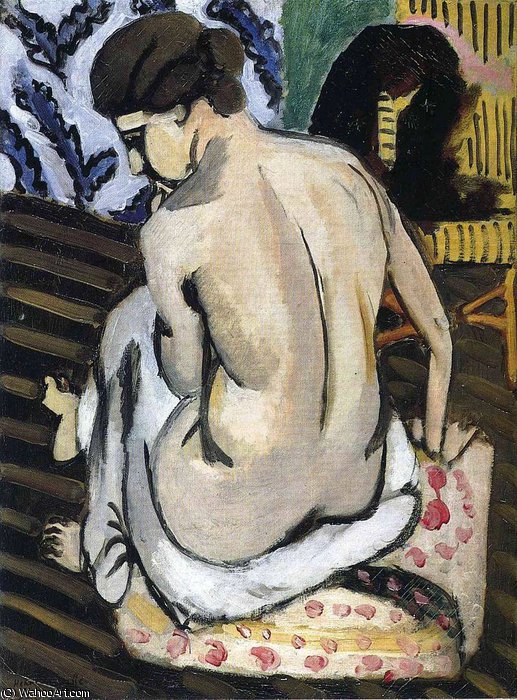
Throughout his career, Matisse consistently sought to capture the spirit of his subjects with remarkable sensitivity and imagination. “Untitled (9869),” produced around 1950, showcases this masterful ability—a serene depiction of a woman seated in repose, bathed in soft light and rendered with meticulous attention to detail. The painting’s understated elegance speaks volumes about Matisse's enduring legacy as one of the most influential artists of the twentieth century.
A Lasting Impression: Color as Emotional Expression
Henri Matisse died in Paris in 1954, leaving behind an unparalleled body of work that continues to inspire admiration and fascination. His unwavering commitment to color—his belief that it could convey emotion directly—established him as a pioneer of modern art and profoundly impacted generations of artists who followed. Reproductions of his iconic paintings offer viewers the opportunity to experience Matisse’s artistic vision firsthand, transporting them into worlds brimming with vibrancy and beauty.


 Προεπισκόπηση
 Μετάβαση σε χειροποίητη ζωγραφική
 Αποστολή
 Κοινοποίηση
 Λεπτομέρειες

 Λήψη
Λήψη
 Παρόμοια έργα
 Ακτινογραφία
 Παρουσίαση
 Περισσότερα λεπτομέρεια






































 Η επιλογή με γυαλί είναι διαθέσιμη μόνο για μεγέθη κάτω από 110 εκ.



