Ατελιέ — Δωρεάν αποστολή σε όλο τον κόσμο — Παράδοση σε 2–6 εβδομάδες
      Προεπισκόπηση Προεπισκόπηση σε AR Αγορά χειροποίητου πίνακα Μετάβαση σε Ψηφιακή Εικόνα Αποστολή
      Λεπτομέρειες Οδηγός Προσθήκη στα αγαπημένα Λήψη Παρόμοια αντικείμενα συλλογής Ακτινογραφία Παρουσίαση Στατιστικά

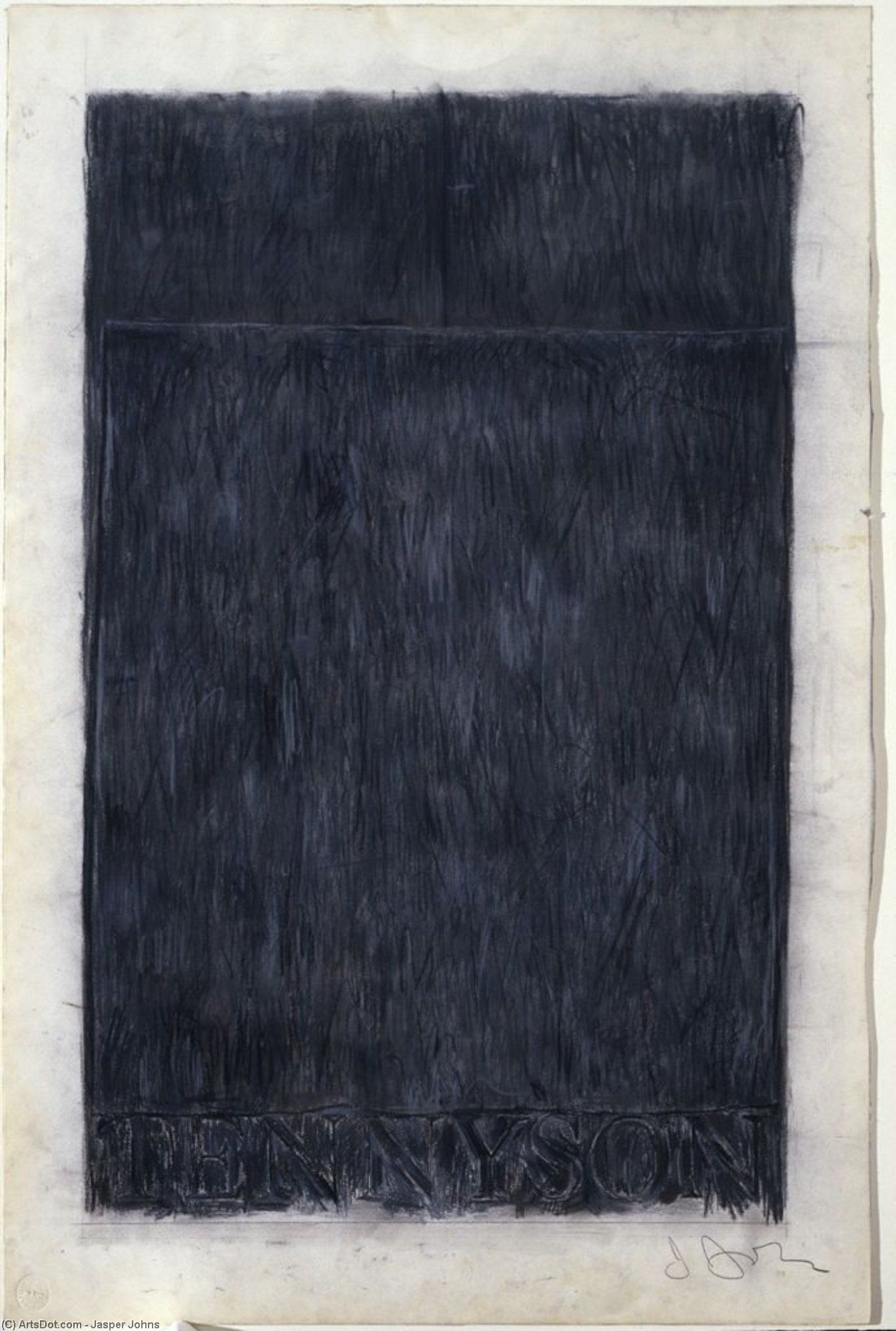
      Tennyson

      Jasper Johns' Tennyson is a haunting black and white painting embodying Abstract Expressionism’s moodiness through an intricate geometric design, reflecting the artist's exploration of identity and American iconography.

      Ο Jasper Johns (1930-): Ένας πρωτοπόρος της Pop & Abstract Expressionism! Δημιουργός των εμβληματικών έργων όπως το 'Φράγμα', χάρτες και στόχοι – επαναπροσδιορίζοντας την σύγχρονη τέχνη.

      Το έργο τέχνης που εμφανίζεται σε αυτή τη σελίδα προστατεύεται από τους νόμους περί πνευματικών δικαιωμάτων, γεγονός που σημαίνει ότι δεν μπορούμε νομικά να δημιουργήσουμε ή να πουλήσουμε μια ταυτόσημη αναπαραγωγή του. Αυτή η προστασία επιβάλλεται βάσει διεθνών συμφωνιών, όπως η Σύμβαση της Βέρνης καθώς και από τους εθνικούς νόμους, συμπεριλαμβανομένων αυτών που ορίζονται από το Νομοθεσία περί πνευματικών δικαιωμάτων των ΗΠΑ - Τίτλος 17. Όλα τα δικαιώματα κατοχυρωμένα. Απαγορεύεται η αναπαραγωγή χωρίς άδεια.

      Αυτή η μέθοδος συμμορφώνεται πλήρως με τους κανονισμούς περί πνευματικών δικαιωμάτων, καθώς δεν περιλαμβάνει την αντιγραφή ή την αναπαραγωγή του προστατευόμενου έργου. Αντίθετα, πρόκειται για μια δημιουργική ερμηνεία — ένα νέο έργο που επηρεάζεται από το πρωτότυπο, χωρίς όμως να είναι πανομοιότυπο με αυτό.

      Giclée / Εκτυπώσεις Τέχνης

      Εκτύπωση giclée ή σε καμβά ποιότητας μουσείου με γρήγορη παραγωγή και ευέλικτες επιλογές φινιρίσματος. ( Αγορά χειροποίητου πίνακα Μετάβαση σε Ψηφιακή Εικόνα)

      Corner sample of the P118B picture frame: moulded polystyrene, 5 cm wide and 3 cm thick
      P118B €10
      Corner sample of the P118H picture frame: moulded polystyrene, 5 cm wide and 3 cm thick
      P118H €10
      Corner sample of the P118W picture frame: moulded polystyrene, 5 cm wide and 3 cm thick
      P118W €10
      Corner sample of the P438Z picture frame: moulded polystyrene, 5.5 cm wide and 3.5 cm thick
      P438Z €10
      Corner sample of the P508JH picture frame: moulded polystyrene, 7 cm wide and 3.5 cm thick
      P508JH €12
      Corner sample of the P508YH picture frame: moulded polystyrene, 7 cm wide and 3.5 cm thick
      P508YH €12
      Corner sample of the P805H picture frame: moulded polystyrene, 5 cm wide and 3.5 cm thick
      P805H €10
      Corner sample of the P805Z picture frame: moulded polystyrene, 5 cm wide and 3.5 cm thick
      P805Z €10
      Corner sample of the P919BZ picture frame: moulded polystyrene, 7 cm wide and 3.5 cm thick
      P919BZ €10
      Corner sample of the P919G picture frame: moulded polystyrene, 7 cm wide and 3.5 cm thick
      P919G €10
      Corner sample of the P919XJ picture frame: moulded polystyrene, 7 cm wide and 3.5 cm thick
      P919XJ €10
      Corner sample of the P959ZH picture frame: moulded polystyrene, 5 cm wide and 3 cm thick
      P959ZH €10
      Corner sample of the P968JZ picture frame: moulded polystyrene, 6 cm wide and 4 cm thick
      P968JZ €12
      Corner sample of the W106C picture frame: solid wood, 5 cm wide and 3 cm thick
      W106C €8
      Corner sample of the W218G picture frame: solid wood, 5 cm wide and 3 cm thick
      W218G €10
      Corner sample of the W218JH picture frame: solid wood, 5 cm wide and 3 cm thick
      W218JH €8
      Corner sample of the W218Y picture frame: solid wood, 5 cm wide and 3 cm thick
      W218Y €10
      Corner sample of the W307PJ picture frame: solid wood, 6 cm wide and 3 cm thick
      W307PJ €10
      Corner sample of the W316G picture frame: solid wood, 6 cm wide and 3 cm thick
      W316G €10
      Corner sample of the W316PJ picture frame: solid wood, 6 cm wide and 3 cm thick
      W316PJ €8
      Corner sample of the W316Y picture frame: solid wood, 6 cm wide and 3 cm thick
      W316Y €10
      Corner sample of the W398PJ picture frame: solid wood, 5 cm wide and 3 cm thick
      W398PJ €8
      Corner sample of the W4111J picture frame: solid wood, 6.5 cm wide and 3.5 cm thick
      W4111J €10
      Corner sample of the W500HY picture frame: solid wood, 7 cm wide and 5 cm thick
      W500HY €15
      Corner sample of the W500JH picture frame: solid wood, 7 cm wide and 5 cm thick
      W500JH €15
      Corner sample of the W692G picture frame: solid wood, 8 cm wide and 4 cm thick
      W692G €12
      Corner sample of the W849H picture frame: solid wood, 5 cm wide and 3 cm thick
      W849H €8
      Corner sample of the W940BG picture frame: solid wood, 7.5 cm wide and 4.5 cm thick
      W940BG €15
      Corner sample of the W953PJ picture frame: solid wood, 6 cm wide and 3.5 cm thick
      W953PJ €8

      Πρότυπο
      κατόπιν παραγγελίας
      CM
      INCH

      Επιλέξτε από τις προκαθορισμένες διαστάσεις μας που διατηρούν τις αρχικές αναλογίες του έργου τέχνης.

      πλάτος
      ύψος

      Μπορείτε να εισαγάγετε δικές σας διαστάσεις ώστε να ταιριάξουν με ένα συγκεκριμένο πλαίσιο ή χώρο. Εάν το επιλεγμένο μέγεθος δεν συμπίπτει με τις αναλογίες της πρωτότυπης εικόνας, θα κόψουμε το έργο τέχνης ή θα επεκτείνουμε την εικόνα με καθρεφτισμένη ή μονόχρωμη ατέλεια. Θα σας αποσταλεί ένα ψηφιακό mockup για έγκρισή σας πριν από την έναρξη της παραγωγής.
      Παρακαλούμε σημειώστε ότι η προεπισκόπηση στην οθόνη δεν αντικατοπτρίζει την πραγματική κοπή ή επέκταση. Μόνο το mockup θα δείξει με ακρίβεια την τελική σύνθεση.
      Παρόλο που είναι διαθέσιμες προσαρμοσμένες διαστάσεις, προτείνουμε την επιλογή μιας διάστασης από τη προκαθορισμένη λίστα για τη διατήρηση των αρχικών αναλογιών.

      Παγκόσμια Αποστολή () σε 2 εβδομάδες αντί για τις συνήθεις 4/5 εβδομάδες. (10 Οκτώβριος)

      Δωρεάν γρήγορη διεθνής αποστολή
      Κάμβας από Λινό Υψηλής Ποιότητας
      Πλήρης ασφάλιση μεταφοράς
      Εγγύηση επιστροφής δασμών και φόρων εισαγωγής
      Εγγύηση Απόλυτης Ομοιότητας Χρωμάτων
      Πολιτική Επιστροφής 100 Ημερών (Μόνο σε περίπτωση ελαττωμάτων)
      Εγγύηση επιστροφής 100% των χρημάτων
      Έκπτωση για πολλαπλές παραγγελίες

      Συνολική Τιμή

      € 59

      Tennyson

      Giclée / Εκτυπώσεις Τέχνης

      Διαστάσεις Αναπαραγωγής

      -

      Συνολικό Κόστος

      € 59

      Βασικά στοιχεία

      • Year: 1959
      • Title: Tennyson
      • Notable elements or techniques: Symbolic imagery
      • Subject or theme: Iconography
      • Movement: Abstract Expressionism
      • Artistic style: Geometric abstraction

      ΚВИΖ Τέχνης

      Για κάθε ερώτηση υπάρχει μόνο μία σωστή απάντηση.

      Ερώτηση 1:
      What artistic movement is Jasper Johns' Tennyson painting associated with?
      Ερώτηση 2:
      In what year was Tennyson created by Jasper Johns?
      Ερώτηση 3:
      Tennyson utilizes a predominantly ____ background.
      Ερώτηση 4:
      Jasper Johns' Tennyson is considered an example of Pop Art due to its focus on ____.
      Ερώτηση 5:
      What technique is most prominently employed in Tennyson?

      A Portrait of Quiet Intensity: The Enigmatic World of Jasper Johns' Tennyson

      In the vast landscape of twentieth-century modernism, few works possess the haunting, meditative quality found in Jasper Johns’ “Tennyson,” completed in 1959. This monumental canvas serves as a profound invitation into a realm where recognizable forms dissolve into evocative suggestion, standing as a pivotal bridge between the raw, emotional energy of Abstract Expressionism and the burgeoning intellectual rigor of Pop Art. Rather than presenting a literal depiction, the painting offers a subtle, atmospheric experience that rewards the patient observer with its deep, layered mysteries.

      The technique employed by Johns in this piece is nothing short of meticulous, utilizing the ancient and demanding medium of encaustic. By mixing pigment with hot wax and layering thin sheets onto the canvas under intense heat, Johns achieved a remarkable textural quality that breathes life into the surface. Subtle ridges and depressions emerge from the dark, charcoal-gray background, creating a tactile landscape that hints at hidden depths beneath the skin of the painting. This deliberate restraint in color and form stands in stark contrast to the sprawling, gestural brushstrokes of his contemporaries like Pollock, favoring instead a sense of precision, control, and profound stillness.

      Symbolism and the Echoes of Memory

      The title of the work serves as a poetic key, referencing Alfred Lord Tennyson’s poignant poem “In Memoriam A Lay of Remembrance.” Through this connection, the painting transcends its abstract appearance to explore themes of grief, loss, and the enduring, often fragmented nature of memory. Johns avoids explicit figures or landscapes, opting instead for a visual language where the dark, somber palette symbolizes sorrow and obscurity. The textured surface of the wax becomes a metaphor for the way impressions linger in the mind—fragmented, layered, and occasionally obscured by the passage of time.

      For the collector or the interior designer, “Tennyson” offers more than mere decoration; it provides an emotional anchor for a space. Its subdued palette and monochromatic depth allow it to integrate seamlessly into sophisticated environments, acting as a focal point for contemplation. The painting does not demand immediate attention through loud colors but rather invites a slow, rhythmic engagement, making it an ideal piece for those seeking to infuse a room with a sense of intellectual depth, resilience, and quiet beauty. It remains a testament to the power of abstraction to convey the most complex human experiences through nothing more than light, shadow, and texture.

      Ερωτήσεις & Απαντήσεις

      Ποιον καλλιτέχνη αποδίδεται το "Tennyson";

      Το έργο "Tennyson" αποδίδεται στον/στην Jasper Johns.

      Μπορώ να δω προεπισκόπηση του "Tennyson" του Jasper Johns πριν την παραγγελία;

      Μια προεπισκόπηση του έργου "Tennyson" του Jasper Johns είναι διαθέσιμη στη σελίδα Προεπισκόπηση του έργου.

      Πόσο έντονες είναι οι αποχρώσεις του "Tennyson";

      Το έργο "Tennyson" του Jasper Johns καταγράφεται με κορεσμό Muted και ένταση Monochromatic.

      Ποια είναι η ημερομηνία δημιουργίας του "Tennyson" του Jasper Johns;

      Η δημιουργία του έργου "Tennyson" του Jasper Johns χρονολογείται στο έτος 1959.

      Πόσο είχε ο/η Jasper Johns όταν δημιουργήθηκε το "Tennyson";

      Ο/Η Jasper Johns δημιούργησε το έργο "Tennyson" στην ηλικία των 29 ετών. Ο/Η καλλιτέχνης γεννήθηκε το 1930 και το έργο χρονολογείται στο 1959.

      Τι ατμόσφαιρα αποπνέει το "Tennyson";

      Η συνολική ατμόσφαιρα του έργου "Tennyson" του Jasper Johns είναι Elegant. Η διάθεση αυτή περιγράφει το γενικό κλίμα του έργου.

      Πώς το "Tennyson" εξισορροπεί το φως και το σκοτάδι;

      Οι καταγεγραμμένες τιμές για το έργο "Tennyson" του Jasper Johns είναι: φωτεινότητα balanced, φωταύγεια Gentle Luminance.


      Βιογραφικό Καλλιτέχνη

      A Life Painted in Symbols: The World of Jasper Johns

      Jasper Johns emerged as a pivotal figure in the landscape of American art, bridging the emotive intensity of Abstract Expressionism with the burgeoning Pop Art movement that would soon redefine artistic boundaries. Born in Augusta, Georgia, in 1930, his early life was marked by a sense of displacement following his parents’ divorce, an experience that perhaps subtly informed his later explorations of identity and belonging within the context of American iconography. His formative years unfolded across various schools before he briefly attended the University of South Carolina, but it wasn't until his move to New York City in 1949 that Johns truly began to forge his artistic path. A period of service during the Korean War further shaped his perspective, exposing him to a world far removed from the burgeoning art scene he was eager to embrace upon his return. This early exposure to conflict and displacement undoubtedly contributed to the introspective nature of much of his later work, prompting him to examine themes of perception, representation, and the complexities of American identity.

      Breaking with Abstraction: The Dawn of a New Visual Language

      The post-war American art world was dominated by Abstract Expressionism—a style characterized by spontaneous gesture and deeply personal emotional expression. While initially influenced by this movement, Johns felt compelled to move beyond its purely non-representational approach. He sought a new visual language, one that incorporated recognizable imagery not as illustrations but as vehicles for deeper contemplation. This wasn’t simply about *depicting* the world; it was about questioning how we perceive and interpret symbols within it. Key influences guided his departure: Marcel Duchamp's radical readymades challenged conventional notions of art-making, demonstrating that everyday objects could be elevated to the status of art through their presentation, while the emphasis on materiality in Abstract Expressionism informed Johns’ early techniques. However, it was the everyday objects and potent symbols of American culture—flags, targets, maps, numbers—that truly became central to his artistic vocabulary. He wasn't interested in escaping representation; he wanted to dissect it, layer it with meaning, and ultimately reveal its inherent ambiguities. This shift marked a significant departure from the subjective emotionalism of Abstract Expressionism, prioritizing intellectual engagement and symbolic exploration over raw feeling.

      Iconic Images: Flags, Targets, and the Language of Symbols

      Johns’ breakthrough works arrived in the mid-1950s, instantly establishing him as a force to be reckoned with. His paintings of flags, most notably *Flag* (1954–55), were not patriotic declarations but rather investigations into the very nature of representation. Rendered in a semi-abstract style, using encaustic—pigment mixed with hot wax—and collage techniques, these flags weren’t simply images; they were textured surfaces laden with symbolic weight. The *Flag* series wasn't about celebrating American nationalism, but rather questioning the act of seeing and representing – what does it mean to depict something so familiar? Similarly, his target paintings, beginning in 1958, explored themes of chance, accuracy, and the relationship between perception and reality. These works, often executed with a deceptively simple palette, invited viewers to consider the inherent contradictions within seemingly straightforward images. *Map* (1961), with its fragmented and layered depictions of the United States, delved into themes of geography, identity, and the complexities of national representation. Works like *False Start* (1959) demonstrated his experimentation with language and visual codes, creating complex compositions that challenged viewers to decipher their underlying meanings. Even *White Flag* (1955), a seemingly simple monochrome canvas, prompted profound questions about absence, surrender, and the very act of seeing.

      Technique and Materials: Encaustic, Collage, and Beyond

      Jasper Johns’ artistic process was characterized by meticulous attention to detail and an innovative use of materials. He frequently employed encaustic—a mixture of pigment and hot wax—to create textured surfaces and layered effects, lending a tactile quality to his paintings. Collage techniques were also integral to his work, incorporating elements such as newspaper clippings, maps, and found objects into his compositions. This layering of different media created visual complexity and invited multiple interpretations. Johns’ use of numbers, particularly in works like *Numbers 1-10* (1958), demonstrated a fascination with mathematical precision and the inherent order within seemingly chaotic arrangements. He also experimented with printmaking techniques, producing lithographs and screenprints that further explored his symbolic vocabulary. The deliberate choice of materials—encaustic, collage, found objects—was not merely decorative; it was a fundamental aspect of Johns’ artistic language, contributing to the layered meanings embedded in his work.

      Recognition and Enduring Impact

      Throughout his illustrious career, Jasper Johns has received numerous accolades, including a Golden Lion at the Venice Biennale in 1988, the National Medal of Arts in 1990, and the Presidential Medal of Freedom in 2011. His works are held in major museum collections worldwide—the Museum of Modern Art, the Whitney Museum of American Art, the Metropolitan Museum of Art in New York, and Tate Modern in London, to name just a few. He has been the subject of countless exhibitions, cementing his position as one of the most important figures in 20th-century art. Beyond his paintings, Johns’ contributions extend to sculpture and printmaking, demonstrating his versatility and unwavering commitment to artistic innovation. His enduring legacy lies not only in the iconic images he created but also in the profound questions he raised about the nature of representation, symbolism, and the very essence of what it means to be an artist in a rapidly changing world. Johns continues to create art today, pushing the boundaries of his practice while retaining the core principles that have defined his career.

      Jasper Johns

      Jasper Johns

      1930 - , Ηνωμένες Πολιτείες της Αμερικής

      Στοιχεία καλλιτέχνη

      • Artistic Movement Or Style: Pop & Abstr Expres
      • Artists Or Movements Influenced By This Artist:
        • Warhol
        • Lichtenstein
      • Artists Who Influenced This Artist: ['Duchamp']
      • Date Of Birth: 15 Μαΐου 1930
      • Full Name: Jasper Johns
      • Nationality: Αμερικανός
      • Notable Artworks:
        • Flag
        • Target
        • Map
      • Place Of Birth: Augusta, ΗΠΑ
      Εξερευνήστε έργα τέχνης ταξινομημένα ανά θέμα, στυλ και χαρακτηριστικά.
      © TopImpressionists.com — Μεγαλλοπρεπή Πνευματικά Δικαιώματα  ·  100% Χειρόχειρα Ζωγραφισμένα · Εγγυημένη Ικανοποίηση · Δωρεάν Αποστολή σε όλο τον Κόσμο
      VISA MASTERCARD