

 Προεπισκόπηση
 Αποστολή
 Κοινοποίηση
 Λεπτομέρειες
 Οδηγός

 Λήψη
Λήψη
 Παρόμοια αντικείμενα συλλογής
 Ακτινογραφία
 Παρουσίαση
 Στατιστικά
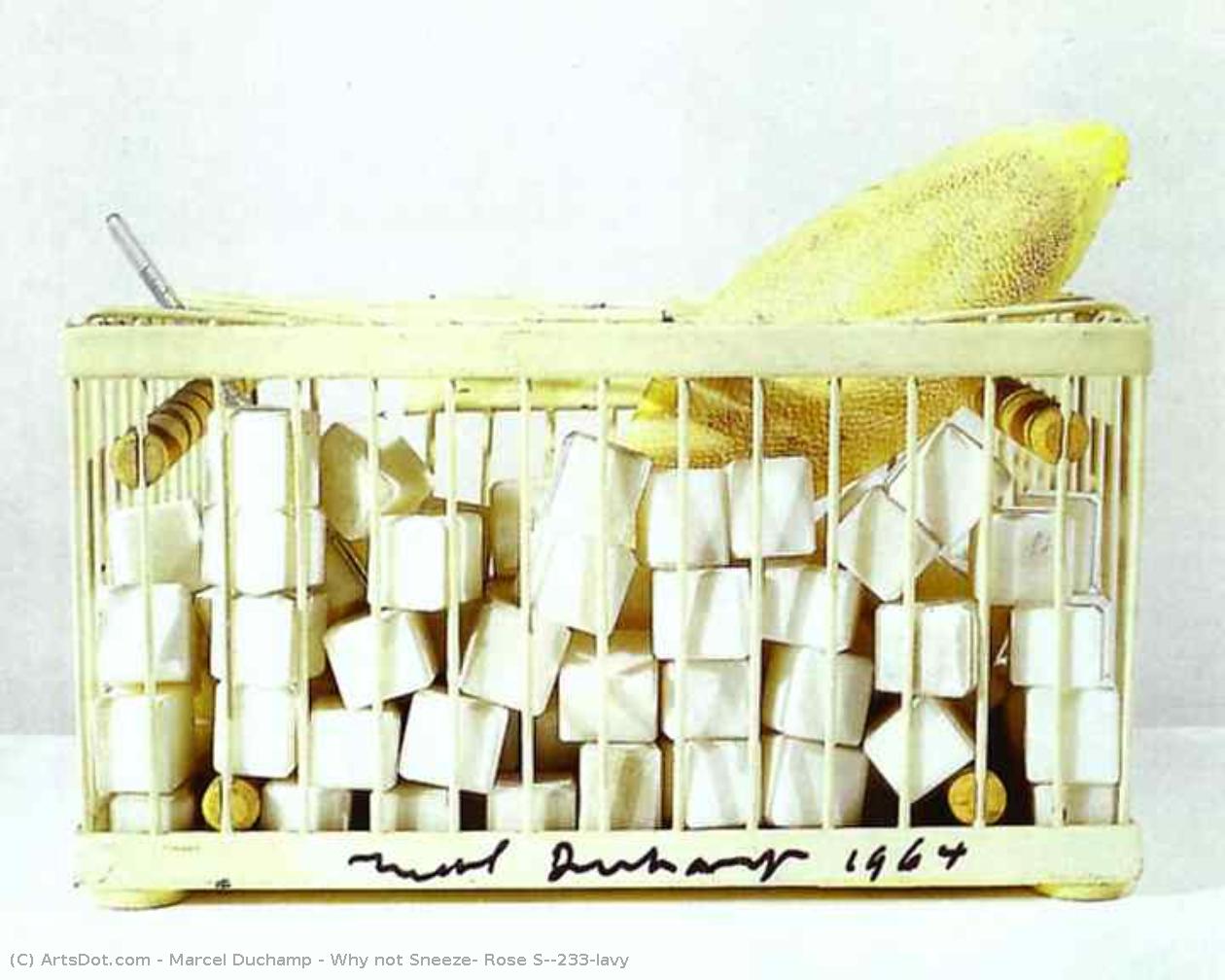
Why not Sneeze, Rose Sélavy
 Acrylic On Canvas
- WallArt
- Dada Gesamtkunstwerk
 1921
1921 12.0 x 22.0 cm
 Tate Modern
 Περισσότερα λεπτομέρεια
Ανακαλύψτε τον Μάρκελ Ντουχαμπ, πρωτοπόρο καλλιτέχνη που επαναπροσδιόρισε την τέχνη με τα Dada και Readymade έργα του. Εξερευνήστε τη ζωή & το έργο του!
Το έργο τέχνης που εμφανίζεται σε αυτή τη σελίδα προστατεύεται από τους νόμους περί πνευματικών δικαιωμάτων, γεγονός που σημαίνει ότι δεν μπορούμε νομικά να δημιουργήσουμε ή να πουλήσουμε μια ταυτόσημη αναπαραγωγή του. Αυτή η προστασία επιβάλλεται βάσει διεθνών συμφωνιών, όπως η Σύμβαση της Βέρνης καθώς και από τους εθνικούς νόμους, συμπεριλαμβανομένων αυτών που ορίζονται από το Νομοθεσία περί πνευματικών δικαιωμάτων των ΗΠΑ - Τίτλος 17. Όλα τα δικαιώματα κατοχυρωμένα. Απαγορεύεται η αναπαραγωγή χωρίς άδεια.
Αυτή η μέθοδος συμμορφώνεται πλήρως με τους κανονισμούς περί πνευματικών δικαιωμάτων, καθώς δεν περιλαμβάνει την αντιγραφή ή την αναπαραγωγή του προστατευόμενου έργου. Αντίθετα, πρόκειται για μια δημιουργική ερμηνεία — ένα νέο έργο που επηρεάζεται από το πρωτότυπο, χωρίς όμως να είναι πανομοιότυπο με αυτό.
Giclée / Εκτυπώσεις Τέχνης
Εκτύπωση giclée ή σε καμβά ποιότητας μουσείου με γρήγορη παραγωγή και ευέλικτες επιλογές φινιρίσματος. ( Αγορά χειροποίητου πίνακα Μετάβαση σε Ψηφιακή Εικόνα)




P118B €10

P118H €10

P118W €10

P438Z €10

P508JH €12

P508YH €12

P805H €10

P805Z €10

P919BZ €10

P919G €10

P919XJ €10

P959ZH €10

P968JZ €12

W106C €8

W218G €10

W218JH €8

W218Y €10

W307PJ €10

W316G €10

W316PJ €8

W316Y €10

W398PJ €8

W4111J €10

W500HY €15

W500JH €15

W692G €12

W849H €8

W940BG €15

W953PJ €8




Πρότυπο
κατόπιν παραγγελίας
CM
INCH
Επιλέξτε από τις προκαθορισμένες διαστάσεις μας που διατηρούν τις αρχικές αναλογίες του έργου τέχνης.
Loading sizes...

πλάτος
ύψος
Πληκτρολογήστε το πλάτος και το ύψος που επιθυμείτε, ώστε να ταιριάζουν στο κάδሮ ή στον τοίχο σας. Μια εκτύπωση μπορεί μόνο να κοπεί και ποτέ να μην γίνει μεγαλύτερη από την εικόνα, επομένως ένα μέγεθος με διαφορετικό σχήμα συνεπάγεται απώλεια ενός μέρους της εικόνας. Σας στέλνουμε ένα ψηφιακό mockup για έγκριση πριν εκτυπώσουμε οτιδήποτε. Η εικόνα που εμφανίζεται σε αυτή τη σελίδα δεν δείχνει την πραγματική κοπή — μόνο το mockup την παρουσιάζει.
Παγκόσμια Αποστολή () σε 2 εβδομάδες αντί για τις συνήθεις 4/5 εβδομάδες. (22 Οκτώβριος)

Δωρεάν γρήγορη διεθνής αποστολή

Κάμβας από Λινό Υψηλής Ποιότητας

Πλήρης ασφάλιση μεταφοράς

Εγγύηση επιστροφής δασμών και φόρων εισαγωγής

Εγγύηση Απόλυτης Ομοιότητας Χρωμάτων

Πολιτική Επιστροφής 100 Ημερών (Μόνο σε περίπτωση ελαττωμάτων)

Εγγύηση επιστροφής 100% των χρημάτων

Έκπτωση για πολλαπλές παραγγελίες
 Η επιλογή με γυαλί είναι διαθέσιμη μόνο για μεγέθη κάτω από 110 εκ.

Why not Sneeze, Rose Sélavy
Giclée / Εκτυπώσεις Τέχνης
Διαστάσεις Αναπαραγωγής
-


Συνολικό Κόστος
€ 60
A Provocative Pause: Unpacking “Why Not Sneeze, Rose Sélavy”
Marcel Duchamp’s "Why Not Sneeze, Rose Sélavy," painted in 1921, isn't merely a still life; it’s an audacious declaration. This deceptively simple image – a white box containing a yellow banana alongside several cups and spoons – immediately throws the viewer off balance, demanding they reconsider their assumptions about art itself. Duchamp, a pivotal figure in the Dada movement, wasn’t interested in replicating reality or expressing personal emotion through traditional means. Instead, he sought to dismantle established artistic conventions, forcing us to confront the very definition of what constitutes “art” and its role within society.
The painting's genesis lies within Duchamp’s exploration of chance and readymades – everyday objects presented as art without alteration. "Why Not Sneeze" exemplifies this approach perfectly. The choice of a banana, an utterly mundane item, elevates it to the status of subject matter through its placement within the box, transforming it into something worthy of contemplation. The inclusion of the cups and spoons further complicates the scene, suggesting a potential for consumption or ritual – elements deliberately devoid of inherent meaning, yet imbued with a subtle tension.
Dadaist Disruptions: Style and Technique
“Why Not Sneeze” is firmly rooted in the principles of Dadaism, a movement born from the disillusionment following World War I. Rejecting logic and reason, Dada artists embraced absurdity, chance, and anti-art sentiments. Duchamp’s technique reflects this ethos; he employed a precise, almost clinical approach to rendering the objects, using oil paint on canvas with a smooth, matte finish. There's no attempt at illusionistic depth or vibrant color – instead, the focus is entirely on the arrangement of the elements and their juxtaposition. The stark white box acts as a frame, isolating the objects and intensifying their impact.
Interestingly, Duchamp’s process involved a degree of chance. He reportedly placed the banana in the box after it had been emptied, allowing the positioning to be determined by accident. This element of randomness underscores the movement's core belief that art should not be dictated by conscious intention but rather emerge from unexpected encounters and unforeseen circumstances.
Symbolic Whispers: Interpretation and Context
The symbolism within “Why Not Sneeze” is deliberately ambiguous, inviting multiple interpretations. The banana itself has been suggested to represent fertility, sexuality, or even a subtle critique of consumer culture – a small, yellow object placed in an enclosed space, hinting at both abundance and confinement. The cups and spoons could symbolize hospitality, offering, or perhaps the act of consuming – again, devoid of any specific narrative but laden with potential meanings.
Furthermore, the title itself, “Why Not Sneeze?”, is a direct challenge to conventional artistic expectations. Duchamp’s question implies that there are no rules governing art, no prescribed methods for creating it. It's an invitation to embrace spontaneity and reject rigid constraints. The painting can be viewed as a meditation on the absurdity of artistic norms and a playful provocation against established aesthetic values.
A Timeless Dialogue: Emotional Impact and Legacy
Despite its seemingly simple composition, “Why Not Sneeze, Rose Sélavy” possesses a profound emotional impact. It’s unsettling, humorous, and thought-provoking – qualities that have cemented its place as one of the most significant works in modern art history. Duchamp's work continues to resonate today, prompting us to question our own perceptions of beauty, value, and the very nature of artistic expression. A reproduction of this iconic piece offers a unique opportunity to engage with a pivotal moment in art history and contemplate the enduring legacy of Marcel Duchamp’s revolutionary spirit.
Ερωτήσεις & Απαντήσεις
Είναι το "Why not Sneeze, Rose Sélavy" διαθέσιμο ως εκτύπωση fine art;
Για να αποκτήσετε ένα εκτύπωμα του "Why not Sneeze, Rose Sélavy" του Μαρκήλ Ντούχαμπ, απλά παραγγείλτε το από τη σελίδα Καλλιτεχνικό Έντυπο: ένα εκτύπωμα fine art σε βαμβακερό καμβά ή σε αρχειοθετητικό χαρτί καμβά.
Ποια διάθεση και συναίσθημα συνυπάρχουν στο "Why not Sneeze, Rose Sélavy";
Στο "Why not Sneeze, Rose Sélavy", μια ατμόσφαιρα Playful συνοδεύεται από ένα συναίσθημα Playful.
Ποια εποχή της καριέρας του/της Μαρκήλ Ντούχαμπ αντιπροσωπεύει το έργο "Why not Sneeze, Rose Sélavy";
Το έργο "Why not Sneeze, Rose Sélavy" ανήκει στην περίοδο Dada Phase της καριέρας του Μαρκήλ Ντούχαμπ. Αυτή η ταξινόμηση συνδέει το έργο με την εξέλιξη του καλλιτέχνη.
Βιογραφικό Καλλιτέχνη
Ένα Επαναστατικό Πνεύμα: Η Ζωή και η Τέχνη του Marcel Duchamp
Ο Marcel Duchamp, γεννημένος ως Henri-Robert-Marcel Duchamp το 1887 στο Blainville-Crevon της Νορμανδίας, ήταν κάτι παραπάνω από έναν καλλιτέχνη· ήταν ένας φιλοσοφικός προκλητής που άλλαξε ριζικά την πορεία της μοντέρνας τέχνης. Η πρώιμη ζωή του, αν και φαινόταν συμβατική – αναπτυσσόμενος μέσα σε μια οικογένεια που εκτιμούσε την καλλιτεχνική έκφραση, με τους δύο αδελφούς του να ακολουθούν επιτυχημένες καλλιτεχνικές καριέρες – προμήνυε την επερχόμενη εικονοκλαστική κίνηση. Ο Duchamp ξεκίνησε αρχικά με τυπική εκπαίδευση, κατακτώντας παραδοσιακές τεχνικές και πειραματιζόμενος με ποστ-εμπρεσιονιστικά στυλ. Ωστόσο, αυτό το ακαδημαϊκό υπόβαθρο δεν λειτούργησε ως αυτοσκοπός, αλλά ως springboard για την αμφισβήτηση της ίδιας της φύσης της τέχνης, του σκοπού της και του ορισμού της. Δεν αρκείσε να απεικονίζει απλώς τον κόσμο· επιδίωξε να προκαλέσει τον τρόπο με τον οποίο τον αντιλαμβανόμαστε και αυτό που συνιστά καλλιτεχνική αξία. Αυτή η ανησυχημένη πνευματική περιέργεια θα αποτελούσε το καθοριστικό χαρακτηριστικό της παραγωγικής του καριέρας.Από τον Κυβισμό στον Δαδαισμό: Μια Απόρριψη των Συμβάσεων
Το καλλιτεχνικό ταξίδι του Duchamp χαρακτηρίστηκε από μια συνεχή εξέλιξη, ένα σκόπιμο απομάκρυνση από τα καθιερωμένα πρότυπα. Η αρχική του ενασχόληση με τον Κυβισμό, που είναι εμφανής σε έργα όπως το Portrait of Chess Players (1911), επέδειξε ένα ενδιαφέρον για σχηματισμούς που θραύστηκαν και για πολλαπλές προοπτικές – μια απόκλιση από την παραδοσιακή αναπαράσταση. Ωστόσο, ξεπέρασε γρήγορα τα καθαρά αισθητικά ζητήματα, αναγνωρίζοντας ότι η απλή αναδιάταξη οπτικών στοιχείων δεν αρκούσε για να απαντήσει στα βαθύτερα ερωτήματα που τον ταλαιπώρουσαν. Οι τρόμος του Α' Παγκοσμίου Πολέμου τροφοδότησαν αυτή την αδιαφορία, οδηγώντας τον Duchamp να αγκαλιάσει τον Δαδαισμό, μια κίνηση που γεννήθηκε από την απογοήτευση και την άρνηση της λογικής, του λόγου και των παραδοσιακών καλλιτεχνικών αξιών. Μέσα στο δαδαιλιστικό πλαίσιο ήταν που ο Duchamp άρχισε πραγματικά να αποδομεί τις συμβατικές έννοιες της τέχνης. Δεν ενδιέφερε η δημιουργία όμορφων αντικειμένων· ήθελε να προκαλέσει σκέψη, να αμφισβητήσει υποθέσεις και να εκθέσει την αυθαιρεσία της αισθητικής κρίσης. Αυτή η περίοδος είδε τη γέννηση της πιο ριζοτομικής καινοτομίας του: του «readymade».Τα Readymades και η Υπερθέση της Τέχνης
Η εισαγωγή των readymades – κοινών κατασκευασμένων αντικειμένων που επιλέχθηκαν και παρουσιάστηκαν ως τέχνη – ήταν η πιο σημαντική συνεισφορά του Duchamp στον 20ό αιώνα. Αυτά δεν ήταν απλώς ευρutakoμένα αντικείμενα· ήταν σκόπιμες πράξεις καλλιτεχνικής υποτίμησης και υπερθέσης. Παίρνοντας ένα καθημερινό αντικείμενο, όπως μια αφλόδεσμο (Fountain, 1917), υπογράφοντάς το ως «R. Mutt» και υποβάλλοντάς το σε μια έκθεση τέχνης, ο Duchamp αμφισβήτησε τον ίδιο τον ορισμό της καλλιτεχνικής δεξιοτεχνίας και της δημιουργίας. Ήταν το χέρι του καλλιτέχνη που δημιούργησε το έργο, ή ήταν η ιδέα του καλλιτέχνη; Αυτό το ερώτημα έγινε κεντρικό στην πρακτική του και laying το θεμέλιο για την Έννοιας Τέχνη (Conceptual Art). Άλλα αξιοσημείωτα readymades, όπως το L.H.O.O.Q. (1919), μια αναπαραγωγή της Μόνα Λίζας σε καρτοφίλο που έχει λερωθεί με μούσι και περιώρη, ήταν παιχνιδιάρχη αλλά και στοχευμένες κριτικές στην ιστορία της τέχνης και στα καθιερωμένα πολιτιστικά είδωλα. Αυτά τα έργα δεν προοριζόταν να θαυμαστούν για τις αισθητικές τους ιδιότητες· είχαν ως σκοπό να προκαλέσουν débat και να αναγκάσουν τους θεατές να επανεξετάσουν τις προκαταλήψεις τους για το τι συνιστά τέχνη. Ο Duchamp πίστευε ότι η τέχνη πρέπει να κατοικεί στο μυαλό, και όχι μόνο στο μάτι.Κληρονομιά και Διαχρονική Επιρροή
Η επίδραση του Marcel Duchamp στις επόμενες γενιές καλλιτεχνών είναι αβάσταχτη. Άλλαξε θεμελιωδώς την κατανόησή μας για την τέχνη, ανοίγοντας τον δρόμο για κινήσεις όπως η Έννοιας Τέχνη, ο Μινιμαλισμός, η Pop Art και άλλες αμέτρητες. Η έμφασή του στην ιδέα του καλλιτέχλο – την έννοια πίσω από το έργο – έναντι των αισθητικών του χαρακτηριστικών συνεχίζει να εμπνέει καλλιτέχνες μέχρι σήμερα.- Κυβισμός: Πρώιμη εξερεύνηση σχηματισμών που θραύστηκαν και χωρικής αναπαράστασης.
- Δαδαισμός: Άρνηση της λογικής, του λόγου και των παραδοσιακών καλλιτεχνικών αξιών ως απόκριση στον Α' Παγκόσμιο Πόλεμο.
- Έννοιας Τέχνη: Έμφαση στην ιδέα πίσω από το έργο τέχνης αντί για τις αισθητικές του ιδιότητες.

Μαρκήλ Ντούχαμπ
1887 - 1968 , Γαλλία
Στοιχεία καλλιτέχνη
- Artistic Movement Or Style:
- Κυβισμός
- Δαδαισμός
- Συνθετικό Κείμενο
- Artists Or Movements Influenced By This Artist: ['Συνθετικό Κείμενο']
- Date Of Birth: 28 Ιουλίου 1887
- Date Of Death: 2 Οκτωβρίου 1968
- Full Name: Henri-Robert-Marcel Duchamp
- Nationality: Γαλλικός-Αμερικανός
- Notable Artworks:
- Πορτρέτο Παικτών Σκάκι
- Λ.Η.Ο.Ο.Κ.
- Αντίγραφο Μονόλιθου
- Μεγάλο Γυαλί
- Place Of Birth: Βλαϊνβίλ Σερ Μερ
Σχετικά άρθρα

Dadaism Unveiled: The Beautiful Chaos of Art's Most Rebellious Movement
Explore the profound rebellion of Dadaism. Discover how this avant-garde movement emerged from the chaos of WWI to redefine art through absurdity, anti-logic, and a legacy that shaped Surrealism and Pop Art. A deep dive into the beautiful chaos of art history for the true enthusiast.

Pop Surrealism Unveiled: The Sophisticated Intersection of Vibrant Pop Art and Dreamlike Subconscious Landscapes
Explore the captivating world of Pop Surrealism. Discover how vibrant Pop Art meets dreamlike subconscious imagery through the works of masters like Jeff Soto and Ryan Heshka. An expert guide for discerning collectors seeking to understand this profound contemporary art movement.
Εξερευνήστε έργα τέχνης ταξινομημένα ανά θέμα, στυλ και χαρακτηριστικά.


