The Enduring Vision of Don Quixote
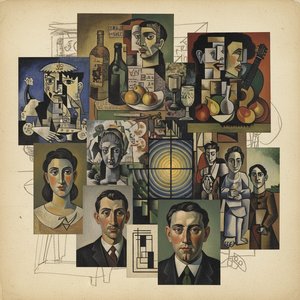
Pablo Picasso’s 1955 sketch, “Don Quixote,” isn't merely an illustration; it’s a distilled essence of Cervantes’ timeless tale and a profound meditation on the nature of illusion versus reality. Emerging from a period of intense experimentation within his artistic evolution, this work represents a shift towards a more direct and emotionally charged approach, mirroring the protagonist’s own struggle to reconcile his idealized vision with the harsh realities of the world. The stark simplicity of the composition – a predominantly white background punctuated by the figures of Don Quixote, his horse Rocinante, and Sancho Panza – immediately draws the viewer into a realm of heightened drama and symbolic weight.
The sketch’s power lies in its raw energy and expressive lines. Picasso abandons the meticulous detail of his earlier Cubist explorations, opting instead for bold, almost frantic strokes that convey both movement and vulnerability. The figures are rendered with an immediate, gestural quality, suggesting a fleeting moment captured on paper – a snapshot of a heroic delusion. Notice how the elongated form of Don Quixote dominates the scene, his posture radiating a desperate yearning for chivalric glory, while Sancho Panza, positioned beneath him, embodies a grounded practicality, a stark contrast to the knight’s fantastical pursuits. The horse and donkey are equally simplified, their forms echoing the dynamism of the human figures.
A Convergence of Influences
Picasso's decision to revisit Cervantes’ classic at this particular juncture in his career is deeply significant. Following the devastation of World War II, Europe was grappling with profound uncertainty and disillusionment. The themes of idealism, delusion, and the clash between fantasy and reality resonated powerfully within a continent scarred by conflict. The work can be seen as a reflection of these anxieties, mirroring the societal yearning for order amidst chaos.
Furthermore, Picasso’s exploration of Don Quixote aligns with his ongoing fascination with mythology and folklore. The image evokes echoes of medieval tapestries and woodcuts – a deliberate nod to the chivalric romances that fueled Quixote's delusions. The inclusion of elements like the sun (a potent symbol of authority and judgment) and the windmills, representing the obstacles in Quixote’s path, further enrich the work’s symbolic landscape. The sketch also subtly references the tradition of Spanish art, particularly its depictions of equestrian scenes, while simultaneously forging a distinctly modern aesthetic.
Technique and Materiality
The sketch itself is executed primarily with charcoal and ink on paper, utilizing hatching techniques to create subtle gradations of tone and texture. The stark contrast between the white background and the dark figures amplifies the drama, emphasizing their isolation and vulnerability. Picasso’s loose, expressive lines suggest a spontaneous process – an immediate response to the subject matter rather than a carefully planned composition. This immediacy is crucial to the work's emotional impact, conveying a sense of urgency and raw feeling.
The choice of Arches paper—a high-quality, heavy weight surface known for its archival permanence—contributes significantly to the sketch’s visual presence. The textured surface allows the charcoal and ink to lay down with depth and richness, enhancing the work's tactile quality. It is a testament to Picasso’s commitment to using materials that would preserve his vision for generations to come.
A Legacy of Illusion
“Don Quixote” transcends its subject matter to become a poignant meditation on the human condition. It speaks to our inherent desire for meaning and purpose, our tendency to project idealized visions onto the world, and the inevitable disappointment that arises when reality fails to meet our expectations. Picasso’s sketch is not simply a portrait of a literary hero; it's an invitation to contemplate the complexities of illusion, delusion, and the enduring power of storytelling – themes that continue to resonate deeply with audiences today.



 Δείτε σε πραγματικό χώρο
 Αγορά χειροποίητου πίνακα
 Αποστολή
 Κοινοποίηση
 Λεπτομέρειες

 Λήψη
Λήψη
 Παρόμοια αντικείμενα συλλογής
 Ακτινογραφία
 Παρουσίαση

 Διαβάστε περισσότερα






































 Η επιλογή με γυαλί είναι διαθέσιμη μόνο για μεγέθη κάτω από 110 εκ.