

Εμφανίζεται: · Συμπεριλαμβανομένου του πλαισίου:
 Προεπισκόπηση σε πραγματική κλίμακα
 Αποστολή
 Κοινοποίηση
 Λεπτομέρειες
 Οδηγός

 Λήψη
Λήψη
 Παρόμοια αντικείμενα συλλογής
 Ακτινογραφία
 Παρουσίαση
 Ερωτήσεις & Απαντήσεις
 Στατιστικά


€ 240
Χειροποίητη Αναπαραγωγή σε Έλαιο
Χειροποίητη ελαιογραφία σε καμβά στο δικό σας μέγεθος και πλαίσιο, κατά παραγγελία από τους καλλιτέχνες μας. ( Μετάβαση σε Εκτυπώσεις Μετάβαση σε Ψηφιακή Αποτέλεσμα)
Διαστάσεις
·Πρότυπο
κατόπιν παραγγελίας
CM
INCH
Επιλέξτε από τις προκαθορισμένες διαστάσεις μας που διατηρούν τις αρχικές αναλογίες του έργου τέχνης.
Φόρτωση μεγεθών...

πλάτος
ύψος
Πληκτρολογήστε το πλάτος και το ύψος που επιθυμείτε, ώστε να ταιριάζουν στο κάδሮ ή στον τοίχο σας. Ε เนื่องจาก πρόκειται για χειροποίητη ζωγραφική, σε περίπτωση διαστάσεων με διαφορετικό σχήμα, ο καλλιτέχνης μπορεί να ζωγραφίσει λίγο παραπάνω γύρω από το έργο ή να αφαιρέσει ένα μέρος — η επιλογή είναι δική σας. Σας στέλνουμε ένα ψηφιακό mockup για έγκριση πριν ξεκινήσει η δημιουργία του έργου. Η εικόνα που εμφανίζεται σε αυτή τη σελίδα δεν δείχνει το τελικό αποτέλεσμα — μόνο το mockup το αναδεικνύει.
 Διαβάστε περισσότερα
Ολοκλήρωση
·
Λευκό €1

Αντιστροφή με θολό φινίρισμα €1

Εκτεταμένη περιφέρεια €1

P118B €10

P118H €10

P118W €10

P438Z €10

P508JH €12

P508YH €12

P805H €10

P805Z €10

P919BZ €10

P919G €10

P919XJ €10

P959ZH €10

P968JZ €12

W106C €8

W218G €10

W218JH €8

W218Y €10

W307PJ €10

W316G €10

W316PJ €8

W316Y €10

W398PJ €8

W4111J €10

W500HY €15

W500JH €15

W692G €12

W849H €8

W940BG €15

W953PJ €8

H24-GOLD €30

H24-SILVER €30

H36-GOLD €45

H36-SILVER €45
Αποστέλλεται σε προστατευτικό σωλήνα, έτοιμο για το δικό σας κάδρονια.
Πρόσθετες υπηρεσίες
προαιρετικόΤι περιλαμβάνουν τα επιπλέον στοιχεία;
Παραδείγματα όσων μπορούν να αλλάξουν: Αντικατάσταση του προσώπου με φωτογραφία του πελάτη· Προσθήκη κατοικιδίου (π.χ. αντικατάσταση γάτας με σκύλο)· Ενσωμάτωση κρυφού μηνύματος στο φόντο· Αλλαγή τοπίου ή στοιχείων στο φόντο.
Μετά την παραγγελία, η ομάδα του TopImpressionists.com θα στείλει email στον πελάτη για οδηγίες και θα παρέχει μια προεπισκόπηση (mockup)
Μετά την παραγγελία, η ομάδα του TopImpressionists.com θα στείλει email στον πελάτη για οδηγίες και θα παρέχει μια προεπισκόπηση (mockup)
Παγκόσμια Αποστολή () σε 3-4 εβδομάδες αντί για τις συνήθεις 5 εβδομάδες. (6 Νοέμβριος). Χωρίς συμβιβασμούς στην ποιότητα.
Βερνίκι Προστασίας
Πληροφορίες έργου
Λεπτομέρειες Χάραξης σε Πλακέτα Χαλκού
This elegant plaque features the artist's name and the title of the artwork, finely engraved for a timeless presentation.
It is made from bronze with a refined, elegant finish. The text is precisely laser-engraved for a sharp and permanent result. Measuring 9x2 cm, the plaque is compact yet easy to read. It's built to be durable and scratch-resistant, offering a professional, museum-quality look. Mounting is simple thanks to the included adhesive backing.
Λεπτομέρειες Διαφανούς Ακρυλικής Πλακίδας
The plaque includes essential engraved details such as the artist's name, the title of the artwork, the date it was created, the type of media used-like oil on canvas or watercolor-a brief description of the piece, and a QR code that links to the complete artwork information.
It is crafted from clear acrylic, offering a sleek, modern appearance. The text is UV-engraved in black to ensure strong visual contrast. With a size of 10x15 cm, it ensures optimal readability. It comes equipped with two metal hooks for secure wall mounting. The plaque is designed to be weather-resistant, making it suitable for various environments, and it includes interactive features that work seamlessly with smartphone scanning.
Λεπτομέρειες Πλακίδας Ακρυλικού Μαύρου Χρώματος
This elegant plaque includes engraved information such as the artist's name, the title of the artwork, the date it was created, the type of media used (like oil on canvas or watercolor), a short description of the artwork, and a QR code for quick access to more information.
The plaque itself is made from refined black acrylic with a premium finish. The text is laser-engraved in white for high contrast and readability. Its size is 10x15 cm, designed to be easy to read. It comes with two metal hooks for professional mounting. The design is sleek and fits any interior style. It is also weather-resistant and durable, with built-in digital integration for mobile compatibility.
Η επιλογή με γυαλί είναι διαθέσιμη μόνο για μεγέθη κάτω από 110 εκ.
 Η επιλογή με γυαλί είναι διαθέσιμη μόνο για μεγέθη κάτω από 110 εκ.
- Δωρεάν γρήγορη διεθνής αποστολή
- Κάμβας από Λινό Υψηλής Ποιότητας
- Πλήρης ασφάλιση μεταφοράς
- Εγγύηση επιστροφής δασμών και φόρων εισαγωγής
- Εγγύηση Απόλυτης Ομοιότητας Χρωμάτων
- Πολιτική Επιστροφής 100 Ημερών (Μόνο σε περίπτωση ελαττωμάτων)
- Εγγύηση επιστροφής 100% των χρημάτων
- Προσφορά για πολλαπλές παραγγελίες


Περιγραφή Συλλεκτικού Αντικειμένου
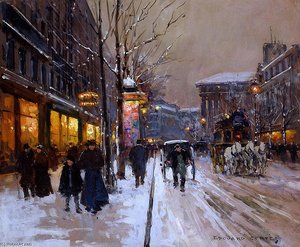
Robert Henri’s "Snow in New York" (1902) captures a gritty NYC street scene with thick impasto and muted tones, reflecting the Ashcan School's realism. Explore urban life through this iconic painting.
Βιογραφικό Καλλιτέχνη
Ο Ρόμπερτ Χένρι (1865-1929) ήταν ένας πρωτοποριακός ζωγράφος της Σχολής του Άσχαν, που απεικόνιζε την καθημερινή ζωή με ειλικρίνεια και αυθεντικότητα. Επηρέασε καλλιτέχνες όπως ο Έντωρντ Χόπερ.
Σχετικά με το έργο
A Winter’s Gaze: Robert Henri's "Snow in New York"
Robert Henri’s “Snow in New York,” painted in 1902, isn’t merely a depiction of a snowy street; it’s a raw, almost brutal, distillation of urban life captured with an unprecedented honesty for its time. Far removed from the idealized landscapes favored by many of his contemporaries, Henri plunges headfirst into the gritty reality of New York City, presenting a scene both familiar and profoundly unsettling. The painting immediately commands attention not through picturesque beauty, but through its stark simplicity and the palpable sense of unease it evokes – a feeling that speaks volumes about the burgeoning anxieties of a rapidly changing America.
Henri’s style firmly places “Snow in New York” within the Ashcan School movement. Rejecting the academic traditions of the National Academy of Design, the Ashcan painters sought to portray everyday life—often the less glamorous aspects—with unflinching realism. This isn't a romanticized view; instead, we encounter a common side street, devoid of grand avenues or iconic landmarks. The composition is deliberately straightforward, utilizing a single-point perspective that draws the eye directly into the scene, emphasizing its immediacy and lack of embellishment. Thick impasto—a technique where paint is applied thickly to create texture—dominates the canvas, lending a tactile quality to the buildings, the snowdrifts, and even the figures traversing the street. The muted palette – browns, grays, and whites – further contributes to the painting’s somber mood, creating an atmosphere of quiet desperation.
The Painter's Perspective: Henri and the Ashcan School
Understanding Robert Henri requires acknowledging his pivotal role in shaping the Ashcan School. Born Robert Henry Cozad in Cincinnati in 1865, Henri’s early life was marked by instability following a fatal shooting involving his father. This event profoundly shaped his artistic vision, leading him to embrace a radical approach to painting—one that prioritized direct observation and honest representation over idealized beauty. Henri's time in Paris exposed him to the Impressionists, but he quickly moved beyond their focus on light and color, seeking instead to capture the essence of American life with unflinching detail. He famously declared that art should be “akin to journalism,” mirroring the straightforwardness and social commentary found in contemporary newspapers.
Henri’s studio became a hub for a group of like-minded artists—including George Luks, Everett Shinn, and William Glackens—collectively known as the "Philadelphia Four." They gathered regularly to discuss art, literature, and philosophy, fostering a spirit of experimentation and challenging established artistic conventions. This collaborative environment fueled their shared desire to depict the realities of urban America, often focusing on marginalized communities and the struggles faced by ordinary people.
Symbolism in the Streetscape
While seemingly simple, “Snow in New York” is rich with symbolic meaning. The absence of grand buildings or recognizable landmarks suggests a sense of anonymity and isolation within the vastness of the city. The figures walking along the street—carrying handbags, bundled in coats—represent the everyday lives of New Yorkers, their faces obscured by the gloom, lost in their own thoughts. The snow itself acts as a metaphor for both hardship and resilience – covering the streets but also creating a temporary sense of stillness. The presence of a wagon suggests commerce and the relentless cycle of urban activity, highlighting the constant struggle for survival.
Notably, Henri’s choice to depict a common street rather than a major avenue is significant. It reflects his deliberate rejection of romanticized views of New York and his focus on the overlooked corners of the city—the places where life unfolded with quiet intensity. The painting isn't about spectacle; it’s about capturing the essence of an ordinary day in an extraordinary place.
A Legacy of Realism
“Snow in New York” remains a powerful testament to Robert Henri’s artistic vision and his pioneering role in American art. It stands as a crucial example of the Ashcan School, demonstrating a commitment to realism, social commentary, and an honest portrayal of urban life. Reproductions of this evocative painting continue to resonate with viewers today, offering a glimpse into the heart of early 20th-century New York—a city grappling with rapid change, industrialization, and the challenges of modernity. Its enduring appeal lies in its ability to capture not just a scene, but also the complex emotions and experiences of those who lived within it.
Ερωτήσεις και Απαντήσεις
Τι συναίσθημα αποπνέει το "Snow in New York" του Ρόμπερτ Χένρι;
Το συναισθηματικό ύφος που καταγράφεται για το "Snow in New York" του Ρόμπερτ Χένρι είναι Melancholic. Περιγράφει με συνοπτικό τρόπο το συναίσθημα που εκφράζει το έργο.
Με ποιο υλικό έχει εκτελεστεί το έργο "Snow in New York" του Ρόμπερτ Χένρι;
Η τεχνική του έργου "Snow in New York" του Ρόμπερτ Χένρι είναι το Acrylic On Canvas. Οι αναπαραγωγές στοχεύουν στην πιστή απόδοση της εμφάνισης αυτής της τεχνικής.
Από ποια χώρα προέρχεται το έργο του Ashcan School "Snow in New York";
Το έργο του ή της Ashcan School "Snow in New York" δημιουργήθηκε από καλλιτέχνη που γεννήθηκε στην/στο Ηνωμένες Πολιτείες Αμερικής.
Γρήγορα στοιχεία και κвиζ τέχνης
Σχετικά με τον Ρόμπερτ Χένρι

Ρόμπερτ Χένρι
1865 - 1929, Ηνωμένες Πολιτείες Αμερικής
Βιογραφικό Καλλιτέχνη
A Turbulent Genesis: The Early Life of Robert Henri
Robert Henri, γεννημένος Robert Henry Cozad στην Σκίντσερς Στέιτιον (μεταγενέστερα ονομάστηκε Cozaddale), στην Οχάιο το 1865, κουβαλούσε από την αρχή μια αίσθηση αποσύνδεσης και αναγέννησης που θα διαμόρφωνε βαθιά τόσο τη ζωή όσο και τη τέχνη του. Η παιδική του ηλικία δεν ήταν ιδιόρρυθμη· σκιναζόταν από τη μεταβλητή σχέση μεταξύ του πατέρα του, John Jackson Cozad – ενός ανθρώπου με φιλοδοξίες και ρίσκα ως τζοker και εκτιμητή ακινήτων – και της μητέρας του, Theresa Gatewood Cozad. Αυτή η αστάθεια οδήγησε σε ένα δραματικό γεγονός το 1882: μια δολοφονία κατά τη διάρκεια μιας διαφωνίας για γη που αναγκάστηκε την οικογένεια να φύγει, υιοθετώντας νέες ταυτότητες για να ξεφύγουν από την εκδίκηση. Ο νεαρός Robert έγινε Robert Henri, μια συνειδητή απομάκρυνση από ένα παρελθόν γεμάτο σύγκρουση και ένα συμβολικό rebirth ως καλλιτέχνης. Το ταξίδι προς τα δυτικά μέσω του Νέου Μπράουνσγουικ και του Κολοράντο, καταλήγοντας σε εγκατάσταση στη Νέα Υόρκη και στη συνέχεια στην Ατλάντικ Σίτι, εμφυσά μια βαθιά ενσυναίσθηση για όσους ζούσαν στις άκρες της κοινωνίας – μια ενσυναίσθηση που θα γινόταν ένα καθοριστικό χαρακτηριστικό του καλλιτεχνικού του οράματος. Αυτή η πρώιμη εμπειρία αναταραχής και αναγέννησης προώθησε μια αίσθηση ανεξαρτησίας και δέσμευση για την απεικόνιση της ζωής όπως πραγματικά ήταν, χωρίς να είναι δεσμευμένη από τις συμβάσεις ή τις κοινωνικές προσδοκίες.Forging a New Vision: Artistic Development and Influences
Η καλλιτεχνική του εκπαίδευση ξεκίνησε στην Πενσιβανιακή Ακαδημία Τέχνης στο Φιλαδέλφεια υπό τον Thomas Anshutz, όπου τελειοποίησε τις τεχνικές του δεξιότητες. Ωστόσο, το επόμενο ταξίδι του προς την Παρίσι το 1888 πυροτόπισε πραγματικά το καλλιτεχνικό του ξύπνημα. Αρχικά προσελκυσμένος από την ακαδημική παράδοση στην Académie Julian και επηρεασμένος από μάστερς όπως οι William-Adolphe Bouguereau και François Millet, ο Henri σταδιακά έλκηθρος προς τον Ιμπρεσιονισμό. Ωστόσο, δεν ήταν ικανοποιημένος απλά με την αναπαραγωγή αυτού που είδε· αναζητούσε μια βαθύτερη αφοσίωση στην πραγματικότητα – έναν τρόπο να αποτυπώσει όχι μόνο τις παροδικές επιδράσεις του φωτός αλλά και την άγρια συναισθηματική και ζωτική δύναμη της σύγχρονης ζωής. Αυτή η αναζήτηση οδήγησε τον Henri να αγκαλιάσει μια πιο τολμηρή, πιο άμεση προσέγγιση, επηρεασμένος από τον Ολλανδικό Ρεαλιστή Franz Hals, η οποία αντικατοπτρίζεται βαθιά στις δικές του καλλιτεχνικές τάσεις. Έκανε πειραματισμούς με *pochades*, μικρά ξύλινα πάνελ που χρησιμοποιούνται για γρήγορες σκίτσα, ενθαρρύνοντας την αυθόρμητη και άμεση εργασία του. Επιστρέφοντας στην Αμερική, έγινε αφοσιωμένος δάσκαλος, μεταδίδοντας όχι μόνο τεχνική αλλά και φιλοσοφία τέχνης ριζωμένη στην παρατήρηση, την ειλικρίνεια και την καλλιτεχνική έκφραση.Championing the Real: The Ashcan School and “The Eight”
Η επιρροή του Robert Henri στην αμερικανική τέχνη δεν περιορίστηκε στα δικά του έργα· έγινε κινητήριος δύναμη για την αλλαγή, προκαλώντας τις συντηρητικές νόρμες του εδραιωμένου καλλιτεχνικού κόσμου. Ήταν μια βασική φιγούρα στην άνοδο της Ashcan School – μιας ομάδας καλλιτεχνών που τολμούσαν να απεικονίσουν τις σκληρές πραγματικότητες της αστικής ζωής, από πολυσύχναστες πόλεις μέχρι γεμάτους ανθρώπους συγκροτήματα. Η δέσμευση του Henri για ρεαλισμό και η άρνησή του για ακαδημαϊκές προτάσεις οδήγησαν τον ίδιο να οργανώσει “The Eight” το 1908 – μια συλλογικότητα καλλιτεχνών που μοιράζονταν τις ιδέες του, πραγματοποιώντας μια ανεξάρτητη έκθεση ως άμεση αντίδραση στις περιοριστικές πολιτικές της Εθνικής Ακαδημίας Τέχνης. Αυτή η πράξη της καταστροφής ήταν ένα ορόσημο στην αμερικανική τέχνη, σηματοδοτώντας μια μετατόπιση μακριά από την ευρωπαϊκή κυριαρχία και προς μια μοναδικά αμερικανικό καλλιτεχνικό φωνή. Τα έργα του Henri κατά τη διάρκεια αυτής της περιόδου, όπως το “Woman in Manteau” (1899) και οι ζωηροί πορτρέτες του, απεικονίζουν την αξιοπρέπεια και την ανθεκτικότητα των απλών ανθρώπων, προσφέροντας μια ισχυρή αντίθεση στις ιδανικές αναπαραστάσεις που προτιμούσαν οι εδραιωμένοι.Legacy and Enduring Influence
Η κληρονομιά του Robert Henri είναι αδιαμφισβήτητη και συνεχίζει να εμπνέει καλλιτέχνες μέχρι σήμερα. Ως δάσκαλος, καθοδήγησε μια αξιοσημείωτη ομάδα ταλέντων, συμπεριλαμβανομένων των Joseph Stella, Edward Hopper, Rockwell Kent, George Bellows και Norman Raeben – καλλιτεχνών που θα διαμόρφωσαν την πορεία της τέχνης του 20ου αιώνα. Το βιβλίο του, *The Art Spirit*, δημοσιευμένο post mortem το 1923, παραμένει ένα θεμελιώδες κείμενο για τους φιλοδοξούς καλλιτέχνες, προσφέροντας διαχρονικές συμβουλές σχετικά με την παρατήρηση, την τεχνική και τη σημασία της καλλιτεχνικής ακεραιότητας. Η δέσμευσή του στην απεικόνιση της ζωής με ειλικρίνεια και ενσυναίσθηση, η άρνησή του για συμβάσεις και η ακλόνητη πίστη στη δύναμη της τέχνης να συνδέεται με το κοινό, οι πειραματισμοί του με την τεχνική και η αφοσίωσή του στην απεικόνιση της καθημερινής ζωής έχουν διαρκή επιρροή. Τα έργα του δεν είναι απλώς αναπαραστάσεις της πραγματικότητας· είναι παράθυρα στην ανθρώπινη κατάσταση – μαρτυρίες για την ομορφιά, τις μάχες και την ανθεκτικότητα της ανθρώπινης ψυχής.Γρήγορα στοιχεία για τον/την Ρόμπερτ Χένρι
- Artistic Movement Or Style: Ashcan School, Ρεαλισμός
- Artists Or Movements Influenced By This Artist:
- Edward Hopper
- The Eight
- Artists Who Influenced This Artist:
- William Bouguereau
- Franz Hals
- Date Of Birth: 24 Ιουνίου 1865
- Date Of Death: 12 Ιουλίου 1929
- Full Name: Robert Henry Cozad
- Nationality: Αμερικανός
- Notable Artworks:
- Θηλυκό στο Μαντήλι
- La Neige (The Snow)
- Sissy in Yellow
- Place Of Birth: Σινσινάτι, ΗΠΑ
Σχετικά Έργα Τέχνης




Εξερευνήστε έργα τέχνης ταξινομημένα ανά θέμα, στυλ και χαρακτηριστικά.


Ρόμπερτ Χένρι
Snow in New York
() ·
Συμπεριλαμβανομένου του πλαισίου: · Χειροποίητο με λάδια σε λινό
Σύνολο