


 Προεπισκόπηση
 Αποστολή
 Κοινοποίηση
 Λεπτομέρειες
 Οδηγός

 Λήψη
Λήψη
 Παρόμοια αντικείμενα συλλογής
 Ακτινογραφία
 Παρουσίαση
 Στατιστικά
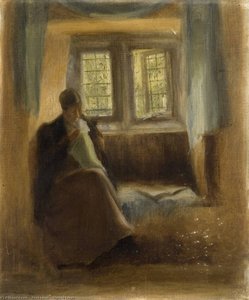
Matilda Lucas
 Impressionism
 31.0 x 26.0 cm
Oil painting by Rosa Lucas depicting an elderly woman’s quiet contemplation. Impressionistic style, soft light & evocative mood. Explore this serene domestic scene.
Rosa Lucas: German Renaissance painter & printmaker. Court artist to Saxony, known for portraits & Reformation art. Explore her legacy at the National Academy of San Luca.
 Περισσότερα λεπτομέρεια
Το έργο τέχνης που εμφανίζεται σε αυτή τη σελίδα προστατεύεται από τους νόμους περί πνευματικών δικαιωμάτων, γεγονός που σημαίνει ότι δεν μπορούμε νομικά να δημιουργήσουμε ή να πουλήσουμε μια ταυτόσημη αναπαραγωγή του. Αυτή η προστασία επιβάλλεται βάσει διεθνών συμφωνιών, όπως η Σύμβαση της Βέρνης καθώς και από τους εθνικούς νόμους, συμπεριλαμβανομένων αυτών που ορίζονται από το Νομοθεσία περί πνευματικών δικαιωμάτων των ΗΠΑ - Τίτλος 17. Όλα τα δικαιώματα κατοχυρωμένα. Απαγορεύεται η αναπαραγωγή χωρίς άδεια.
Ως μια σεβαστή και νόμιμη εναλλακτική, προσφέρουμε προσαρμοσμένα, χειροποίητα έργα τέχνης εμπνευσμένα από το πρωτότυπο. Οι έμπειροι και επαγγελματίες καλλιτέχνες μας μελετούν προσεκτικά το στυλ, τη διάθεση και την καλλιτεχνική ουσία του πρωτοτύπου, ώστε να δημιουργήσουν ένα νέο, μοναδικό έργο που προκαλεί την ίδια αίσθηση — παραμένοντας όμως μια πρωτότυπη δημιουργία από μόνη της.
Αυτή η μέθοδος συμμορφώνεται πλήρως με τους κανονισμούς περί πνευματικών δικαιωμάτων, καθώς δεν περιλαμβάνει την αντιγραφή ή την αναπαραγωγή του προστατευόμενου έργου. Αντίθετα, πρόκειται για μια δημιουργική ερμηνεία — ένα νέο έργο που επηρεάζεται από το πρωτότυπο, χωρίς όμως να είναι πανομοιότυπο με αυτό.
Χειροποίητη Αναπαραγωγή σε Έλαιο
Χειροποίητη ελαιογραφία σε καμβά στο δικό σας μέγεθος και πλαίσιο, κατά παραγγελία από τους καλλιτέχνες μας. ( Μετάβαση σε Εκτυπώσεις Μετάβαση σε Ψηφιακή Εικόνα)




































Πρότυπο
κατόπιν παραγγελίας
CM
INCH
Επιλέξτε από τις προκαθορισμένες διαστάσεις μας που διατηρούν τις αρχικές αναλογίες του έργου τέχνης.
Loading sizes...

πλάτος
ύψος
Πληκτρολογήστε το πλάτος και το ύψος που επιθυμείτε, ώστε να ταιριάζουν στο κάδሮ ή στον τοίχο σας. Ε เนื่องจาก πρόκειται για χειροποίητη ζωγραφική, σε περίπτωση διαστάσεων με διαφορετικό σχήμα, ο καλλιτέχνης μπορεί να ζωγραφίσει λίγο παραπάνω γύρω από το έργο ή να αφαιρέσει ένα μέρος — η επιλογή είναι δική σας. Σας στέλνουμε ένα ψηφιακό mockup για έγκριση πριν ξεκινήσει η δημιουργία του έργου. Η εικόνα που εμφανίζεται σε αυτή τη σελίδα δεν δείχνει το τελικό αποτέλεσμα — μόνο το mockup το αναδεικνύει.
Παραδείγματα αλλαγών: Αντικατάσταση προσώπου με φωτογραφία του πελάτη· Προσθήκη κατοικίδιου (π.χ., αντικατάσταση γάτας με σκύλο)· Ενσωμάτωση κρυφού μηνύματος στο φόντο· Αλλαγή τοπίου ή στοιχείων του φόντου.
Μετά την παραγγελία, η ομάδα του TopImpressionists.com θα στείλει email στον πελάτη με οδηγίες και θα παρέχει μια προεπισκόπηση προσχεδίου
Μετά την παραγγελία, η ομάδα του TopImpressionists.com θα στείλει email στον πελάτη με οδηγίες και θα παρέχει μια προεπισκόπηση προσχεδίου
Παγκόσμια Αποστολή () σε 3-4 εβδομάδες αντί για τις συνήθεις 5 εβδομάδες. (24 Οκτώβριος). Χωρίς συμβιβασμούς στην ποιότητα.

Δωρεάν γρήγορη διεθνής αποστολή

Κάμβας από Λινό Υψηλής Ποιότητας

Πλήρης ασφάλιση μεταφοράς

Εγγύηση επιστροφής δασμών και φόρων εισαγωγής

Εγγύηση Απόλυτης Ομοιότητας Χρωμάτων

Πολιτική Επιστροφής 100 Ημερών (Μόνο σε περίπτωση ελαττωμάτων)

Εγγύηση επιστροφής 100% των χρημάτων

Έκπτωση για πολλαπλές παραγγελίες
 Η επιλογή με γυαλί είναι διαθέσιμη μόνο για μεγέθη κάτω από 110 εκ.

Matilda Lucas
Τεχνική Αναπαραγωγής
Διαστάσεις Αναπαραγωγής
-


Συνολικό Κόστος
€ 236
Παρόμοια Έργα Τέχνης


Βιογραφικό Καλλιτέχνη
Rosa Lucas: A Renaissance of Light and Emotion
Rosa Lucas, a name perhaps less heralded than some of her contemporaries within the grand halls of 16th-century art, nevertheless carved out a significant and deeply personal space for herself as a painter and printmaker. Born in Germany during a period of immense artistic ferment – the tail end of the Northern Renaissance and the burgeoning influence of Italian Mannerism – Lucas’s work offers a unique blend of meticulous technique and intensely felt emotion. Her legacy isn't one of monumental commissions or courtly grandeur, but rather a quiet testament to her ability to capture fleeting moments of beauty, domestic tranquility, and profound human connection.
Lucas’s early life remains somewhat shrouded in the mists of historical record, though it is generally accepted that she received a solid artistic education within the workshops of prominent artists in Saxony. This training instilled in her a rigorous understanding of perspective, anatomy, and color theory – hallmarks of the Renaissance tradition. However, unlike many of her peers who diligently replicated established styles, Lucas quickly developed a distinctive approach, prioritizing emotional resonance over strict adherence to convention. Her subjects often centered on intimate scenes: portraits of women engaged in quiet contemplation, glimpses into domestic interiors bathed in soft light, and evocative depictions of everyday life.
The Court Artist of Saxony
Lucas’s career truly flourished during her tenure as a court artist for the Electorate of Saxony. This appointment, a considerable achievement for a woman in that era, afforded her access to influential patrons – including members of the ruling family and prominent nobility. Her commissions primarily consisted of portraiture, but these were not merely formal representations; they aimed to capture the inner lives and personalities of her subjects. She skillfully employed subtle gestures, expressive glances, and carefully chosen attire to convey a sense of character and mood. Her portraits frequently featured women – often members of the court or their families – rendered with remarkable sensitivity and psychological depth.
Beyond portraiture, Lucas also produced a substantial body of work in the medium of woodcut printmaking. These prints, characterized by their crisp lines and vibrant colors, served as both independent artworks and illustrations for devotional texts and illuminated manuscripts. Her prints frequently depicted religious scenes, but always with an emphasis on human emotion and experience rather than purely theological dogma. The influence of German Expressionism, a movement that would not emerge until centuries later, is subtly present in her use of color and the heightened emotional intensity of her compositions.
Technique and Style
Lucas’s artistic style can be described as a harmonious blend of Northern Renaissance realism and Italianate elegance. She possessed a remarkable command of oil paint, utilizing layering techniques to create rich textures and luminous effects. Her use of light is particularly noteworthy – she masterfully employed chiaroscuro (the contrast between light and dark) to sculpt forms, define volumes, and evoke a sense of atmosphere. Her compositions are typically balanced and harmonious, but never static; there’s always a feeling of movement or anticipation.
In her woodcuts, Lucas demonstrated an exceptional ability to render intricate detail with minimal lines. She skillfully manipulated the grain of the wood to create subtle tonal variations and achieve a remarkable sense of depth. Her prints are not simply reproductions of images; they are carefully crafted works of art in their own right.
Legacy and Influence
Despite her considerable talent, Rosa Lucas’s work has often been overshadowed by that of her male contemporaries. However, recent scholarship is beginning to recognize the unique contributions she made to the artistic landscape of 16th-century Germany. Her paintings and prints offer a valuable glimpse into the lives and experiences of women during this period – a perspective that is often missing from traditional art historical narratives.
Her work continues to be exhibited in museums across Europe, and her paintings are highly sought after by collectors. Rosa Lucas’s legacy lies not only in her artistic achievements but also in her quiet determination to forge a path for herself as an artist in a world dominated by men. She stands as a testament to the enduring power of individual creativity and the importance of recognizing the contributions of all artists, regardless of gender or social status.
Notable Works
- Dining Room at Stanegarth, Cumbria: A captivating impressionistic oil painting capturing a cozy, atmospheric interior.
- Hitchin Market: An evocative watercolor depicting a bustling European market scene.
- Matilda Lucas: Oil painting by Rosa Lucas depicting an elderly woman’s quiet contemplation.
Further Exploration
For more information about Rosa Lucas, we recommend visiting the National Academy of San Luca in Rome, where her work is prominently displayed. The museum's collection offers a comprehensive overview of her artistic career and provides valuable context for understanding her place within the broader history of art.
Στοιχεία καλλιτέχνη
- Artistic Movement Or Style: Renaissance Painting
- Artists Or Movements Influenced By This Artist: ['Italian Renaissance']
- Artists Who Influenced This Artist: ['Lucas Cranach Elder']
- Full Name: Rosa Lucas
- Nationality: German
- Notable Artworks:
- Dining Room at Stanegarth
- Hitchin Market
- Matilda Lucas
- Place Of Birth: WahooArt
Σχετικά άρθρα

Painting with Light: How Impressionist Masterpieces Transform Your Home's Mood
Discover how Impressionist masterpieces transform your home's mood. Explore the luminous beauty of Monet and Renoir through our exquisite, hand-painted oil reproductions designed to bring light, warmth, and timeless elegance to your living space.

The Timeless Charm of Oil on Board: Reimagining Texture and Light through the Impressionist Lens
Discover the profound intimacy of oil on panel. Explore how Impressionist masters used rigid supports to capture light, texture, and impasto depth through exquisite, handmade oil reproductions for discerning collectors.

The Soul of Impressionism: Why Oil on Canvas Captures Eternal Light and Timeless Emotion
Discover the enchanting alchemy of Impressionism. Explore how the mastery of oil on canvas, through glazing and impasto, captures eternal light and emotion. Perfect for lovers of Monet and Van Gogh seeking the profound depth of hand-painted fine art.

The Timeless Beauty of Oil on Panel: Capturing Light and Texture through the Impressionist Lens
Discover the exquisite depth of oil on panel. Explore how Impressionist masters captured light and texture through tactile brushwork, and learn how to bring these museum-quality, hand-painted masterpieces into your home with expert curation.

From Fleeting Moments to Eternal Masterpieces: Transform Your Memories into Bespoke Impressionist Oil Paintings
Elevate your cherished memories with TopImpressionists.com. We transform your photos into exquisite, hand-painted Impressionist oil masterpieces. Experience the timeless texture of real brushstrokes and professional artistry to create a lasting legacy for your home.