


 Preview
 Send
Send Share
Share
 Details
 Guide
Guide

 Download
 Similars
 X-Ray
X-Ray Diaporama
 Stats
StatsThree sailing boats
 Oil On Canvas
- WallArt
- Bengal School of Art
 19th Century
 17.0 x 12.0 cm
 Victoria Memorial Hall
Capture the serene maritime beauty of three sailing boats in this evocative piece by Abanindranath Tagore; discover timeless Indian artistry for your collection.
 Read More
Discover Abanindranath Tagore (1871-1951), pioneer of modern Indian art & founder of the Bengal School! Explore his Mughal, Rajput & Orientalist paintings reflecting Swadeshi values and lyrical beauty.
Hand Made Oil Reproduction
Hand-painted oil on canvas in your size and frame, made to order by our artists. ( Switch to Print Switch to Digital Image)




P118B $10

P118H $10

P118W $10

P438Z $10

P508JH $12

P508YH $12

P805H $10

P805Z $10

P919BZ $10

P919G $10

P919XJ $10

P959ZH $10

P968JZ $12

W106C $8

W218G $10

W218JH $8

W218Y $10

W307PJ $10

W316G $10

W316PJ $8

W316Y $10

W398PJ $8

W4111J $10

W500HY $15

W500JH $15

W692G $12

W849H $8

W940BG $15

W953PJ $8




Standard
custom
CM
INCH
Pick from our preset sizes that match the artwork's original proportions.
Loading sizes...

width
height
Type the width and the height you need, to fit your frame or your wall. This is hand-painted, so for a size with a different shape the artist can paint a bit more around the picture, or cut a bit — you choose. We send you a digital mockup to approve before the painting starts. The picture shown on this page does not show the real result — only the mockup does.
Examples of what can be changed: Replace face with customer photo; Add pet (e.g., replace cat with dog); Include hidden message in background; Change background landscape or elements.
After order, TopImpressionists.com team will email client for instructions and provide a mockup preview
After order, TopImpressionists.com team will email client for instructions and provide a mockup preview
Worldwide Delivery () in 3/4 weeks instead of standard 5 weeks. (21 October). No compromise on quality.

Free Worldwide Express Shipping

High-Quality Linen Canvas

Full Shipping Insurance

Customs Tax Refund Guarantee

True Color Matching Guarantee

100-Day Return Policy (Defects Only)

100% Money-Back Guarantee

Bulk Discount Offer
 Glass option is only available in size under 110 CM

Three sailing boats
Reproduction Medium
Reproduction Size
-


Total Price
$ 269
A Serene Voyage on Canvas
Gazing upon this depiction of three sailing boats, one is immediately transported to a time of gentle passage and quiet contemplation. The composition itself sings of the maritime spirit—a timeless dance between human endeavor and the vast, yielding expanse of water. Three distinct vessels anchor the scene: one gracefully positioned on the left, another drawing the eye toward the center, and the third completing the visual journey on the right. Each boat possesses its own unique silhouette, suggesting individual stories whispered across the gentle currents.
The artist, Abanindranath Tagore, masterfully captures not just boats upon water, but an entire mood—a sense of rhythmic movement punctuated by moments of serene stillness. The inclusion of a solitary figure on the right side adds a crucial human element; this observer seems to be absorbing the spectacle, inviting the viewer into a shared moment of quiet appreciation for nature's artistry.
Echoes of Indian Artistic Tradition
To understand this piece is to appreciate the rich currents of early 20th-century Indian art. Abanindranath Tagore was a pivotal figure who navigated the confluence of global artistic movements while fiercely championing indigenous aesthetics. His work, as seen here, subtly rejects purely Western models, instead weaving in influences that speak to Mughal and Rajput traditions. This commitment to Swadeshi values imbues the painting with a deep sense of cultural rootedness, making it more than just a seascape; it is a statement of artistic identity.
While his training exposed him to various techniques, including those influenced by Whistler's aestheticism, the final effect remains deeply personal and evocative. The handling of light across the water suggests an understanding of atmospheric perspective that transcends mere imitation, achieving instead a soulful resonance.
Technique and Visual Harmony
The execution on this canvas, rendered at a manageable size of 17 x 12 cm, allows for an intimate viewing experience. The technique employed must balance the fluidity of water with the solid presence of the boats. One can almost feel the texture of the painted breeze lifting the sails. The artist achieves visual harmony by distributing weight across the three vessels, ensuring that no single element overpowers the collective beauty of the scene. It is a study in balanced composition.
The subtle variations in color—the deep blues of the water contrasting with the warmer tones of the wood and canvas—guide the eye naturally from left to right, mirroring the journey of the boats themselves.
Symbolism of Passage and Observation
Beyond its immediate beauty, this artwork carries potent symbolism. The sailing boats are perennial symbols of life's journeys—the passage through time, the voyage toward an unknown horizon. They suggest movement, change, and the necessary trust in currents unseen. Meanwhile, the observer on the shore represents introspection; it is a reminder to pause amidst the rush of modern life and simply watch the world drift by.
For collectors and designers alike, this piece offers an emotional anchor. It speaks to longing, peace, and the enduring beauty found in natural rhythms. Reproducing such a work allows one to bring a pocket-sized vista of tranquility into any room, transforming a space into a quiet harbor.
Questions & Answers
What luminance does "Three sailing boats" by Abanindranath Tagore have?
"Three sailing boats" by Abanindranath Tagore has a gentle luminance luminance. Luminance describes how much light the colors appear to reflect.
What shape and dimensions is "Three sailing boats" by Abanindranath Tagore?
"Three sailing boats" by Abanindranath Tagore is a portrait composition measuring 17 x 12 cm in the original.
Where should a reproduction of "Three sailing boats" by Abanindranath Tagore be hung?
With its portrait shape, a reproduction of "Three sailing boats" is suggested for a living room.
Artist Biography
Early Life and Background
- Born: May 7, 1861, Joransanko, Calcutta, British India
- Died: December 5, 1951
- Family: Member of the distinguished Tagore family; nephew of Rabindranath Tagore. His grandfather was Girindranath Tagore, and his father was Gunendranath Tagore.
- Education: Studied at Sanskrit College, Kolkata in the 1880s and later attended Calcutta School of Art.
Artistic Development and Influences
- Early Training: Learned pastels from O. Ghilardi and oil painting from Charles Palmer at Calcutta School of Art.
- Mughal and Rajput Styles: Sought to modernize these styles, rejecting Western art models.
- Swadeshi Values: Incorporated Swadeshi values into his art, promoting Indian traditions.
- Whistler's Aestheticism: Influenced by Whistler’s aesthetic principles.
- Japanese Influence: Later incorporated Chinese and Japanese calligraphic traditions into his style after meeting artists Tikan and Hesida.
Major Works and Artistic Contributions
- Rohini II: A notable work showcasing his artistic skill.
- Passing of Shajahan: Another significant painting reflecting his style.
- Season Flower in a Vase: Demonstrates his mastery of technique and subject matter.
- Arabian Nights Series (1930): Considered one of his finest achievements, using Arabian Nights stories to explore colonial Calcutta.
- Bharat Mata: A significant painting symbolizing Mother India.
- Founder of the Bengal School of Art: Played a pivotal role in shaping modern Indian painting and promoting nationalistic art.
- Indian Society of Oriental Art (1907): Founded this society to promote traditional Indian art forms.
Legacy and Historical Significance
- Pioneer of Modern Indian Painting: Recognized as a key figure in the development of modern Indian art.
- Influence on Subsequent Artists: Mentored notable artists such as Nandalal Bose, Asit Halder, Kshitindranath Majumdar and Jamini Roy.
- Revival of Traditional Art Forms: Advocated for a return to traditional Indian techniques and styles.
- Impact on Bengali Children's Literature: Wrote influential children’s books like Rajkahini, Budo Angla, Nalak, and Khirer Putul.
- National Art Treasures: His works are considered National Art Treasures.

Abanindranath Tagore
1871 - 1951 , India
Quick Facts
- Full Name: Abanindranath Tagore
- Nationality: Indian
- Date Of Birth: 1871
- Date Of Death: 1951
- Place Of Birth: Joransanko, India
- Notable Artworks:
- Rohini II
- Passing of Shajahan
- Season Flower in a Vase
- Artistic Movement Or Style: Bengal School of Art
- Artists Who Influenced This Artist:
- Whistler
- Mughal artists
- Rajput artists
- Artists Or Movements Influenced By This Artist:
- Nandalal Bose
- Kshitindranath Majumdar
- Jamini Roy
Related Articles

Navigating Symbolism & Sentiment: A Comprehensive Exploration of Boats in Art History
Explore the rich history of boats in art! Discover symbolism & style from ancient myths to Impressionist masterpieces. Expert insights for collectors at TopImpressionists.

Boats on Canvas: 10 Masterpieces of Maritime Art for Your Home Decor
Sail away with 10 iconic boat paintings! Explore masterpieces by Monet, Van Gogh & Turner. Discover the stories behind these timeless seascapes and find museum-quality art reproductions for your home decor at TopImpressionists.com.

Raja Ravi Varma: Bridging Tradition & Modernity in 19th-Century Indian Art
Explore the life & art of Raja Ravi Varma, a pioneer who fused European techniques with Indian iconography. Discover his iconic paintings, lasting legacy, and influence on modern Indian art at TopImpressionists.

The Allure of the Horizon: A Comprehensive Exploration of Seascape Art Through History & Emotion
Explore the captivating world of seascape art! Discover its history, key artists & movements – from Dutch Masters to Impressionism. Expert insights for collectors and enthusiasts at TopImpressionists.
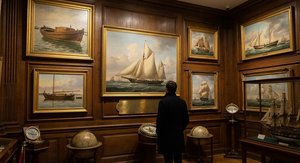
Navigating Symbolism & Style: A Comprehensive Exploration of Boats in Art History
Explore the rich history of boats in art! From ancient symbolism to Impressionist masterpieces & modern visions, discover renowned artists & collecting tips at TopImpressionists.
Explore artworks organized by themes, styles, and characteristics.


