Preview
 Send
Send Share
Share
 Details
 Guide
Guide

 Download
 Similars
 X-Ray
X-Ray Diaporama
 Q&A
Q&A Stats
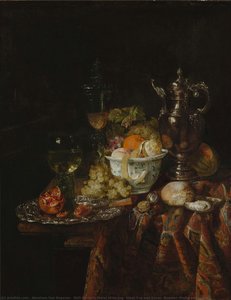
StatsStill-Life

- 126.0 x 106.0 cm


Explore Abraham Hendricksz. van Beyeren's masterpiece – Still-Life (1655). Admire the masterful use of light and color capturing a serene tableau of fruit, vegetables, and decorative vases in Delft.
 Read More
Discover Abraham Hendricksz. van Beyeren, a Dutch still life painter (1620-1690). Admire his masterful flower & fruit compositions in Leiden, Delft & Amsterdam. See works at Mauritshuis!
Giclée / Art Print
Museum-quality giclée or canvas print with fast production and flexible finish options. ( Buy Hand Made Painting Switch to Digital Image)




P118B $10

P118H $10

P118W $10

P438Z $10

P508JH $12

P508YH $12

P805H $10

P805Z $10

P919BZ $10

P919G $10

P919XJ $10

P959ZH $10

P968JZ $12

W106C $8

W218G $10

W218JH $8

W218Y $10

W307PJ $10

W316G $10

W316PJ $8

W316Y $10

W398PJ $8

W4111J $10

W500HY $15

W500JH $15

W692G $12

W849H $8

W940BG $15

W953PJ $8




Standard
custom
CM
INCH
Pick from our preset sizes that match the artwork's original proportions.
Loading sizes...

width
height
Type the width and the height you need, to fit your frame or your wall. A print can only be cut, never made bigger than the picture, so a size with a different shape loses a part of the image. We send you a digital mockup to approve before we print anything. The picture shown on this page does not show the real cut — only the mockup does.
Worldwide Delivery () in 2 weeks instead of standard 4/5 weeks. (7 November)

Free Worldwide Express Shipping

High-Quality Linen Canvas

Full Shipping Insurance

Customs Tax Refund Guarantee

True Color Matching Guarantee

100-Day Return Policy (Defects Only)

100% Money-Back Guarantee

Bulk Discount Offer
 Glass option is only available in size under 110 CM

Still-Life
Giclée / Art Print
Reproduction Size
-


Total Price
$ 70
A Symphony of Light and Color: Exploring Abraham Hendricksz. van Beyeren’s Still Life
The Dutch Golden Age witnessed an unparalleled flourishing of artistic creativity, fueled by economic prosperity and an insatiable intellectual curiosity. Among the luminaries of this era stands Abraham Hendricksz. van Beyeren (1620 – 1690), a painter whose meticulous depictions of fruit, vegetables, and fish continue to captivate audiences centuries later. His masterpiece, “Still Life,” transcends mere representation; it embodies the spirit of its time—a profound appreciation for the natural world intertwined with masterful artistic execution. This work serves as a window into a period where the material abundance of the Netherlands was celebrated through the lens of extreme technical precision and luminous beauty.
The painting presents a breathtaking tableau, a tabletop adorned with an abundant assortment of nature's finest offerings. Apples, oranges, and bananas are arranged in a harmonious dance across the surface, accompanied by the delicate clusters of grapes that add a touch of organic elegance to the scene. The composition is thoughtfully balanced, featuring various bowls that suggest a bountiful feast, while a decorative vase on the left introduces a structural grace to the arrangement. For the discerning collector or interior designer, this piece offers more than just visual interest; it provides a sense of opulence and permanence, making it an ideal centerpiece for spaces that value classical sophistication and the quiet grandeur of the Baroque tradition.
The Master’s Touch: Technique and the Legacy of Light
Van Beyeren’s artistic journey was profoundly shaped by his connection to the masters of Delft, with many accounts suggesting the influence of Johannes Vermeer. This lineage is unmistakably evident in his sophisticated command of light—a quality that allows him to transform simple objects into luminous protagonists. He embraced the philosophy that "light is the soul of painting," striving to capture the subtle interplay between sunlight and shadow to create a sense of palpable presence. His technique involved a meticulous layering process known as glazing, where thin washes of translucent color are applied over opaque pigments. This method allowed him to build up tonal gradations with astonishing subtlety, creating an illusion of depth and texture that makes the skin of an orange or the dew on a grape feel almost touchable.
Beyond the technical brilliance, there is a deep emotional resonance within the work. As his career matured, van Beyeren moved away from the dramatic, theatrical intensity of early Baroque chiaroscuro toward a more serene and contemplative aesthetic. This evolution is captured perfectly in this piece, where the palette is soft and luminous, celebrating the quiet beauty of the natural world. The painting does not merely show food; it invites the viewer into a moment of stillness, encouraging a meditative appreciation for the fleeting beauty of life. For those seeking to infuse their homes with an atmosphere of tranquility and refined taste, this reproduction offers a timeless connection to the mastery of the seventeenth-century Dutch masters.
Questions & Answers
From which era does "Still-Life" date?
"Still-Life" by Abraham Hendricksz. Van Beyeren dates from the Early-Modern period. The period gives the historical context of the work.
What are the author and date of "Still-Life"?
Abraham Hendricksz. Van Beyeren made "Still-Life" in 1655.
What is the recommended print size for "Still-Life" by Abraham Hendricksz. Van Beyeren?
A large reproduction is suggested for "Still-Life" by Abraham Hendricksz. Van Beyeren. Size can be adjusted while keeping the proportions.
Artist Biography
The Master of the Dutch Golden Age Still Life
In the vibrant, prosperous landscape of the seventeenth-century Netherlands, few artists captured the sensory richness of existence as profoundly as Abraham Hendricksz. van Beyeren. Born in The Hague around 1620, van Beyeren emerged during a period of unparalleled artistic flourishing known as the Dutch Golden Age. His life and work were deeply intertwined with the intellectual and commercial pulse of cities like Leiden, Delft, and Amsterdam, where he established himself as a premier chronicler of the material world. While much of his early biography remains shrouded in the soft shadows of history, his artistic lineage suggests a connection to the masters of his era, with some accounts even attributing his foundational training to the legendary Johannes Vermeer. This influence is evident in his sophisticated command of light, a quality that allowed him to transform simple objects into luminous protagonists within his compositions.
The evolution of van Beyron's style serves as a visual chronicle of the shifting aesthetic tides in Dutch art. His early period was characterized by a dramatic, almost theatrical intensity, heavily influenced by the chiaroscuro techniques popularized by Caravaggio. During these formative years, his canvases were defined by deep, moody shadows and sharp, piercing highlights that lent a sense of gravity and emotional weight to his subjects. However, as his career matured, van Beyeren underwent a remarkable stylistic metamorphosis. He gradually moved away from the heavy Baroque tension toward a more serene and luminous palette. His later works embraced softer hues and delicate, precise brushstrokes, reflecting a broader cultural transition from the dramatic grandeur of the early century toward a more contemplative, tranquil aesthetic that celebrated the quiet beauty of the natural world.
Symbolism and the Art of the Banquet
Van Beyeren’s oeuvre is most celebrated for its mastery of the still life, particularly his ability to render textures that seem almost tactile to the viewer. He was a virtuoso of the "banquet" tradition, creating opulent scenes that were far more than mere displays of wealth. Through his meticulous depiction of overflowing platters of fruit, glistening lobsters, and fine glassware, he engaged in a complex dialogue with symbolism. A single piece of ripening fruit or a beautifully crafted timepiece could serve as a memento mori—a poignant reminder of the fleeting nature of life and the inevitability of decay. This tension between the exuberant abundance of the feast and the underlying theme of transience gave his work a profound intellectual depth that resonated with the humanist values of his time.
His technical achievements are perhaps best exemplified in his diverse range of subjects, which included:
- Floral Compositions: Exquisite arrangements where each petal and leaf was rendered with scientific precision, capturing the ephemeral beauty of blooms.
- Maritime and Aquatic Life: Masterful depictions of fish and crustaceans, such as his famous Large Still life with Lobster, which showcased his ability to capture moisture and light reflecting off organic surfaces.
- Luxury Goods: The inclusion of precious metals, fine ceramics, and intricate glassware, demonstrating a profound understanding of how different materials interact with light.
Legacy and Historical Significance
The historical significance of Abraham Hendricksz. van Beyeren lies in his ability to elevate the still life genre from mere decorative craft to a high art form capable of expressing complex philosophical truths. His works continue to reside in some of the world's most prestigious institutions, including the Mauritshuis in The Hague, the Louvre in Paris, and the Metropolitan Museum of Art in New York. By bridging the gap between the dramatic intensity of the early Baroque and the refined elegance of later Dutch traditions, he left an indelible mark on the trajectory of European painting. Today, his canvases remain much more than historical artifacts; they are enduring windows into a lost era of splendor, inviting every generation to pause and admire the quiet, magnificent details of the world around them.

Abraham Hendricksz. Van Beyeren
1620 - 1690 , Netherlands
Quick Facts
- Full Name: Abraham Hendricksz. van Beyeren
- Nationality: Dutch
- Date Of Birth: 1620
- Date Of Death: 1690
- Place Of Birth: The Hague, Netherlands
- Notable Artworks:
- Still Life with a Lobster, Fruit, Silver and China Ware
- A blue and white porcelain bowl with fruit
- A chinese porcelain jug, grapes and a peach on a pewter plate with a fobwatch on a draped ledge
- Artistic Movement Or Style: Still Life
- Artists Or Movements Influenced By This Artist: ['Dutch Golden Age']
Related Articles

Mastering Light & Shadow: A Journey Through the Dutch Golden Age's Luminous Legacy
Embark on a cultural journey through the Dutch Golden Age. Explore the masterful interplay of light and shadow in 17th-century masterpieces, from Rembrandt to Vermeer, and discover how this era of profound realism continues to inspire fine art collectors today.

Golden Light & Dutch Skies: The Timeless Magic of Dutch Golden Age Landscapes
Discover the breathtaking beauty of Dutch Golden Age landscapes. Explore the mastery of light, chiaroscuro, and 17th-century realism through an expert art history lens, celebrating the enduring legacy of the Dutch Masters for discerning collectors and art lovers.
Explore artworks organized by themes, styles, and characteristics.