


 Preview
 Send
Send Share
Share
 Details
 Guide
Guide

 Download
 Similars
 X-Ray
X-Ray Diaporama
 Stats
StatsIl Contento
 Oil On Copper
- Baroque
 1607
1607 30.0 x 42.0 cm
 National Gallery of Scotland
Discover "Il Contento" by Adam Elsheimer! This captivating Baroque painting depicts the biblical Flight into Egypt with stunning nocturnal detail & influences, showcasing a master's innovative artistry.
 Read More
Adam Elsheimer (1578-1610): German Baroque master of small-scale cabinet paintings & innovative landscapes. Influenced Rembrandt, Rubens & pioneered nocturnal scenes! Explore his art.
Giclée / Art Print
Museum-quality giclée or canvas print with fast production and flexible finish options. ( Buy Hand Made Painting Switch to Digital Image)




P118B $10

P118H $10

P118W $10

P438Z $10

P508JH $12

P508YH $12

P805H $10

P805Z $10

P919BZ $10

P919G $10

P919XJ $10

P959ZH $10

P968JZ $12

W106C $8

W218G $10

W218JH $8

W218Y $10

W307PJ $10

W316G $10

W316PJ $8

W316Y $10

W398PJ $8

W4111J $10

W500HY $15

W500JH $15

W692G $12

W849H $8

W940BG $15

W953PJ $8




Standard
custom
CM
INCH
Pick from our preset sizes that match the artwork's original proportions.
Loading sizes...

width
height
Type the width and the height you need, to fit your frame or your wall. A print can only be cut, never made bigger than the picture, so a size with a different shape loses a part of the image. We send you a digital mockup to approve before we print anything. The picture shown on this page does not show the real cut — only the mockup does.
Worldwide Delivery () in 2 weeks instead of standard 4/5 weeks. (21 October)

Free Worldwide Express Shipping

High-Quality Linen Canvas

Full Shipping Insurance

Customs Tax Refund Guarantee

True Color Matching Guarantee

100-Day Return Policy (Defects Only)

100% Money-Back Guarantee

Bulk Discount Offer
 Glass option is only available in size under 110 CM

Il Contento
Giclée / Art Print
Reproduction Size
-


Total Price
$ 70
A Glimpse of Paradise Lost: Adam Elsheimer’s “Il Contento”
Adam Elsheimer’s “Il Contento,” painted around 1607, isn't merely a depiction of a biblical scene; it’s a profound meditation on human desire, fleeting joy, and the inevitable shadow that follows even the most radiant moments. This small cabinet painting, measuring just 30 x 42 cm, housed within the National Gallery of Scotland, possesses an astonishing depth and luminosity rarely found in works of its scale. It's a testament to Elsheimer’s mastery of light, color, and his innovative approach to rendering nocturnal landscapes – techniques that would profoundly influence generations of artists.
The painting unfolds around the story from Mateo Alemán’s Spanish picaresque novel *Guzmán de Alfarache*, a tale where the god Contento, representing contentment and happiness, was overthrown by his brother Discontento. Elsheimer brilliantly captures this pivotal moment: Jupiter, a towering figure of divine authority, directs Mercury to snatch Contento from the earth, while a captivated crowd – oblivious to their impending loss of bliss – revels in a scene of boisterous celebration. The composition is meticulously balanced, drawing the eye through a carefully orchestrated arrangement of figures and light.
The Alchemy of Copper and Light
Elsheimer’s choice of medium—oil on copper—was crucial to achieving the painting's remarkable effects. Copper, prized for its smooth surface and ability to retain detail, allowed Elsheimer to build up layers of translucent glazes, creating a depth of color and atmospheric perspective that would have been challenging to achieve on canvas. This technique is particularly evident in the depiction of the night sky – a breathtaking expanse rendered with an unprecedented level of realism for the period. Unlike the dark, amorphous backgrounds typical of earlier nocturnal scenes, Elsheimer’s sky is populated with meticulously placed stars and constellations, including Ursa Major and Leo, demonstrating his keen interest in astronomy and scientific observation.
The interplay of light sources – the torch held by Joseph, the flickering flames of the shepherds' fire, and the reflected glow of the moon on the water – creates a dynamic and emotionally charged atmosphere. This masterful manipulation of chiaroscuro—the dramatic contrast between light and dark—heightens the sense of drama and mystery, drawing the viewer into the scene’s intimate narrative.
Symbolism and the Human Condition
Beyond its biblical subject matter, “Il Contento” is rich in symbolic meaning. The joyous revelry of the crowd represents a fleeting moment of happiness, a temporary escape from the realities of life. The impending arrival of Discontento serves as a potent reminder that even the most blissful experiences are ultimately transient. Elsheimer’s decision to portray Contento as a female figure adds another layer of complexity, suggesting that contentment itself is not simply a passive state but an active pursuit – one often threatened by external forces and internal desires.
The painting's enduring appeal lies in its ability to resonate with universal themes: the search for happiness, the inevitability of loss, and the delicate balance between joy and sorrow. “Il Contento” is not just a beautiful artwork; it’s a poignant reflection on the human condition, rendered with exquisite skill and profound insight.
A Legacy of Innovation
Adam Elsheimer's work was highly influential in his time, particularly for artists like Rembrandt and Rubens. His innovative use of light and landscape paved the way for future generations of painters, and his small-scale cabinet paintings helped to establish a new genre within the art world. “Il Contento” stands as a testament to Elsheimer’s genius—a luminous masterpiece that continues to captivate viewers with its beauty, complexity, and enduring emotional power.
Questions & Answers
Is there a slideshow for "Il Contento" by Adam Elsheimer?
A slideshow is available: the Diaporama page of "Il Contento" by Adam Elsheimer.
How strong is the contrast in "Il Contento" by Adam Elsheimer?
"Il Contento" by Adam Elsheimer shows a statement contrast between its light and dark areas.
How harmonious are the colors of "Il Contento" by Adam Elsheimer?
"Il Contento" by Adam Elsheimer displays a softly mixed palette color harmony.
Artist Biography
A Luminous Life Cut Short: The World of Adam Elsheimer
Adam Elsheimer, a name perhaps less instantly recognizable than those of his Baroque contemporaries Rubens or Rembrandt, nonetheless occupies a pivotal position in the history of art. Born in Frankfurt am Main in 1578, his tragically short life – he died at just thirty-two years old in Rome in 1610 – belied an artistic output that resonated deeply with his peers and continues to captivate viewers today. Elsheimer wasn’t a painter of grand scale or prolific production; instead, he specialized in exquisitely detailed cabinet paintings, small works executed primarily on copper plates, which allowed for a level of precision and luminosity rarely seen before. These intimate canvases weren't intended for public display but rather for the private contemplation of connoisseurs – a testament to the burgeoning art market and the growing appreciation for individual artistic expression during the early 17th century. His father, a master tailor, provided a stable upbringing, and young Adam’s early talent was recognized through an apprenticeship with local artist Philipp Uffenbach. This foundational training instilled in him the technical skills that would later blossom under different influences. A likely sojourn to Strasbourg around 1596 exposed him to broader artistic currents, but it was his journey to Italy via Munich in 1598 that truly ignited his creative development.From Venice to Rome: Forging a Unique Artistic Voice
Italy proved transformative for Elsheimer. He spent considerable time in Venice, absorbing the vibrant color palettes and dramatic compositions of masters like Tintoretto and Paolo Veronese. The influence of these Venetian giants is evident in his early works – a boldness of form and a sensuous use of light that would become hallmarks of his style. Around 1600, he settled in Rome, becoming integrated into the bustling artistic community. A crucial period followed as an assistant to Johann Rottenhammer, a German painter specializing in cabinet paintings. This mentorship provided invaluable technical expertise, particularly in the demanding medium of painting on copper. However, Elsheimer didn’t simply mimic his teacher; he began to forge his own unique path, moving away from strict Mannerist conventions towards a more naturalistic approach. His landscapes, in particular, were innovative for their time, seamlessly integrating figures into harmonious natural settings. He cultivated important friendships with Giovanni Faber, a papal doctor and botanist connected to the Accademia dei Lincei – a scientific society dedicated to observation and experimentation – and Paul Bril, a Flemish landscape painter. These connections exposed him to new ideas and fostered an intellectual curiosity that informed his art.Master of Light and Shadow: Defining Elsheimer’s Style
Elsheimer's artistic reputation rests on his mastery of light and shadow – *chiaroscuro* – and his pioneering depictions of nocturnal scenes. He was among the first artists to accurately represent constellations in night skies, a testament to his scientific curiosity and meticulous observation. Paintings like “The Flight into Egypt” are breathtaking examples of this skill, where moonlight illuminates the landscape with an ethereal glow, creating a sense of mystery and wonder. His works frequently depicted mythological and biblical scenes, rendered with a lyrical temperament and painstaking detail. "Tobias and the Angel," "The Burning of Troy," "Apollo and Coronis," and “Ceres and Stellio” are all prime examples of his ability to imbue classical narratives with emotional depth and visual poetry. The small scale of his paintings encouraged intimate viewing, allowing audiences to fully appreciate the intricate details and subtle nuances of his technique. He didn’t merely depict scenes; he created worlds – miniature universes brimming with atmosphere and emotion.A Lasting Legacy: Influence and Rediscovery
Despite his brief career, Adam Elsheimer exerted a considerable influence on subsequent generations of artists. His work was highly regarded by contemporaries, including Peter Paul Rubens, who deeply lamented his early death and praised his exceptional talent. The dissemination of his art was aided by engravings made by Hendrick Goudt, which brought his compositions to a wider European audience. Rembrandt van Rijn, in particular, demonstrably drew inspiration from Elsheimer’s nocturnal scenes and innovative landscapes, incorporating similar effects of light and shadow into his own work. Elsheimer's influence extended beyond the Dutch masters; numerous 17th-century artists across Europe were impacted by his pioneering approach to landscape painting and dramatic lighting techniques. However, after his death, Elsheimer’s reputation waned for centuries. It wasn’t until the 20th century that a renewed appreciation for his work emerged, fueled by scholarly research and a growing recognition of his importance in the development of Baroque art. Today, Adam Elsheimer is celebrated as a visionary artist whose small-scale paintings possess an enduring power to move and inspire. His legacy lies not only in his technical brilliance but also in his ability to capture the beauty and mystery of the world around him with unparalleled sensitivity and grace.A Life Marked by Struggle
Elsheimer’s life, though artistically fruitful, was not without its hardships. He faced persistent financial difficulties throughout his career, leading to periods of debt and even imprisonment. His marriage in 1606 to Carola Antonia Stuarda da Francoforte brought a brief period of happiness, but the tragic death of their son cast a shadow over his later years. Around 1608, he converted to Catholicism, perhaps seeking solace or hoping for greater acceptance within Roman society. Despite these personal struggles, Elsheimer continued to paint with unwavering dedication until his untimely death in Rome in December 1610 at the age of thirty-two. He left behind a relatively small but profoundly influential body of work – a testament to the power of artistic vision and the enduring legacy of a luminous life cut short.
Adam Elsheimer
1578 - 1610 , Germany
Quick Facts
- Full Name: Adam Elsheimer
- Nationality: German
- Date Of Birth: 1578
- Date Of Death: 1610
- Place Of Birth: Frankfurt, Germany
- Notable Artworks:
- Tobias and the Angel
- The Burning of Troy
- Apollo and Coronis
- The Stoning of St. Stephen
- Artistic Movement Or Style: Baroque painting
- Artists Who Influenced This Artist:
- Albrecht Dürer
- Tintoretto
- Paolo Veronese
- Artists Or Movements Influenced By This Artist:
- Rembrandt
- Peter Paul Rubens
Related Articles

Baroque Classicism: The Grandeur of Order and Drama in 17th-Century Art History
Explore the profound elegance of Baroque Classicism. Discover how 17th-century masters synthesized dramatic emotion with classical order through the lens of the Counter-Reformation and the works of legends like Carlo Maratta and Andrea Sacchi.

Baroque Drama: Bringing Opulence & Emotion into Contemporary Interiors
Explore the opulent world of Baroque interior design! Discover key elements, modern applications & how to bring dramatic elegance into your home with TopImpressionists.com's authentic reproductions.

The Visceral Stage: Exploring Dramatic Narratives & Emotional Intensity in Baroque Art
Explore the dramatic world of Baroque art! Discover iconic masters like Caravaggio & Rembrandt, their techniques, and the movement's lasting impact. Expert insights for collectors & enthusiasts at TopImpressionists.

The Dramatic Flourish: Exploring the Baroque Movement's Enduring Legacy in Art History
Explore the dramatic world of Baroque art! Discover iconic artists like Caravaggio & Rubens, defining techniques, and its lasting impact on art history. Expert insights for collectors & enthusiasts at TopImpressionists.
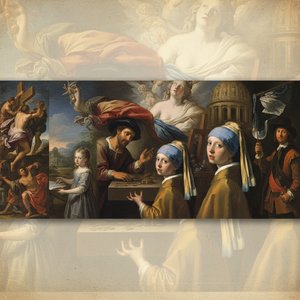
Baroque Masterpieces: 10 Paintings That Defined an Era |
Journey through the drama & grandeur of Baroque art! Explore 10 masterpieces by Caravaggio, Rembrandt, Rubens & more. Discover stunning oil paintings, rich colors & timeless stories. Find museum-quality reproductions at .
Explore artworks organized by themes, styles, and characteristics.


