Preview
 Send
Send Share
Share
 Details
 Guide
Guide

 Download
 Similars
 X-Ray
X-Ray Diaporama
 Stats
StatsMinerva
 Oil On Canvas
- WallArt
- Baroque Realism
 1640
1640- Early Modern
 131.0 x 103.0 cm
 Galleria degli Uffizi
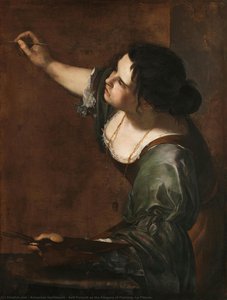
Experience the dramatic Baroque intensity of Artemisia Gentileschi's Minerva, a powerful portrait of wisdom and strength rendered with masterful chiaroscuro, available to bring timeless elegance to your private collection.
 Read More
Artemisia Gentileschi (1593-1656): Italian Baroque painter celebrated for dramatic realism, powerful depictions of women like Judith, & her resilience against adversity. A pioneering artist!
Hand Made Oil Reproduction
Hand-painted oil on canvas in your size and frame, made to order by our artists. ( Switch to Print Switch to Digital Image)




P118B $10

P118H $10

P118W $10

P438Z $10

P508JH $12

P508YH $12

P805H $10

P805Z $10

P919BZ $10

P919G $10

P919XJ $10

P959ZH $10

P968JZ $12

W106C $8

W218G $10

W218JH $8

W218Y $10

W307PJ $10

W316G $10

W316PJ $8

W316Y $10

W398PJ $8

W4111J $10

W500HY $15

W500JH $15

W692G $12

W849H $8

W940BG $15

W953PJ $8




Standard
custom
CM
INCH
Pick from our preset sizes that match the artwork's original proportions.
Loading sizes...

width
height
You may enter your own dimensions to fit a specific frame or space. If your selected size does not match the original image's proportions, we will either crop the artwork or extend the painting with additional hand-painted elements. A digital mockup will be sent for your approval before production begins.
Please note that the on-screen preview does not reflect the actual cropping or extension. Only the mockup will accurately show the final composition.
While custom sizes are available, we recommend selecting a dimension from the predefined list to preserve the original proportions.
Examples of what can be changed: Replace face with customer photo; Add pet (e.g., replace cat with dog); Include hidden message in background; Change background landscape or elements.
After order, TopImpressionists.com team will email client for instructions and provide a mockup preview
After order, TopImpressionists.com team will email client for instructions and provide a mockup preview
Worldwide Delivery () in 3/4 weeks instead of standard 5 weeks. (2 October). No compromise on quality.

Free Worldwide Express Shipping

High-Quality Linen Canvas

Full Shipping Insurance

Customs Tax Refund Guarantee

True Color Matching Guarantee

100-Day Return Policy (Defects Only)

100% Money-Back Guarantee

Bulk Discount Offer
 Glass option is only available in size under 110 CM

Minerva
Reproduction Medium
Reproduction Size
-


Total Price
$ 269
A Vision of Divine Wisdom and Resilience
In the grand tapestry of the Baroque era, few voices resonate with as much profound strength and psychological depth as that of Artemisia Gentileschi. Her masterpiece, Minerva, completed around 1640, is not merely a portrait of a deity but a breathtaking manifestation of courage and intellectual sovereignty. As the viewer encounters this monumental canvas, they are immediately struck by the commanding presence of the Roman goddess of wisdom, justice, and strategic warfare. Positioned against a somber, enveloping darkness, Minerva emerges with an unmistakable aura of composure, her gaze meeting the observer with a piercing clarity that demands respect and contemplation.
The composition is a masterclass in Tenebrism, a dramatic style characterized by intense contrasts between light and shadow. Gentileschi utilizes this technique to sculpt the goddess’s features, lending a tactile, three-dimensional quality to her skin and the heavy folds of her regal purple gown. This interplay of light—the chiaroscuro—does more than just create depth; it serves to illuminate the inner fortitude of the subject. The deep violet hues of her attire evoke a sense of both piety and nobility, while the subtle presence of flanking figures adds a layer of narrative complexity, suggesting a divine retinue that reinforces her authority and the weight of her cosmic responsibilities.
The Artistry of Shadow and Symbolism
To behold Minerva is to witness the meticulous technical prowess of an artist who mastered the language of oil on canvas. Every brushstroke serves a purpose, from the soft, luminous rendering of the goddess's face to the sharp, metallic glint of her attributes. The artist’s ability to capture texture—the sheen of silk, the weight of fabric, and the subtle musculature of a divine being—demonstrates a level of realism that aligns her with the revolutionary spirit of Caravaggio. This technical precision ensures that the painting remains a captivating centerpiece, capable of anchoring a room with its dramatic energy and sophisticated aesthetic.
Beyond its visual splendor, the painting is rich with symbolic resonance. The staff held aloft by Minerva serves as a potent emblem of divine guidance and legitimate power. For the modern collector or interior designer, this work offers more than mere decoration; it provides a focal point of intellectual stimulation. The piece embodies the triumph of wisdom over chaos and the resilience of the spirit against adversity. It is an evocative choice for those seeking to infuse their spaces with a sense of historical gravity, timeless elegance, and a powerful narrative of female agency that continues to inspire awe centuries after its creation.
Questions & Answers
What is the creation date of "Minerva" by Artemisia Gentileschi?
The creation of "Minerva" by Artemisia Gentileschi is dated 1640.
How intense are the colors in "Minerva" by Artemisia Gentileschi?
The colors in "Minerva" by Artemisia Gentileschi have a monochromatic intensity.
What palette and what feeling does "Minerva" combine?
"Minerva" by Artemisia Gentileschi combines an earthy palette with a dramatic tone.
Can "Minerva" by Artemisia Gentileschi, held at the Galleria degli Uffizi, be legally reproduced?
The original "Minerva" is at the Galleria degli Uffizi, and the work is in the public domain - its copyright has expired.
Are there works similar to "Minerva"?
Artworks similar to "Minerva" by Artemisia Gentileschi are gathered on the artwork's Similars page.
What was Artemisia Gentileschi's age when "Minerva" was created?
Artemisia Gentileschi made "Minerva" at the age of 47. The artist was born in 1593 and the work is dated 1640.
Who is the artist behind "Minerva"?
The artist behind "Minerva" is Artemisia Gentileschi. The work is catalogued under Artemisia Gentileschi's name.
Artist Biography
A Daughter of Rome: The Life and Art of Artemisia Gentileschi
Artemisia Gentileschi’s name echoes through the halls of art history, resonating not simply as that of a painter, but as an emblem of resilience, defiance, and extraordinary artistic talent in a world determined to silence female voices. Born in Rome in 1593, she entered a milieu steeped in artistry—her father, Orazio Gentileschi, was a respected painter deeply influenced by the revolutionary realism of Caravaggio. From her earliest years, Artemisia’s gift was undeniable, nurtured within her father's workshop where she absorbed techniques of composition and the dramatic use of light and shadow that would become hallmarks of her distinctive style. This formative training wasn’t merely about mastering brushstrokes; it was an immersion into a world of artistic ambition, one typically closed to women. Recognizing his daughter’s exceptional talent, Orazio provided opportunities unavailable to most females of the era, allowing her to study from life models—a crucial step in developing anatomical accuracy and expressive power.
Shadows and Strength: Artistic Development
Gentileschi's artistic development was profoundly shaped by Caravaggio’s tenebrism—the stark contrast between light and darkness that imbued his paintings with an intense emotionality. Yet, she didn’t simply mimic her father or Caravaggio; she forged her own unique voice, characterized by a raw psychological depth and a compelling focus on female subjects often depicted with unprecedented agency and strength. Even in her early works, like *Susanna and the Elders* (1610), a biblical scene depicting Susanna being spied upon by two lecherous old men, Artemisia’s interpretation diverges from traditional portrayals. Here, Susanna isn't passively vulnerable; she displays a quiet dignity and resistance, foreshadowing the powerful female figures that would dominate her later oeuvre. But it is *Judith Slaying Holofernes* (existing in multiple versions between 1614-1620) that cemented her reputation as a master of dramatic narrative and psychological realism. The painting isn’t merely a depiction of violence; it's an exploration of courage, determination, and the righteous fury of a woman defending her people. The visceral intensity, the unflinching portrayal of the act itself, shocked and captivated audiences then—and continues to do so today. Other notable works like *Judith and her Maidservant* (1625) and *Danaë* (c. 1636-1639) further demonstrate her evolving style, showcasing both vulnerability and power in her female protagonists. Her ability to render flesh with such realism, combined with a masterful use of chiaroscuro, created scenes that were both terrifying and deeply moving.
A Trial by Fire: Trauma and Triumph
Artemisia’s life was irrevocably altered by a horrific event: her rape at the hands of Agostino Tassi, a fellow painter and colleague of her father. The ensuing trial (1611-1612) became a public spectacle, subjecting Artemisia to grueling questioning and societal scrutiny. While she bravely testified against Tassi, the proceedings were marred by bias and attempts to discredit her character. This trauma profoundly impacted her life and art, imbuing her work with an emotional intensity that some scholars believe is directly linked to her personal experiences. The trial itself became a symbol of the challenges faced by women seeking justice in a patriarchal society. Despite this ordeal, Artemisia refused to be defined by it. She continued to paint, moving between Rome, Florence, and Naples, establishing herself as a successful artist in her own right. In 1616, she achieved another milestone: becoming the first woman admitted to the Accademia di Arte del Disegno in Florence—a testament to her talent and perseverance. This achievement was not merely symbolic; it opened doors for future generations of female artists.
Legacy of a Pioneer
Artemisia Gentileschi’s career spanned decades, marked by both artistic innovation and personal resilience. She worked for prominent patrons, including the Medici family, and established a thriving workshop, proving that women could not only excel as artists but also succeed in a traditionally male-dominated profession. For centuries, her work was often overshadowed by the circumstances of her life, viewed through the lens of scandal rather than artistic merit. However, beginning in the 20th century, there has been a significant reevaluation of her art, recognizing her as one of the most important and innovative painters of the Baroque period. Her paintings are now celebrated for their emotional depth, dramatic realism, and powerful depictions of women—not as passive objects but as active agents in their own narratives. Artemisia Gentileschi is more than just an artist; she’s a feminist icon, a trailblazer who defied societal expectations and left behind a legacy that continues to inspire generations. Her story serves as a potent reminder of the importance of recognizing and celebrating the contributions of women throughout history—and of ensuring that their voices are never silenced again. She painted not just with her hands, but with her soul, leaving an indelible mark on the world of art.
Key Works
- Judith Slaying Holofernes (1614-1620): Perhaps her most famous work, showcasing dramatic realism and female empowerment.
- Susanna and the Elders (1610): An early masterpiece demonstrating her unique interpretation of a classic biblical scene.
- Judith and Her Maidservant (1625): A compelling portrayal of female solidarity and strength after a violent act.
- Danaë (c. 1636-1639): A sensual and psychologically complex depiction of the mythological figure.

Artemisia Gentileschi
1593 - 1656 , Italy
Quick Facts
- Artistic Movement Or Style: Baroque painting
- Artists Or Movements Influenced By This Artist:
- Feminist art
- Baroque painters
- Artists Who Influenced This Artist:
- Caravaggio
- Orazio Gentileschi
- Date Of Birth: 1593
- Date Of Death: 1656
- Full Name: Artemisia Gentileschi
- Nationality: Italian
- Notable Artworks:
- Judith Slaying Holofernes
- Susanna and the Elders
- Danaë
- Judith & her Maidservant
- Place Of Birth: Rome, Italy
Related Articles

Baroque Masterpieces: 10 Paintings That Defined an Era |
Journey through the drama & grandeur of Baroque art! Explore 10 masterpieces by Caravaggio, Rembrandt, Rubens & more. Discover stunning oil paintings, rich colors & timeless stories. Find museum-quality reproductions at .

The Visceral Stage: Exploring Dramatic Narratives & Emotional Intensity in Baroque Art
Explore the dramatic world of Baroque art! Discover iconic masters like Caravaggio & Rembrandt, their techniques, and the movement's lasting impact. Expert insights for collectors & enthusiasts at TopImpressionists.

Baroque Drama: Bringing Opulence & Emotion into Contemporary Interiors
Explore the opulent world of Baroque interior design! Discover key elements, modern applications & how to bring dramatic elegance into your home with TopImpressionists.com's authentic reproductions.

Italian Baroque Unlocked: High-Drama Art That Hits Hard
Dive into the high-drama world of Italian Baroque art. Discover how chiaroscuro, intense emotion, and theatrical lighting redefined aesthetics. Explore the visceral power of the Counter-Reformation through a modern lens with expert insights from TopImpressionists.com.

The Dramatic Flourish: Exploring the Baroque Movement's Enduring Legacy in Art History
Explore the dramatic world of Baroque art! Discover iconic artists like Caravaggio & Rubens, defining techniques, and its lasting impact on art history. Expert insights for collectors & enthusiasts at TopImpressionists.
Explore artworks organized by themes, styles, and characteristics.