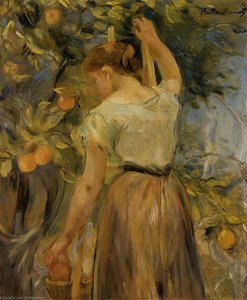
Preview
 Send
Send Share
Share
 Details
 Guide
Guide

 Download
 Similars
 X-Ray
X-Ray Diaporama
 Q&A
Q&A Stats
StatsThatched Cottage in Normandy


Experience the vibrant Impressionist charm of Berthe Morisot's 1865 Normandy cottage scene, capturing serene rural life; discover this masterpiece today.
 Read More
Berthe Morisot: A pioneering Impressionist painter known for intimate domestic scenes and evocative light. Explore her unique style & legacy alongside Édouard Manet.
Giclée / Art Print
Museum-quality giclée or canvas print with fast production and flexible finish options. ( Buy Hand Made Painting Switch to Digital Image)




P118B $10

P118H $10

P118W $10

P438Z $10

P508JH $12

P508YH $12

P805H $10

P805Z $10

P919BZ $10

P919G $10

P919XJ $10

P959ZH $10

P968JZ $12

W106C $8

W218G $10

W218JH $8

W218Y $10

W307PJ $10

W316G $10

W316PJ $8

W316Y $10

W398PJ $8

W4111J $10

W500HY $15

W500JH $15

W692G $12

W849H $8

W940BG $15

W953PJ $8




Standard
custom
CM
INCH
Pick from our preset sizes that match the artwork's original proportions.
Loading sizes...

width
height
Type the width and the height you need, to fit your frame or your wall. A print can only be cut, never made bigger than the picture, so a size with a different shape loses a part of the image. We send you a digital mockup to approve before we print anything. The picture shown on this page does not show the real cut — only the mockup does.
Worldwide Delivery () in 2 weeks instead of standard 4/5 weeks. (1 November)

Free Worldwide Express Shipping

High-Quality Linen Canvas

Full Shipping Insurance

Customs Tax Refund Guarantee

True Color Matching Guarantee

100-Day Return Policy (Defects Only)

100% Money-Back Guarantee

Bulk Discount Offer
 Glass option is only available in size under 110 CM

Thatched Cottage in Normandy
Giclée / Art Print
Reproduction Size
-


Total Price
$ 70
A Glimpse into Pastoral Serenity: Morisot's Normandy
To stand before Berthe Morisot’s depiction of a Thatched Cottage in Normandy is to step through a veil and into the gentle embrace of a bygone French afternoon. This painting, executed in 1865, is far more than a mere record of rural architecture; it is an immersion into the very spirit of life lived at the rhythm of the seasons. Morisot captures that quintessential joie de vivre found in the countryside—a scene brimming with quiet activity and vibrant natural beauty. The eye is immediately drawn to the contrast between the sturdy, humble lines of the thatched cottage and the exuberant vitality of the surrounding foliage.
The Impressionist Brushstroke: Light and Life
As a quintessential figure of the Impressionist movement, Morisot employs light not just as an illuminator, but as a palpable element within the composition. Her technique, executed in rich oil on canvas, is masterful in its delicacy. Observe how the brushstrokes dance across the surface; they are simultaneously bold enough to convey the lush density of the green leaves and delicate enough to suggest the ephemeral quality of sunlight filtering through them. This handling of paint allows the scene to breathe. The vibrant palette—the deep greens, the warm ochres of the cottage, and the varied tones of the figures’ clothing—speaks volumes about the intensity of natural color observed by an artist attuned to fleeting moments.
Composition and Human Connection
The arrangement within the canvas is a carefully orchestrated ballet of movement. The foreground is anchored by those healthy, verdant trees, which frame the central subject matter. Beyond them rests the modest cottage, its thatched roof suggesting generations of quiet habitation. Scattered throughout this idyllic setting are several figures—some strolling, some pausing in conversation. These people are not merely placed within the scene; they animate it. They provide a narrative thread, inviting the viewer to imagine their stories and the gentle murmur of their daily routines against the backdrop of timeless Normandy.
Symbolism of Simplicity and Retreat
In an era of rapid industrial change, this painting serves as a profound meditation on simplicity. The thatched cottage symbolizes permanence, tradition, and shelter—a sanctuary from the clamor of modern life. Morisot elevates the everyday into something sublime. It speaks to a yearning for connection with nature, a universal desire reflected in art across centuries. For the contemporary admirer, owning or displaying this piece is an act of curating tranquility; it brings the restorative peace of the French countryside into one's own space.
A Legacy for the Modern Collector
For those who appreciate the confluence of history and emotion, 'Thatched Cottage in Normandy' remains a vital touchstone. It showcases Morisot’s unique perspective—one that celebrates the intimate moments of bourgeois life while adhering to the revolutionary principles of Impressionism. Whether used as a focal point in an elegant drawing-room or appreciated for its sheer technical brilliance, this reproduction offers not just decoration, but a tangible piece of artistic history, whispering tales of 19th-century French light and enduring pastoral charm.
Questions & Answers
How is "Thatched Cottage in Normandy" recommended to be printed - what size, what orientation?
medium size, landscape orientation: that is the print setup suggested for "Thatched Cottage in Normandy" by Berthe Morisot.
What was Berthe Morisot's age when "Thatched Cottage in Normandy" was created?
Berthe Morisot made "Thatched Cottage in Normandy" at the age of 24. The artist was born in 1841 and the work is dated 1865.
Toward which tone does "Thatched Cottage in Normandy" lean?
The dominant hue of "Thatched Cottage in Normandy" by Berthe Morisot is ochre to sepia. The hue is the underlying tone of the palette.
Related Artworks




Artist Biography
A Life Immersed in Light and Intimacy
Berthe Morisot, born in Bourges, France, in 1841, emerged as a pivotal figure within the Impressionist movement, yet her story extends far beyond simply being a “female Impressionist.” To define her solely by gender diminishes the profound originality of her artistic vision and her unwavering commitment to capturing the fleeting moments of modern life. Descended from a bourgeois family with artistic lineage – she was related to the celebrated Rococo painter Jean-Honoré Fragonard – Morisot received an education uncommon for women of her era, one that nurtured her innate talent and fostered a lifelong dedication to painting. Early lessons with Geoffroy-Alphonse Chocarne and Joseph Guichard provided foundational skills, but it was exposure to the masterpieces within the Louvre, copying works by the Old Masters, that truly ignited her artistic sensibility. This period of rigorous training laid the groundwork for her later explorations of light, color, and form. The influence of Jean-Baptiste-Camille Corot proved particularly significant; his emphasis on *plein air* painting – working outdoors directly from nature – became a cornerstone of Morisot’s approach, allowing her to capture the ephemeral qualities of light and atmosphere with remarkable sensitivity.Navigating the Impressionist Circle
Morisot's artistic journey intertwined closely with that of Édouard Manet, whom she met in 1864. Their relationship was one of mutual respect and intellectual exchange, with Manet serving as a mentor and friend. He painted her numerous times, immortalizing her presence within his own evolving style. However, Morisot wasn’t merely a subject; she actively participated in the burgeoning Impressionist movement, becoming a founding member alongside Monet, Degas, Renoir, and Pissarro. In 1874, she boldly exhibited with this group of “rejected” artists, defying the conservative standards of the official Salon. This first Impressionist exhibition marked a turning point in art history, challenging traditional academic conventions and paving the way for new modes of artistic expression. Morisot participated in nearly all subsequent Impressionist exhibitions, consistently showcasing her unique perspective and solidifying her position within the avant-garde. Her work, often depicting intimate scenes of domestic life – women reading, mothers with children, leisurely moments in gardens – offered a distinctly feminine gaze, challenging prevailing societal norms and expanding the scope of acceptable subject matter for female artists.A Distinctive Artistic Voice
What sets Morisot apart is not simply *what* she painted, but *how* she painted it. Her brushwork is characterized by its delicate fluidity, a lightness of touch that conveys an impression of spontaneity and immediacy. She masterfully employed broken color – applying small strokes of pure pigment side-by-side to create a shimmering effect of light and atmosphere. Unlike some of her Impressionist colleagues who focused on grand landscapes or bustling cityscapes, Morisot often chose intimate interior scenes and portraits, exploring the nuances of human relationships and the quiet beauty of everyday life. Her palette is typically soft and harmonious, favoring pastel shades and subtle gradations of color. This isn’t to say her work lacks strength; rather, it possesses a refined elegance and emotional depth that resonates with viewers even today. Critics like Gustave Geffroy recognized this unique quality, hailing her as one of “les trois grandes dames” of Impressionism – alongside Marie Bracquemond and Mary Cassatt – acknowledging her significant contribution to the movement.Legacy and Lasting Influence
Berthe Morisot’s life was tragically cut short in 1895, but her artistic legacy endures. Married to Eugène Manet, brother of Édouard, she navigated a world that often underestimated female artists, yet she persevered with unwavering determination. She exhibited under her full maiden name – a subtle act of independence and self-assertion – and consistently challenged conventional expectations. Her work continues to captivate audiences with its delicate beauty, emotional honesty, and innovative technique. Morisot’s influence extends beyond the realm of Impressionism; she paved the way for future generations of female artists, demonstrating that women could achieve artistic excellence and contribute meaningfully to the evolution of art history. Today, her paintings are held in prestigious collections around the world, serving as a testament to her enduring talent and her pivotal role in shaping modern art. Woman in the Green Dress, The Cradle, and Summer’s Day remain iconic examples of her mastery, inviting viewers into a world of light, intimacy, and quiet contemplation.
Berthe Morisot
1841 - 1895 , France
Quick Facts
- Full Name: Berthe Morisot
- Nationality: French
- Date Of Birth: 1841
- Date Of Death: 1895
- Place Of Birth: Bourges, France
- Notable Artworks:
- Woman in the green dress
- The Cradle
- La Lecture
- Artistic Movement Or Style: Impressionism
- Artists Who Influenced This Artist:
- Corot
- Manet
- Artists Or Movements Influenced By This Artist: ['Impressionism']
Related Articles

Impressionistic Landscapes: 10 Masterpieces That Changed Art & Decor
Journey into the heart of Impressionism! Explore 10 masterpieces by Monet, Renoir & Degas that revolutionized landscape art. Discover their stories, techniques & find museum-quality reproductions to elevate your home decor on TopImpressionists.com.

Cultivating Visions: A Historical Journey Through Rural Landscapes in Art
Explore the rich history of rural landscape painting with TopImpressionists. Discover Impressionist masterpieces, key artists & movements. Find your perfect serene artwork and bring nature's beauty home.

Mastering the English Landscape: The Top 25 John Constable Artworks
Experience the soul of English landscapes through John Constable's top 25 works. Explore the full collection online at TopImpressionists.com.

Impressionist Landscapes: 10 Masterpieces for Your Home | TopImpressionists
Journey through 10 iconic Impressionist landscapes by Monet, Renoir & Degas. Explore the history, techniques & emotions behind these masterpieces. Find museum-quality reproductions for your home at TopImpressionists.com – where art comes to life! Discover all masterpieces on TopImpressionists.com

Evoking Nature's Sublime: A Comprehensive Exploration of 19th-Century Landscape Painting
Explore the captivating world of 19th-century landscape painting! Discover renowned artists like Friedrich & Monet, key movements, and find the perfect artwork to bring nature's serenity into your home. Expert insights at TopImpressionists.
Explore artworks organized by themes, styles, and characteristics.