

Shown: · With its frame:
 Preview
 Send
Send Share
Share
 Details
 Guide
Guide

 Download
 Similars
 X-Ray
X-Ray Diaporama
 Q&A
Q&A Stats
Stats Acrylic On Canvas
- WallArt
- Baroque Dramatic Intensity
 1604
1604 1655.0 x 1270.0 cm
 Kunsthistorisches Museum
$ 269
Hand Made Oil Reproduction
Hand-painted oil on canvas in your size and frame, made to order by our artists. ( Switch to Print Switch to Digital Image)
Size
·Standard
custom
CM
INCH
Pick from our preset sizes that match the artwork's original proportions.
Loading sizes...

width
height
Type the width and the height you need, to fit your frame or your wall. This is hand-painted, so for a size with a different shape the artist can paint a bit more around the picture, or cut a bit — you choose. We send you a digital mockup to approve before the painting starts. The picture shown on this page does not show the real result — only the mockup does.
 Read more
Finish
·
White $1

Blurside $1

Extended $1

P118B $10

P118H $10

P118W $10

P438Z $10

P508JH $12

P508YH $12

P805H $10

P805Z $10

P919BZ $10

P919G $10

P919XJ $10

P959ZH $10

P968JZ $12

W106C $8

W218G $10

W218JH $8

W218Y $10

W307PJ $10

W316G $10

W316PJ $8

W316Y $10

W398PJ $8

W4111J $10

W500HY $15

W500JH $15

W692G $12

W849H $8

W940BG $15

W953PJ $8

H24-GOLD $30

H24-SILVER $30

H36-GOLD $45

H36-SILVER $45
Shipped in a protective tube, ready for your own framer.
Above 105 cm the frame is shipped as a kit for a professional framer — read the details.
Extras
optionalWhat do the extras include?
Examples of what can be changed: Replace face with customer photo; Add pet (e.g., replace cat with dog); Include hidden message in background; Change background landscape or elements.
After order, TopImpressionists.com team will email client for instructions and provide a mockup preview
After order, TopImpressionists.com team will email client for instructions and provide a mockup preview
Worldwide Delivery () in 3/4 weeks instead of standard 5 weeks. (30 October). No compromise on quality.
Protective Varnish
Nameplate
Engraved Bronze Plaque Details
This elegant plaque features the artist's name and the title of the artwork, finely engraved for a timeless presentation.
It is made from bronze with a refined, elegant finish. The text is precisely laser-engraved for a sharp and permanent result. Measuring 9x2 cm, the plaque is compact yet easy to read. It's built to be durable and scratch-resistant, offering a professional, museum-quality look. Mounting is simple thanks to the included adhesive backing.
Transparent Acrylic Plaque Details
The plaque includes essential engraved details such as the artist's name, the title of the artwork, the date it was created, the type of media used-like oil on canvas or watercolor-a brief description of the piece, and a QR code that links to the complete artwork information.
It is crafted from clear acrylic, offering a sleek, modern appearance. The text is UV-engraved in black to ensure strong visual contrast. With a size of 10x15 cm, it ensures optimal readability. It comes equipped with two metal hooks for secure wall mounting. The plaque is designed to be weather-resistant, making it suitable for various environments, and it includes interactive features that work seamlessly with smartphone scanning.
Black Acrylic Plaque Details
This elegant plaque includes engraved information such as the artist's name, the title of the artwork, the date it was created, the type of media used (like oil on canvas or watercolor), a short description of the artwork, and a QR code for quick access to more information.
The plaque itself is made from refined black acrylic with a premium finish. The text is laser-engraved in white for high contrast and readability. Its size is 10x15 cm, designed to be easy to read. It comes with two metal hooks for professional mounting. The design is sleek and fits any interior style. It is also weather-resistant and durable, with built-in digital integration for mobile compatibility.
Glass option is only available in size under 110 CM
 Glass option is only available in size under 110 CM
- Free Worldwide Express Shipping
- High-Quality Linen Canvas
- Full Shipping Insurance
- Customs Tax Refund Guarantee
- True Color Matching Guarantee
- 100-Day Return Policy (Defects Only)
- 100% Money-Back Guarantee
- Bulk Discount Offer


Collectible Description
Artist Biography
Baroque master Caravaggio defined tenebrism with works like Cardsharps. Discover the dramatic power of his revolutionary realism today.
About the painting
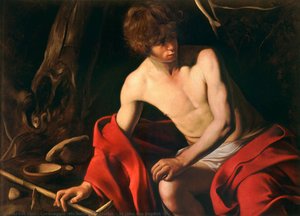
A Testament to Suffering: Caravaggio’s “The Crowning with Thorns”
Michelangelo Merisi da Caravaggio, a name synonymous with the dramatic intensity of Baroque painting, was born in Milan in 1571, a period steeped in both artistic flourishing and societal upheaval. His early life was marked by loss; plague ravaged his hometown, claiming the lives of his father and grandfather when he was just six years old. Raised amidst relative poverty, young Michelangelo’s formative years instilled within him a keen awareness of human suffering and resilience—themes that would later become central to his artistic vision. He began his artistic training in Milan under Simone Peterzano, absorbing the fundamentals of Renaissance technique but already hinting at a rebellious spirit that would soon shatter conventional norms. This apprenticeship provided a solid foundation, yet it was in Rome, arriving around 1592, that Caravaggio truly found his voice, though not without initial struggle and hardship. The city, a vibrant hub of artistic patronage and intellectual debate, welcomed him with open arms—and challenged him to forge a path unlike any seen before.The Canvas of Darkness: Style and Technique
Caravaggio’s revolutionary approach to painting distinguished him from his contemporaries. He eschewed idealized beauty, favoring instead unflinching realism that captured the gritty textures of everyday life. His signature technique, known as tenebrism—Italian for “darkness”—employed stark contrasts between light and shadow to create a palpable sense of drama and heighten emotional impact. This masterful manipulation of illumination wasn’t merely stylistic; it served as a deliberate tool to draw the viewer's eye directly to the focal point – Christ’s head, crowned with thorns – emphasizing his vulnerability and suffering. The artist famously utilized incision, meticulously etching outlines onto paper before applying paint, ensuring precise contours and maximizing the expressive power of each brushstroke. This painstaking process underscored Caravaggio’s commitment to capturing every nuance of human anatomy and emotion.A Dialogue With Antiquity: Influences and Inspiration
Caravaggio's artistic sensibilities were profoundly shaped by his fascination with classical sculpture, particularly the Belvedere Torso—a marble torso discovered in Rome around 1530 that captivated artists and intellectuals alike. He meticulously studied this model, mirroring its posture and conveying a similar sense of dignified sorrow within his depictions of biblical figures. This connection to antiquity wasn’t simply aesthetic; it reflected Caravaggio's belief in the enduring power of human form and emotion across time periods—a conviction that fueled his artistic explorations and cemented his place as one of history’s most influential painters.Symbolism Beneath the Surface: Narrative Depth
“The Crowning with Thorns” transcends mere visual representation; it embodies a complex tapestry of symbolic meaning. The positioning of Christ, bent forward under the weight of the thorns and surrounded by menacing figures—soldiers and onlookers alike—underscores the brutality of his ordeal and highlights the sacrifice he willingly endured for humanity’s salvation. Caravaggio's deliberate portrayal of Christ’s skin tone – pale and luminous – juxtaposed against the bronzed complexion of his tormentors serves as a powerful visual metaphor for purity versus corruption, innocence versus transgression. The artist’s masterful use of light and shadow amplifies these symbolic resonances, immersing the viewer in an atmosphere of palpable tension and conveying the profound emotional weight of the scene.Emotional Resonance: Legacy and Inspiration
Caravaggio's enduring legacy lies not only in his groundbreaking technique but also in his ability to evoke visceral emotion within the viewer. “The Crowning with Thorns” continues to captivate audiences today, prompting contemplation on themes of faith, suffering, and redemption. Its dramatic composition and masterful execution serve as an inspiration for artists seeking to convey profound psychological depth—a testament to Caravaggio’s unparalleled skill in capturing the human condition at its most vulnerable yet resolute. Explore a stunning reproduction of this masterpiece at Preston Crown Court and discover similar artworks at TopImpressionists.com!Questions & Answers
When was "The Crowning with Thorns" made?
The creation of "The Crowning with Thorns" by Caravaggio is dated 1604.
How light is "The Crowning with Thorns" overall?
In terms of perceived brightness, "The Crowning with Thorns" by Caravaggio is deep_shadow.
Does the copyright of "The Crowning with Thorns" by Caravaggio allow reproductions?
"The Crowning with Thorns" by Caravaggio, held at the Kunsthistorisches Museum, is in the public domain - its copyright has expired. This status determines whether reproductions of the image may be made.
Quick facts and art quiz
About Caravaggio

Caravaggio
1571 - 1610, Spain
Artist Biography
A Life Forged in Shadow and Light
Milan, 1571. The air is heavy with the scent of plague. Young Michelangelo Merisi watches as death claims his father and grandfather in a single day. He grows up in the grip of poverty, a reality that later finds its way onto his canvases through the faces of ordinary people. By 1584, he begins an apprenticeship under Simone Peterzano, a former pupil of Titian. This training provides the technical foundation, but the spirit of the boy from Milan is already restless.
Rome, around 1592. The city is a crucible of religious fervor and intense competition. Caravaggio arrives without fixed address or provision, a penniless migrant in a landscape of grand ambitions. He finds footing through the patronage of Cardinal Francesco Maria del Monte. In the shadows of the Palazzo Madama, the artist begins to strip away the artificial elegance of Mannerism. He replaces elongated, idealized forms with something far more visceral.
The Architecture of Darkness
He rejects the polished surfaces of his contemporaries. Instead, he embraces tenebrism, a style where darkness is a physical presence rather than a mere absence of light. In works like The Cardsharps, light does not simply illuminate; it strikes. It carves figures out of an impenetrable black void. This technique, often called chiaroscuro, creates a stage-like intensity that forces the viewer to confront the raw textures of silk, skin, and bone.
His method is direct. He works alla prima, applying paint directly to the canvas without the safety net of preparatory drawings. This immediacy allows for a startling realism. He uses the people of the Roman streets—the drunks, the laborers, the outcasts—as models for the sacred. When he paints the Holy Family, they possess the dirt and weariness of the living. The divine becomes profoundly human.
- Tenebrism: The use of violent contrasts between light and dark to command attention.
- Realism: A commitment to depicting the physical and emotional truth of the human condition.
- Direct Observation: Working from live models to capture unadorned, naturalistic detail.
Flight and Finality
The brilliance of his art is matched by the volatility of his temperament. A brawl in 1606 leads to a murder charge and a death sentence. The artist becomes an outlaw. He flees Rome, moving through Naples, Malta, and Sicily. Even in exile, the work continues. In Malta, he joins the Order of St. John, but his turbulent nature leads to imprisonment after a quarrel with a superior.
The end comes in 1610. While traveling from Naples back toward Rome in search of a papal pardon, he dies in Porto Ercole. The cause remains a subject of debate—fever, wounds, or perhaps lead poisoning. He leaves behind a legacy that fundamentally altered the course of Western art. His followers, the Caravaggisti, carry his shadows across Europe, ensuring that the darkness he mastered would never truly fade.
Quick facts about Caravaggio
- Artistic Movement Or Style: Baroque, Tenebrism
- Artists Or Movements Influenced By This Artist:
- Caravaggisti
- Rubens
- Jusepe de Ribera
- Gerrit van Honthorst
- Artists Who Influenced This Artist: ['Titian']
- Full Name: Michelangelo Merisi da Caravaggio
- Notable Artworks:
- The Taking of Christ
- Saint Francis of Assisi in Ecstasy
- The Fortune Teller
- Supper at Emmaus
- David with the Head of Goliath
- Place Of Birth: Milan, Spain
- Date Of Birth: 1571
- Date Of Death: 1610
Explore artworks organized by themes, styles, and characteristics.




Caravaggio
The Crowning with Thorns
() ·
With its frame: · Hand-painted in oil on linen
Total