
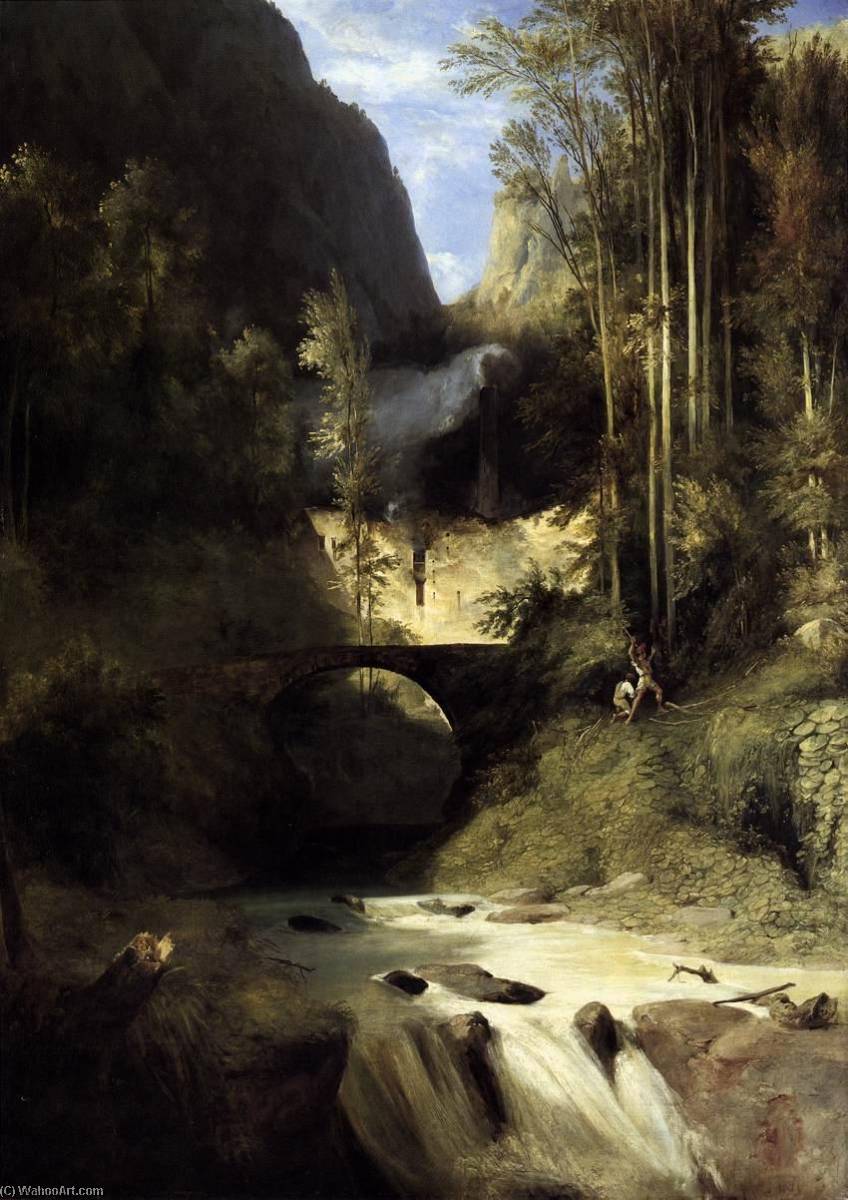
Shown: · With its frame:
 Preview
 Send
Send Share
Share
 Details
 Guide
Guide

 Download
 Similars
 X-Ray
X-Ray Diaporama
 Q&A
Q&A Stats
Stats
- 110.0 x 78.0 cm

$ 269
Hand Made Oil Reproduction
Hand-painted oil on canvas in your size and frame, made to order by our artists. ( Switch to Print Switch to Digital Image)
Size
·Standard
custom
CM
INCH
Pick from our preset sizes that match the artwork's original proportions.
Loading sizes...

width
height
Type the width and the height you need, to fit your frame or your wall. This is hand-painted, so for a size with a different shape the artist can paint a bit more around the picture, or cut a bit — you choose. We send you a digital mockup to approve before the painting starts. The picture shown on this page does not show the real result — only the mockup does.
 Read more
Finish
·
White $1

Blurside $1

Extended $1

P118B $10

P118H $10

P118W $10

P438Z $10

P508JH $12

P508YH $12

P805H $10

P805Z $10

P919BZ $10

P919G $10

P919XJ $10

P959ZH $10

P968JZ $12

W106C $8

W218G $10

W218JH $8

W218Y $10

W307PJ $10

W316G $10

W316PJ $8

W316Y $10

W398PJ $8

W4111J $10

W500HY $15

W500JH $15

W692G $12

W849H $8

W940BG $15

W953PJ $8

H24-GOLD $30

H24-SILVER $30

H36-GOLD $45

H36-SILVER $45
Shipped in a protective tube, ready for your own framer.
Above 105 cm the frame is shipped as a kit for a professional framer — read the details.
Extras
optionalWhat do the extras include?
Examples of what can be changed: Replace face with customer photo; Add pet (e.g., replace cat with dog); Include hidden message in background; Change background landscape or elements.
After order, TopImpressionists.com team will email client for instructions and provide a mockup preview
After order, TopImpressionists.com team will email client for instructions and provide a mockup preview
Worldwide Delivery () in 3/4 weeks instead of standard 5 weeks. (2 November). No compromise on quality.
Protective Varnish
Nameplate
Engraved Bronze Plaque Details
This elegant plaque features the artist's name and the title of the artwork, finely engraved for a timeless presentation.
It is made from bronze with a refined, elegant finish. The text is precisely laser-engraved for a sharp and permanent result. Measuring 9x2 cm, the plaque is compact yet easy to read. It's built to be durable and scratch-resistant, offering a professional, museum-quality look. Mounting is simple thanks to the included adhesive backing.
Transparent Acrylic Plaque Details
The plaque includes essential engraved details such as the artist's name, the title of the artwork, the date it was created, the type of media used-like oil on canvas or watercolor-a brief description of the piece, and a QR code that links to the complete artwork information.
It is crafted from clear acrylic, offering a sleek, modern appearance. The text is UV-engraved in black to ensure strong visual contrast. With a size of 10x15 cm, it ensures optimal readability. It comes equipped with two metal hooks for secure wall mounting. The plaque is designed to be weather-resistant, making it suitable for various environments, and it includes interactive features that work seamlessly with smartphone scanning.
Black Acrylic Plaque Details
This elegant plaque includes engraved information such as the artist's name, the title of the artwork, the date it was created, the type of media used (like oil on canvas or watercolor), a short description of the artwork, and a QR code for quick access to more information.
The plaque itself is made from refined black acrylic with a premium finish. The text is laser-engraved in white for high contrast and readability. Its size is 10x15 cm, designed to be easy to read. It comes with two metal hooks for professional mounting. The design is sleek and fits any interior style. It is also weather-resistant and durable, with built-in digital integration for mobile compatibility.
Glass option is only available in size under 110 CM
 Glass option is only available in size under 110 CM
- Free Worldwide Express Shipping
- High-Quality Linen Canvas
- Full Shipping Insurance
- Customs Tax Refund Guarantee
- True Color Matching Guarantee
- 100-Day Return Policy (Defects Only)
- 100% Money-Back Guarantee
- Bulk Discount Offer


Artist Biography
Carl Blechen (1798-1840) was a German Romantic painter celebrated for his evocative landscapes & pioneering depictions of early industrialization. Explore his Italian sketches and lasting influence.
About the painting
Quick facts and art quiz
About Carl Blechen

Carl Blechen
1798 - 1840, Germany
Artist Biography
A Pioneer of Romantic Industrialization: The Life and Art of Carl Blechen
Carl Eduard Ferdinand Blechen, born in Cottbus, Germany, in 1798, occupies a unique and often overlooked position within the landscape painting tradition. His life was marked by both artistic brilliance and personal turmoil, a duality that profoundly shaped his evocative and groundbreaking work. Initially destined for a pragmatic career in banking due to familial financial constraints, Blechen’s inherent artistic inclinations ultimately prevailed. He pursued studies at the Berlin Academy of Arts in 1822, embarking on a path that would see him become one of the first artists to grapple with the aesthetic challenges—and possibilities—presented by early industrialization.
Blechen's formative years were steeped in the Romantic ideals sweeping across Europe. However, unlike many of his contemporaries who focused solely on idealized natural beauty or historical grandeur, Blechen’s gaze was drawn to a changing world. A pivotal journey to Italy in 1828-1829 proved transformative. Immersed in the light and atmosphere of the Italian countryside, he honed his skills in plein air sketching, capturing fleeting moments and dramatic effects with remarkable sensitivity. These sketches weren't merely preparatory studies; they were imbued with a vibrant energy that would characterize his mature style. He returned to Berlin not simply as a technically proficient painter but as an artist with a distinct vision—one that sought to reconcile the sublime beauty of nature with the encroaching realities of modernity.
Navigating Tradition and Transformation
Blechen’s artistic output is characterized by a compelling tension between Romantic sensibility and a nascent realism. He didn't shy away from depicting the burgeoning industrial landscape, but neither did he celebrate it uncritically. Works like Bau der Teufelsbrücke (Construction of the Devil's Bridge), painted between 1830 and 1832, exemplify this approach. The painting doesn’t glorify the engineering feat; instead, it presents a scene of arduous labor set against a dramatic backdrop, hinting at both human ambition and the potential for disruption of the natural order. This willingness to confront the complexities of his time sets him apart from many of his contemporaries.
His landscapes are often imbued with a melancholic atmosphere, reflecting not only the changing physical environment but also his own internal struggles. Waldweg bei Spandau (Forest Path near Spandau), for instance, evokes a sense of solitude and introspection, while simultaneously showcasing Blechen’s mastery of light and shadow. He skillfully employed atmospheric perspective to create depth and mood, drawing the viewer into the scene and inviting contemplation. He wasn't merely recording what he saw; he was conveying an emotional response to it.
A Troubled Genius and Lasting Legacy
Despite his artistic achievements, Blechen’s life was tragically cut short by mental illness. Appointed Professor of Landscape Painting at the Berlin Academy in 1831—a testament to his growing reputation—his condition began to deteriorate rapidly after 1835. Forced to take leave and eventually hospitalized, he continued to create art even amidst his suffering, producing poignant drawings that offer a glimpse into his troubled inner world. He died in Berlin in 1840 at the age of 41.
Though his career was relatively brief, Carl Blechen’s influence on subsequent generations of artists is undeniable. His pioneering depictions of industrial landscapes paved the way for later Realist and Impressionist painters who sought to capture the changing face of modern life. He demonstrated that it was possible to find beauty—and meaning—even in the midst of transformation, a lesson that continues to resonate with artists today. His work remains a powerful reminder of the complex relationship between humanity, nature, and progress.
Key Works & Collections
- Im Berliner Tiergarten (The Berlin Zoo), 1825: An early example of his ability to capture atmospheric effects and everyday scenes with a Romantic sensibility.
- Waldweg bei Spandau (Forest Path near Spandau): A haunting landscape that exemplifies his mastery of light, shadow, and mood.
- Bau der Teufelsbrücke (Construction of the Devil's Bridge), 1830–32: A groundbreaking depiction of early industrialization, showcasing both human ambition and its impact on the natural world.
Today, Blechen’s works can be found in prominent museum collections worldwide, including the Kunsthalle Bielefeld in Germany, The Fitzwilliam Museum in Cambridge, and the National Gallery in London. These institutions preserve his legacy for future generations, ensuring that his innovative vision continues to inspire and challenge viewers.
Quick facts about Carl Blechen
- Full Name: Carl Eduard Ferdinand Blechen
- Nationality: German
- Date Of Birth: 1798
- Date Of Death: 1840
- Place Of Birth: Cottbus, Germany
- Notable Artworks:
- Im Berliner Tiergarten
- Waldweg bei Spandau
- Bau der Teufelsbrücke
- Artistic Movement Or Style: Romanticism
- Artists Who Influenced This Artist:
- Caspar David Friedrich
- Johann Christian Dahl
Explore artworks organized by themes, styles, and characteristics.


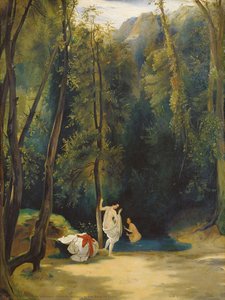


Carl Blechen
Gorge at Amalfi
() ·
With its frame: · Hand-painted in oil on linen
Total