Preview
 Send
Send Share
Share
 Details
 Guide
Guide

 Download
 Similars
 X-Ray
X-Ray Diaporama
 Stats
StatsSelf-Portrait


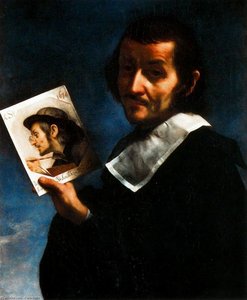
Admire Carlo Dolci's iconic Self-Portrait (1674), a masterpiece of Florentine Baroque artistry housed at the Galleria degli Uffizi. Explore its serene beauty and masterful technique – a timeless testament to spiritual devotion.
 Read More
Carlo Dolci (1616-1686): Explore the serene piety & meticulous detail of this Florentine Baroque master. Discover his religious masterpieces like 'St. Sebastian' and learn about his artistic legacy.
Giclée / Art Print
Museum-quality giclée or canvas print with fast production and flexible finish options. ( Buy Hand Made Painting Switch to Digital Image)




P118B $10

P118H $10

P118W $10

P438Z $10

P508JH $12

P508YH $12

P805H $10

P805Z $10

P919BZ $10

P919G $10

P919XJ $10

P959ZH $10

P968JZ $12

W106C $8

W218G $10

W218JH $8

W218Y $10

W307PJ $10

W316G $10

W316PJ $8

W316Y $10

W398PJ $8

W4111J $10

W500HY $15

W500JH $15

W692G $12

W849H $8

W940BG $15

W953PJ $8




Standard
custom
CM
INCH
Pick from our preset sizes that match the artwork's original proportions.
Loading sizes...

width
height
You may enter your own dimensions to fit a specific frame or space. If your selected size does not match the original image's proportions, we will either crop the artwork or extend the image with a mirrored or solid-fill edge. A digital mockup will be sent for your approval before production begins.
Please note that the on-screen preview does not reflect the actual cropping or extension. Only the mockup will accurately show the final composition.
While custom sizes are available, we recommend selecting a dimension from the predefined list to preserve the original proportions.
Worldwide Delivery () in 2 weeks instead of standard 4/5 weeks. (5 October)

Free Worldwide Express Shipping

High-Quality Linen Canvas

Full Shipping Insurance

Customs Tax Refund Guarantee

True Color Matching Guarantee

100-Day Return Policy (Defects Only)

100% Money-Back Guarantee

Bulk Discount Offer
 Glass option is only available in size under 110 CM

Self-Portrait
Giclée / Art Print
Reproduction Size
-


Total Price
$ 70
A Window Into Florentine Baroque Piety
In the quiet corridors of the Galleria degli Uffizi, there exists a painting that does not merely capture a face, but rather invites the viewer into a profound state of meditation. Carlo Dolci’s Self-Portrait, completed in 1674, stands as a luminous testament to the spirit of Florentine Baroque piety. Unlike the grand, theatrical spectacles often associated with the Roman Baroque period, Dolci’s work offers an intimate encounter with the soul. Through a masterful command of light and shadow, he presents himself not as a boastful creator, but as a man of deep introspection and spiritual gravity. The painting serves as a bridge between the physical world of the artist and the internal landscape of his devotion, making it a captivating centerpiece for any collection that values emotional depth and historical resonance.
The technical brilliance of this masterpiece lies in Dolci’s adherence to the Florentine tradition of disegno. Every contour of his profile is rendered with an almost obsessive precision, reflecting a dedication to anatomical accuracy and textural realism. The artist employs a subdued palette—dominated by deep blacks, muted browns, and subtle grays—which directs the eye toward the soft, diffused light playing across his features. This use of chiaroscuro is not used for dramatic shock, but to create a sense of serene atmosphere. For the discerning collector or interior designer, this technique provides a sophisticated aesthetic; the painting’s tonal harmony allows it to integrate seamlessly into refined spaces, offering a sense of timeless dignity and quiet strength.
Symbolism and the Artist's Legacy
Beyond the mere likeness of the artist, the composition is rich with symbolic weight. As Dolci gazes slightly to the left, his posture suggests a mind preoccupied with thoughts beyond the canvas. In his hand, he holds a small card or miniature portrait, a gesture that introduces themes of memory, legacy, and the interconnectedness of art and life. This inclusion transforms the self-portrait from a simple study of identity into a complex narrative about the artist's relationship with his craft and his faith. It is as if Dolci is presenting us with a piece of his own heart, inviting us to contemplate the very essence of what it means to create with purpose.
To possess a reproduction of this work is to bring a fragment of the Medici-era Florentine Renaissance into the modern home. The painting embodies an era where art was an instrument of both civic pride and spiritual renewal. Its emotional impact is immediate yet enduring; it does not demand attention through loudness, but commands respect through its stillness. Whether placed in a study, a library, or a curated gallery wall, Dolci’s Self-Portrait acts as an anchor of sophistication, providing a focal point that inspires contemplation and celebrates the enduring power of the human spirit captured in oil and canvas.
Questions & Answers
How does the subject of "Self-Portrait" relate to Carlo Dolci's usual themes?
"Self-Portrait" depicts portraiture, baroque art, religious painting, detail, florentine style, light shadow, introspection, while Carlo Dolci's recorded themes are religious devotion, florentine tradition, baroque style, psychological depth, artist’s legacy. Comparing the two shows how the work relates to the artist's usual subjects.
Which artist is "Self-Portrait" attributed to?
"Self-Portrait" was created by Carlo Dolci. The information on this page describes Carlo Dolci's original work.
At what age did Carlo Dolci make "Self-Portrait"?
Carlo Dolci was 58 years old when creating "Self-Portrait" in 1674. The age is computed from the artist's birth year, 1616.
What use and space are recommended for "Self-Portrait" by Carlo Dolci?
"Self-Portrait" is suggested for statement, and the recommended space is a living room.
What is the emotional tone of "Self-Portrait" by Carlo Dolci?
"Self-Portrait" is associated with a reflective feeling. The emotional tone describes the impression the work gives.
How do contrast and harmony combine in "Self-Portrait"?
The color composition of "Self-Portrait" by Carlo Dolci combines a bold contrast with a discordant palette harmony.
What is the creation date of "Self-Portrait" by Carlo Dolci?
"Self-Portrait" by Carlo Dolci was created in 1674.
Artist Biography
A Florentine Master of Baroque Piety
Carlo Dolci, born in Florence in 1616, stands as a compelling figure within the Italian Baroque landscape—a painter whose intensely devotional works and meticulous technique secured his place among the most sought-after artists of his era. Unlike many contemporaries drawn to the dramatic grandeur of Rome, Dolci remained steadfastly rooted in Florentine tradition, cultivating a style characterized by quiet intensity and profound spiritual depth. His life unfolded against a backdrop of artistic fervor, yet he carved a unique path defined not by prolific output but by an unwavering commitment to detail and emotional resonance. From his earliest training under Jacopo Vignali, Dolci demonstrated a precocious talent, quickly establishing a reputation for precision that would become the hallmark of his oeuvre. He wasn’t driven by expansive compositions or dynamic narratives; instead, he focused on intimate portrayals of religious subjects, often repeating favored themes across multiple versions—a testament to their enduring appeal and perhaps reflective of his methodical approach.Early Life and Artistic Formation
Dolci's artistic journey began within a family already touched by creativity, providing an early nurturing ground for his innate abilities. Apprenticed to Jacopo Vignali at a remarkably young age, he absorbed the lessons of a master known for dramatic flair, yet Dolci soon began to forge his own distinct voice. Even as a boy, his dedication to capturing minute details and conveying emotional weight was evident. Stories abound of his painstaking approach—a commitment so thorough that it reportedly took weeks to complete even a single limb on a figure. This deliberate pace wasn’t born of slowness but rather an intense desire for perfection, a striving to imbue each brushstroke with spiritual significance. He quickly gained recognition within Florentine circles, attracting commissions from prominent families and establishing his workshop before reaching adulthood. While other artists sought the bustling artistic scene of Rome, Dolci remained in Florence, deeply connected to its traditions and patrons. This steadfast loyalty to his native city shaped not only his career but also the very essence of his art.Style and Notable Works
Dolci’s style is immediately recognizable—a harmonious blend of rich color, meticulous detail, and profound emotional expression. His paintings aren't about grand spectacle; they are intimate encounters with faith, rendered with a tenderness that invites contemplation. He frequently depicted scenes from the lives of saints and biblical narratives, focusing on moments of quiet devotion or poignant suffering. St Sebastian, for example, is not portrayed as a heroic martyr but as a figure consumed by spiritual anguish, his body exquisitely rendered to emphasize vulnerability rather than strength. Similarly, his depictions of the four Evangelists reveal a deep understanding of human psychology, capturing their individual personalities with remarkable sensitivity. Christ Breaking the Bread, another celebrated work, exemplifies his ability to convey sacred moments with understated grace and emotional power. His daughter, Agnese Dolci, played an important role in disseminating his artistic vision, skillfully creating copies of her father’s paintings that further extended his reach and influence. These reproductions, while not original creations, attest to the demand for Dolci's work and the enduring appeal of his style.Legacy and Historical Significance
Carlo Dolci’s impact on Florentine art is undeniable. He stands as a key figure in the development of the Baroque style within the city, contributing significantly to its rich artistic heritage. While influenced by earlier masters like Giovanni Bellini and Bramantino, he forged his own unique path, characterized by a quiet intensity and devotional focus that set him apart from many of his contemporaries. His paintings continue to grace prestigious institutions such as the Uffizi Gallery in Florence, where the Contini Bonacossi Collection offers a particularly rich representation of his oeuvre. The enduring appeal of Dolci’s work lies not only in its technical brilliance but also in its ability to evoke profound spiritual emotions. He wasn't merely painting religious scenes; he was creating visual meditations on faith, inviting viewers to connect with the divine on a deeply personal level. His legacy extends beyond his paintings—he represents a commitment to artistic excellence and a belief in the power of art to inspire piety and contemplation. Even today, exploring Dolci’s masterpieces offers a glimpse into the heart of 17th-century Florence and the enduring power of Baroque artistry.
Carlo Dolci
1616 - 1686 , Italy
Quick Facts
- Full Name: Carlo Dolci
- Nationality: Italian
- Date Of Birth: 1616
- Date Of Death: 1686
- Place Of Birth: Florence, Italy
- Notable Artworks:
- St Sebastian
- Christ Breaking Bread
- The Guardian Angel
- Moses
- Artistic Movement Or Style: Baroque
- Artists Who Influenced This Artist: ['Jacopo Vignali']
- Artists Or Movements Influenced By This Artist: ['Agnese Dolci']
Related Articles

Reproducing Artistry: A Guide to Oil, Canvas & Paper Reproduction Mediums
Explore the world of art reproduction! Learn about oil, canvas & paper options with our expert guide. Discover museum-quality reproductions for your home or collection.

From Initial Sketch to Enduring Legacy: A Comprehensive Exploration of the Oil Painting Reproduction Process
Discover the art of museum-quality oil painting reproduction. Explore our expert process, skilled artists & authentic replicas. Elevate your home with timeless beauty – handcrafted and customized to your vision.

The Enduring Legacy of Hand-Painted Oil Paintings: Aesthetic Value, Longevity & Emotional Resonance
Explore the enduring legacy of hand-painted oil paintings. Discover the aesthetic value, material longevity & emotional resonance that sets original art—and expertly crafted reproductions—apart. Invest in timeless beauty.

Baroque Masterpieces: 10 Paintings That Defined an Era |
Journey through the drama & grandeur of Baroque art! Explore 10 masterpieces by Caravaggio, Rembrandt, Rubens & more. Discover stunning oil paintings, rich colors & timeless stories. Find museum-quality reproductions at .

Bring Drama to Your Walls: The Timeless Elegance of Baroque Oil Masterpieces
Elevate your collection with the dramatic grandeur of Baroque oil masterpieces. TopImpressionists offers exquisite, hand-painted reproductions of the Great Masters, featuring authentic chiaroscuro and premium textures. Discover bespoke artistry and expert consultation for elite collectors worldwide.
Explore artworks organized by themes, styles, and characteristics.