Preview
 Send
Send Share
Share
 Details
 Guide
Guide

 Download
 Similars
 X-Ray
X-Ray Diaporama
 Stats
StatsSelf-Portrait


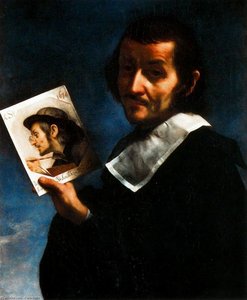
Admire Carlo Dolci’s "Self-Portrait" (1674). A Baroque masterpiece showcasing the artist's refined style & introspective gaze. Explore this iconic Italian painting.
 Read More
Carlo Dolci (1616-1686): Explore the serene piety & meticulous detail of this Florentine Baroque master. Discover his religious masterpieces like 'St. Sebastian' and learn about his artistic legacy.
Giclée / Art Print
Museum-quality giclée or canvas print with fast production and flexible finish options. ( Buy Hand Made Painting Switch to Digital Image)




P118B $10

P118H $10

P118W $10

P438Z $10

P508JH $12

P508YH $12

P805H $10

P805Z $10

P919BZ $10

P919G $10

P919XJ $10

P959ZH $10

P968JZ $12

W106C $8

W218G $10

W218JH $8

W218Y $10

W307PJ $10

W316G $10

W316PJ $8

W316Y $10

W398PJ $8

W4111J $10

W500HY $15

W500JH $15

W692G $12

W849H $8

W940BG $15

W953PJ $8




Standard
custom
CM
INCH
Pick from our preset sizes that match the artwork's original proportions.
Loading sizes...

width
height
You may enter your own dimensions to fit a specific frame or space. If your selected size does not match the original image's proportions, we will either crop the artwork or extend the image with a mirrored or solid-fill edge. A digital mockup will be sent for your approval before production begins.
Please note that the on-screen preview does not reflect the actual cropping or extension. Only the mockup will accurately show the final composition.
While custom sizes are available, we recommend selecting a dimension from the predefined list to preserve the original proportions.
Worldwide Delivery () in 2 weeks instead of standard 4/5 weeks. (7 October)

Free Worldwide Express Shipping

High-Quality Linen Canvas

Full Shipping Insurance

Customs Tax Refund Guarantee

True Color Matching Guarantee

100-Day Return Policy (Defects Only)

100% Money-Back Guarantee

Bulk Discount Offer
 Glass option is only available in size under 110 CM

Self-Portrait
Giclée / Art Print
Reproduction Size
-


Total Price
$ 70
A Portrait of Quiet Devotion: Carlo Dolci’s Self-Portrait
Carlo Dolci's "Self-Portrait," painted in 1674, is not merely a likeness; it’s an intimate glimpse into the soul of a Florentine master. This oil on canvas transcends the conventions of formal portraiture, offering instead a profound meditation on faith, artistic practice, and the quiet dignity of a life dedicated to spiritual contemplation. The painting immediately draws the viewer in with its somber palette – deep blacks, muted browns, and subtle grays—a deliberate choice that evokes a sense of introspection and solemnity, characteristic of Dolci’s distinctive style. The lighting is remarkably soft, diffusing light across his features and highlighting the delicate textures of his clothing, creating an atmosphere both serene and deeply personal.
At the heart of the composition lies Dolci himself, presented with a dignified restraint that speaks volumes about his artistic philosophy. He holds in his right hand a small, painted portrait – likely a devotional image or perhaps a representation of a loved one – a gesture laden with symbolic weight. This inclusion suggests themes of memory, legacy, and the artist’s own relationship to his craft. The crisp lines defining his clothing and face are hallmarks of Baroque realism, yet they're executed with an almost obsessive attention to detail, reflecting Dolci’s meticulous approach to every brushstroke. The subtle layering of elements – Dolci in the foreground, the miniature portrait receding slightly—creates a convincing sense of depth, anchoring the viewer within this intimate space.
The Florentine Baroque and Carlo Dolci's Unique Path
Carlo Dolci’s artistic journey is particularly noteworthy. Unlike many of his contemporaries who flocked to the grandeur of Rome, he remained firmly rooted in the traditions of Florence. This decision shaped his distinctive style—one characterized by a profound sense of piety, an avoidance of dramatic narratives, and an unwavering commitment to detail. He wasn't driven by the ambition of large-scale frescoes or dynamic compositions; instead, Dolci focused on creating small, intensely personal works that explored the depths of religious emotion. His life unfolded against a backdrop of artistic fervor, yet he carved out a unique path defined by quiet intensity and spiritual depth.
His training under Jacopo Vignali provided him with a solid foundation, but it was Dolci’s own innate talent—demonstrated early through works like the infant Christ – that truly set him apart. He wasn't interested in merely replicating reality; he sought to capture the essence of faith and devotion, imbuing his paintings with an almost palpable sense of spirituality. This dedication is evident in the meticulous rendering of his features, particularly the subtle nuances of light and shadow that bring his face to life.
Symbolism and the Miniature Portrait
The inclusion of the small painted portrait held by Dolci adds another layer of complexity to the work. While its precise meaning remains open to interpretation, it likely functions as a symbolic representation of memory, legacy, or perhaps even an embodiment of someone significant in his life. The act of holding this miniature image suggests a deep connection to the past and a reverence for those who have shaped his artistic vision. It’s a poignant reminder that art is not simply about depicting reality but also about preserving and honoring it.
Furthermore, Dolci's consistent repetition of compositions—often creating multiple versions of the same subject—underscores his methodical approach to painting. This practice wasn’t driven by mere habit; rather, it reflected a deep understanding of the spiritual power inherent in each image. Each iteration served as an opportunity for him to refine his technique and deepen his connection with the subject matter.
A Timeless Testament to Spiritual Devotion
Carlo Dolci’s “Self-Portrait” is more than just a painting; it's a window into the soul of a master artist. It stands as a testament to the power of faith, the beauty of meticulous craftsmanship, and the enduring appeal of quiet contemplation. Reproductions of this work offer a remarkable opportunity to experience the serenity and spiritual depth that defined Dolci’s artistic legacy—a legacy that continues to resonate with viewers today.
Questions & Answers
Is "Self-Portrait" by Carlo Dolci a well-known artwork?
The popularity level recorded for "Self-Portrait" by Carlo Dolci is recognized.
Who is the author of "Self-Portrait", and in which movement?
Behind "Self-Portrait" stand Carlo Dolci and the Baroque movement.
What space is suggested for "Self-Portrait" by Carlo Dolci?
A reproduction of "Self-Portrait" fits well in a living room.
At what age did Carlo Dolci make "Self-Portrait"?
When "Self-Portrait" was created in 1674, Carlo Dolci - born in 1616 - was 58 years old.
How can I view "Self-Portrait" by Carlo Dolci as a slideshow?
"Self-Portrait" by Carlo Dolci can be viewed as a slideshow on the artwork's Diaporama page.
What is the creation date of "Self-Portrait" by Carlo Dolci?
"Self-Portrait" dates from 1674. The date places the work within Carlo Dolci's career and its era.
Who created "Self-Portrait"?
"Self-Portrait" is attributed to Carlo Dolci.
Artist Biography
A Florentine Master of Baroque Piety
Carlo Dolci, born in Florence in 1616, stands as a compelling figure within the Italian Baroque landscape—a painter whose intensely devotional works and meticulous technique secured his place among the most sought-after artists of his era. Unlike many contemporaries drawn to the dramatic grandeur of Rome, Dolci remained steadfastly rooted in Florentine tradition, cultivating a style characterized by quiet intensity and profound spiritual depth. His life unfolded against a backdrop of artistic fervor, yet he carved a unique path defined not by prolific output but by an unwavering commitment to detail and emotional resonance. From his earliest training under Jacopo Vignali, Dolci demonstrated a precocious talent, quickly establishing a reputation for precision that would become the hallmark of his oeuvre. He wasn’t driven by expansive compositions or dynamic narratives; instead, he focused on intimate portrayals of religious subjects, often repeating favored themes across multiple versions—a testament to their enduring appeal and perhaps reflective of his methodical approach.Early Life and Artistic Formation
Dolci's artistic journey began within a family already touched by creativity, providing an early nurturing ground for his innate abilities. Apprenticed to Jacopo Vignali at a remarkably young age, he absorbed the lessons of a master known for dramatic flair, yet Dolci soon began to forge his own distinct voice. Even as a boy, his dedication to capturing minute details and conveying emotional weight was evident. Stories abound of his painstaking approach—a commitment so thorough that it reportedly took weeks to complete even a single limb on a figure. This deliberate pace wasn’t born of slowness but rather an intense desire for perfection, a striving to imbue each brushstroke with spiritual significance. He quickly gained recognition within Florentine circles, attracting commissions from prominent families and establishing his workshop before reaching adulthood. While other artists sought the bustling artistic scene of Rome, Dolci remained in Florence, deeply connected to its traditions and patrons. This steadfast loyalty to his native city shaped not only his career but also the very essence of his art.Style and Notable Works
Dolci’s style is immediately recognizable—a harmonious blend of rich color, meticulous detail, and profound emotional expression. His paintings aren't about grand spectacle; they are intimate encounters with faith, rendered with a tenderness that invites contemplation. He frequently depicted scenes from the lives of saints and biblical narratives, focusing on moments of quiet devotion or poignant suffering. St Sebastian, for example, is not portrayed as a heroic martyr but as a figure consumed by spiritual anguish, his body exquisitely rendered to emphasize vulnerability rather than strength. Similarly, his depictions of the four Evangelists reveal a deep understanding of human psychology, capturing their individual personalities with remarkable sensitivity. Christ Breaking the Bread, another celebrated work, exemplifies his ability to convey sacred moments with understated grace and emotional power. His daughter, Agnese Dolci, played an important role in disseminating his artistic vision, skillfully creating copies of her father’s paintings that further extended his reach and influence. These reproductions, while not original creations, attest to the demand for Dolci's work and the enduring appeal of his style.Legacy and Historical Significance
Carlo Dolci’s impact on Florentine art is undeniable. He stands as a key figure in the development of the Baroque style within the city, contributing significantly to its rich artistic heritage. While influenced by earlier masters like Giovanni Bellini and Bramantino, he forged his own unique path, characterized by a quiet intensity and devotional focus that set him apart from many of his contemporaries. His paintings continue to grace prestigious institutions such as the Uffizi Gallery in Florence, where the Contini Bonacossi Collection offers a particularly rich representation of his oeuvre. The enduring appeal of Dolci’s work lies not only in its technical brilliance but also in its ability to evoke profound spiritual emotions. He wasn't merely painting religious scenes; he was creating visual meditations on faith, inviting viewers to connect with the divine on a deeply personal level. His legacy extends beyond his paintings—he represents a commitment to artistic excellence and a belief in the power of art to inspire piety and contemplation. Even today, exploring Dolci’s masterpieces offers a glimpse into the heart of 17th-century Florence and the enduring power of Baroque artistry.
Carlo Dolci
1616 - 1686 , Italy
Quick Facts
- Full Name: Carlo Dolci
- Nationality: Italian
- Date Of Birth: 1616
- Date Of Death: 1686
- Place Of Birth: Florence, Italy
- Notable Artworks:
- St Sebastian
- Christ Breaking Bread
- The Guardian Angel
- Moses
- Artistic Movement Or Style: Baroque
- Artists Who Influenced This Artist: ['Jacopo Vignali']
- Artists Or Movements Influenced By This Artist: ['Agnese Dolci']
Related Articles

Drama and Light: Discover the Captivating Grandeur of Baroque Art
Immerse yourself in the dramatic splendor of Baroque art. Explore the profound impact of light, shadow, and the Counter-Reformation through an expert historical lens, celebrating the masters who defined an era of unparalleled grandeur and emotional intensity.
Explore artworks organized by themes, styles, and characteristics.