Preview
 Send
Send Share
Share
 Details
 Guide
Guide

 Download
 Similars
 X-Ray
X-Ray Diaporama
 Stats
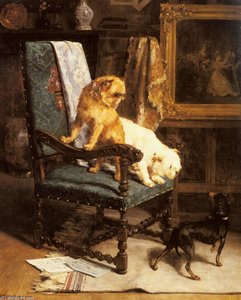
StatsDogs and a Tortoise
Discover Charles van den Eycken (1859-1923), a Belgian Post-Impressionist celebrated for charming scenes of animals, especially cats & dogs in cozy interiors. Explore his vibrant style and artistic legacy!
 Read More
Giclée / Art Print
Museum-quality giclée or canvas print with fast production and flexible finish options. ( Buy Hand Made Painting Switch to Digital Image)




































Standard
custom
CM
INCH
Pick from our preset sizes that match the artwork's original proportions.
Loading sizes...

width
height
Type the width and the height you need, to fit your frame or your wall. A print can only be cut, never made bigger than the picture, so a size with a different shape loses a part of the image. We send you a digital mockup to approve before we print anything. The picture shown on this page does not show the real cut — only the mockup does.
Worldwide Delivery () in 2 weeks instead of standard 4/5 weeks. (22 October)

Free Worldwide Express Shipping

High-Quality Linen Canvas

Full Shipping Insurance

Customs Tax Refund Guarantee

True Color Matching Guarantee

100-Day Return Policy (Defects Only)

100% Money-Back Guarantee

Bulk Discount Offer
 Glass option is only available in size under 110 CM

Dogs and a Tortoise
Giclée / Art Print
Reproduction Size
-


Total Price
$ 70
Artist Biography
A Brussels Painter of Domestic Bliss: The Life and Art of Charles van den Eycken
Charles van den Eycken, born in Brussels in 1859, occupies a charming niche within the landscape of late 19th and early 20th-century Belgian painting. While not a revolutionary figure challenging artistic conventions, his enduring appeal lies in his ability to capture the quiet intimacy of domestic life, particularly through his affectionate portrayals of animals – most notably cats and dogs. Born into an artistic family—his father and grandfather were both painters—van den Eycken’s path seemed predetermined, yet he forged a distinctive style that resonated with a public increasingly captivated by scenes of comfortable middle-class existence. He received early training from his father, grounding him in traditional techniques before pursuing formal studies at the Académie Royale des Beaux-Arts in Brussels under Joseph Edouard Stevens, a realist animal painter whose influence is clearly visible in van den Eycken’s work. This academic foundation provided him with the technical skill to render detail and form, but it was his innate sensitivity to character and atmosphere that truly set his paintings apart.The Allure of Animal Companionship
Van den Eycken's artistic focus quickly centered on animalier painting—the depiction of animals in art. However, he wasn’t interested in the grand, heroic depictions of wildlife favored by some of his contemporaries. Instead, he found beauty and narrative potential in the everyday lives of domestic pets. His paintings are filled with cats lounging amongst books, dogs playfully interacting with children, or simply enjoying a moment of quiet contemplation within cozy interiors. These weren't merely portraits; they were glimpses into worlds of warmth, companionship, and gentle humor. He skillfully captured not just the physical likeness of his subjects but also their personalities—the mischievous glint in a cat’s eye, the loyal devotion in a dog’s gaze. This ability to imbue animals with human-like qualities is perhaps the key to his lasting popularity. His work reflects a broader cultural trend of increasing affection for pets during this period, as animals became increasingly integrated into family life and viewed as cherished companions rather than simply utilitarian creatures.Artistic Influences and Style
While van den Eycken developed a unique voice, his artistic style wasn’t formed in isolation. The influence of Post-Impressionism is subtly present in his work, particularly in his use of color and brushwork. Though he didn't fully embrace the radical experimentation of artists like Van Gogh, he adopted a brighter palette and looser application of paint than was typical of earlier academic painting. This lends a vibrancy and immediacy to his scenes, enhancing their emotional impact. He also shared affinities with Dutch Golden Age painters known for their meticulous depictions of interiors and domestic life—a legacy perhaps inherited through his family’s artistic lineage. However, van den Eycken wasn't simply imitating past masters; he synthesized these influences into something distinctly his own. His paintings are characterized by a harmonious balance between realism and expressiveness, creating scenes that feel both authentic and emotionally resonant.Recognition and Legacy
Throughout his career, Charles van den Eycken enjoyed considerable success. He exhibited regularly at prestigious salons in Belgium and beyond—Brussels, Liège, Ghent, Antwerp, Amsterdam, Barcelona, Madrid—gaining recognition for his charming depictions of animal life. His work even caught the eye of Queen Marie-Henriette of Belgium, who commissioned paintings from him. He was a founding member of the artist group “L’Essor,” which provided a platform for emerging artists to showcase their work and challenge traditional artistic norms. Today, van den Eycken's paintings are held in museum collections, including the Musée des Beaux-Arts in Brussels, and continue to be sought after by collectors worldwide. His legacy lies not in groundbreaking innovation but in his ability to capture the simple joys of life with warmth, humor, and a keen eye for detail. He reminds us that beauty can be found in the everyday—in the quiet companionship of our animal friends and the comforting familiarity of home. His paintings offer a nostalgic glimpse into a bygone era, inviting viewers to share in moments of peaceful domesticity.Exploring Van den Eycken’s World Today
Fortunately for art enthusiasts, Charles van den Eycken's work is readily accessible through platforms like TopImpressionists and TopImpressionists.com, offering high-quality hand-painted reproductions that allow admirers to bring a touch of his charming world into their own homes. These online resources also provide valuable insights into his life and artistic development, fostering a deeper appreciation for his contribution to Belgian art. His paintings continue to inspire artists and delight audiences with their timeless appeal.- Explore more about Charles van den Eycken at: /en/artists/charles-van-den-eycken/
- Discover his artworks on TopImpressionists.com: /en/art/in-the-artistss-studio-by-charles-van-den-eycken/

Charles van den Eycken
1859 - 1923 , Belgium
Quick Facts
- Artistic Movement Or Style: Post-Impressionism
- Artists Or Movements Influenced By This Artist: ['Young Belgian artists']
- Artists Who Influenced This Artist: ['Vincent van Gogh']
- Date Of Birth: 1859
- Date Of Death: 1923
- Full Name: Charles van den Eycken
- Nationality: Belgian
- Notable Artworks:
- The house by the river
- Winter's chill
- In The Artist's Studio
- The Actors In The Wings
- Feline Librarians
- Place Of Birth: Brussels, Belgium
Explore artworks organized by themes, styles, and characteristics.