


 Preview
 Send
Send Share
Share
 Details
 Guide
Guide

 Download
 Similars
 X-Ray
X-Ray Diaporama
 Q&A
Q&A Stats
StatsA Study in White


Hawthorne championed plein air painting and influenced generations with his tonal style and dedication to capturing light and atmosphere. The painting reflects the aesthetic ideals of Luminism.
 Read More
Charles Webster Hawthorne was an American painter renowned for his evocative portraits and landscapes, particularly his depictions of New England coastal life. A key figure in the Cape Cod School of Art, he championed plein air painting and influenced generations with his tonal style and dedication to capturing light and atmosphere.
Giclée / Art Print
Museum-quality giclée or canvas print with fast production and flexible finish options. ( Buy Hand Made Painting Switch to Digital Image)




P118B $10

P118H $10

P118W $10

P438Z $10

P508JH $12

P508YH $12

P805H $10

P805Z $10

P919BZ $10

P919G $10

P919XJ $10

P959ZH $10

P968JZ $12

W106C $8

W218G $10

W218JH $8

W218Y $10

W307PJ $10

W316G $10

W316PJ $8

W316Y $10

W398PJ $8

W4111J $10

W500HY $15

W500JH $15

W692G $12

W849H $8

W940BG $15

W953PJ $8




Standard
custom
CM
INCH
Pick from our preset sizes that match the artwork's original proportions.
Loading sizes...

width
height
Type the width and the height you need, to fit your frame or your wall. A print can only be cut, never made bigger than the picture, so a size with a different shape loses a part of the image. We send you a digital mockup to approve before we print anything. The picture shown on this page does not show the real cut — only the mockup does.
Worldwide Delivery () in 2 weeks instead of standard 4/5 weeks. (31 October)

Free Worldwide Express Shipping

High-Quality Linen Canvas

Full Shipping Insurance

Customs Tax Refund Guarantee

True Color Matching Guarantee

100-Day Return Policy (Defects Only)

100% Money-Back Guarantee

Bulk Discount Offer
 Glass option is only available in size under 110 CM

A Study in White
Giclée / Art Print
Reproduction Size
-


Total Price
$ 70
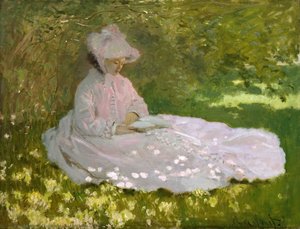
This alluring portrait of a young woman in a white dress seated on a hill, presumably under a tree, demonstrates the general principles of American Impressionism around the turn of the century. The painting captures the fleeting impression of sharp contrast of light and the deep, rich colors of a summer day, with bold, visible brushstrokes in a lightened color palette. One gets the sense that the painting captures a contemplative moment of rest painted outdoors.The painting is dedicated to Hawthorne’s teacher and professional role model, William Merritt Chase. It bears the inscription: “To My Master Wm. M. Chase.” Hawthorne enrolled in Chase’s summer school at Shinnecock Hills, Long Island in 1896. There, the artist served as chief assistant to his master. Several years later, Hawthorne established his own summer school, the Cape Cod School of Art, which attracted plein air painters to Provincetown for the next three decades.
Questions & Answers
How do contrast and harmony combine in "A Study in White"?
In "A Study in White", a bold contrast is paired with a discordant palette harmony.
What space is suggested for "A Study in White" by Charles Webster Hawthorne?
A reproduction of "A Study in White" fits well in a hotel lobby.
How strong are the colors of "A Study in White"?
The color of "A Study in White" is subtle color in saturation and balanced in intensity.
Related Artworks




Artist Biography
A Luminist of the New England Coast
Charles Webster Hawthorne, born in Lodi, Illinois, in 1872, stands as a pivotal figure in American art during a period defined by transition and burgeoning national identity. Though his earliest years unfolded inland, it was the rugged, windswept coastline of Maine—to which his parents returned shortly after his birth—that would indelibly shape his artistic vision. This profound connection to the sea, instilled through childhood experiences with his father’s profession as a ship captain and ice farmer, became a recurring motif throughout his career, informing both subject matter and aesthetic sensibility. Hawthorne's journey toward becoming a celebrated portraitist and genre painter was one of dedicated study, unwavering commitment to capturing the essence of light and form, and an innovative approach to art education that would leave a lasting legacy on American painting. He initially pursued formal training in New York City, balancing the demands of work as an office boy with evening classes at the Art Students League under George de Forest Brush and H. Siddons Mowbray, followed by studies at the National Academy of Design. Crucially, his exposure to William Merritt Chase—first as a student and then as an assistant at Shinnecock Hills—proved transformative, instilling in him a deep appreciation for plein air painting and the expressive potential of brushwork. These formative experiences laid the foundation for Hawthorne’s distinctive style, characterized by its robust handling of paint and luminous tonal qualities.The Cape Cod School and a Philosophy of Painting
Hawthorne's influence extended far beyond his own canvases; he was also an exceptionally influential teacher, driven by a desire to foster genuine artistic vision in others. In 1899, recognizing a need for a dedicated space where artists could immerse themselves in direct observation of nature, he founded the Cape Cod School of Art in Provincetown, Massachusetts. This institution quickly became a haven for aspiring painters, attracting students from across the country and establishing Provincetown as a thriving art colony—a beacon for those seeking an alternative to traditional academic training. Hawthorne’s pedagogical approach was unconventional yet profoundly effective. He emphasized simplifying forms, focusing on tonal values, and capturing the fleeting effects of light – principles deeply rooted in his own artistic practice. His teaching wasn't about imposing a specific technique but rather encouraging students to develop their individual vision through rigorous observation and bold experimentation. He famously urged them to “go out like a savage,” embracing a fresh, uninhibited approach to painting, stripping away preconceived notions and allowing the immediacy of experience to guide their hand. Among his notable pupils was Norman Rockwell, who spent a formative summer studying with Hawthorne, absorbing lessons that would later inform his own iconic American scenes. Bertha Noyes, another prominent student, went on to become a significant figure in the Washington D.C. artistic community. The Cape Cod School of Art flourished under Hawthorne’s guidance for thirty years, leaving an enduring mark on American art education and fostering a generation of artists who valued direct observation and expressive brushwork.Capturing Light and Life: Themes and Techniques
Hawthorne's paintings are immediately recognizable for their vibrant color palettes and masterful handling of light. He frequently depicted scenes from the seaside around Provincetown, portraying fishermen, families, and everyday life with a remarkable sensitivity to atmosphere and character. His portraits, in particular, stand out for their psychological depth and expressive brushwork. He wasn’t interested in mere likeness but rather sought to capture the inner essence of his subjects—their personalities, their stories, their connection to the world around them. He achieved this through careful observation of light and shadow, using tonal variations to model form and create a sense of volume. His technique often involved applying paint with broad, confident strokes, allowing the texture of the canvas to contribute to the overall effect. This approach, influenced by both Chase and the Dutch masters he encountered during his travels—particularly Frans Hals—resulted in paintings that are simultaneously realistic and painterly. Hawthorne’s work also reflects an interest in genre painting, depicting scenes of everyday life with a keen eye for detail and social commentary. He found beauty in the ordinary, elevating humble subjects to the level of art through his skillful execution and empathetic portrayal. His First Voyage, for example, captures a poignant moment of youthful potential, while works like The Red Dress demonstrate his ability to imbue even simple compositions with emotional resonance.Legacy and Enduring Influence
Charles Webster Hawthorne passed away in Baltimore, Maryland, in 1930, leaving behind a rich artistic legacy that continues to resonate today. His wife, Marion Campbell Hawthorne, played a crucial role in preserving his work and ideas by collecting and publishing his writings in the influential book Hawthorne on Painting in 1938. This collection offers invaluable insights into his artistic philosophy and teaching methods, providing a window into the mind of a master painter. His works are now held in prestigious collections such as the Art Institute of Chicago, the Metropolitan Museum of Art in New York, and the Smithsonian American Art Museum in Washington D.C., ensuring their accessibility to future generations. Hawthorne’s influence can be seen in the work of countless artists who followed him, particularly those associated with the Cape Cod School of Art and the broader American Impressionist movement. He remains a celebrated figure for his luminous paintings, masterful use of oil paint, and enduring commitment to artistic education—a testament to his belief that art should be rooted in direct observation, personal expression, and a deep connection to the natural world.- Born: January 8, 1872, Lodi, Illinois
- Founded Cape Cod School of Art: 1899
- Died: November 29, 1930, Baltimore, Maryland

Charles Webster Hawthorne
1872 - 1930 , United States of America
Quick Facts
- Full Name: Charles Webster Hawthorne
- Nationality: American
- Date Of Birth: 1872
- Date Of Death: 1930
- Place Of Birth: Lodi, United States of America
- Notable Artworks:
- His First Voyage
- The Red Dress
- Early Moonrise
- Artistic Movement Or Style: Impressionism, Luminism
- Artists Who Influenced This Artist: ['William Merritt Chase']
- Artists Or Movements Influenced By This Artist: ['Norman Rockwell']
Related Articles

Capturing the Soul of Nature: A Journey Through the Sublime Majesty of American Romanticism
Explore the breathtaking beauty of American Romanticism. Discover how Hudson River School masters captured the sublime spirit of the wilderness through luminous oil landscapes and emotional depth. A journey into the soul of nature for the true art enthusiast.

Capturing the Light: A Journey Through the Soul of American Impressionism and the Hudson River School
Explore the luminous beauty of American Impressionism and the Hudson River School. Discover a curated journey through light, landscape, and history, celebrating the enduring legacy of masters through exquisite, hand-painted oil reproductions for the discerning art lover.
Explore artworks organized by themes, styles, and characteristics.


