Preview
 Send
Send Share
Share
 Details
 Guide
Guide

 Download
 Similars
 X-Ray
X-Ray Diaporama
 Q&A
Q&A Stats
StatsA Teacher and his Pupil

- 135.0 x 111.0 cm


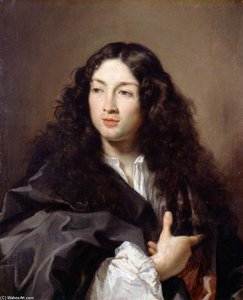
Delve into Baroque artistry with Claude Lefebvre's 'A Teacher and his Pupil,' a masterful portrait capturing mentorship and knowledge transfer. Explore its dramatic chiaroscuro lighting and rich textures.
 Read More
A master of French Baroque portraiture, Claude Lefebvre captured the elegance of the seventeenth century in works like A Teacher and his Pupil, inviting you to discover the profound intimacy within his luminous oil paintings.
Giclée / Art Print
Museum-quality giclée or canvas print with fast production and flexible finish options. ( Buy Hand Made Painting Switch to Digital Image)




P118B $10

P118H $10

P118W $10

P438Z $10

P508JH $12

P508YH $12

P805H $10

P805Z $10

P919BZ $10

P919G $10

P919XJ $10

P959ZH $10

P968JZ $12

W106C $8

W218G $10

W218JH $8

W218Y $10

W307PJ $10

W316G $10

W316PJ $8

W316Y $10

W398PJ $8

W4111J $10

W500HY $15

W500JH $15

W692G $12

W849H $8

W940BG $15

W953PJ $8




Standard
custom
CM
INCH
Pick from our preset sizes that match the artwork's original proportions.
Loading sizes...

width
height
Type the width and the height you need, to fit your frame or your wall. A print can only be cut, never made bigger than the picture, so a size with a different shape loses a part of the image. We send you a digital mockup to approve before we print anything. The picture shown on this page does not show the real cut — only the mockup does.
Worldwide Delivery () in 2 weeks instead of standard 4/5 weeks. (5 November)

Free Worldwide Express Shipping

High-Quality Linen Canvas

Full Shipping Insurance

Customs Tax Refund Guarantee

True Color Matching Guarantee

100-Day Return Policy (Defects Only)

100% Money-Back Guarantee

Bulk Discount Offer
 Glass option is only available in size under 110 CM

A Teacher and his Pupil
Giclée / Art Print
Reproduction Size
-


Total Price
$ 70
A Moment Frozen in Time: The Intimacy of Claude Lefebvre
In the quiet depths of the seventeenth century, amidst the grand flourishes of the Baroque era, there existed moments of profound, silent connection that transcended the mere recording of faces. Claude Lefebvre’s 1670 masterpiece, "A Teacher and his Pupil," captures such a moment with unparalleled emotional resonance. This is not merely a portrait of two individuals; it is an evocative window into the very essence of mentorship and the sacred transmission of knowledge. As the viewer gazters upon the illuminated faces of the distinguished gentleman and the attentive young boy, one feels transported to a private study where time itself seems to pause, held in suspense by the weight of intellectual discovery.
The painting serves as a breathtaking example of chiaroscuro, the dramatic interplay of light and shadow that defined the Baroque period. Lefebvre masterfully directs the light to fall upon the subjects' features, pulling them from an atmospheric, near-indistinct darkness into sharp, luminous relief. This technique does more than create depth; it focuses the viewer’s soul on the psychological exchange occurring between the figures. The teacher’s steady, guiding presence and the pupil’s eager, focused gaze form a triangular composition that provides a sense of structural harmony and stability, grounding the fleeting emotional intensity of the scene within a classical, balanced framework.
Mastery of Texture and the Baroque Spirit
Beyond its emotional depth, "A Teacher and his Pupil" is a triumph of technical virtuosity. Lefebvre’s use of oil on canvas allows for a rich, layered saturation of color that breathes life into every fold of fabric. One can almost feel the heavy weight of the teacher’s robes and the crispness of the boy’s waistcoat through the artist's meticulous brushwork. The subtle interplay of deep blacks, earthy browns, and muted grays creates a somber yet sophisticated palette, punctuated only by the brilliant whites of collars and cuffs that catch the light like sudden sparks of insight.
The artist employs atmospheric perspective with great skill, allowing the background to dissolve into a soft, mysterious obscurity. This lack of detail in the periphery ensures that nothing distracts from the central narrative of learning. For the discerning collector or interior designer, this painting offers a profound sense of gravitas. It possesses a quiet authority that can anchor a room, providing a focal point that invites contemplation rather than mere observation. The textures—from the smooth, porcelain-like skin tones to the tactile complexity of the drapery—demonstrate a level of realism that makes the scene feel tangibly present.
A Legacy of Knowledge and Light
Historically, this work reflects the humanist ideals flourishing in seventeenth-century Europe, where the pursuit of reason and the cultivation of the mind were held in high esteem. Commissioned by an aristocratic family, the painting speaks to the era's emphasis on lineage, education, and the importance of passing wisdom from one generation to the next. There is a subtle symbolism in the darkness surrounding the figures; it may represent the vast unknown or the challenges inherent in the pursuit of truth, which the light of education seeks to illuminate.
To possess a reproduction of this work is to bring more than just decoration into a space; it is to invite an atmosphere of intellectual curiosity and timeless elegance. Whether placed in a private library, a formal study, or a contemporary living space, "A Teacher and his Pupil" acts as a silent interlocutor, reminding all who behold it of the enduring beauty found in the pursuit of wisdom and the profound bonds formed through shared learning.
Questions & Answers
What mood does "A Teacher and his Pupil" by Claude Lefebvre express within Baroque?
"A Teacher and his Pupil" carries a reflective emotional tone within the Baroque movement.
What saturation and intensity does "A Teacher and his Pupil" by Claude Lefebvre show?
The color of "A Teacher and his Pupil" is muted in saturation and monochromatic in intensity.
What placement suits the format of "A Teacher and his Pupil" by Claude Lefebvre?
The portrait format of "A Teacher and his Pupil" by Claude Lefebvre is recommended for a living room. Format and space together guide the placement of a reproduction.
Artist Biography
A Legacy of Light and Line
In the grand tapestry of the seventeenth century, few artists captured the quiet dignity of the French nobility with as much grace as Claude Lefebvre. Born in Fontainebleau, the son of the painter Jean Lefèbvre, his artistic journey was deeply rooted in the traditions of his lineage and the prestigious workshops of his era. His early training began within the workshop of Claude d'Hoey at Fontainebleau, providing him with a foundational mastery of form that would later define his career. As he moved toward Paris, his education expanded under the guidance of masters such as Eustache Le Sueur and, most significantly, the legendary Charles Le Brun. While working under Le Brun, Lefebvre likely contributed to the preparation of grand cartoons for the History of the King tapestry series at the Château of Versailles, a period that placed him at the very heart of French royal artistic ambition.
Despite his early exposure to large-scale historical compositions, Lefebvre’s path took a more intimate turn. While Le Brun recognized his talent, he famously encouraged the artist to specialize in portraiture, noting that his compositions for larger narratives were less suited to his particular strengths. This redirection proved transformative. Lefebvre emerged as a leading portraitist of his time, a skill that earned him admission as a member of the Académie Royale de peinture et de sculpture in 1663. His ability to capture the psychological depth and social standing of his subjects allowed him to secure prestigious commissions, including a long-term project for the portrait of Jean-Baptiste Colbert, which he eventually presented at the Château of Versailles.
The Mastery of the Baroque Portrait
Lefebvre’s work is characterized by a profound command of the chiaroscuro technique, using the dramatic interplay of light and shadow to breathe life into his subjects. His portraits are not merely records of faces but evocative windows into the soul, often utilizing a somber yet sophisticated palette of deep blacks, earthy browns, and muted grays. In masterpieces such as A Teacher and his Pupil, one can observe how he directs light to pull figures from an atmospheric darkness into sharp, luminous relief, creating a sense of profound, silent connection. This technical virtuosity extended to his rendering of textures; through meticulous brushwork, he could convey the heavy weight of velvet robes, the crispness of fine lace, and the delicate shimmer of pearls.
His artistic development was further enriched by his travels, particularly his time in England. During his stay in London, he was invited to paint at the court of King Charles II, and it is believed that his style absorbed the elegant influences of Anthony van Dyck. This fusion of French precision and English fluidity helped solidify his reputation as an artist capable of capturing both the regal authority and the refined elegance of the era. His influence also extended to the next generation of painters, as he served as an assistant professor at the Académie, mentoring students such as François de Troy and Jean Cotelle, le jeune.
Historical Significance and Enduring Presence
Though many of Lefebvre’s original paintings have been lost to time—with much of his surviving legacy known through the meticulous engravings of contemporaries like Gérard Edelinck and Pieter van Schuppen—his impact on French portraiture remains undeniable. His work represents a vital chapter in the transition of Baroque sensibilities, blending the grandeur of the French court with an intimate, psychological realism. Today, his contributions are preserved in some of the world's most esteemed institutions, including:
- The Louvre
- The National Portrait Gallery, London
- The Château of Versailles
Lefebvre remains a symbol of the refined artistry that defined the age of Louis XIV, an artist who turned the gaze inward to find the monumental within the personal.

Claude Lefebvre
1632 - 1675 , France
Quick Facts
- Artistic Movement Or Style: Baroque
- Artists Or Movements Influenced By This Artist:
- François de Troy
- Jean Cotelle, le jeune
- Artists Who Influenced This Artist:
- Claude d'Hoey
- Eustache Le Sueur
- Charles Le Brun
- Anthony van Dyck
- Full Name: Claude Lefèbvre
- Nationality: French
- Notable Artworks:
- A Teacher and his Pupil
- Portrait of Marie De Rabutin-chantals
- Portrait of a gentleman
- Portrait Of A Man
- Place Of Birth: Fontainebleau, France
- Date Of Birth: 1632
- Date Of Death: 1675
Related Articles

Drama & Light: The Captivating Power of Baroque Painting and the Mastery of Chiaroscuro
Explore the dramatic world of Baroque painting. Discover how masters used chiaroscuro and tenebrism to evoke profound emotion, from the Counter-Reformation to today's fine art collectors seeking breathtaking, hand-painted historical reproductions.

Chiaroscuro & Emotion: Capturing the Dramatic Soul of Baroque Art
Explore the profound drama of Baroque art. Discover how masters used chiaroscuro and intense emotion to capture the soul of the 17th century through light, shadow, and spiritual grandeur in this expert art history guide.
Explore artworks organized by themes, styles, and characteristics.