


 Preview
 Send
Send Share
Share
 Details
 Guide
Guide

 Download
 Similars
 X-Ray
X-Ray Diaporama
 Stats
StatsMill near Zaandam


Discover Claude Monet’s ‘Mill Near Zaandam’! This iconic Impressionist painting captures serene Dutch landscapes with vibrant colors & loose brushstrokes. A timeless masterpiece for art lovers.
 Read More
Claude Monet was an Impressionist master known for his Water Lilies series. Discover the beauty of his light-filled landscapes today.
Giclée / Art Print
Museum-quality giclée or canvas print with fast production and flexible finish options. ( Buy Hand Made Painting Switch to Digital Image)




P118B $10

P118H $10

P118W $10

P438Z $10

P508JH $12

P508YH $12

P805H $10

P805Z $10

P919BZ $10

P919G $10

P919XJ $10

P959ZH $10

P968JZ $12

W106C $8

W218G $10

W218JH $8

W218Y $10

W307PJ $10

W316G $10

W316PJ $8

W316Y $10

W398PJ $8

W4111J $10

W500HY $15

W500JH $15

W692G $12

W849H $8

W940BG $15

W953PJ $8




Standard
custom
CM
INCH
Pick from our preset sizes that match the artwork's original proportions.
Loading sizes...

width
height
Type the width and the height you need, to fit your frame or your wall. A print can only be cut, never made bigger than the picture, so a size with a different shape loses a part of the image. We send you a digital mockup to approve before we print anything. The picture shown on this page does not show the real cut — only the mockup does.
Worldwide Delivery () in 2 weeks instead of standard 4/5 weeks. (28 October)

Free Worldwide Express Shipping

High-Quality Linen Canvas

Full Shipping Insurance

Customs Tax Refund Guarantee

True Color Matching Guarantee

100-Day Return Policy (Defects Only)

100% Money-Back Guarantee

Bulk Discount Offer
 Glass option is only available in size under 110 CM

Mill near Zaandam
Giclée / Art Print
Reproduction Size
-


Total Price
$ 70
A Glimpse into Dutch Light: Claude Monet’s ‘Mill Near Zaandam’
Claude Monet's ‘Mill Near Zaandam’, painted in 1871, is more than just a landscape; it’s a pivotal work marking a crucial turning point in the artist’s development and a beautiful example of early Impressionism. This painting encapsulates Monet’s burgeoning style as he absorbed influences from the Dutch Masters during his formative travels.
Historical Context: A Dutch Awakening
In 1871, a young Monet embarked on a journey to Holland, seeking artistic inspiration. He was profoundly impacted by the works of 17th-century Dutch painters like Rembrandt and Vermeer – artists renowned for their mastery of light and shadow, and realistic depictions of everyday life. Zaandam, with its iconic windmills and waterways, provided the perfect setting for Monet to experiment with these newfound influences. This trip wasn’t merely a change of scenery; it was an artistic pilgrimage that fundamentally altered his approach to painting.
Subject & Composition: The Heart of Dutch Industry
The painting centers around a prominent windmill, a symbol deeply ingrained in the Dutch landscape and economy. Surrounded by tranquil waters reflecting its form, and lush greenery, the mill isn’t presented as a grand monument but rather as an integral part of the natural environment. Several small boats dot the waterway, adding a sense of scale and human presence to the scene. The composition is deliberately horizontal, emphasizing the expansive Dutch skies and mirroring the calm surface of the water.
Style & Technique: Embracing Impressionism
‘Mill Near Zaandam’ showcases the hallmarks of Monet's emerging Impressionistic style. He employs loose brushstrokes, abandoning the precise detail favored by earlier academic painters. Instead, he focuses on capturing the fleeting effects of light and atmosphere. The color palette is vibrant yet harmonious, with bold strokes of blue, green, and yellow creating depth and movement. Warm tones are used for the mill itself, providing a striking contrast against the cooler hues of the sky and water. This technique isn’t about replicating reality perfectly; it's about conveying the impression of a moment in time.
Symbolism & Emotional Impact: Tranquility and Industry
The windmill, beyond its literal representation, symbolizes both Dutch industry and a harmonious relationship between humanity and nature. The serene atmosphere evokes feelings of peace and tranquility. Monet doesn’t portray the harsh realities of industrial life; instead, he presents an idealized vision of rural beauty. The painting invites viewers to pause and appreciate the simple elegance of the landscape, fostering a sense of calm contemplation.
A Timeless Masterpiece for Your Space
‘Mill Near Zaandam’ remains a beloved work within the Impressionist canon. Its enduring appeal lies in its ability to transport viewers to another time and place, offering a moment of respite from the modern world. Consider adding a hand-made oil painting reproduction of this masterpiece to your collection. TopImpressionists offers stunning replicas created with high-quality materials and techniques, allowing you to experience the beauty of Monet’s vision in your own home.
- Ideal for: Living rooms, studies, or any space where a touch of serenity is desired.
- Complements: Interiors with neutral color palettes, natural textures, and classic furnishings.
- Evokes: A sense of peace, tranquility, and appreciation for the beauty of nature.
Discover the magic of Monet – a timeless treasure to be enjoyed for generations.
Questions & Answers
What kind of colors does "Mill near Zaandam" use?
"Mill near Zaandam" by Claude Monet uses a pastels color palette. The palette summarizes the work's overall color character.
What explains the copyright situation of "Mill near Zaandam" by Claude Monet?
"Mill near Zaandam" by Claude Monet is in the public domain - its copyright has expired. Copyright duration runs from the artist's death, which occurred in 1926.
What size should I print "Mill near Zaandam" for my room?
The recommended pairing for "Mill near Zaandam" by Claude Monet: a medium print in a living room.
Related Artworks


Artist Biography
A Life Shaped by Light and Water
The story of Oscar-Claude Monet begins in the streets of Paris, though his heart was often found wandering the salt-misted air of Le Havre. As a young boy, he moved to Normandy, where his father initially hoped he would follow a path in commerce. Yet, the boy possessed a restless eye for detail, finding early success by selling charcoal caricatures to local acquaintances. It was during these formative years that a chance encounter with Eugène Boudin changed everything. Boudin did not merely offer lessons in oil paint; he introduced the young man to the practice of painting en plein air, teaching him to set his easel directly within the unpredictable elements of nature.
This early training instilled a lifelong obsession with the fleeting moment. When the Franco-Prussian War forced him into the streets of London, Monet found himself absorbing the atmospheric effects seen in the works of J.M.W. Turner. He returned to France with a new understanding of how mist and light could dissolve solid forms. In Paris, he sought formal instruction under Charles Gleyre, where he formed deep bonds with fellow painters like Auguste Renoir. These friendships were forged in a shared desire to break away from the rigid, dark constraints of the academic Salon, seeking instead a way to record the world as it was actually perceived by the eye.
The Rebellion of Impression
The year 1874 marked a turning point for this group of rebels. Dissatisfied with conservative standards, they organized their own independent exhibitions. It was during one such showing that his painting, Impression, Sunrise, gave a name to a movement that many initially viewed with derision. The term "Impressionism" emerged from the very criticism meant to mock his loose brushstrokes and unfinished appearance. Monet did not recoil from this label; he embraced it, using it to define a style centered on the subjective sensation of a scene.
His technique became a study in optical truth. He applied unmixed colors side-by-side, a method known as broken color, allowing the viewer's eye to blend the hues. He rejected traditional dark grounds, opting instead for light-colored primers that added a new brightness to his canvases. His work often focused on the following elements:
- The use of rapid, visible brushstrokes to capture movement.
- The study of how sunlight alters the appearance of a single subject over time.
- The rejection of linear perspective in favor of asymmetrical, flattened arrangements influenced by Japanese prints.
Giverny and the Final Vision
In 1883, Monet settled in Giverny, creating a sanctuary that would become his most profound subject. He transformed his property into an elaborate garden, complete with a water lily pond and a Japanese bridge. This was no mere landscape; it was a living laboratory where he could observe the interplay of light on water and foliage under controlled conditions. The gardens at Giverny provided him with a steady stream of inspiration for decades.
The later years of his life were defined by the monumental Water Lilies series. These vast canvases, often painted while he struggled with cataracts, moved toward a near-abstract state where the horizon line vanished entirely. He painted the same pond repeatedly, documenting the way shadows danced across the surface at dusk or how morning mist clung to the lilies. Through these works, he achieved a sense of immersion, inviting anyone who looked upon them to lose themselves in a world of pure, shifting color. He left behind a legacy that fundamentally altered the trajectory of modern art, proving that the most transient moment could be captured through the power of paint.

Claude Monet
1840 - 1926 , France
Quick Facts
- Full Name: Oscar-Claude Monet
- Nationality: French
- Date Of Birth: 1840
- Date Of Death: 1926
- Place Of Birth: Paris, France
- Notable Artworks:
- Impression, Sunrise
- Water Lilies
- Haystacks
- Rouen Cathedral
- Artistic Movement Or Style: Impressionism
- Artists Who Influenced This Artist:
- Eugène Boudin
- J.M.W. Turner
- Artists Or Movements Influenced By This Artist: ['Modern Art']
Related Articles

The Beauty of Impermanence: Capturing Decay through Impressionist Eyes
Explore the profound beauty of impermanence through Impressionist and Post-Impressionist eyes. Discover how masters like Monet and Van Gogh captured fleeting light and the poetic essence of nature's transitions in our deep dive into art history and emotional landscapes.

Capturing the Soul: The Most Emotionally Moving Impressionist and Post-Impressionist Masterpieces
Discover the profound emotional depth of Impressionist and Post-Impressionist masterpieces. Explore how legends like Monet, Van Gogh, and Gauguin captured light and soul through evocative landscapes and vibrant brushwork for a timeless connection to art history.

The Art of Living: Transforming Your Lounge with Timeless Impressionist Masterpieces
Discover how to transform your lounge with the luminous beauty of Impressionist masterpieces. Explore expert curation tips for Claude Monet and Renoir reproductions, bringing timeless light, texture, and elegance into your home sanctuary through premium, handmade oil paintings.
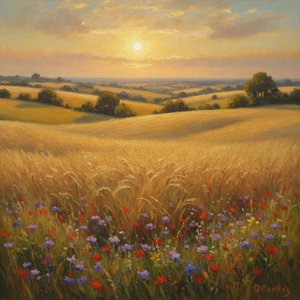
Golden Fields & Sun-Drenched Meadows: Capturing the Soul of Impressionist Landscapes
Immerse yourself in the luminous world of Impressionist landscapes. Discover how masters like Monet and Gauguin captured ephemeral light through plein air painting, and learn to bring the soul of sun-drenched meadows into your home with exquisite, hand-painted oil reproductions.

Chasing Light: The Soulful Beauty and Eternal Legacy of Impressionist Landscapes
Discover the soulful beauty of Impressionist landscapes. Explore the mastery of Claude Monet and the revolution of light through expert art history insights and premium, hand-painted oil reproductions designed for discerning collectors.
Explore artworks organized by themes, styles, and characteristics.


