

 Preview
 Send
Send Share
Share
 Details
 Guide
Guide

 Download
 Similars
 X-Ray
X-Ray Diaporama
 Q&A
Q&A Stats
Statsuntitled (3469)

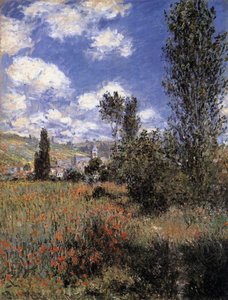
Admire Claude Monet's iconic Impressionist landscape – 'untitled (3469)' captures serene beauty with wildflowers, a tranquil pond and reflections of willow trees at Giverny.
 Read More
Impressionist master Claude Monet is famous for his Water Lilies series. Discover the beauty of his light-filled landscapes today.
Get a print-ready file that goes far beyond the web preview. Every digital image we sell comes from a high-resolution master in our stock database — usually 5,000 to 15,000 pixels wide — so you can print large, crop tightly, or reproduce fine detail with confidence.
No file leaves our studio untouched. A digital expert checks the colors against the original painting and corrects them if needed, then improves clarity and detail with professional retouching tools — always staying faithful to the artist's brushwork and style. The result is an image that looks like the painting, not like a filtered scan.
You approve before you're done: our expert sends the image by e-mail within 72 hours for your review. Not satisfied? Ask for improvements or corrections, or request a refund if the quality falls short.
This is the quality relied on by publishers, design studios, galleries and print shops.
Digital Image
Download a high-resolution file for personal display, printing, and creative projects. ( Switch to Print Buy Hand Made Painting)
Included in Every Digital Image Order
Expert Digital Delivery, Guaranteed
When you choose TopImpressionists.com, you're not just getting an image - you're receiving a professionally enhanced digital artwork, crafted with precision and backed by a satisfaction guarantee. Here's everything that comes with your order, automatically:

Fast Email Delivery
Your high-resolution digital image file will be emailed to you within 72 hours of ordering - ready for immediate use.

AI-Enhanced Digital File
Your artwork is professionally optimized using advanced AI tools and manual editing, ensuring maximum detail, clarity, and color accuracy.

Free Lifetime Re-Delivery
Accidentally deleted or lost your file? No worries - we'll resend it to you anytime, free of charge.

No Import Fees - Ever
Enjoy your artwork instantly with zero customs, duties, or delivery fees - digital downloads are always tax-free.

Color Accuracy Guarantee
We ensure your digital image reflects the original colors as closely as possible using professional tools and color management.

100-Day Satisfaction Guarantee
If you're not satisfied with your digital image, we'll revise it or refund 100% within 100 days - no questions asked.

100% Money-Back Guarantee
Not satisfied? Get a full refund within 100 days of receiving your digital file - no questions asked.

Bulk Order Discounts
Buy 3 images, save 10% - Buy 5, save 15% - Buy 10+, save 20%. Great for creative projects, galleries, and agencies.
The Soul of Impressionism Captured in “untitled (3469)”
Claude Monet’s “untitled (3469),” a deceptively simple landscape depicting a tranquil field brimming with wildflowers, transcends mere visual representation. It embodies the very essence of Impressionism—a radical departure from academic painting that prioritized capturing fleeting sensations and atmospheric conditions rather than meticulous detail.
- Subject Matter: The scene centers around a serene meadow populated by an abundance of colorful blossoms. Monet meticulously observed this natural tableau, striving to convey not just what he *saw*, but how it *felt*.
- Style & Technique: Characteristic of Monet’s oeuvre, “untitled (3469)” showcases loose brushstrokes—a hallmark of Impressionism—that blend seamlessly together to create an ethereal haze. The artist employed a technique known as plein air painting, working directly outdoors to capture the immediacy of light and color.
A Pioneer of Light: Monet’s Revolutionary Approach
Before Monet's groundbreaking method, artists painstakingly recreated subjects with painstaking accuracy, prioritizing realism above all else. Boudin’s influence was instrumental in fostering this revolutionary concept—the deliberate abandonment of studio conventions for the observation and depiction of nature. This decision fundamentally altered the trajectory of art history.
- Historical Context: Painted circa 1874, “untitled (3469)” emerged during a pivotal moment in artistic innovation. Impressionism challenged established norms and provoked considerable controversy within the Parisian Salon—the official exhibition showcasing new artworks.
Symbolism Beyond Surface Beauty
Beyond its picturesque composition, "untitled (3469)" carries subtle symbolic weight. The woman strolling through the meadow represents humanity’s connection to the natural world – a core theme in Monet's artistic vision. Furthermore, the trees and sky contribute to an overarching sense of tranquility and contemplation.
- Emotional Impact: Monet aimed to evoke feelings of peace and wonder, mirroring the beauty he perceived in his surroundings. The painting’s luminous palette—dominated by shades of green, yellow, and blue—captures the vibrancy of springtime and invites viewers into a meditative state.
The Legacy of Impressionism: Monet's Enduring Influence
"untitled (3469)" stands as a testament to Monet’s unwavering dedication to capturing the ephemeral qualities of light and color. His pioneering approach paved the way for subsequent artistic movements, establishing Impressionism as one of the most influential styles in modern art.
Questions & Answers
What does "untitled (3469)" by Claude Monet depict, and in what mood?
"untitled (3469)" shows landscape, flowers, woman walking, trees, pond, sunlight, reflections, and its recorded mood is serene.
What space matches the colors of "untitled (3469)" by Claude Monet?
The neutrals colors of "untitled (3469)" by Claude Monet match its recommended space: a living room.
How do movement and era meet in "untitled (3469)" by Claude Monet?
In "untitled (3469)" by Claude Monet, the Impressionism movement meets the 19th-Century era.
Related Artworks



Artist Biography
The Early Life of Claude Monet
To understand the mechanics of modern perception, one must look at the specific, often turbulent, origins of Claude Monet. Born on 14 November 1840 in Paris, France, he was the second son of Claude-Adolphe Monet and Louise-Justine Aubrée Monet. His entry into the world was marked by a formal baptism on 20 May 1841 at Notre-Dame-de-Lorette, Paris, where he was recorded under the name Oscar-Claude. This early Parisian existence was short-lived. By 1845, the family had relocated to Le Havre, Normandy, a move that shifted his environment from the urban center to the salt-misted atmosphere of the coast.
The stability of his youth was fractured by personal loss. In January 1857, when he was only sixteen years old, his mother died. This event stripped away a primary source of support during his formative years. While his father initially intended for him to enter the world of commerce, the trajectory of his life was already moving toward a different, more visual preoccupation. The shift from the structured life of a Parisian household to the unpredictable elements of Normandy provided the raw, environmental data that would eventually define his entire approach to light and atmosphere.
Artistic Training and Early Influences
Monet’s technical foundation was built on a series of practical, unglamorous lessons that prioritized direct observation over academic theory. His formal education began when he entered the Le Havre secondary school of the arts on 1 April 1851. Before the structured environment of the school, he received his first drawing lessons from Jacques-François Ochard. These early exercises provided the basic dexterity required for a professional career, but they were merely the starting point for a much more radical approach to the medium.
The real shift occurred through his connection with Eugène Boudin. Boudin did more than teach him how to handle oil paints; he introduced the concept of painting en plein air. This insistence on working outdoors, facing the elements, stripped away the safety of the studio. By the time Monet moved to Paris and studied under Charles Gleyre in 1862, his trajectory was already set toward the immediate and the perceptual. In Gleyre’s studio, he was not an isolated student but part of a specific cohort of painters, including classmates Auguste Renoir and Frédéric Bazille. These associations were not merely social; they were the crucible for a new way of seeing that rejected the dark, controlled environments of the traditional Salon.
The Rebellion of Impressionism
The art establishment of the 19th century relied on the rigid, dark constraints of the academic Salon, but Monet chose a different path. In 1874, he joined a group of artists to organize an independent exhibition, a direct challenge to the conservative standards of the time. This was not a mere disagreement over technique; it was a fundamental break from tradition. By seeking to record the world as it was actually perceived by the eye, he became a key precursor to modernism. He moved away from the polished, photographic realism demanded by the academies to focus on the subjective sensation of a scene.
The movement eventually took its name from a single work: Impression, Sunrise. Originally, the term "Impressionism" was intended as a mockery by critics who viewed his loose brushstrokes and unfinished appearance with derision. Monet did not fight the label. He embraced it, using the concept to define a style centered on the fleeting, transient moment. He replaced traditional dark grounds with light-colored primers, allowing light to dictate the composition rather than strict linear perspective.
- Impression, Sunrise (1873)
Life in Argenteuil and Vétheuil
The period between 1871 and 1878 in Argenteuil was a time of intense observation. Living near the Seine, Monet focused on the domestic and the immediate. This era produced works like The Promenade at Argenteuil, Soleil Couchant (1874), which captured the specific light of a sunset. His life here was defined by the presence of his wife, Camille, and their son, Jean. This stability provided a foundation for his experiments with light and color before the movement's social pressures intensified.
Tragedy disrupted this rhythm. Following the death of Camille in 1879, Monet moved to Vétheuil, where he remained until 1881. This transition marked a shift in his personal and professional trajectory. The loss of his wife coincided with a period of significant change in his domestic life and his approach to the landscape. He moved next to Poissy, staying there from 1881 until 1883. These years were not merely transitional; they were essential for an artist refining his ability to translate sensory perception into paint.
- The Promenade at Argenteuil, Soleil Couchant (1874)
- Camille Monet On Her Deathbed (1879)
The Sanctuary of Giverny
Monet’s move to Giverny in 1883 marked a shift from observing nature to actively constructing it. He spent the next 43 years transforming this property into a controlled environment designed for visual study. This was no casual gardening; he engineered an elaborate landscape featuring a water lily pond and a Japanese bridge. By manipulating the terrain, he created a living laboratory where light and water interacted under his specific terms. He was not merely a spectator of the landscape but its architect.
The focus of his later years centered on this aquatic environment. For the final 31 years of his life, the water lily pond became his primary subject. He used the garden to document the way light dissolved forms and how shadows moved across the surface. This period of intense observation resulted in a massive output of canvases that stripped away traditional perspective. His work from this era remains a direct record of his obsession with the ephemeral qualities of his own creation.
- Irises in Monet's Garden (1900)
- The Japanese Bridge (1918)
Technique and Artistic Style
Monet’s approach to the canvas was a rejection of the dark, controlled environments of the traditional studio. He prioritized en plein air painting, taking his easel directly into the unpredictable elements of nature to capture light as it actually functioned. This commitment to immediacy required a specific technical vocabulary. He utilized rapid, visible brushstrokes and a method of broken color, applying unmixed pigments side-by-side. This forced the viewer's eye to perform the blending, creating an optical truth that a smooth, blended surface could never achieve. He abandoned the heavy, dark grounds favored by the Academy, opting instead for light-colored primers that maximized the luminosity of his palette.
His compositions often discarded the safety of linear perspective. Instead, he favored asymmetrical arrangements, a structural choice heavily influenced by the flattened planes of Japanese woodblock prints. This shift moved his work away from traditional three-dimensional modeling and toward a more direct, sensory experience of the subject. He was less interested in the solid form of an object and more focused on how sunlight and atmosphere dissolved those forms into shifting color. His method was a calculated attempt to record the subjective sensation of a scene rather than a photographic likeness.
- Impression, Sunrise (1872/1873)
- The Walk. Lady with a Parasol (1875)
- Grainstacks in the Sunlight, Midday (1890)
The Monumental Water Lilies Series
The final decades of Monet's life were consumed by a singular, obsessive focus: the water lily pond at his home in Giverny. This was not a casual subject. He produced approximately 250 oil paintings of these lilies, a massive output that defined his late-stage artistic production. The series moved away from traditional landscape structures, focusing instead on the immediate, shifting surface of the water. This period of work was complicated by his physical decline, as many of these canvases were painted while he struggled with cataracts. This visual impairment likely influenced the abstraction and the heavy emphasis on color and light that characterize the series.
The scale and repetition of the works reveal a commitment to documenting the specific, transient qualities of his garden. He did not merely paint a pond; he recorded the way light and atmosphere interacted with the water over time. The resulting collection is a massive, cohesive body of work that prioritizes the sensory experience of the environment over clear, defined outlines. This was his most sustained effort, a relentless attempt to capture the essence of a single, changing subject through sheer volume and repetition.
- le bassin aux nympheas - reflets verts (1920)
- Reflections of Clouds on the Water-Lily Pond (tryptich, center panel) (1920)
Legacy and Modern Influence
Monet fundamentally altered the trajectory of modern art. He is a key precursor to modernism, having shifted the focus of painting from the depiction of solid objects to the recording of visual perception. This shift forced a departure from the rigid, dark constraints of academic tradition. His insistence on capturing the subjective sensation of a scene changed how artists approached the canvas. He did not merely paint landscapes; he documented the way light and atmosphere dissolve form.
His popularity and fame soared during the second half of the 20th century. This resurgence solidified his position as a primary influence for many generations of artists. His method of using unmixed colors and broken brushstrokes provided a new visual language that moved toward a near-abstract state. This evolution is most evident in his late works, where the horizon line vanishes and the viewer is immersed in shifting color. His ability to translate the transient nature of light into a permanent medium remains a central point of study for those examining the roots of modern visual thought.
Where to See His Works Today
To witness the physical reality of his impact, one must travel to Paris. The Musée Marmottan Monet holds the world's largest collection of his paintings, providing a concentrated look at his evolution. Nearby, the Musée d'Orsay contains 45 of his works, offering a significant density of his output within a single institution. These collections allow for a direct comparison of how his handling of light changed over decades.
The reach of his influence extends far beyond France. In the United States, the Metropolitan Museum of Art in New York holds 25 of his works, while the Art Institute of Chicago maintains 17. These holdings ensure his visual language remains accessible to a global audience. Seeing these canvases in person reveals the actual texture of his brushwork, which often looks different under museum lighting than it does in digital reproductions.
- Impression, Sunrise (1873)
- The Walk. Lady with a Parasol (1875)
- The Japanese Bridge (1918)

Claude Monet
1840 - 1926 , France
Quick Facts
- Artistic Movement Or Style: Impressionism
- Artists Or Movements Influenced By This Artist: ['Modernism']
- Artists Who Influenced This Artist:
- Eugène Boudin
- J.M.W. Turner
- Full Name: Oscar-Claude Monet
- Nationality: French
- Notable Artworks:
- Impression, Sunrise
- Water Lilies
- Haystacks
- Rouen Cathedral
- Place Of Birth: Paris, France
- Date Of Birth: 1840
- Date Of Death: 1926