

 Preview
 Send
Send Share
Share
 Details
 Guide
Guide

 Download
 Similars
 X-Ray
X-Ray Diaporama
 Stats
StatsWillows, Giverny


 Read More
Purchase a high-resolution, enhanced digital image, far superior to the online preview.
Each file is meticulously prepared by our in-house specialists using advanced tools and expert manual retouching. We ensure every image has exceptional clarity, precise color accuracy, and fine detail.
The final file is delivered via email within 72 hours, optimized for immediate use in professional, editorial, and print environments. This is the same quality trusted by top-tier design studios, publishers, and galleries.
Digital Image
Download a high-resolution file for personal display, printing, and creative projects. ( Switch to Print Buy Hand Made Painting)
Included in Every Digital Image Order
Expert Digital Delivery, Guaranteed
When you choose TopImpressionists.com, you're not just getting an image - you're receiving a professionally enhanced digital artwork, crafted with precision and backed by a satisfaction guarantee. Here's everything that comes with your order, automatically:

Fast Email Delivery
Your high-resolution digital image file will be emailed to you within 72 hours of ordering - ready for immediate use.

AI-Enhanced Digital File
Your artwork is professionally optimized using advanced AI tools and manual editing, ensuring maximum detail, clarity, and color accuracy.

Free Lifetime Re-Delivery
Accidentally deleted or lost your file? No worries - we'll resend it to you anytime, free of charge.

No Import Fees - Ever
Enjoy your artwork instantly with zero customs, duties, or delivery fees - digital downloads are always tax-free.

Color Accuracy Guarantee
We ensure your digital image reflects the original colors as closely as possible using professional tools and color management.

100-Day Satisfaction Guarantee
If you're not satisfied with your digital image, we'll revise it or refund 100% within 100 days - no questions asked.

100% Money-Back Guarantee
Not satisfied? Get a full refund within 100 days of receiving your digital file - no questions asked.

Bulk Order Discounts
Buy 3 images, save 10% - Buy 5, save 15% - Buy 10+, save 20%. Great for creative projects, galleries, and agencies.
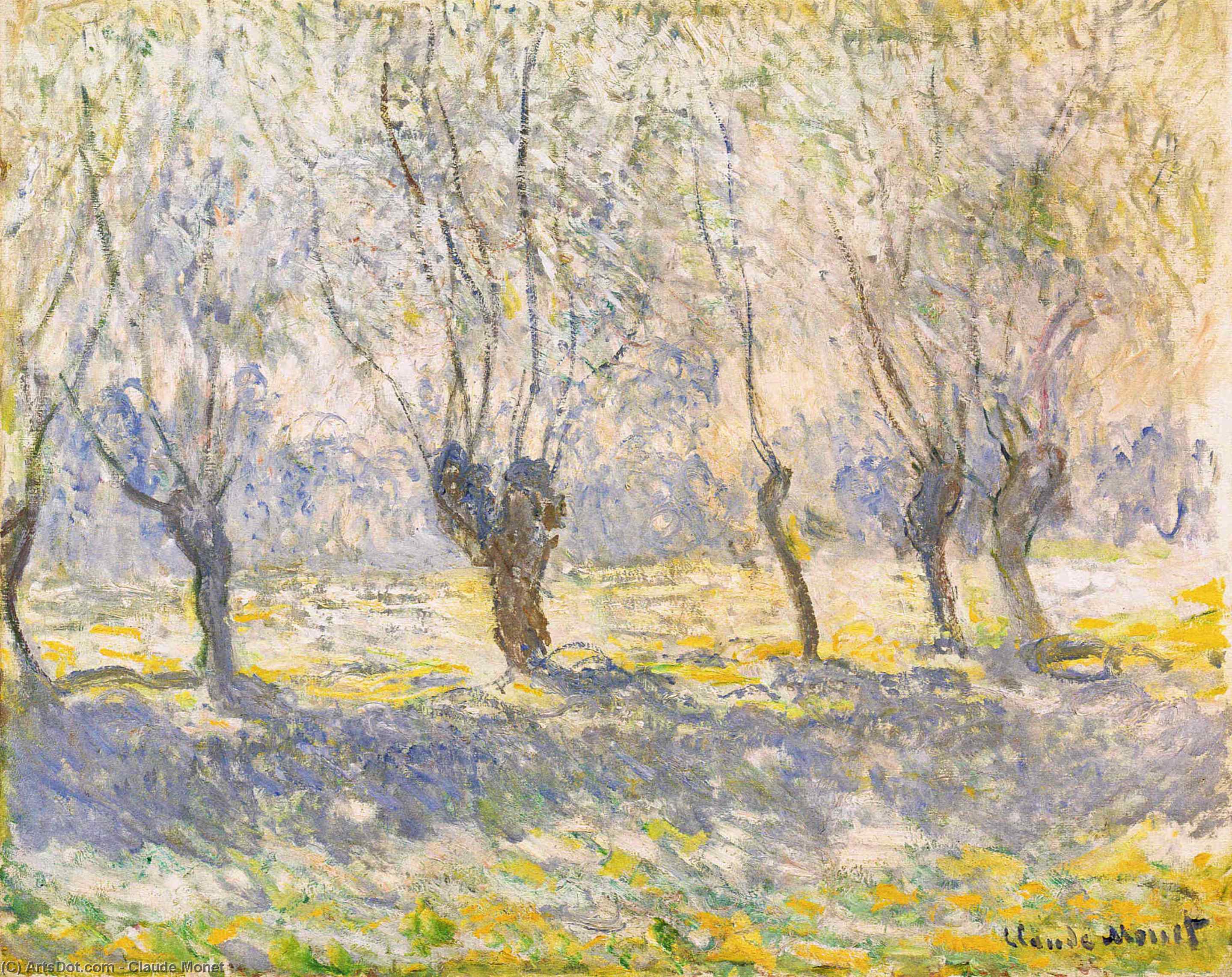
Willows, Giverny: A Study in Serenity by Claude Monet
- Artist: Claude Monet
- Year: 1886
- Style: Impressionism
- Medium: Oil on Canvas (reproduction)
“Willows, Giverny,” painted in 1886 by the celebrated Claude Monet, is a quintessential example of his Impressionistic style. This captivating artwork transports viewers to the tranquil banks of the Epte River near Monet’s home in Giverny, France. The scene depicts graceful willow trees gently swaying over the water's surface, bathed in the soft light characteristic of Monet’s vision.
The Essence of Impressionism
Impressionism, a revolutionary art movement that emerged in late 19th-century France, sought to capture fleeting moments and the subjective experience of light and color. Rejecting the rigid conventions of academic painting, Impressionist artists like Monet prioritized depicting their immediate sensory impressions rather than striving for photographic realism. “Willows, Giverny” perfectly embodies this philosophy through its loose brushstrokes, vibrant palette, and emphasis on atmosphere.
Technique and Composition
Monet’s masterful technique is evident in the painting's delicate rendering of light and shadow. He employed short, broken brushstrokes to create a shimmering effect on the water's surface and to suggest the movement of the willow branches. The composition is carefully balanced, with the trees forming a natural frame around the tranquil river scene. The use of color—predominantly greens, blues, and hints of yellow—evokes a sense of peace and harmony. Monet’s ability to capture the ephemeral qualities of light and atmosphere is what makes this piece so compelling.
Historical Context and Symbolism
“Willows, Giverny” was created during a period when Monet was deeply immersed in exploring the natural world around his home. Giverny became his sanctuary and an endless source of inspiration for his art. The willow tree itself often symbolizes grace, flexibility, and resilience—qualities that resonate with the Impressionist spirit of adapting to change and embracing the beauty of the present moment. This painting reflects Monet's personal connection to nature and his desire to share its restorative power with the world.
Emotional Impact and Legacy
“Willows, Giverny” evokes a profound sense of serenity and tranquility. The gentle sway of the willows, the shimmering water, and the soft light combine to create an atmosphere of peaceful contemplation. This artwork is not merely a depiction of a landscape; it's an invitation to immerse oneself in the beauty of nature and to appreciate the fleeting moments that make life so precious. As a cornerstone of Impressionist art, “Willows, Giverny” continues to inspire awe and admiration for its artistic brilliance and emotional depth.
Questions & Answers
Who sells hand-painted copies of "Willows, Giverny" by Claude Monet?
Hand-painted copies of "Willows, Giverny" by Claude Monet are sold on this website: a hand-painted oil reproduction on linen canvas, ordered from its Hand-Painted Reproduction page.
Is "Willows, Giverny" by Claude Monet a portrait, landscape or square composition?
"Willows, Giverny" by Claude Monet is a landscape composition. The proportions are worth checking before choosing a print size.
What print size of "Willows, Giverny" by Claude Monet fits the recommended room?
In a living room, "Willows, Giverny" is suggested at a medium print size.
Related Artworks


Artist Biography
A Life Shaped by Light and Water
The story of Oscar-Claude Monet begins in the streets of Paris, though his heart was often found wandering the salt-misted air of Le Havre. As a young boy, he moved to Normandy, where his father initially hoped he would follow a path in commerce. Yet, the boy possessed a restless eye for detail, finding early success by selling charcoal caricatures to local acquaintances. It was during these formative years that a chance encounter with Eugène Boudin changed everything. Boudin did not merely offer lessons in oil paint; he introduced the young man to the practice of painting en plein air, teaching him to set his easel directly within the unpredictable elements of nature.
This early training instilled a lifelong obsession with the fleeting moment. When the Franco-Prussian War forced him into the streets of London, Monet found himself absorbing the atmospheric effects seen in the works of J.M.W. Turner. He returned to France with a new understanding of how mist and light could dissolve solid forms. In Paris, he sought formal instruction under Charles Gleyre, where he formed deep bonds with fellow painters like Auguste Renoir. These friendships were forged in a shared desire to break away from the rigid, dark constraints of the academic Salon, seeking instead a way to record the world as it was actually perceived by the eye.
The Rebellion of Impression
The year 1874 marked a turning point for this group of rebels. Dissatisfied with conservative standards, they organized their own independent exhibitions. It was during one such showing that his painting, Impression, Sunrise, gave a name to a movement that many initially viewed with derision. The term "Impressionism" emerged from the very criticism meant to mock his loose brushstrokes and unfinished appearance. Monet did not recoil from this label; he embraced it, using it to define a style centered on the subjective sensation of a scene.
His technique became a study in optical truth. He applied unmixed colors side-by-side, a method known as broken color, allowing the viewer's eye to blend the hues. He rejected traditional dark grounds, opting instead for light-colored primers that added a new brightness to his canvases. His work often focused on the following elements:
- The use of rapid, visible brushstrokes to capture movement.
- The study of how sunlight alters the appearance of a single subject over time.
- The rejection of linear perspective in favor of asymmetrical, flattened arrangements influenced by Japanese prints.
Giverny and the Final Vision
In 1883, Monet settled in Giverny, creating a sanctuary that would become his most profound subject. He transformed his property into an elaborate garden, complete with a water lily pond and a Japanese bridge. This was no mere landscape; it was a living laboratory where he could observe the interplay of light on water and foliage under controlled conditions. The gardens at Giverny provided him with a steady stream of inspiration for decades.
The later years of his life were defined by the monumental Water Lilies series. These vast canvases, often painted while he struggled with cataracts, moved toward a near-abstract state where the horizon line vanished entirely. He painted the same pond repeatedly, documenting the way shadows danced across the surface at dusk or how morning mist clung to the lilies. Through these works, he achieved a sense of immersion, inviting anyone who looked upon them to lose themselves in a world of pure, shifting color. He left behind a legacy that fundamentally altered the trajectory of modern art, proving that the most transient moment could be captured through the power of paint.

Claude Monet
1840 - 1926 , France
Quick Facts
- Full Name: Oscar-Claude Monet
- Nationality: French
- Date Of Birth: 1840
- Date Of Death: 1926
- Place Of Birth: Paris, France
- Notable Artworks:
- Impression, Sunrise
- Water Lilies
- Haystacks
- Rouen Cathedral
- Artistic Movement Or Style: Impressionism
- Artists Who Influenced This Artist:
- Eugène Boudin
- J.M.W. Turner
- Artists Or Movements Influenced By This Artist: ['Modern Art']