
 Preview
 Send
Send Share
Share
 Details
 Guide
Guide

 Download
 Similars
 X-Ray
X-Ray Diaporama
 Q&A
Q&A Stats
StatsJerusalem

- 28.0 x 40.0 cm


 Read More
Get a print-ready file that goes far beyond the web preview. Every digital image we sell comes from a high-resolution master in our stock database — usually 5,000 to 15,000 pixels wide — so you can print large, crop tightly, or reproduce fine detail with confidence.
No file leaves our studio untouched. A digital expert checks the colors against the original painting and corrects them if needed, then improves clarity and detail with professional retouching tools — always staying faithful to the artist's brushwork and style. The result is an image that looks like the painting, not like a filtered scan.
You approve before you're done: our expert sends the image by e-mail within 72 hours for your review. Not satisfied? Ask for improvements or corrections, or request a refund if the quality falls short.
This is the quality relied on by publishers, design studios, galleries and print shops.
Digital Image
Download a high-resolution file for personal display, printing, and creative projects. ( Switch to Print Buy Hand Made Painting)
Included in Every Digital Image Order
Expert Digital Delivery, Guaranteed
When you choose TopImpressionists.com, you're not just getting an image - you're receiving a professionally enhanced digital artwork, crafted with precision and backed by a satisfaction guarantee. Here's everything that comes with your order, automatically:

Fast Email Delivery
Your high-resolution digital image file will be emailed to you within 72 hours of ordering - ready for immediate use.

AI-Enhanced Digital File
Your artwork is professionally optimized using advanced AI tools and manual editing, ensuring maximum detail, clarity, and color accuracy.

Free Lifetime Re-Delivery
Accidentally deleted or lost your file? No worries - we'll resend it to you anytime, free of charge.

No Import Fees - Ever
Enjoy your artwork instantly with zero customs, duties, or delivery fees - digital downloads are always tax-free.

Color Accuracy Guarantee
We ensure your digital image reflects the original colors as closely as possible using professional tools and color management.

100-Day Satisfaction Guarantee
If you're not satisfied with your digital image, we'll revise it or refund 100% within 100 days - no questions asked.

100% Money-Back Guarantee
Not satisfied? Get a full refund within 100 days of receiving your digital file - no questions asked.

Bulk Order Discounts
Buy 3 images, save 10% - Buy 5, save 15% - Buy 10+, save 20%. Great for creative projects, galleries, and agencies.
David Bomberg’s Jerusalem: A City Captured in Bold Color and Geometric Form
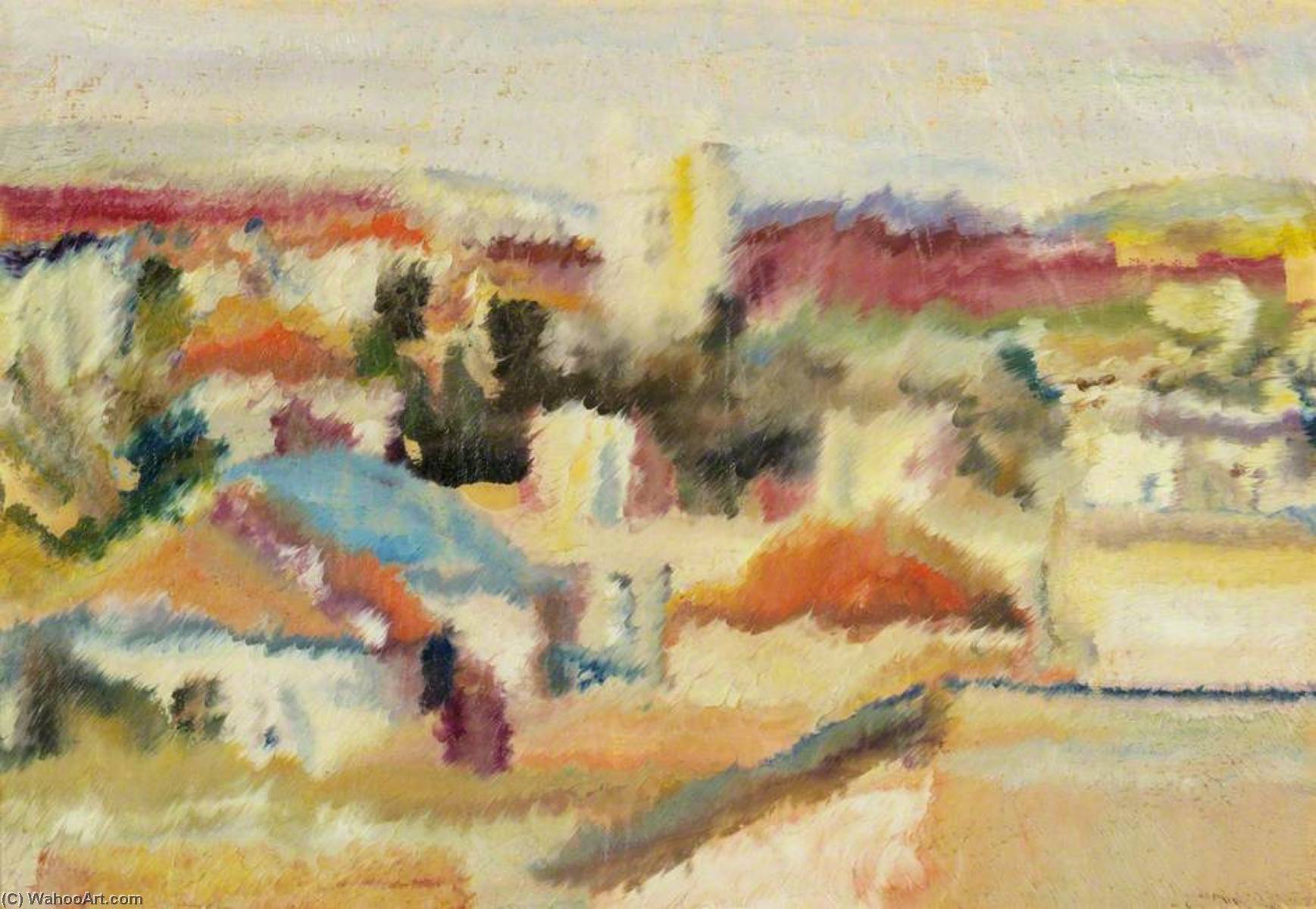
David Bomberg's "Jerusalem" stands as a testament to the artist’s distinctive vision—a cityscape rendered with audacious hues and geometric precision that transcends mere representation, delving into the emotional core of its subject. Painted in 1925 during his formative years as an avant-garde painter, this oil on canvas artwork resides at the Bristol Museum – Art Gallery, offering visitors a glimpse into Bomberg’s artistic journey and his profound engagement with the spiritual landscape of Jerusalem.Style and Technique: Embracing Cubist Influences
Bomberg's approach to painting is undeniably influenced by the revolutionary movements of Cubism and Futurism that dominated European art in the early 20th century. However, unlike many of his contemporaries who adhered strictly to these stylistic conventions, Bomberg skillfully blended geometric abstraction with Impressionistic techniques—a harmonious fusion evident in the artwork’s textured surface and vibrant color palette. The artist employed bold shades of ochre, crimson, and teal to depict buildings and mountains alike, creating a dynamic interplay between light and shadow that imbues the scene with palpable atmosphere. This deliberate layering of pigment contributes significantly to the painting's expressive power.Historical Context: Echoes of Zionism and Artistic Exploration
Created during a period marked by fervent Zionist aspirations—the burgeoning movement advocating for Jewish self-determination in Palestine—"Jerusalem" reflects Bomberg’s personal fascination with the city’s history and cultural significance. The painting captures not only its architectural grandeur but also its spiritual essence, symbolized primarily by the prominent church steeple and clock tower. These elements serve as anchors to time and tradition, grounding the cityscape within a broader narrative of faith and resilience—themes central to Bomberg's artistic sensibilities.Symbolism: Beyond Representation – Emotion Embodied
More than just a depiction of Jerusalem’s physical appearance, Bomberg’s artwork operates on a deeper symbolic level. The geometric shapes employed throughout the composition aren’t merely decorative; they represent an attempt to distill the essence of the city into its fundamental forms—a visual metaphor for stability amidst change and aspiration toward transcendence. Furthermore, the artist's masterful use of color communicates emotion—the fiery reds conveying passion and determination, while the cool blues evoking contemplation and serenity.Emotional Impact: A Window Into Bomberg’s Soul
“Jerusalem” is undeniably a painting that resonates with profound emotional depth. It invites viewers to contemplate not only the beauty of the cityscape but also the artist's own inner landscape—his intellectual curiosity, his artistic ambition, and his unwavering belief in the transformative power of art. As a result, it remains an enduring symbol of artistic innovation and spiritual contemplation—a captivating masterpiece that continues to inspire admiration and scholarly inquiry.- Artist: David Bomberg
- Year: 1925
- Medium: Oil on Canvas
- Dimensions: 28 x 40 cm
- Location: Bristol Museum - Art Gallery, United Kingdom
Questions & Answers
What technique and size is the original "Jerusalem" by David Bomberg?
The medium of "Jerusalem" by David Bomberg is acrylic on canvas, and its recorded dimensions are 28 x 40 cm.
What mood would "Jerusalem" bring to a space?
The dramatic atmosphere of "Jerusalem" by David Bomberg matches its recommended space: a living room.
Where can I download "Jerusalem" by David Bomberg?
"Jerusalem" by David Bomberg can be downloaded from the artwork's Download page, as a high-resolution digital image download.
Artist Biography
Early Life and Artistic Training
- Born: Birmingham, United Kingdom (December 5, 1890)
- Died: London, United Kingdom (August 19, 1957)
- One of the 'Whitechapel Boys' – a group of East End artists who emerged in the early 20th century.
Born to Polish-Jewish immigrant parents, Abraham and Rebecca Bomberg, initially studied at the City and Guilds Technical Art School before training as a lithographer in Birmingham.
Studied under Walter Sickert at Westminster School of Art (1908-1910), influenced by Sickert's focus on form and urban life. Significant exposure to Paul Cézanne through the 1910 Roger Fry exhibition "Manet and the Post-Impressionists." Attended the Slade School of Art (1911), winning the Tonks Prize for his drawing of fellow student Isaac Rosenberg.
The Avant-Garde Years: Cubism, Futurism, and Controversy
- At the Slade, Bomberg was part of a remarkable generation including Mark Gertler, Stanley Spencer, C.R.W. Nevinson, and Dora Carrington.
- Influenced by the 1912 London exhibitions of Italian Futurists and Fry's second Post-Impressionist exhibition (Picasso, Matisse, Fauvists, Wyndham Lewis).
- Developed a distinctive style combining Cubism and Futurism – characterized by geometric compositions, limited color palettes, angular figures, and grid-like structures.
- His radical approach led to expulsion from the Slade School of Art in 1913, deemed too audacious for the institution's conventional methods.
- Briefly associated with Bloomsbury Group’s Omega Workshops and exhibited with the Camden Town Group. Showed affinity with Wyndham Lewis’s Vorticist movement but remained independent, refusing full involvement.
From War to Landscape: A Shift in Style
Experiences as a private soldier during World War I profoundly impacted his artistic vision, leading to a move away from abstraction.
The 1920s saw Bomberg adopt a more figurative style, focusing on portraits and landscapes drawn directly from nature. Developed an increasingly expressionist technique, marked by textured impasto and emotional intensity.
Extensive travels through the Middle East (particularly Palestine) and Europe significantly influenced his later work. His depictions of Jerusalem are particularly notable.
Later Years and Legacy
- From 1945 to 1953, taught at Borough Polytechnic (now London South Bank University), influencing a generation of artists including Frank Auerbach, Leon Kossoff, Philip Holmes, Cliff Holden, Edna Mann, Dorothy Mead, Gustav Metzger, Dennis Creffield, Cecil Bailey and Miles Richmond.
- Married landscape painter Lilian Holt.
- Despite periods of relative obscurity during his lifetime, Bomberg's work has gained increasing recognition in recent decades as a significant contribution to British modern art.
- David Bomberg House at London South Bank University is named in his honor.
- His legacy lies in his unique synthesis of European avant-garde movements and his later development of a powerful, expressive landscape style that captured the essence of place and human experience.

David Bomberg
1890 - 1957 , United Kingdom
Quick Facts
- Full Name: David Garshen Bomberg
- Nationality: British
- Date Of Birth: 1890
- Date Of Death: 1957
- Place Of Birth: Birmingham, United Kingdom
- Notable Artworks:
- Self Portrait (1937)
- Kitty, the Artist’s Sister (1929)
- Study for a Painting
- Jerusalem
- Artistic Movement Or Style:
- Cubism
- Futurism
- Expressionism
- Artists Who Influenced This Artist:
- Paul Cézanne
- Walter Sickert
- Wyndham Lewis
- Artists Or Movements Influenced By This Artist:
- Frank Auerbach
- Leon Kossoff