


 Preview
 Send
Send Share
Share
 Details
 Guide
Guide

 Download
 Similars
 X-Ray
X-Ray Diaporama
 Stats
StatsNepean River


Discover 'Nepean River' by Desiderius Orban (1945). An evocative impressionistic landscape painting of rural Australia. Explore thick impasto & atmospheric perspective in this unique artwork.
Desiderius Orban (1884-1986) was a Hungarian painter who brought Cubism, Expressionism & Fauvism to Hungary before flourishing in Australia. Influenced by Matisse & Van Gogh, he impacted generations as an artist and teacher.
 Read More
The artwork displayed on this page is protected by copyright law, which means we cannot legally create or sell an identical reproduction. This protection is enforced under international agreements such as the Berne Convention and by national laws, including those outlined by the U.S. Copyright Law - Title 17.
As a respectful and legal alternative, we offer custom, hand-painted artworks inspired by the original. Our skilled and professional artists carefully study the original's style, mood, and artistic essence to create a new, unique piece that evokes the same feeling - while remaining an original creation in its own right.
This method fully complies with copyright regulations because it does not involve copying or duplicating the protected artwork. Instead, it is a creative reinterpretation - a new painting that is influenced by the original but not identical to it.
Hand Made Oil Reproduction
Hand-painted oil on canvas in your size and frame, made to order by our artists. ( Switch to Print Switch to Digital Image)




































Standard
custom
CM
INCH
Pick from our preset sizes that match the artwork's original proportions.
Loading sizes...

width
height
Type the width and the height you need, to fit your frame or your wall. This is hand-painted, so for a size with a different shape the artist can paint a bit more around the picture, or cut a bit — you choose. We send you a digital mockup to approve before the painting starts. The picture shown on this page does not show the real result — only the mockup does.
Examples of what can be changed: Replace face with customer photo; Add pet (e.g., replace cat with dog); Include hidden message in background; Change background landscape or elements.
After order, TopImpressionists.com team will email client for instructions and provide a mockup preview
After order, TopImpressionists.com team will email client for instructions and provide a mockup preview
Worldwide Delivery () in 3/4 weeks instead of standard 5 weeks. (25 October). No compromise on quality.

Free Worldwide Express Shipping

High-Quality Linen Canvas

Full Shipping Insurance

Customs Tax Refund Guarantee

True Color Matching Guarantee

100-Day Return Policy (Defects Only)

100% Money-Back Guarantee

Bulk Discount Offer
 Glass option is only available in size under 110 CM

Nepean River
Reproduction Medium
Reproduction Size
-


Total Price
$ 269
Related Artworks


Artist Biography
The Visionary Journey of Desiderius Orban
The story of Desiderius Orban is one of profound movement, both geographical and stylistic, tracing a path from the heart of Central Europe to the vibrant landscapes of Australia. Born in 1884 in Győr, Hungary, as Orbán Dezső, his early years were steeped in the rich academic traditions of Budapest. Under the tutelage of János Pentelei Molnár, Orban developed a foundational mastery of form that would later serve as the bedrock for his radical experiments with modernism. His artistic soul, however, was restless, yearning for the avant-garde currents flowing through the great art capitals of Europe.
It was in Paris that Orban truly found his creative voice. Immersed in the electric atmosphere of the early 20th century, he encountered the transformative power of Fauvism and Expressionism. The bold, emotive brushwork of Vincent van Gogh, the structural integrity of Paul Cézanne, and the vibrant, liberated color palettes of Henri Matisse became his guiding lights. This period of intense exposure allowed him to absorb the revolutionary aesthetics that were dismantling classical traditions, preparing him to become a vital conduit for modernism in his homeland.
The Architect of Hungarian Modernism
Upon returning to Hungary, Orban became a central figure in a movement that would forever alter the nation's cultural landscape. Alongside luminaries such as Károly Kernstok, Béla Czóbel, and Róbert Berény, he joined the group known as The Eight (or the "Neos"). This collective of young, daring artists sought to break away from provincialism and introduce the cutting-edge techniques of Western Europe—specifically Cubism and Fauvism—to the Hungarian public. Orban’s role in this group was pivotal; his work acted as a bridge between the established academic style and the fractured, energetic geometries of the new age.
The 1911 exhibition of The Eight remains a landmark moment in art history, showcasing a radical departure from tradition that challenged the sensibilities of the era. Through his paintings, Orban explored the interplay of light, color, and structure, often utilizing a more fragmented approach to composition that echoed the influence of Pablo Picasso and Georges Braque. His ability to synthesize these complex European influences into a unique, personal language solidified his reputation as a pioneer of the Hungarian avant-garde.
Resilience and Legacy in a New World
The shadows of political upheaval eventually forced Orban onto a new, unexpected trajectory. As the rise of Nazism and Fascism threatened the very fabric of European culture, Orban fled Budapest in 1939, seeking refuge in Sydney, Australia. This transition marked a significant chapter in his life; adopting the name Desiderius, he began anew in a land far removed from the cafes of Paris and the studios of Budapest. Despite the displacement, his artistic spirit remained undiminished. During World War II, he demonstrated remarkable resilience by enlisting in the Australian army, later dedicating himself to the cultivation of art within his new home.
Orban’s later years were defined by a profound commitment to education and the continued evolution of his craft. He established his own art school, passing on his deep knowledge of modern techniques to a new generation of Australian artists, including notable figures like Harold Thornton and John Olsen. His contributions were celebrated through prestigious accolades, such as the Blake Prize for Religious Art in 1967 and 1971, and his recognition by the Art Gallery of New South Wales. Today, Orban is remembered not merely as a refugee of war, but as a global citizen of art whose legacy spans continents and continues to inspire through its enduring mastery of color and form.

Desiderius Orban
1884 - 1986 , Hungary
Quick Facts
- Artistic Movement Or Style: Cubism, Expressionism, Fauvism
- Artists Or Movements Influenced By This Artist:
- Harold Thornton
- John Olsen
- James Clifford
- Artists Who Influenced This Artist:
- Henri Matisse
- Vincent van Gogh
- Paul Cézanne
- Date Of Birth: 1884
- Date Of Death: 1986
- Full Name: Desiderius Orban
- Nationality: Hungarian
- Place Of Birth: Győr, Hungary
Related Articles
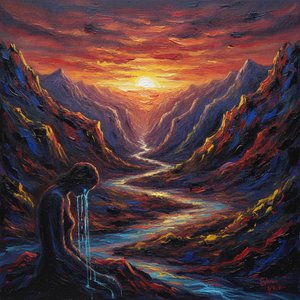
Capturing Emotion: A Journey Through the Soul of Expressionist Landscapes
Explore the profound emotional depth of Expressionist landscapes. Discover how Post-Impressionist masters moved beyond light to capture the soul through vibrant color and form. A curated journey for true art lovers seeking the beauty of expressive mastery.

The Soul of Impressionism: Why Oil on Canvas Captures Eternal Light and Timeless Emotion
Discover the enchanting alchemy of Impressionism. Explore how the mastery of oil on canvas, through glazing and impasto, captures eternal light and emotion. Perfect for lovers of Monet and Van Gogh seeking the profound depth of hand-painted fine art.
Explore artworks organized by themes, styles, and characteristics.

