


 Preview
 Send
Send Share
Share
 Details
 Guide
Guide

 Download
 Similars
 X-Ray
X-Ray Diaporama
 Stats
StatsSt.Martin


Experience the vibrant energy of Edouard Cortès' Post-Impressionist cityscapes capturing Parisian life; own a piece of this bustling artistic history today.
 Read More
Discover Edouard Cortès – the Parisian Poet of Painting! Explore his evocative cityscapes capturing Paris's unique atmosphere and daily life through vibrant, atmospheric art.
The artwork displayed on this page is protected by copyright law, which means we cannot legally create or sell an identical reproduction. This protection is enforced under international agreements such as the Berne Convention and by national laws, including those outlined by the U.S. Copyright Law - Title 17.
This method fully complies with copyright regulations because it does not involve copying or duplicating the protected artwork. Instead, it is a creative reinterpretation - a new painting that is influenced by the original but not identical to it.
Giclée / Art Print
Museum-quality giclée or canvas print with fast production and flexible finish options. ( Buy Hand Made Painting Switch to Digital Image)




P118B $10

P118H $10

P118W $10

P438Z $10

P508JH $12

P508YH $12

P805H $10

P805Z $10

P919BZ $10

P919G $10

P919XJ $10

P959ZH $10

P968JZ $12

W106C $8

W218G $10

W218JH $8

W218Y $10

W307PJ $10

W316G $10

W316PJ $8

W316Y $10

W398PJ $8

W4111J $10

W500HY $15

W500JH $15

W692G $12

W849H $8

W940BG $15

W953PJ $8




Standard
custom
CM
INCH
Pick from our preset sizes that match the artwork's original proportions.
Loading sizes...

width
height
Type the width and the height you need, to fit your frame or your wall. A print can only be cut, never made bigger than the picture, so a size with a different shape loses a part of the image. We send you a digital mockup to approve before we print anything. The picture shown on this page does not show the real cut — only the mockup does.
Worldwide Delivery () in 2 weeks instead of standard 4/5 weeks. (27 October)

Free Worldwide Express Shipping

High-Quality Linen Canvas

Full Shipping Insurance

Customs Tax Refund Guarantee

True Color Matching Guarantee

100-Day Return Policy (Defects Only)

100% Money-Back Guarantee

Bulk Discount Offer
 Glass option is only available in size under 110 CM

St.Martin
Giclée / Art Print
Reproduction Size
-


Total Price
$ 70
The Vibrant Pulse of Urban Life in Edouard Cortès' St. Martin
To stand before Edouard Cortès’ depiction of St. Martin is to be instantly enveloped by the exhilarating, yet strangely comforting, rhythm of city life itself. This painting is far more than a mere snapshot of a bustling Parisian thoroughfare; it is a vibrant meditation on human connection and the ceaseless energy that defines urban existence. Cortès, known as the “Parisian Poet of Painting,” possessed an unparalleled gift for capturing not just what Paris looked like, but how it felt to inhabit its winding streets. The scene explodes with life—pedestrians meandering along the sidewalk, the gleam of passing automobiles, and the occasional flash of a bicycle wheel—all woven together under the watchful gaze of the magnificent Porte St. Martin archway, which anchors the entire composition.
A Masterclass in Post-Impressionist Color and Movement
Stylistically, this work is a quintessential example of Post-Impressionism. Cortès moves beyond the fleeting immediacy of pure Impressionism, imbuing his subject matter with a deeper sense of structure, emotional resonance, and vivid color theory. Observe the palette: it is dominated by warm, golden tones that seem to emanate from the very cobblestones beneath the tires. These colors do not just decorate the scene; they evoke a profound sense of joie de vivre, a joyous appreciation for being alive in this moment. The technique itself speaks volumes through its bold and expressive brushstrokes. They are visible upon close inspection, lending a dynamic, almost palpable energy to the canvas, suggesting movement even where objects appear stationary.
Compositional Depth: Light, Shadow, and Human Detail
Cortès’ genius lies in his masterful handling of depth and light. The interplay between deep shadows cast by the architecture and the bright highlights catching on passing vehicles creates a remarkable dimensionality. Your eye is naturally drawn through the composition, guided first to the focal point—the grand archway—and then allowed to wander down the receding lines of the street. Beyond the major elements, notice the subtle details: the casually placed handbags near the foreground corners, the variety of vehicles from classic cars to motorcycles. These small inclusions ground the monumental scene in relatable human experience, suggesting a life lived fully and without pretense.
Bringing Parisian Energy Home
For the collector or designer seeking an artwork that breathes narrative into a space, St. Martin offers unparalleled emotional impact. It is art that refuses to be passive; it demands engagement. Owning a reproduction of this piece means inviting a piece of historical Parisian dynamism into your own home or gallery. It speaks to a timeless human condition—the beautiful chaos of gathering in public spaces. Whether you are drawn to the warmth of its golden hues, the energy of its depicted motion, or the sheer romance of its subject matter, Cortès’ vision ensures that this painting remains an enduring celebration of life in the great city.
Questions & Answers
Is "St.Martin" by Edouard Cortès a portrait, landscape or square composition?
"St.Martin" by Edouard Cortès has a landscape format. The format describes the proportions of the composition.
What palette and what feeling does "St.Martin" combine?
The earthy palette of "St.Martin" by Edouard Cortès goes together with its joyful emotional tone. Color is one of the ways a work conveys feeling.
Where does "St.Martin" stand among Edouard Cortès's recurring subjects?
"St.Martin" depicts cityscape, urban life, street scene, bustle, architecture, people, transportation, while Edouard Cortès's recorded themes are parisian city life depiction, post-impressionist energy capture, everyday urban activity focus, capturing modern parisian spirit. Comparing the two shows how the work relates to the artist's usual subjects.
Related Artworks


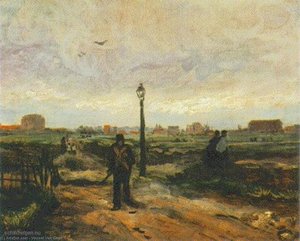


Artist Biography
The Parisian Poet: A Life in Light and Shadow
Édouard Léon Cortès, affectionately known as “Le Poète Parisien de la Peinture” – the Parisian Poet of Painting – wasn’t born into the glittering world he would so vividly capture on canvas. His origins lay in Lagny-sur-Marne, a quiet town east of Paris, where he arrived on August 6th, 1882. Though France was his birthplace, artistic lineage flowed through his veins from his Spanish father, Antonio Cortés, a painter who had once served the Spanish Royal Court. This heritage instilled within young Édouard an early appreciation for artistry and a dedication to honing his skills. He began formal studies at the École des Beaux-Arts in Paris at just seventeen, immersing himself in the techniques of the masters while simultaneously forging his own distinct path. Even then, Cortès possessed a fiercely independent spirit, playfully rebuffing suggestions that he was merely a student of any particular master, declaring himself “a student of myself only.” This self-reliance would become a hallmark of his career and artistic vision.Capturing the Soul of Paris
Cortès’s name became synonymous with Parisian cityscapes. He didn't simply paint buildings; he painted atmospheres – the soft glow of gas lamps on rain-slicked cobblestones, the bustling energy of boulevards teeming with life, the quiet intimacy of a café scene unfolding under a hazy sky. His work wasn’t about grand monuments or historical events, but rather the everyday poetry of Parisian existence. He possessed an uncanny ability to capture fleeting moments – a shaft of sunlight illuminating Notre Dame, the vibrant colors reflected in puddles after a shower, the hushed anticipation before a performance at the Opera. These weren't idealized visions; they were honest portrayals of a city brimming with life, beauty, and a touch of melancholy. His palette favored muted tones, skillfully blended to evoke mood and atmosphere, often employing shades of gray, blue, and ochre that perfectly mirrored the Parisian climate. He wasn’t interested in radical experimentation or abstract forms; his focus remained steadfastly on representing the world as he saw it – beautiful, transient, and deeply evocative.A Soldier's Brush: War and Resilience
The idyllic world Cortès painted was shattered by the outbreak of World War I. Despite being a committed pacifist, duty called, and at the age of thirty-two, he enlisted in the French Infantry Regiment. The horrors of war profoundly impacted him, yet even amidst the chaos and destruction, his artistic spirit endured. Wounded early in the conflict, he was reassigned to utilize his talent for sketching, tasked with mapping enemy positions. This experience, though harrowing, likely sharpened his observational skills and deepened his appreciation for the fragility of life – themes that would subtly permeate his later work. He refused the Légion d'Honneur offered by the French government, a testament to his unwavering pacifist beliefs. Personal tragedy also struck during this period; his first wife, Fernande Joyeuse, passed away in 1918, leaving him with their daughter, Jacqueline Simone. He later married Fernande’s sister, Lucienne Joyeuse, finding solace and companionship amidst the lingering shadows of war.Recognition and Legacy
Following the war, Cortès's career flourished. His work was first exhibited in North America in 1945, introducing his Parisian scenes to a wider audience and solidifying his international reputation. He continued to paint prolifically, capturing the evolving face of Paris while remaining true to his signature style. In his final year, 1969, he received the prestigious Prix Antoine-Quinson from the Salon de Vincennes – a fitting tribute to a lifetime dedicated to artistic expression. Cortès lived a remarkably simple life, surrounded by close friends and devoted to his craft. He passed away on November 26th, 1969, in Lagny-sur-Marne, leaving behind a vast body of work that continues to captivate art lovers worldwide. Today, a street bears his name in his hometown, a lasting testament to the “Parisian Poet” who immortalized the city’s soul on canvas. His paintings remain highly sought after, not merely as decorative pieces but as windows into a bygone era – glimpses of a Paris that exists now primarily through his evocative and enduring art.Influences and Artistic Kinship
While Cortès developed a uniquely personal style, echoes of other masters can be discerned within his work. The atmospheric effects and subtle play of light recall the Impressionists, particularly Camille Pissarro and Alfred Sisley. However, he lacked their focus on pure optical sensation, instead prioritizing narrative and emotional resonance. Post-Impressionist artists like Eugène Boudin also influenced his approach to capturing fleeting moments and atmospheric conditions. His dedication to depicting everyday life aligns him with Realist painters, yet his romanticized vision of Paris elevates his work beyond mere documentation. He wasn’t attempting to replicate reality precisely; he was striving to capture its essence, its mood, its poetry. Artists like Frederick Soulacroix and Paul Gauguin, though distinct in their styles, shared Cortès's fascination with capturing the spirit of a place and its people, imbuing their canvases with a sense of atmosphere and emotion. His legacy lies not in revolutionizing painting but in perfecting a particular vision – a deeply personal and profoundly moving portrayal of Paris that continues to resonate with audiences today.
Edouard Cortès
1882 - 1969 , France
Quick Facts
- Full Name: Edouard Leon Cortes
- Nationality: French
- Date Of Birth: 1882
- Date Of Death: 1969
- Place Of Birth: Lagny-sur-Marne, France
- Notable Artworks:
- The Draughtsman...
- Boulevard a Paris
- St.Martin
- Artistic Movement Or Style: Post-Impressionism
Related Articles

Beyond the Light: Discovering the Soul and Emotional Depth of Post-Impressionism
Embark on a cultural journey through Post-Impressionism. Discover the profound emotional depth of masters like Van Gogh and Cézanne, exploring how they moved beyond light to capture the very soul of human experience through vibrant color and symbolic form.
Capturing Emotion: A Journey Through the Soul of Expressionist Landscapes
Explore the profound emotional depth of Expressionist landscapes. Discover how Post-Impressionist masters moved beyond light to capture the soul through vibrant color and form. A curated journey for true art lovers seeking the beauty of expressive mastery.
Explore artworks organized by themes, styles, and characteristics.


