

Shown: · With its frame:
 Preview
 Send
Send Share
Share
 Details
 Guide
Guide

 Download
 Similars
 X-Ray
X-Ray Diaporama
 Q&A
Q&A Stats
Stats Acrylic On Canvas
- WallArt
- American Realism
 1931
1931 127.0 x 81.0 cm
$ 269
Hand Made Oil Reproduction
Hand-painted oil on canvas in your size and frame, made to order by our artists. ( Switch to Print Switch to Digital Image)
This Artwork Is Under Copyright Protection
The artwork displayed on this page is protected by copyright law, which means we cannot legally create or sell an identical reproduction. This protection is enforced under international agreements such as the Berne Convention and by national laws, including those outlined by the U.S. Copyright Law - Title 17.
As a respectful and legal alternative, we offer custom, hand-painted artworks inspired by the original. Our skilled and professional artists carefully study the original's style, mood, and artistic essence to create a new, unique piece that evokes the same feeling - while remaining an original creation in its own right.
This method fully complies with copyright regulations because it does not involve copying or duplicating the protected artwork. Instead, it is a creative reinterpretation - a new painting that is influenced by the original but not identical to it.
 Read more
Size
·Standard
custom
CM
INCH
Pick from our preset sizes that match the artwork's original proportions.
Loading sizes...

width
height
Type the width and the height you need, to fit your frame or your wall. This is hand-painted, so for a size with a different shape the artist can paint a bit more around the picture, or cut a bit — you choose. We send you a digital mockup to approve before the painting starts. The picture shown on this page does not show the real result — only the mockup does.
Finish
·
White $1

Blurside $1

Extended $1

P118B $10

P118H $10

P118W $10

P438Z $10

P508JH $12

P508YH $12

P805H $10

P805Z $10

P919BZ $10

P919G $10

P919XJ $10

P959ZH $10

P968JZ $12

W106C $8

W218G $10

W218JH $8

W218Y $10

W307PJ $10

W316G $10

W316PJ $8

W316Y $10

W398PJ $8

W4111J $10

W500HY $15

W500JH $15

W692G $12

W849H $8

W940BG $15

W953PJ $8

H24-GOLD $30

H24-SILVER $30

H36-GOLD $45

H36-SILVER $45
Shipped in a protective tube, ready for your own framer.
Above 105 cm the frame is shipped as a kit for a professional framer — read the details.
Extras
optionalWhat do the extras include?
Examples of what can be changed: Replace face with customer photo; Add pet (e.g., replace cat with dog); Include hidden message in background; Change background landscape or elements.
After order, TopImpressionists.com team will email client for instructions and provide a mockup preview
After order, TopImpressionists.com team will email client for instructions and provide a mockup preview
Worldwide Delivery () in 3/4 weeks instead of standard 5 weeks. (30 October). No compromise on quality.
Protective Varnish
Nameplate
Engraved Bronze Plaque Details
This elegant plaque features the artist's name and the title of the artwork, finely engraved for a timeless presentation.
It is made from bronze with a refined, elegant finish. The text is precisely laser-engraved for a sharp and permanent result. Measuring 9x2 cm, the plaque is compact yet easy to read. It's built to be durable and scratch-resistant, offering a professional, museum-quality look. Mounting is simple thanks to the included adhesive backing.
Transparent Acrylic Plaque Details
The plaque includes essential engraved details such as the artist's name, the title of the artwork, the date it was created, the type of media used-like oil on canvas or watercolor-a brief description of the piece, and a QR code that links to the complete artwork information.
It is crafted from clear acrylic, offering a sleek, modern appearance. The text is UV-engraved in black to ensure strong visual contrast. With a size of 10x15 cm, it ensures optimal readability. It comes equipped with two metal hooks for secure wall mounting. The plaque is designed to be weather-resistant, making it suitable for various environments, and it includes interactive features that work seamlessly with smartphone scanning.
Black Acrylic Plaque Details
This elegant plaque includes engraved information such as the artist's name, the title of the artwork, the date it was created, the type of media used (like oil on canvas or watercolor), a short description of the artwork, and a QR code for quick access to more information.
The plaque itself is made from refined black acrylic with a premium finish. The text is laser-engraved in white for high contrast and readability. Its size is 10x15 cm, designed to be easy to read. It comes with two metal hooks for professional mounting. The design is sleek and fits any interior style. It is also weather-resistant and durable, with built-in digital integration for mobile compatibility.
Glass option is only available in size under 110 CM
 Glass option is only available in size under 110 CM
- Free Worldwide Express Shipping
- High-Quality Linen Canvas
- Full Shipping Insurance
- Customs Tax Refund Guarantee
- True Color Matching Guarantee
- 100-Day Return Policy (Defects Only)
- 100% Money-Back Guarantee
- Bulk Discount Offer


Collectible Description
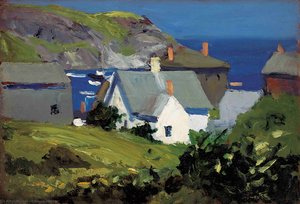
Edward Hopper's 'The Camel’s Hump' captures a serene American landscape with a solitary car amidst towering mountains, reflecting themes of isolation and modern life. Explore the iconic realism of this 1931 masterpiece.
Artist Biography
Edward Hopper: A master of American realism, capturing solitude and urban life with evocative light & shadow. Explore his iconic paintings like Nighthawks and Monhegan Houses.
About the painting
The Camel’s Hump: A Silent Landscape of Modern Isolation
Edward Hopper's "The Camel’s Hump," painted in 1931, isn’t merely a depiction of a mountain range; it’s a distilled essence of American loneliness and the quiet drama unfolding within the vastness of the modern world. This oil on canvas transports us to a remote corner of Vermont, yet the scene resonates with a profound sense of solitude that speaks volumes about Hopper's masterful ability to capture the unspoken anxieties of his time. The painting’s enduring appeal lies in its deceptively simple composition – a winding road cutting through a rugged landscape dominated by towering, yellowish-hued mountains – and the subtle narrative it suggests, hinting at journeys both literal and metaphorical.
Hopper's New Realism style is powerfully evident here. He eschews romanticized landscapes in favor of an objective portrayal of reality, prioritizing light, shadow, and form over emotional embellishment. The meticulous attention to detail—the texture of the road surface, the subtle variations in color across the mountainsides, the slight curve of the distant trees—creates a remarkably convincing illusion of depth and space. The use of muted tones, punctuated by the warm glow of the sunlight, contributes significantly to the painting’s melancholic atmosphere. It's a world rendered with precision but imbued with an underlying sense of detachment.
A Road Less Traveled: Symbolism and Context
The presence of a solitary car on the road is arguably the most significant element within "The Camel’s Hump." It immediately establishes a theme of travel, not necessarily towards a destination, but rather as an act of seeking—or perhaps fleeing. The car's diminutive size in relation to the immense mountains reinforces this feeling of isolation and vulnerability. It suggests a human presence dwarfed by the power and indifference of nature. This motif aligns perfectly with Hopper’s broader exploration of themes of alienation and urban loneliness, prevalent concerns during the interwar period.
The painting's setting—the Green Mountains of Vermont—adds another layer of meaning. These rugged peaks have a long history as symbols of wilderness and escape, yet here they are presented with a certain stoicism, reflecting the challenges faced by those who venture into them. The choice of this specific location speaks to Hopper’s fascination with the American landscape and his desire to capture its inherent beauty alongside its underlying sense of melancholy. Interestingly, the painting's title itself—borrowed from a prominent Vermont mountain—further anchors it within the regional context, grounding the abstract themes in a tangible place.
The Poetics of Light and Shadow
Hopper’s masterful manipulation of light is central to the painting’s emotional impact. The strong directional lighting casts deep shadows across the mountainsides, creating a dramatic interplay between illumination and darkness. This technique not only enhances the sense of depth but also subtly emphasizes the isolation of the figures within the landscape. The warm glow emanating from the sun suggests a fleeting moment of beauty amidst an otherwise bleak scene, hinting at a transient joy that is quickly overshadowed by the pervasive feeling of solitude.
Furthermore, Hopper’s use of color—primarily earthy tones punctuated by hints of yellow and blue—contributes to the painting's overall mood. The muted palette evokes a sense of quiet contemplation, while the subtle variations in hue create a visually engaging experience for the viewer. The careful orchestration of these elements transforms "The Camel’s Hump" into more than just a landscape; it becomes a poignant meditation on the human condition.
A Timeless Masterpiece: Reproduction and Beyond
"The Camel's Hump" remains one of Edward Hopper’s most iconic works, captivating audiences with its evocative portrayal of American life. TopImpressionists offers meticulously crafted hand-painted reproductions that faithfully capture the painting’s original beauty and emotional depth. These reproductions are not merely copies; they are artistic interpretations created by skilled artisans who understand Hopper's techniques and vision.
Whether you’re an art enthusiast, a collector seeking to expand your collection, or simply someone drawn to Hopper’s timeless aesthetic, a TopImpressionists reproduction of "The Camel’s Hump" provides a stunning way to experience this masterpiece in your own home. It's a piece that invites contemplation, sparking conversations about loneliness, isolation, and the enduring beauty of the American landscape.
Questions & Answers
How do movement and era meet in "The Camel's Hump" by Edward Hopper?
In "The Camel's Hump" by Edward Hopper, the American Realism movement meets the Modern era.
Can I watch "The Camel's Hump" as a full-screen slideshow?
"The Camel's Hump" by Edward Hopper can be viewed as a slideshow on the artwork's Diaporama page.
Which artist is "The Camel's Hump" attributed to?
"The Camel's Hump" was created by Edward Hopper. The information on this page describes Edward Hopper's original work.
Quick facts and art quiz
About Edward Hopper

Edward Hopper
1931 - 1967, United States of America
Artist Biography
A Solitude Observed: The Life and Art of Edward Hopper
Edward Hopper, a name inextricably linked to the quietude and subtle melancholy that permeated 20th-century American life, wasn’t simply a painter of scenes; he was a poet of light and shadow, a chronicler of modern isolation. Born in Nyack, New York, in 1882, to middle-class parents of Dutch ancestry, Hopper's early years provided a stable upbringing that nurtured his artistic inclinations. From childhood sketches meticulously dated and signed, it became evident that keen observation and an innate talent for drawing were central to his being. Though initially encouraged towards commercial illustration – a pragmatic suggestion from his parents – Hopper’s ambitions leaned toward fine art, leading him to the New York School of Art where he studied under William Merritt Chase and Robert Henri. These formative years instilled not only technical skill but also an appreciation for realism and a commitment to depicting the world as he saw it—unvarnished and honest. The writings of Ralph Waldo Emerson resonated deeply with Hopper, reinforcing his sense of individualism and acute observation – qualities that would become hallmarks of his artistic vision. Early travels to Paris exposed him to Impressionism, yet Hopper quickly diverged from its fleeting brushstrokes, forging a path uniquely his own.Finding His Voice: Realism and the American Scene
Hopper’s artistic journey wasn't immediate or effortless. He grappled with discovering his distinctive voice, experimenting with various styles before settling into the realism that would define his career. This wasn’t mere replication of reality; it was a distillation of its essence, stripping away extraneous detail to reveal underlying emotional truths. His paintings began to focus on everyday scenes – houses, diners, offices, hotel rooms – imbued with a sense of stillness and often, loneliness. He possessed an extraordinary ability to capture the psychological states of his subjects, hinting at narratives without explicitly stating them. The precise rendering of light and shadow became crucial, not merely as descriptive elements but as emotional cues, creating atmospheres that were both captivating and unsettling. House by the Railroad (1925), an early masterpiece, exemplifies this approach—a seemingly simple composition radiating a profound sense of isolation and mystery. Hopper’s printmaking, often overlooked, ran parallel to his painting, sharing similar themes and stylistic qualities, demonstrating his mastery across mediums. He wasn't interested in grand historical narratives or allegorical symbolism; he focused on the mundane, elevating it through careful observation and emotional resonance.Iconic Visions: Nighthawks and Beyond
While Hopper’s career unfolded gradually, certain works catapulted him to widespread recognition. Nighthawks (1942), arguably his most famous painting, became an instant icon of American culture. The late-night diner scene, bathed in stark fluorescent light, perfectly encapsulates the alienation and anonymity of modern urban life. The figures within are lost in their own thoughts, disconnected from one another despite their proximity—a poignant commentary on the human condition. Gas (1940), with its striking portrayal of a roadside gas station, showcases Hopper’s fascination with American landscapes and the burgeoning automobile culture. Other notable works like *Automat*, *Office in a Small City*, and *Summertime* each offer unique insights into the complexities of 20th-century American society. These paintings weren't merely depictions of places; they were explorations of mood, psychology, and the subtle dramas unfolding within ordinary settings. His wife, Josephine Nivison Hopper, played a vital role not only as his lifelong companion but also as a frequent model, contributing significantly to the characterization of his female figures.Themes and Legacy: A Lasting Influence
Several recurring themes permeate Hopper’s oeuvre. Urban isolation is perhaps the most prominent—the sense of loneliness experienced by individuals even amidst crowds. He explored the American landscape, both rural and urban, often emphasizing its starkness and emptiness. His work delves into psychological realism, probing the inner lives of his subjects with a sensitivity that transcends mere representation. There’s also an undercurrent of nostalgia for a simpler past, juxtaposed with an acknowledgement of the complexities and anxieties of modern life. Hopper's influence on subsequent artists is undeniable. His unique style has inspired countless painters, including Pierre Sanford Ross, and continues to resonate with contemporary artists seeking to capture the essence of human experience. His paintings remain highly sought after by collectors and are exhibited in major museums worldwide, solidifying his place as a pivotal figure in American art history. More than just an artist, Edward Hopper was a visual philosopher, offering profound insights into the human condition through his masterful use of light, shadow, and composition.- His legacy lies not only in the beauty of his paintings but also in their enduring ability to provoke thought, evoke emotion, and remind us of the quiet solitude that often defines our lives.
- Hopper’s work continues to captivate audiences because it speaks to universal themes of loneliness, isolation, and the search for meaning in a rapidly changing world.
- His paintings have become iconic representations of American culture, often used to symbolize the anxieties and aspirations of the 20th century—and beyond.
- Hopper’s aesthetic has profoundly influenced filmmakers (like Alfred Hitchcock) and writers, inspiring countless works that explore similar themes of alienation and psychological tension.
Quick facts about Edward Hopper
- Artistic Movement Or Style: American Realism
- Artists Or Movements Influenced By This Artist: ['Pierre Sanford Ross']
- Artists Who Influenced This Artist:
- William Merritt Chase
- Robert Henri
- Degas
- Manet
- Full Name: Edward Hopper
- Nationality: American
- Notable Artworks:
- Nighthawks
- Gas
- House by the Railroad
- City Sunlight
- Place Of Birth: Upper Nyack, United States of America
- Date Of Birth: 1931
- Date Of Death: 1967
Related Artworks


Explore artworks organized by themes, styles, and characteristics.




Edward Hopper
The Camel's Hump
() ·
With its frame: · Hand-painted in oil on linen
Total