


 Preview
 Send
Send Share
Share
 Details
 Guide
Guide

 Download
 Similars
 X-Ray
X-Ray Diaporama
 Q&A
Q&A Stats
StatsMarisma

Discover 'Marisma' by Eliseo Meifren i Roig – a serene Impressionist landscape of a Spanish wetland. Explore its tranquil beauty & layered brushwork, reflecting nature’s peace.
Explore the vibrant Impressionist paintings of Eliseo Meifrèn i Roig! Born in Barcelona, this Spanish artist traveled extensively, blending Italian influences with Parisian techniques. Discover his Catalan landscapes & global exhibitions.
 Read More
Giclée / Art Print
Museum-quality giclée or canvas print with fast production and flexible finish options. ( Buy Hand Made Painting Switch to Digital Image)




































Standard
custom
CM
INCH
Pick from our preset sizes that match the artwork's original proportions.
Loading sizes...

width
height
Type the width and the height you need, to fit your frame or your wall. A print can only be cut, never made bigger than the picture, so a size with a different shape loses a part of the image. We send you a digital mockup to approve before we print anything. The picture shown on this page does not show the real cut — only the mockup does.
Worldwide Delivery () in 2 weeks instead of standard 4/5 weeks. (30 October)

Free Worldwide Express Shipping

High-Quality Linen Canvas

Full Shipping Insurance

Customs Tax Refund Guarantee

True Color Matching Guarantee

100-Day Return Policy (Defects Only)

100% Money-Back Guarantee

Bulk Discount Offer
 Glass option is only available in size under 110 CM

Marisma
Giclée / Art Print
Reproduction Size
-


Total Price
$ 70
Related Artworks


Artist Biography
The Radiant Legacy of Eliseo Meifrèn i Roig
In the golden twilight of the nineteenth century, a transformative energy swept through the European art world, breaking the rigid shackles of academic tradition to embrace the fleeting beauty of light and atmosphere. At the heart of this movement in Catalonia stood Eliseo Meifrèn i Roig, an artist whose brush captured the very soul of the Mediterranean landscape. Born in Barcelona in 1859, Meifrèn’s journey was one of profound metamorphosis. Though he initially pursued a path in medicine, the irresistible call of the canvas led him to abandon science for the pursuit of aesthetic truth. This early decision would eventually establish him as a pioneer of Catalan Impressionism, a master capable of translating the ephemeral dance of sunlight upon water into enduring oil masterpieces.
Meifrèn’s artistic foundation was laid at the Escola de la Llotja in Barcelona, where he studied under the watchful eyes of masters such as Antoni Cabà and Ramón Martí Alsina. These early mentors instilled in him a Romantic sensibility, rooted in careful observation and a respect for classical composition. However, the true catalyst for his stylistic revolution arrived in 1879 with his relocation to Paris. Immersed in the vibrant, avant-garde atmosphere of the Belle Époque, Meifrèn encountered the groundbreaking techniques of Claude Monet and Camille Pissarro. It was here that he embraced the practice of plein air painting, learning to move beyond the muted, somber palettes of the Barbizon School toward a more luminous and spontaneous way of seeing. This Parisian influence infused his work with a newfound freedom, allowing him to capture the transient textures of clouds, sea spray, and shifting shadows.
A Journey Through Light and Landscape
The breadth of Meifrèn’s vision was significantly expanded by his travels, which allowed him to weave diverse geographical influences into a singular, cohesive style. His excursions into Italy provided him with a deep appreciation for classical grandeur, while his time in the Canary Islands, Mallorca, and the Balearic Islands offered him a kaleidoscope of maritime and coastal scenery. As an artist specializing in marine painting, he possessed a rare ability to render the rhythmic pulse of the ocean and the tranquil stillness of Mediterranean harbors. His works often serve as windows into specific moments in time, where the salt air and warm sun feel almost tangible through his textured brushstrokes.
Throughout his career, Meifrèn’s evolution was marked by a transition from academic precision to an expressive, impressionistic fluidity. While his early works might have leaned toward the structured landscapes of his training, his mature period is defined by:
- Luminous Color Palettes: A move away from grays and earth tones toward vibrant blues, brilliant whites, and warm sunset hues.
- Atmospheric Depth: The use of light to create a sense of moisture, mist, and the heavy, sweet air of coastal villages.
- Textural Vitality: Impasto techniques that give physical weight to the crest of a wave or the rugged surface of a seaside cliff.
- Emotional Resonance: A capacity to evoke feelings of nostalgia, peace, or the melancholic beauty of a fading twilight.
Historical Significance and Enduring Spirit
Beyond his individual technical achievements, Eliseo Meifrèn i Roig holds a position of immense historical importance as one of the primary conduits for Impressionism in Catalonia. He did not merely adopt a foreign style; he localized it, infusing the French technique with the specific light and character of the Spanish coast. His role as a director of the art school in Palma de Mallorca further cemented his legacy, as he helped nurture subsequent generations of artists within the Mediterranean tradition. Even as the art world moved toward more abstract movements, Meifrèn remained dedicated to the profound beauty of the natural world.
Today, his paintings—ranging from the evocative Nocturno to the charming vistas of Paisaje de Cadaqués—continue to captivate collectors and historians alike. He remains a symbol of artistic courage, representing the moment when Catalan art stepped out of the shadows of the academy and into the brilliant, uninhibited light of modernity. His life’s work stands as a testament to the power of observation and the eternal allure of the landscape, reminding us that even the most fleeting moment can be captured forever through the devotion of a master.

Eliseo Meifrèn i Roig
1859 - 1940 , Spain
Quick Facts
- Artistic Movement Or Style: Catalan Impressionism
- Artists Who Influenced This Artist:
- Antoni Caba
- Ramón Martí Alsina
- Claude Monet
- Camille Pissarro
- Full Name: Eliseo Meifrèn i Roig
- Nationality: Spanish
- Notable Artworks:
- Nocturno
- Paisaje de Barcelona
- Paisaje de Cadaques
- Jardin
- Place Of Birth: Barcelona, Spain
- Date Of Birth: 1859
- Date Of Death: 1940
Related Articles
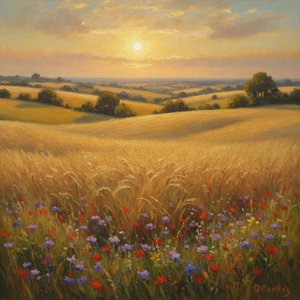
Golden Fields & Sun-Drenched Meadows: Capturing the Soul of Impressionist Landscapes
Immerse yourself in the luminous world of Impressionist landscapes. Discover how masters like Monet and Gauguin captured ephemeral light through plein air painting, and learn to bring the soul of sun-drenched meadows into your home with exquisite, hand-painted oil reproductions.

Capturing the Soul: The Most Emotionally Moving Impressionist and Post-Impressionist Masterpieces
Discover the profound emotional depth of Impressionist and Post-Impressionist masterpieces. Explore how legends like Monet, Van Gogh, and Gauguin captured light and soul through evocative landscapes and vibrant brushwork for a timeless connection to art history.

Beyond the Light: Capturing Raw Emotion and Subjective Vision in Post-Impressionist Landscapes
Explore the profound emotional depth of Post-Impressionist landscapes. Discover how masters like Van Gogh moved beyond light to capture raw human feeling through vibrant color and expressive texture in this expert art history retrospective.

Enchanting Strokes: Unveiling the Luminous Magic and Timeless Soul of Impressionist Masterpieces
Immerse yourself in the luminous beauty of Impressionism. TopImpressionists.com offers exquisite, hand-painted oil reproductions of masters like Monet and Van Gogh. From museum-quality landscapes to bespoke portraits from photos, we bring timeless artistry and soul to your collection.

Whispers of Rural Serenity: A Journey Through the Enchanting Village Landscapes of Impressionism
Immerse yourself in the tranquil beauty of Impressionist village landscapes. Explore our exquisite collection of hand-painted oil reproductions, capturing the light and soul of masters like Monet and Pissarro. Bring a piece of art history into your home with TopImpressionists.com.
Explore artworks organized by themes, styles, and characteristics.


