

Shown: · With its frame:
 Preview
 Send
Send Share
Share
 Details
 Guide
Guide

 Download
 Similars
 X-Ray
X-Ray Diaporama
 Q&A
Q&A Stats
Stats

$ 269
Hand Made Oil Reproduction
Hand-painted oil on canvas in your size and frame, made to order by our artists. ( Switch to Print Switch to Digital Image)
Size
·Standard
custom
CM
INCH
Pick from our preset sizes that match the artwork's original proportions.
Loading sizes...

width
height
Type the width and the height you need, to fit your frame or your wall. This is hand-painted, so for a size with a different shape the artist can paint a bit more around the picture, or cut a bit — you choose. We send you a digital mockup to approve before the painting starts. The picture shown on this page does not show the real result — only the mockup does.
 Read more
Finish
·
White $1

Blurside $1

Extended $1

P118B $10

P118H $10

P118W $10

P438Z $10

P508JH $12

P508YH $12

P805H $10

P805Z $10

P919BZ $10

P919G $10

P919XJ $10

P959ZH $10

P968JZ $12

W106C $8

W218G $10

W218JH $8

W218Y $10

W307PJ $10

W316G $10

W316PJ $8

W316Y $10

W398PJ $8

W4111J $10

W500HY $15

W500JH $15

W692G $12

W849H $8

W940BG $15

W953PJ $8

H24-GOLD $30

H24-SILVER $30

H36-GOLD $45

H36-SILVER $45
Shipped in a protective tube, ready for your own framer.
Above 105 cm the frame is shipped as a kit for a professional framer — read the details.
Extras
optionalWhat do the extras include?
Examples of what can be changed: Replace face with customer photo; Add pet (e.g., replace cat with dog); Include hidden message in background; Change background landscape or elements.
After order, TopImpressionists.com team will email client for instructions and provide a mockup preview
After order, TopImpressionists.com team will email client for instructions and provide a mockup preview
Worldwide Delivery () in 3/4 weeks instead of standard 5 weeks. (2 November). No compromise on quality.
Protective Varnish
Nameplate
Engraved Bronze Plaque Details
This elegant plaque features the artist's name and the title of the artwork, finely engraved for a timeless presentation.
It is made from bronze with a refined, elegant finish. The text is precisely laser-engraved for a sharp and permanent result. Measuring 9x2 cm, the plaque is compact yet easy to read. It's built to be durable and scratch-resistant, offering a professional, museum-quality look. Mounting is simple thanks to the included adhesive backing.
Transparent Acrylic Plaque Details
The plaque includes essential engraved details such as the artist's name, the title of the artwork, the date it was created, the type of media used-like oil on canvas or watercolor-a brief description of the piece, and a QR code that links to the complete artwork information.
It is crafted from clear acrylic, offering a sleek, modern appearance. The text is UV-engraved in black to ensure strong visual contrast. With a size of 10x15 cm, it ensures optimal readability. It comes equipped with two metal hooks for secure wall mounting. The plaque is designed to be weather-resistant, making it suitable for various environments, and it includes interactive features that work seamlessly with smartphone scanning.
Black Acrylic Plaque Details
This elegant plaque includes engraved information such as the artist's name, the title of the artwork, the date it was created, the type of media used (like oil on canvas or watercolor), a short description of the artwork, and a QR code for quick access to more information.
The plaque itself is made from refined black acrylic with a premium finish. The text is laser-engraved in white for high contrast and readability. Its size is 10x15 cm, designed to be easy to read. It comes with two metal hooks for professional mounting. The design is sleek and fits any interior style. It is also weather-resistant and durable, with built-in digital integration for mobile compatibility.
Glass option is only available in size under 110 CM
 Glass option is only available in size under 110 CM
- Free Worldwide Express Shipping
- High-Quality Linen Canvas
- Full Shipping Insurance
- Customs Tax Refund Guarantee
- True Color Matching Guarantee
- 100-Day Return Policy (Defects Only)
- 100% Money-Back Guarantee
- Bulk Discount Offer


Collectible Description
A tender moment of French Realism unfolds in Maternal Tenderness by Émile Friant as a mother cradles her child amidst a serene field, inviting you to bring this evocative 1906 masterpiece into your private collection.
Artist Biography
Explore the realist paintings of Émile Friant (1863-1932), a French artist celebrated for evocative portraits, genre scenes & patriotic works like 'La Toussaint'. Discover his Salon successes and influence on late 19th/early 20th century art.
About the painting
A Moment Frozen in Time: The Soul of Maternal Tenderness
In the quietude of a sun-drenched field, Émile Friant captures a scene that transcends mere observation, inviting the viewer into a sanctuary of pure emotion. Maternal Tenderness, painted in 1906, is far more than a depiction of a woman and her child; it is a profound meditation on the sanctity of the maternal bond. As the eye wanders through the lush, verdant grass, one encounters a mother cradling her infant with an intimacy that feels both private and universal. The soft light of the French countryside bathes the subjects in a warm, nostalgic glow, while the presence of two loyal dogs resting nearby adds a layer of domestic peace and companionship. This is a world where time seems to slow down, allowing the viewer to breathe in the serene atmosphere of a summer afternoon.
The composition is masterfully orchestrated to draw the heart toward the center of the frame. The woman, dressed in the simple, elegant attire of the era with a delicate bonnet framing her face, serves as the emotional anchor of the piece. Every brushstroke contributes to the sense of weight and warmth in the child's small form against her embrace. A subtle detail, such as the handbag resting on the ground, grounds this ethereal moment in the reality of everyday life, suggesting that this profound connection is found not in grand gestures, but in the quiet, unadorned intervals of our daily existence.
The Mastery of French Realism
As a pivotal figure in the transition between 19th-century realism and the dawn of modernism, Émile Friant utilized his technical prowess to elevate genre painting to new heights of psychological depth. Through the medium of oil on canvas, Friant employs a meticulous technique that honors the traditions of French Realism while infusing them with a soft, almost impressionistic light. His ability to render textures—the roughness of the earth, the softness of a child's skin, and the gentle movement of the surrounding trees—demonstrates a scientific precision learned from his early training, yet it is always subservient to the emotional truth of the scene.
For the discerning collector or interior designer, this painting offers a sophisticated balance of detail and atmosphere. The palette, rich with natural greens, earthy tones, and soft highlights, makes it an exquisite centerpiece for a room designed for contemplation and comfort. It does not merely decorate a wall; it transforms a space, bringing with it a sense of historical weight and a calming, pastoral elegance. To possess a reproduction of this work is to invite the timeless grace of the Belle Époque into the modern home, serving as a constant reminder of the beauty found in life's most tender connections.
Questions & Answers
Is Émile Friant, creator of "Maternal Tenderness", known under other names?
Other names recorded for Émile Friant, creator of "Maternal Tenderness", include Emile Friant.
What is the dominant hue of "Maternal Tenderness" by Émile Friant?
"Maternal Tenderness" leans toward a green to violet spectrum tone.
Which room is "Maternal Tenderness" by Émile Friant recommended for?
A reproduction of "Maternal Tenderness" fits well in a bedroom.
Quick facts and art quiz
About Émile Friant

Émile Friant
1863 - 1932, France
Artist Biography
A Life Rooted in Realism: The World of Émile Friant
Émile Friant, born in the small commune of Dieuze in 1863, emerged as a pivotal figure bridging the gap between 19th-century realism and the burgeoning artistic movements of the early 20th century. His life story is one deeply intertwined with the political and social upheavals of his time. The Franco-Prussian War cast a long shadow over his childhood; the family’s flight to Nancy following the annexation of Dieuze by Prussia instilled in him a sense of displacement that perhaps fueled his dedication to capturing the essence of French life and identity within his art. Though initially steered towards a scientific path, Friant's innate artistic talent quickly asserted itself, nurtured first by private tutors and then under the guidance of Louis-Théodore Devilly in Nancy. Devilly’s emphasis on direct observation and meticulous detail laid the foundation for Friant’s signature style—a realism imbued with emotional depth and psychological insight. Even a youthful self-portrait, “Le Petit Friant,” at just fifteen years old, garnered attention and secured him permission to pursue formal studies in Paris, marking the beginning of his ascent within the art world.Parisian Training and Early Salon Successes
The Parisian artistic landscape proved both stimulating and disillusioning for the young Friant. Studying under Alexandre Cabanel, a celebrated academic painter, exposed him to established techniques but ultimately left him feeling constrained by the rigid atelier system. While he diligently practiced oil sketches of historical works, Friant yearned for a more personal and authentic approach. This desire led him back to Nancy, where he continued to hone his skills while exhibiting regularly at both Parisian and local salons. His early Salon submissions, including “The Prodigal Son” and “Studio Interior,” demonstrated a burgeoning talent for narrative painting and an ability to capture the nuances of human emotion. A second-place finish in the prestigious Prix de Rome competition further solidified his reputation, followed by third and then second-class honors at subsequent Salon presentations. Crucially, Friant cultivated lasting friendships with actors Ernest and Benoit Coquelin, which led to a series of compelling portrait commissions that would become a hallmark of his oeuvre. A grant from the 1886 Salon enabled travel to the Netherlands, where he encountered the works of Dutch Masters—an experience that profoundly influenced his use of light and shadow and his attention to everyday life.Mature Works: Portraits, Genre Scenes, and North African Influences
Friant’s mature work is characterized by evocative portraits and genre scenes depicting the lives of ordinary people in Nancy and beyond. He possessed an extraordinary ability to capture not just physical likeness but also the inner character and psychological state of his subjects. This talent reached its zenith with “La Toussaint” (All Saints' Day), a poignant depiction of a family mourning at a graveside, which earned him a Gold Medal at the 1889 Universal Exhibition—a testament to his growing acclaim. Beyond portraiture, Friant found inspiration in North Africa, making multiple journeys to Algeria and Tunisia. These travels infused his landscapes with a vibrant palette and a sense of exoticism, while also providing compelling subjects for portraits that reflected the cultural diversity of the region. In 1923, he was appointed professor of painting at the École des Beaux-Arts in Paris, a position that acknowledged his established reputation and influence within the art world. His contributions were further recognized with promotion to Commander in the Legion of Honor and membership in the Institut de France—the highest honors bestowed upon artists in France.A Legacy of Realism and Photographic Precision
Émile Friant’s artistic legacy rests firmly on his commitment to realism, a style he embraced while simultaneously transcending its limitations. While initially shaped by Devilly's emphasis on direct observation and Cabanel’s academic techniques, Friant developed a distinctive voice that moved beyond strict adherence to either approach. He was not merely interested in replicating reality; rather, he sought to imbue his paintings with emotional resonance and psychological depth. His innovative use of photography as a preparatory tool—a practice increasingly common among artists of the time—demonstrates an engagement with emerging technologies and a desire for accuracy in representation. He represents a crucial link between 19th-century naturalism and the artistic innovations of the early 20th century, contributing to the evolution of French painting while remaining true to his core principles. Some consider him one of the last great naturalists, preserving a tradition of meticulous observation and emotional honesty in an era of rapid change. His tragic death in 1932—falling from a height in Paris—brought an abrupt end to a remarkable career, but his paintings continue to captivate audiences with their beauty, sensitivity, and enduring relevance. Friant’s work serves as a powerful reminder of the importance of capturing the human experience with both precision and compassion.Quick facts about Émile Friant
- Full Name: Émile Friant
- Nationality: French
- Date Of Birth: 1863
- Date Of Death: 1932
- Place Of Birth: Dijon, France
- Notable Artworks:
- La Toussaint
- Self-portrait
- The Lovers
- Artistic Movement Or Style: Realism
- Artists Who Influenced This Artist:
- Devilly
- Cabanel
- Artists Or Movements Influenced By This Artist: Early 20th century art
Related Artworks


Explore artworks organized by themes, styles, and characteristics.



Émile Friant
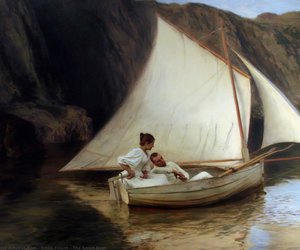
Maternal Tenderness
() ·
With its frame: · Hand-painted in oil on linen
Total