

Shown: · With its frame:
 Preview
 Send
Send Share
Share
 Details
 Guide
Guide

 Download
 Similars
 X-Ray
X-Ray Diaporama
 Q&A
Q&A Stats
Stats
- 50.0 x 73.0 cm


$ 269
Hand Made Oil Reproduction
Hand-painted oil on canvas in your size and frame, made to order by our artists. ( Switch to Print Switch to Digital Image)
Size
·Standard
custom
CM
INCH
Pick from our preset sizes that match the artwork's original proportions.
Loading sizes...

width
height
Type the width and the height you need, to fit your frame or your wall. This is hand-painted, so for a size with a different shape the artist can paint a bit more around the picture, or cut a bit — you choose. We send you a digital mockup to approve before the painting starts. The picture shown on this page does not show the real result — only the mockup does.
 Read more
Finish
·
White $1

Blurside $1

Extended $1

P118B $10

P118H $10

P118W $10

P438Z $10

P508JH $12

P508YH $12

P805H $10

P805Z $10

P919BZ $10

P919G $10

P919XJ $10

P959ZH $10

P968JZ $12

W106C $8

W218G $10

W218JH $8

W218Y $10

W307PJ $10

W316G $10

W316PJ $8

W316Y $10

W398PJ $8

W4111J $10

W500HY $15

W500JH $15

W692G $12

W849H $8

W940BG $15

W953PJ $8

H24-GOLD $30

H24-SILVER $30

H36-GOLD $45

H36-SILVER $45
Shipped in a protective tube, ready for your own framer.
Above 105 cm the frame is shipped as a kit for a professional framer — read the details.
Extras
optionalWhat do the extras include?
Examples of what can be changed: Replace face with customer photo; Add pet (e.g., replace cat with dog); Include hidden message in background; Change background landscape or elements.
After order, TopImpressionists.com team will email client for instructions and provide a mockup preview
After order, TopImpressionists.com team will email client for instructions and provide a mockup preview
Worldwide Delivery () in 3/4 weeks instead of standard 5 weeks. (7 November). No compromise on quality.
Protective Varnish
Nameplate
Engraved Bronze Plaque Details
This elegant plaque features the artist's name and the title of the artwork, finely engraved for a timeless presentation.
It is made from bronze with a refined, elegant finish. The text is precisely laser-engraved for a sharp and permanent result. Measuring 9x2 cm, the plaque is compact yet easy to read. It's built to be durable and scratch-resistant, offering a professional, museum-quality look. Mounting is simple thanks to the included adhesive backing.
Transparent Acrylic Plaque Details
The plaque includes essential engraved details such as the artist's name, the title of the artwork, the date it was created, the type of media used-like oil on canvas or watercolor-a brief description of the piece, and a QR code that links to the complete artwork information.
It is crafted from clear acrylic, offering a sleek, modern appearance. The text is UV-engraved in black to ensure strong visual contrast. With a size of 10x15 cm, it ensures optimal readability. It comes equipped with two metal hooks for secure wall mounting. The plaque is designed to be weather-resistant, making it suitable for various environments, and it includes interactive features that work seamlessly with smartphone scanning.
Black Acrylic Plaque Details
This elegant plaque includes engraved information such as the artist's name, the title of the artwork, the date it was created, the type of media used (like oil on canvas or watercolor), a short description of the artwork, and a QR code for quick access to more information.
The plaque itself is made from refined black acrylic with a premium finish. The text is laser-engraved in white for high contrast and readability. Its size is 10x15 cm, designed to be easy to read. It comes with two metal hooks for professional mounting. The design is sleek and fits any interior style. It is also weather-resistant and durable, with built-in digital integration for mobile compatibility.
Glass option is only available in size under 110 CM
 Glass option is only available in size under 110 CM
- Free Worldwide Express Shipping
- High-Quality Linen Canvas
- Full Shipping Insurance
- Customs Tax Refund Guarantee
- True Color Matching Guarantee
- 100-Day Return Policy (Defects Only)
- 100% Money-Back Guarantee
- Bulk Discount Offer


Collectible Description
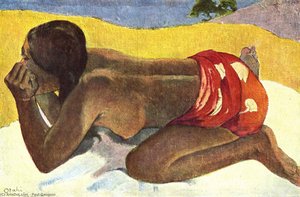
Paul Gauguin’s "Alone," a captivating Post-Impressionist painting from 1893, depicts a serene woman resting in a warm yellow field, showcasing the artist's signature cloisonnism style. Discover this iconic artwork and bring its tranquil beauty into your space.
Artist Biography
Paul Gauguin: A revolutionary Post-Impressionist painter known for bold colors, exotic subjects & Symbolist themes. Explore his journey from finance to artistic legend.
About the painting
Alone: A Portrait of Quietude by Paul Gauguin
Paul Gauguin’s “Alone,” painted in 1893, is more than just a depiction of a woman resting; it's an immersive exploration of solitude and the profound stillness that can be found within. Measuring a modest 50 x 73 cm, this oil-on-canvas work invites viewers into a world of contemplative serenity, a hallmark of Gauguin’s mature style and a poignant reflection of his own increasingly isolated existence.
- Subject Matter: The central figure, a woman lying prone with her head cradled in her arm, exudes an immediate sense of peace. Her relaxed posture suggests either slumber or deep contemplation – the ambiguity adds to the painting’s evocative power. Scattered around her are other figures, smaller and less defined, contributing to the overall impression of isolation rather than distracting from the primary theme.
- Style & Technique: Gauguin masterfully employs the style of Cloisonnism, characterized by bold outlines and flattened planes of color. This technique, reminiscent of stained glass, creates a striking visual impact, emphasizing the geometric forms and contributing to the painting’s tranquil atmosphere. The use of warm yellow in the background field further enhances this sense of calm and adds depth to the composition.
- Historical Context: “Alone” emerged during a pivotal moment in Gauguin's artistic journey, firmly rooted within the Post-Impressionist movement. Influenced by artists like Van Gogh and Bernard, he sought to move beyond mere representation, aiming instead to capture subjective emotions and spiritual truths. The painting’s themes of isolation resonate with the anxieties and uncertainties of the late 19th century, a period marked by rapid social change and increasing urbanization.
Decoding Symbolism: A Journey Within
Beyond its surface beauty, “Alone” is rich in symbolic potential. The woman’s posture immediately evokes feelings of vulnerability and introspection. Her placement on the ground suggests a surrender to the moment, a willingness to embrace solitude rather than resist it. The expansive yellow field surrounding her isn't merely a backdrop; it represents an open space, a realm of possibility, perhaps even a metaphor for the unconscious mind. The smaller figures, though indistinct, could symbolize fleeting memories or the echoes of past experiences – reminders of connections that have faded into the background.
- Color Palette: Gauguin’s deliberate use of warm yellows and earthy tones contributes significantly to the painting's emotional impact. Yellow, often associated with optimism and enlightenment, is tempered by the muted colors, creating a sense of both hope and melancholy.
- Compositional Elements: The diagonal lines created by the woman’s body and the horizon line contribute to the dynamic feel of the composition, preventing it from feeling static or lifeless. This careful arrangement guides the viewer's eye and reinforces the painting's central theme of movement – not physical movement, but rather the internal journey of contemplation.
Gauguin’s Legacy: A Timeless Exploration
"Alone" stands as a testament to Gauguin’s profound understanding of human emotion and his ability to translate complex feelings onto canvas. It's a painting that invites viewers to pause, reflect, and consider the beauty and significance of solitude. Its influence can be seen in countless works of art that followed, solidifying Gauguin’s place as one of the most important artists of the modern era.
A hand-painted reproduction of “Alone” offers a unique opportunity to bring this iconic artwork into your home or office. Each reproduction is meticulously crafted by skilled artisans, ensuring exceptional detail and color accuracy. Whether you are an art collector, interior designer, or simply someone who appreciates beauty, this stunning piece will undoubtedly become a cherished addition to your collection.
Questions & Answers
What colors dominate "Alone" by Eugène Henri Paul Gauguin?
"Alone" is defined by an earthy palette led by coral (#e6bf4a).
What style does "Alone" belong to?
The movement associated with "Alone" by Eugène Henri Paul Gauguin is Post-Impressionist Movement. This classification situates the work among related artists and artworks.
What national origin stands behind the Post-Impressionist Movement of "Alone"?
The Post-Impressionist Movement work "Alone" was made by an artist born in France.
Quick facts and art quiz
About Eugène Henri Paul Gauguin

Eugène Henri Paul Gauguin
1848 - 1903, France
Artist Biography
A Life Painted in Bold Strokes: The World of Paul Gauguin
Eugène Henri Paul Gauguin, a name that resonates with vibrant color and rebellious spirit, stands as a pivotal figure in the transition from Impressionism to modern art. Born in Paris in 1848, his life was anything but conventional. His early years were shaped by an unusual upbringing; his father a journalist, and his mother descended from Peruvian aristocracy—her grandmother, Flora Tristan, a pioneering feminist and socialist writer whose ideals undoubtedly resonated within the family. This heritage would profoundly shape Gauguin’s artistic vision, instilling in him a fascination with cultures beyond Europe. A formative period spent in Peru as a child, following his family's relocation in 1850, immersed him in a world vastly different from Parisian society, an experience that lingered and ultimately fueled his quest for authenticity in art. Returning to France after his father’s death, Gauguin received a formal education but found himself drawn not to academia, but to the burgeoning financial world, embarking on a career as a stockbroker—a path seemingly at odds with the artistic destiny that awaited him.From Finance to Artistic Calling
For years, Gauguin led a double life, diligently pursuing his business ventures while secretly nurturing a passion for painting. Initially influenced by the Impressionists, he began experimenting with color and light in his spare time, but soon felt constrained by their dedication to capturing fleeting moments of reality. The financial crisis of 1882 proved a turning point, forcing him to abandon his lucrative career and wholeheartedly embrace his artistic calling. This wasn’t merely a change in profession; it was a fundamental shift in worldview. He sought guidance from Camille Pissarro, who encouraged his development and introduced him to the avant-garde circles of Paris. However, Gauguin quickly began to diverge from Impressionistic principles, yearning for something more expressive, more symbolic—a means of conveying not just what he *saw*, but what he *felt*. This desire led him on a journey of artistic exploration that would take him far beyond the Parisian salons and into the heart of “primitive” cultures. He wasn’t simply interested in depicting these cultures; he sought to absorb their essence, believing they held a purity lost in Western civilization.The Call of Brittany and Tahiti
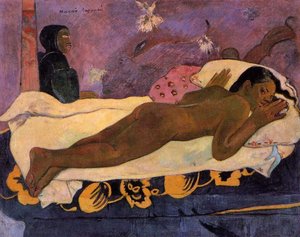
Gauguin’s artistic evolution was inextricably linked to his travels. He spent time in Brittany, captivated by the rugged landscapes and deeply rooted traditions of its people. This period saw him experimenting with flattened forms, bold outlines, and a simplification of composition—techniques that moved him further away from naturalism and closer to a more symbolic language. But it was his journey to Tahiti in 1891 that truly unleashed his creative potential. Seeking refuge from what he perceived as the stifling constraints of European civilization, Gauguin hoped to find inspiration in Polynesian culture, believing it offered a purer, more authentic way of life. This wasn’t simply an artistic pursuit; it was a spiritual quest. He immersed himself in local customs and beliefs, depicting Polynesian women, landscapes, and religious practices through his unique lens. Influenced by Japanese prints—Japonisme—and medieval art, he developed a distinctive aesthetic characterized by vibrant colors, exotic subject matter, and an air of mystery. Iconic paintings like “Vahine no te miti” (Woman with Mango), “Manao Tupapau” (Watched by the Spirit of the Dead), and “The Day of Gods emerged from this period, solidifying his reputation as a visionary artist. His use of color became increasingly bold and non-naturalistic, serving not to replicate reality but to express emotion and spiritual meaning.Legacy and Controversy
Despite his artistic breakthroughs, Gauguin’s life was often marked by hardship. He struggled with financial difficulties and declining health during his time in Tahiti and later on the Marquesas Islands, where he eventually settled. Yet, he continued to paint prolifically, relentlessly exploring themes of life, death, and spirituality. He died in 1903 on Hiva Oa, a remote island in the Marquesas archipelago, largely unrecognized for his genius. It was only after his death that Gauguin’s work began to receive the acclaim it deserved. Today, he is celebrated as a pivotal figure in the development of modern art, bridging the gap between Impressionism and Symbolism, and paving the way for movements like Fauvism. His use of color, simplified forms, and symbolic imagery profoundly influenced artists such as Pablo Picasso, Henri Matisse, and countless others. However, Gauguin remains a controversial figure due to aspects of his personal life—particularly his relationships with young Polynesian women—which continue to be debated and reinterpreted in light of contemporary ethical considerations. Nevertheless, his artistic contributions are undeniable, and his legacy continues to inspire artists and art lovers around the world. He was a true innovator, a rebel who dared to challenge conventions and forge his own path, leaving behind a body of work that is as captivating and enigmatic as the man himself.Key Influences & Artistic Characteristics
- Impressionism: Early influence on color and light, later rejected for its focus on fleeting reality.
- Japonisme: Inspired flattened perspectives, bold outlines, and decorative patterns.
- Medieval Art: Influenced symbolic imagery and a rejection of strict realism.
- Synthetism: A style developed by Gauguin emphasizing the creation of art based on subjective experience rather than objective observation.
- Primitivism: Fascination with non-Western cultures, believing they offered a more authentic and spiritual way of life. This is reflected in his subject matter and stylistic choices.
Quick facts about Eugène Henri Paul Gauguin
- Artistic Movement Or Style: Post-Impressionism, Symbolism
- Artists Or Movements Influenced By This Artist:
- Pablo Picasso
- Henri Matisse
- Fauvism
- Artists Who Influenced This Artist: ['Camille Pissarro']
- Date Of Birth: 1848
- Date Of Death: 1903
- Full Name: Eugène Henri Paul Gauguin
- Nationality: French
- Notable Artworks:
- Clearing
- Vahine no te miti
- Manao Tupapau
- Little Breton Shepherd
- Place Of Birth: Paris, France
Related Artworks




Explore artworks organized by themes, styles, and characteristics.


Eugène Henri Paul Gauguin
Alone
() ·
With its frame: · Hand-painted in oil on linen
Total