Preview
 Send
Send Share
Share
 Details
 Guide
Guide

 Download
 Similars
 X-Ray
X-Ray Diaporama
 Stats
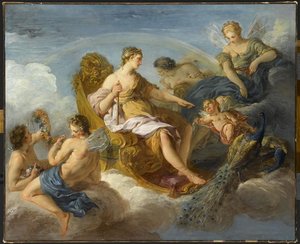
StatsJunon, Iris et Flore


Experience the opulence of "Junon, Iris et Flore" by François Lemoyne! This stunning Rococo masterpiece depicts mythological figures in a vibrant, detailed painting—a true testament to French art's elegance.
 Read More
François Lemoyne (1688-1737): Parisian Rococo painter reviving grand allegories & influenced by Rubens. Explore his legacy of elegance & Baroque splendor!
Giclée / Art Print
Museum-quality giclée or canvas print with fast production and flexible finish options. ( Buy Hand Made Painting Switch to Digital Image)




P118B $10

P118H $10

P118W $10

P438Z $10

P508JH $12

P508YH $12

P805H $10

P805Z $10

P919BZ $10

P919G $10

P919XJ $10

P959ZH $10

P968JZ $12

W106C $8

W218G $10

W218JH $8

W218Y $10

W307PJ $10

W316G $10

W316PJ $8

W316Y $10

W398PJ $8

W4111J $10

W500HY $15

W500JH $15

W692G $12

W849H $8

W940BG $15

W953PJ $8




Standard
custom
CM
INCH
Pick from our preset sizes that match the artwork's original proportions.
Loading sizes...

width
height
Type the width and the height you need, to fit your frame or your wall. A print can only be cut, never made bigger than the picture, so a size with a different shape loses a part of the image. We send you a digital mockup to approve before we print anything. The picture shown on this page does not show the real cut — only the mockup does.
Worldwide Delivery () in 2 weeks instead of standard 4/5 weeks. (22 October)

Free Worldwide Express Shipping

High-Quality Linen Canvas

Full Shipping Insurance

Customs Tax Refund Guarantee

True Color Matching Guarantee

100-Day Return Policy (Defects Only)

100% Money-Back Guarantee

Bulk Discount Offer
 Glass option is only available in size under 110 CM

Junon, Iris et Flore
Giclée / Art Print
Reproduction Size
-


Total Price
$ 70
A Vision of Divine Harmony: Unveiling François Lemoyne’s Junon, Iris et Flore
François Lemoyne's “Junon, Iris et Flore,” painted in the heart of the Rococo era between 1720 and 1724, isn’t merely a depiction of mythological figures; it’s an immersive experience. This opulent canvas transports the viewer to a realm where classical grandeur intertwines with playful exuberance, reflecting the spirit of Louis XV's France. Lemoyne, deeply influenced by the legacy of Rubens and the Venetian masters, masterfully captures a moment of serene power – Juno, the Roman goddess of marriage and childbirth, presiding over a scene brimming with allegorical significance and breathtaking beauty.
The painting’s core lies in its masterful composition. A pyramidal structure anchors the scene, drawing the eye towards the central figure of Juno, seated regally upon an elaborate gilded chair that seems to float amidst swirling clouds. Surrounding her are a constellation of cherubic figures – Iris, goddess of the rainbow, and Flore, representing flowers – engaged in delightful activities: playing instruments, offering bouquets, and generally radiating an aura of youthful joy. The inclusion of a magnificent peacock, positioned prominently in the lower right corner, adds a touch of regal splendor and symbolizes Juno’s connection to royalty and immortality. Lemoyne's deliberate use of light and shadow creates a sense of depth and drama, highlighting the figures' features and enhancing the painting's overall luminosity.
The Rococo Palette: Color, Line, and Texture in Detail
The color palette is undeniably characteristic of the Rococo style – a symphony of pastel hues that evoke a sense of lightness, elegance, and dreamlike quality. Soft blues, delicate pinks, creamy whites, and shimmering golds dominate the scene, creating an atmosphere of refined beauty. Lemoyne’s skillful use of layering and blending techniques results in smooth transitions between colors, while subtle variations in tone add depth and dimension to the figures and drapery. The artist employs curving lines extensively, mirroring the graceful forms of the human body and the billowing clouds, contributing significantly to the painting's overall sense of fluidity and movement.
Beyond color and line, Lemoyne demonstrates a remarkable command of texture. He utilizes varying brushstrokes to create a diverse range of effects – smooth surfaces for the figures’ skin, textured strokes for the clouds and drapery, and meticulous detailing in the peacock's iridescent plumage. This attention to tactile detail invites the viewer to almost feel the softness of the fabrics and the shimmer of the feathers, further enhancing the painting’s immersive quality.
Symbolism and Historical Context: A Window into 18th-Century France
“Junon, Iris et Flore” is rich in symbolic meaning. Juno represents not only marriage and childbirth but also authority, justice, and protection – qualities highly valued during the period. Iris embodies communication, hope, and divine messengership, while Flore symbolizes fertility, abundance, and the beauty of nature. The peacock itself holds significant mythological associations, representing Juno’s royal status and her connection to immortality. The painting was created during a time of immense artistic innovation in France, as artists sought to revive the grandeur of classical art while embracing the playful spirit of the Rococo style. Lemoyne's work reflects this dynamic interplay between tradition and modernity, showcasing his mastery of both technical skill and allegorical storytelling.
A Legacy of Elegance: Reproduction and Artistic Inspiration
Reproductions of “Junon, Iris et Flore” offer a remarkable opportunity to bring the beauty and sophistication of this iconic masterpiece into your home or office. Whether you’re an art enthusiast, a collector seeking to enrich your collection, or an interior designer aiming to create a space of timeless elegance, this painting provides a stunning focal point. The delicate colors, graceful forms, and rich symbolism will undoubtedly elevate any setting, transporting viewers to a world of divine harmony and artistic splendor. Consider commissioning a hand-painted reproduction – a faithful recreation that captures the essence of Lemoyne’s original work, ensuring its legacy endures for generations to come.
Questions & Answers
Which artist is "Junon, Iris et Flore" attributed to?
"Junon, Iris et Flore" was created by François Lemoyne. The information on this page describes François Lemoyne's original work.
Does "Junon, Iris et Flore" by François Lemoyne use strong contrasts or soft harmonies?
The color composition of "Junon, Iris et Flore" by François Lemoyne combines a balanced contrast with a strong color unity harmony.
At what size is "Junon, Iris et Flore" suggested for a living room?
In a living room, "Junon, Iris et Flore" is suggested at a medium print size.
Artist Biography
A Parisian Legacy in Rococo Splendor
François Lemoyne, a name perhaps less immediately recognized than those of his contemporaries Boucher or Watteau, nevertheless occupies a significant position within the tapestry of 18th-century French art. Born in Paris in 1688, Lemoyne dedicated his life to reviving the grandeur of large-scale allegorical painting—a tradition that had somewhat waned since the era of Charles Le Brun, whom Lemoyne deeply admired and sought to emulate. His ambition was not merely to decorate, but to create works imbued with intellectual weight and emotional resonance, reflecting the complex spirit of the Rococo period while simultaneously harking back to a more classical ideal. From his early training under his stepfather, Robert le Vrac, and later within the rigorous environment of the Académie Royale de peinture et de sculpture, Lemoyne demonstrated a dedication to mastering both technical skill and artistic expression. His formal education with Louis Galloche and Pierre-Jacques Cazes proved formative, particularly in developing his nuanced understanding of color—a characteristic that would become increasingly prominent throughout his career. The coveted Prix de Rome in 1711 marked a pivotal moment, though financial constraints initially delayed his journey to Italy; a trip he eventually undertook in 1723 accompanying François Berger.Italian Echoes and Rococo Flourishes
The sojourn to Italy proved transformative for Lemoyne. Immersing himself in the works of Renaissance masters like Raphael, Correggio, and Titian, he absorbed their techniques and aesthetic principles, enriching his artistic vocabulary. However, it was the dynamic energy of Peter Paul Rubens that left an indelible mark on his style—evident in his vibrant color palettes and dramatic compositions. Exposure to Venetian painting within Pierre Crozat’s renowned collection further refined his sensibilities, fostering a love for rich textures and atmospheric effects. These influences coalesced into a distinctly Rococo aesthetic characterized by elegance, ornamentation, and a focus on decorative beauty. Yet, Lemoyne never fully abandoned the ambition of grand narrative that defined earlier French academic painting; he sought to synthesize these seemingly disparate elements—the lightness and grace of the Rococo with the intellectual rigor of the classical tradition. This unique blend is what sets his work apart and contributes to its enduring appeal.Versailles and Royal Recognition
Lemoyne’s artistic prowess found its most spectacular expression in his monumental ceiling frescoes, notably L'Apothéose d'Hercule (The Apotheosis of Hercules) at the Salon d’Hercule within the Palace of Versailles. This masterpiece—a dazzling display of illusionistic technique and dynamic composition—immediately garnered widespread acclaim. Contemporaries like Voltaire and Cardinal Fleury lauded its brilliance, recognizing Lemoyne as a master of his craft. Beyond Versailles, he also undertook significant religious commissions, such as The Transfiguration in the chancel of the Jacobin Church (now Parish Church of St. Thomas d’Aquin) in Paris, demonstrating his versatility and ability to adapt his style to different subject matter. In 1736, Lemoyne reached the pinnacle of his career with his appointment as Premier peintre du roi (First Painter to the King) under Louis XV—a testament to his artistic achievements and standing within the French court.A Tragic End and Lasting Influence
Despite achieving such heights, Lemoyne’s life was tragically cut short by suicide in 1737. His untimely death marked not only a personal loss but also signaled a shift in artistic tastes; it coincided with a decline in popularity for the large-scale allegorical ceiling paintings he so passionately championed. Nevertheless, his legacy endured through his students, including prominent artists such as Charles-Joseph Natoire and François Boucher, to whom he imparted his knowledge and skills. While perhaps not as universally celebrated today as some of his contemporaries, Lemoyne’s contributions to French Rococo art are increasingly appreciated for their technical mastery, artistic ambition, and the unique synthesis of classical ideals with the prevailing aesthetic sensibilities of his time. His works remain a testament to a dedicated artist who sought to elevate painting to its highest form—a legacy that continues to inspire and captivate audiences centuries later.Key Works & Artistic Contributions
- Ceiling Frescoes: Lemoyne’s most celebrated achievements, exemplified by L'Apothéose d'Hercule, showcase his mastery of illusionistic techniques and dynamic composition.
- Mythological Scenes: Works like Hercules and Omphale demonstrate his ability to depict classical narratives with both dramatic intensity and sensual grace.
- Religious Paintings: The Transfiguration exemplifies his skill in rendering religious subjects with emotional depth and technical precision.
- Portraiture: His portrait of Head of King Louis XV, reveals a subtle understanding of character and a mastery of charcoal and pastel techniques.

François Lemoyne
1688 - 1737 , France
Quick Facts
- Artistic Movement Or Style: Rococo
- Artists Or Movements Influenced By This Artist:
- Natoire
- Boucher
- Artists Who Influenced This Artist:
- Rubens
- Raphael
- Correggio
- Titian
- Cazes
- Date Of Birth: 1688
- Date Of Death: 1737
- Full Name: François Lemoyne
- Nationality: French
- Notable Artworks:
- The Apotheosis of Hercules
- Hercules and Omphale
- Perseus and Andromeda
- Head of King Louis XV
- The Transfiguration
- Other Names: François Le Moine
- Place Of Birth: Paris, France
Related Articles

The Elegance of Rococo: A Journey Through Pastel Dreams and Ornate Splendor
Embark on an elegant journey through the Rococo era. Discover the delicate beauty of pastel masterpieces, the intricate artistry of 18th-century French masters, and how this era of ornate splendor continues to inspire timeless luxury in fine art collecting.

Drama & Delight: A Journey Through the Grandeur of Baroque and Rococo Art
Embark on a cultural journey through the dramatic grandeur of Baroque and the delicate grace of Rococo art. Discover the history, techniques, and timeless beauty of these magnificent eras with our expert-led exploration of European masterpieces.

The Elegance of Rococo Portraiture: A Journey Through Grace, Soft Light, and Pastel Dreams
Discover the exquisite world of Rococo portraiture. Explore the delicate beauty of 18th-century French art, from pastel light to graceful asymmetry, and learn how to bring this era of elegance into your home through masterfully hand-painted oil reproductions.
Explore artworks organized by themes, styles, and characteristics.