Preview
 Send
Send Share
Share
 Details
 Guide
Guide

 Download
 Similars
 X-Ray
X-Ray Diaporama
 Stats
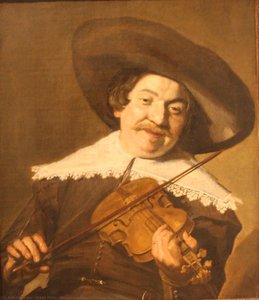
StatsThe Rommel Pot Player
 Baroque
 1618
1618 38.0 x 31.0 cm
 The Art Institute of Chicago
Frans Hals (1582-1666) was a Dutch Golden Age master renowned for his lively portraits and genre scenes. His loose brushwork captured personality and movement, influencing generations of artists. See iconic works like 'The Laughing Cavalier'!
 Read More
Giclée / Art Print
Museum-quality giclée or canvas print with fast production and flexible finish options. ( Buy Hand Made Painting Switch to Digital Image)




































Standard
custom
CM
INCH
Pick from our preset sizes that match the artwork's original proportions.
Loading sizes...

width
height
You may enter your own dimensions to fit a specific frame or space. If your selected size does not match the original image's proportions, we will either crop the artwork or extend the image with a mirrored or solid-fill edge. A digital mockup will be sent for your approval before production begins.
Please note that the on-screen preview does not reflect the actual cropping or extension. Only the mockup will accurately show the final composition.
While custom sizes are available, we recommend selecting a dimension from the predefined list to preserve the original proportions.
Worldwide Delivery () in 2 weeks instead of standard 4/5 weeks. (4 October)

Free Worldwide Express Shipping

High-Quality Linen Canvas

Full Shipping Insurance

Customs Tax Refund Guarantee

True Color Matching Guarantee

100-Day Return Policy (Defects Only)

100% Money-Back Guarantee

Bulk Discount Offer
 Glass option is only available in size under 110 CM

The Rommel Pot Player
Giclée / Art Print
Reproduction Size
-


Total Price
$ 70
Artist Biography
A Life Illuminated: Frans Hals and the Dutch Golden Age
Frans Hals, a name synonymous with the vibrant energy of the Dutch Golden Age, stands as one of history’s most celebrated portraitists. Born in Mechelen (present-day Belgium) around 1582 – precise dates remain elusive – his artistic journey unfolded against a backdrop of burgeoning mercantile wealth and unprecedented cultural freedom in the Netherlands. Unlike many artists of his time who benefited from extensive workshop training, Hals' early life was marked by relative obscurity. His father, Frans Claesz, was a cloth merchant, and while likely exposed to art through family connections, Hals’ formal education appears limited. This unconventional start perhaps contributed to the uniquely individualistic style that would come to define him. He moved with his family to Haarlem in 1603, a thriving center for painting, and entered the local Guild of St. Luke in 1610, marking the official beginning of his professional career.Breaking from Convention: A New Approach to Portraiture
Hals’ work immediately distinguished itself through its remarkable vivacity and psychological depth. He rejected the polished, idealized portraits common during the Renaissance and early Baroque periods, opting instead for a more direct, spontaneous approach. His subjects weren't merely representations of status or wealth; they were captured in moments of genuine emotion – laughing, singing, conversing, or simply lost in thought. This ability to convey personality was revolutionary. Hals’ brushwork became his signature: loose, energetic strokes that created an impressionistic effect centuries before the movement officially began. He didn't meticulously blend colors or smooth surfaces; instead, he embraced visible texture and a sense of immediacy. The Laughing Cavalier, painted around 1624, exemplifies this approach perfectly. The subject’s confident gaze and open-mouthed laugh seem to leap from the canvas, inviting viewers into a shared moment of joy. This painting, along with others like Malle Babbe, showcases Hals' mastery of capturing fleeting expressions and individual character.Genre Scenes and Group Portraits: Expanding Artistic Horizons
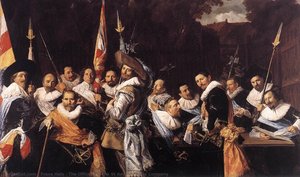
While renowned for his individual portraits, Hals also excelled in genre scenes – depictions of everyday life – and group portraits, a particularly popular commission type during the Dutch Golden Age. His genre paintings, though fewer in number than his portraiture, reveal a keen observation of human behavior and a playful sense of humor. He often depicted scenes of merriment, such as taverns or festive gatherings, capturing the boisterous energy of Dutch society. Hals’ group portraits were equally innovative. Unlike the rigid, formal arrangements favored by other artists, he arranged his subjects in dynamic compositions, each figure possessing a distinct personality and engaging with the viewer directly. The Banquet of the Officers of the St George Militia Company, painted in 1616, is a prime example. The painting isn’t simply a record of civic duty; it's a lively depiction of camaraderie and collective identity.Influences and Legacy: A Lasting Impact on Art History
Pinpointing Hals’ direct influences proves challenging, given his unconventional training. He absorbed elements from earlier Dutch masters like Karel van Mander and Pieter Claesz, but he quickly developed a style uniquely his own. His work, in turn, profoundly influenced generations of artists. Rembrandt van Rijn, though developing his own distinct aesthetic, clearly studied Hals’ techniques, particularly his use of light and shadow. Later artists like Édouard Manet and the Impressionists were captivated by Hals' loose brushwork and emphasis on capturing fleeting moments. His rejection of academic conventions paved the way for a more expressive and individualistic approach to painting.Historical Significance: A Mirror to Dutch Society
Frans Hals’ significance extends beyond his artistic innovations; he provides invaluable insight into the social and cultural landscape of the Dutch Golden Age. His portraits offer a glimpse into the lives of merchants, civic leaders, and ordinary citizens, reflecting the burgeoning wealth, individualism, and relative freedom that characterized the period. He captured not just likenesses but also the spirit of an era – its energy, optimism, and embrace of everyday life. Despite facing financial difficulties in his later years, Hals remained a highly respected figure within the Haarlem art community. He died in 1666, leaving behind a legacy that continues to inspire and captivate audiences today. His work stands as a testament to the power of observation, the beauty of spontaneity, and the enduring allure of human personality.
Quick Facts
- Full Name: Frans Hals
- Nationality: Dutch
- Date Of Birth: (Unknown)
- Date Of Death: 1666
- Notable Artworks:
- The Laughing Cavalier
- Marriage Portrait of Isaac Massa
- Portrait of a Couple
- Artistic Movement Or Style: Dutch Golden Age, Baroque
Explore artworks organized by themes, styles, and characteristics.