


 Preview
 Send
Send Share
Share
 Details
 Guide
Guide

 Download
 Similars
 X-Ray
X-Ray Diaporama
 Stats
StatsSalome
 Acrylic On Canvas
- WallArt
- German Symbolism
 1906
1906 92.0 x 114.0 cm
 Lenbachhaus
Franz Ritter von Stuck's "Salome" (1906) depicts a captivating dance of desire and tragedy, blending Symbolism with biblical drama. Explore the haunting beauty & dark narrative of this iconic masterpiece.
 Read More
Franz von Stuck was a German Symbolist painter known for his evocative mythological scenes, striking sculptures, and pivotal role in the Munich Secession. His work blends classical precision with dreamlike imagery and explores themes of sin, beauty, and the subconscious.
Hand Made Oil Reproduction
Hand-painted oil on canvas in your size and frame, made to order by our artists. ( Switch to Print Switch to Digital Image)




P118B $10

P118H $10

P118W $10

P438Z $10

P508JH $12

P508YH $12

P805H $10

P805Z $10

P919BZ $10

P919G $10

P919XJ $10

P959ZH $10

P968JZ $12

W106C $8

W218G $10

W218JH $8

W218Y $10

W307PJ $10

W316G $10

W316PJ $8

W316Y $10

W398PJ $8

W4111J $10

W500HY $15

W500JH $15

W692G $12

W849H $8

W940BG $15

W953PJ $8




Standard
custom
CM
INCH
Pick from our preset sizes that match the artwork's original proportions.
Loading sizes...

width
height
Type the width and the height you need, to fit your frame or your wall. This is hand-painted, so for a size with a different shape the artist can paint a bit more around the picture, or cut a bit — you choose. We send you a digital mockup to approve before the painting starts. The picture shown on this page does not show the real result — only the mockup does.
Examples of what can be changed: Replace face with customer photo; Add pet (e.g., replace cat with dog); Include hidden message in background; Change background landscape or elements.
After order, TopImpressionists.com team will email client for instructions and provide a mockup preview
After order, TopImpressionists.com team will email client for instructions and provide a mockup preview
Worldwide Delivery () in 3/4 weeks instead of standard 5 weeks. (23 October). No compromise on quality.

Free Worldwide Express Shipping

High-Quality Linen Canvas

Full Shipping Insurance

Customs Tax Refund Guarantee

True Color Matching Guarantee

100-Day Return Policy (Defects Only)

100% Money-Back Guarantee

Bulk Discount Offer
 Glass option is only available in size under 110 CM

Salome
Reproduction Medium
Reproduction Size
-


Total Price
$ 269
The Enigmatic Dance: Unveiling Franz Ritter von Stuck’s “Salome”
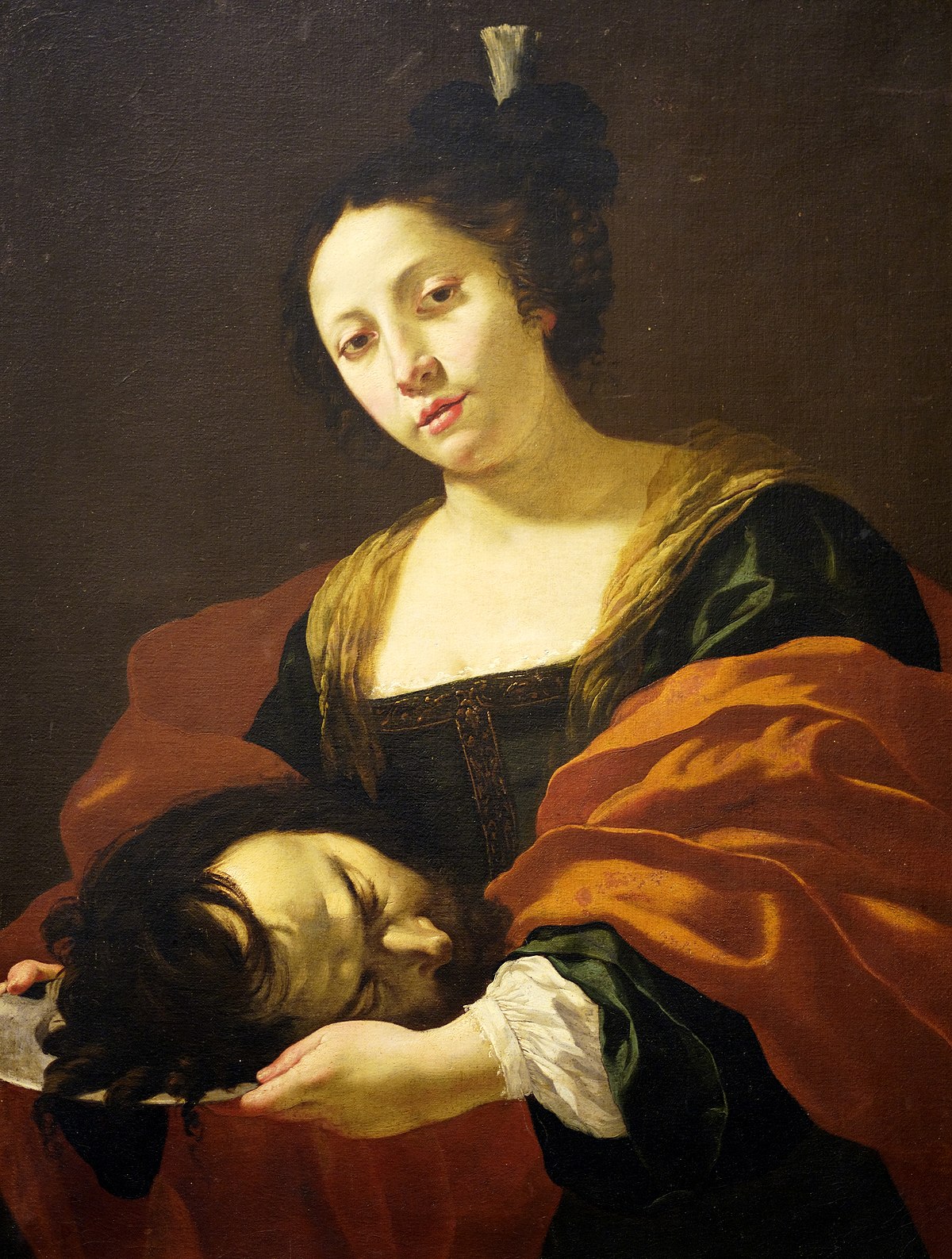
Franz Ritter von Stuck's 1906 painting, "Salome," is not merely a depiction of a biblical episode; it’s a profoundly unsettling and intensely symbolic exploration of desire, power, and the dark undercurrents of human nature. Emerging from the fertile ground of German Symbolism, Stuck masterfully blends classical precision with the dreamlike logic of the subconscious, creating an image that continues to captivate and disturb over a century later. The painting’s immediate impact lies in its dramatic composition – a carefully orchestrated tableau of figures poised on the precipice of violence and obsession. The scene unfolds within a shadowy, almost claustrophobic space, dominated by a towering, ornate architecture suggesting both opulence and impending doom. This isn't a straightforward narrative; it’s an atmosphere saturated with tension, inviting viewers to contemplate the motivations and fates of those involved.
A Symphony of Contrasts: Style, Technique, and Materiality
Stuck’s artistic style is immediately recognizable as a potent blend of Symbolism and Art Nouveau influences. The painting showcases his signature use of rich, jewel-toned colors – deep reds, emerald greens, and shimmering golds – applied with meticulous detail to create an opulent yet unsettling effect. His brushwork is deliberately expressive, employing visible strokes that contribute to the overall sense of drama and movement. Notice particularly the way he renders the textures: the velvet drapery, the polished surfaces of the architecture, and even the glistening skin of Salome herself – all are rendered with a tactile quality that draws the viewer into the scene. The painting was executed in oil on canvas, a medium that allowed Stuck to achieve both luminous color saturation and remarkable textural detail. The use of chiaroscuro—the dramatic contrast between light and shadow—further intensifies the emotional impact, highlighting key figures and obscuring others in an atmosphere of mystery and foreboding.
The Narrative Unfolds: Biblical Context and Symbolism
At its core, “Salome” depicts a pivotal moment from the New Testament – the fulfillment of Herodias’s vengeful plot against John the Baptist. However, Stuck doesn't offer a simple retelling of the story; instead, he delves into the psychological complexities of the characters and imbues the scene with layers of symbolic meaning. Salome herself is not portrayed as a seductive temptress but rather as a figure caught in a web of manipulation and driven by a primal desire for power. The presence of the dark servant, clutching John’s severed head on a platter, introduces an element of grotesque horror – a stark reminder of the brutal consequences of unchecked ambition. The architecture—a blend of Romanesque and Byzantine styles—suggests both grandeur and decay, mirroring the moral corruption at the heart of the narrative. The star-studded night sky serves as a backdrop to this drama, hinting at a realm beyond earthly concerns and perhaps suggesting a connection between life and death.
A “Prince of Art”: Stuck’s Legacy and Artistic Significance
Franz Ritter von Stuck was more than just an artist; he was a cultural phenomenon. Nicknamed the "Prince of Art" during his lifetime, he bridged the gap between academic tradition and the burgeoning currents of modernism. His work explored themes of sin, beauty, and the subconscious with a boldness and emotional intensity that resonated deeply with audiences at the turn of the 20th century. Villa Stuck, his own architectural masterpiece in Munich, stands as a testament to his artistic vision—a lavishly decorated space filled with sculptures, paintings, and intricate details reflecting his fascination with mythology, symbolism, and the darker aspects of human experience. “Salome” is arguably one of his most enduring works, demonstrating his mastery of dramatic composition, evocative color palettes, and profound psychological insight. It remains a powerful and unsettling image that continues to provoke discussion and inspire interpretation.
Questions & Answers
What is "Salome" made with, and in which style?
"Salome" is made in acrylic on canvas, in the German Symbolism style.
Is "Salome" by Franz Ritter von Stuck a painting, a drawing or a print?
"Salome" is a wall art piece.
What are the date and style of "Salome" by Franz Ritter von Stuck?
"Salome" was created in 1906 as a work of the German Symbolism movement. Date and movement anchor the artwork in art history.
Artist Biography
A Life Steeped in Myth and Symbol
Franz Ritter von Stuck, a name synonymous with the evocative power of German Symbolism, emerged from the rural landscapes of Bavaria in 1863 to become one of the most influential artists of his generation. Born in Tettenweis, initially destined for a life following his father as a forester, young Franz demonstrated an undeniable artistic inclination that would irrevocably alter his path. This early aptitude led him to Munich, first to the School of Applied Arts in 1878 and then to the Academy of Fine Arts from 1882-1884, where he fell under the spell of Arnold Böcklin’s hauntingly beautiful mythological scenes – a formative influence that would deeply shape his artistic vision. Stuck wasn't merely an artist; he was a cultural phenomenon, a “Prince of Art” as he became known during his lifetime, bridging the gap between 19th-century academic tradition and the burgeoning currents of modernism.The Rise of a Symbolist Master
Stuck’s ascent to prominence was remarkably swift. His breakthrough arrived in 1889 with The Guardian of Paradise, exhibited at the Munich Glass Palace, instantly garnering critical acclaim and a gold medal. This painting wasn't simply a display of technical skill; it announced a new artistic voice – one that blended classical precision with mythological subject matter and an undercurrent of Symbolist mystery. He quickly became a central figure in challenging established norms, co-founding the Munich Secession in 1892 alongside like-minded artists determined to break free from conservative constraints and champion modern art. This act of artistic rebellion coincided with his exploration into sculpture, debuting with Athlete, demonstrating an impressive versatility. However, it was The Sin (1893) that truly cemented his reputation as a master of Symbolist painting, captivating audiences with its dramatic intensity and psychological depth. This period marked the full flowering of Stuck’s unique style – a potent combination of sensuality, classical form, and symbolic resonance.Themes and Influences: A World of Desire and Myth
The artistic universe of Franz von Stuck is populated by recurring motifs that reveal his profound engagement with timeless themes. Mythology served as a constant source of inspiration, drawing from Greek, Roman, and biblical narratives which he reimagined with a distinctly personal flair. These weren’t mere retellings; they were explorations of the human condition filtered through the lens of ancient stories. Equally prominent was his fascination with sensuality and the femme fatale, powerfully embodied in his numerous depictions of Salome – a figure representing desire, danger, and moral ambiguity. These paintings weren’t simply about physical beauty; they delved into the psychological complexities of female power and its potential for both allure and destruction. Underlying all this was a deep reverence for classical art, evident in his meticulous technique, anatomical accuracy, and compositional rigor. Beyond Böcklin, Stuck acknowledged influences from the Pre-Raphaelites and Gustave Moreau, but he wasn’t merely an imitator; he synthesized these influences into something uniquely his own, profoundly impacting subsequent generations of artists.Legacy and Influence: A Teacher and a Knight
In 1895, Franz von Stuck took on another crucial role – that of teacher at the Munich Academy. He became a highly respected instructor, not only imparting technical skills but also encouraging his students to explore their individual artistic visions. Among those who benefited from his guidance were luminaries such as Paul Klee, Hans Purrmann, and Josef Albers, demonstrating the breadth of his influence. His dedication to art was further recognized in 1905 when he was ennobled, becoming “Ritter von Stuck” – a testament to his growing prestige and contribution to German culture. He continued to receive accolades throughout Europe, solidifying his position as one of the leading artists of his time. His Villa Stuck in Munich, now a museum, stands as a lasting monument to his life and work, offering invaluable insights into his artistic vision and the cultural milieu of late 19th and early 20th-century Germany. His legacy endures not only through his paintings and sculptures but also through the countless artists he inspired, ensuring that the spirit of Franz von Stuck continues to resonate within the art world today.Major Works and Enduring Significance
- The Spring (1886): A vibrant depiction showcasing his early mastery of color and composition.
- Dissonance (1893): An unsettling portrayal embodying emotional turmoil through a woman playing the violin.
- Salome (various versions): Perhaps his most iconic work, depicting the biblical story with striking sensuality and psychological depth.
- Athlete (1892): A powerful sculpture demonstrating his skill in three-dimensional form.

Franz Ritter von Stuck
1863 - 1928 , Germany
Quick Facts
- Full Name: Franz Ritter von Stuck
- Nationality: German
- Date Of Birth: 1863
- Date Of Death: 1928
- Place Of Birth: Tettenweis, Germany
- Notable Artworks:
- The Guardian of Paradise
- Salome
- The Sin
- Athlete
- Dissonance
- Artistic Movement Or Style: Symbolism, Art Nouveau
- Artists Who Influenced This Artist:
- Arnold Böcklin
- Pre-Raphaelites
- Gustave Moreau
- Artists Or Movements Influenced By This Artist:
- Paul Klee
- Wassily Kandinsky
Related Articles

The Elegance of Erté: Capturing the Timeless Glamour and Sophistication of Art Deco Style
Immerse yourself in the exquisite world of Erté. Discover how his legendary Art Deco illustrations defined 1920s glamour through unparalleled elegance, symmetry, and fashion artistry. Explore a timeless legacy of luxury for the true art enthusiast.
Explore artworks organized by themes, styles, and characteristics.


