Preview
 Send
Send Share
Share
 Details
 Guide
Guide

 Download
 Similars
 X-Ray
X-Ray Diaporama
 Q&A
Q&A Stats
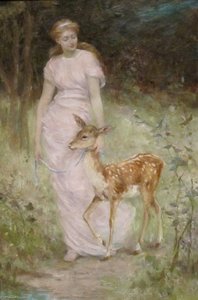
StatsA Symphony, Nineteenth Century


Explore Frederick Stuart Church's evocative etching *A Symphony*, capturing a poignant moment of musical connection and moral allegory within a beautifully rendered nineteenth-century landscape.
 Read More
Frederick Stuart Church (1842-1923) was an American illustrator renowned for allegorical animal depictions. Explore his charming works featured in Harper's, Century Magazine & more. Discover the art of a master of empathy and whimsical storytelling.
Giclée / Art Print
Museum-quality giclée or canvas print with fast production and flexible finish options. ( Buy Hand Made Painting Switch to Digital Image)




P118B $10

P118H $10

P118W $10

P438Z $10

P508JH $12

P508YH $12

P805H $10

P805Z $10

P919BZ $10

P919G $10

P919XJ $10

P959ZH $10

P968JZ $12

W106C $8

W218G $10

W218JH $8

W218Y $10

W307PJ $10

W316G $10

W316PJ $8

W316Y $10

W398PJ $8

W4111J $10

W500HY $15

W500JH $15

W692G $12

W849H $8

W940BG $15

W953PJ $8




Standard
custom
CM
INCH
Pick from our preset sizes that match the artwork's original proportions.
Loading sizes...

width
height
Type the width and the height you need, to fit your frame or your wall. A print can only be cut, never made bigger than the picture, so a size with a different shape loses a part of the image. We send you a digital mockup to approve before we print anything. The picture shown on this page does not show the real cut — only the mockup does.
Worldwide Delivery () in 2 weeks instead of standard 4/5 weeks. (29 October)

Free Worldwide Express Shipping

High-Quality Linen Canvas

Full Shipping Insurance

Customs Tax Refund Guarantee

True Color Matching Guarantee

100-Day Return Policy (Defects Only)

100% Money-Back Guarantee

Bulk Discount Offer
 Glass option is only available in size under 110 CM

A Symphony, Nineteenth Century
Giclée / Art Print
Reproduction Size
-


Total Price
$ 70
A Deep Dive Into Frederick Stuart Church’s “A Symphony”
Frederick Stuart Church's "A Symphony," created in 1884, isn't merely a depiction of a man playing guitar; it’s a meticulously crafted etching on parchment that embodies the spirit of Romanticism while subtly hinting at Symbolist influences. Produced during a period marked by burgeoning interest in natural history and moral allegory—a trend championed by luminaries like Darwin—the artwork reflects a broader cultural preoccupation with interpreting nature's grandeur through philosophical frameworks. Church, having begun his artistic journey as a draftsman for the American Express Company before serving valiantly during the Civil War, honed his skills under Walter Shirlaw at Chicago’s Academy of Design, establishing himself as one of America’s foremost illustrators.The Technique and Material Choices
Church's masterful execution speaks volumes about his dedication to capturing nuanced detail. The etching process itself—utilizing acid to carve lines into a metal plate—allowed for exceptional precision, resulting in an image characterized by delicate tonal gradations and subtle textures. The parchment substrate—chosen for its archival qualities—further underscores Church’s commitment to preserving the artwork's integrity for generations to come. Examining the plate itself reveals intricate linework that meticulously renders the guitar player’s posture and facial expression, demonstrating a profound understanding of anatomy and gesture.Historical Context: Darwinian Influence and Moral Allegory
“A Symphony” sits squarely within the intellectual landscape shaped by Charles Darwin's groundbreaking publication of *On the Origin of Species*. The theory challenged prevailing religious dogma regarding creation, prompting artists to grapple with questions about humanity’s place in the natural world. Church skillfully incorporates this influence through the artwork’s symbolic representation—the guitar player embodies a contemplative figure striving for harmony amidst perceived discordance. The seated companion represents wisdom and understanding, while the standing individual symbolizes active engagement with life's challenges.Symbolism: Guitar Player as Harmony Seekers
The central figure—holding the guitar—is arguably the artwork’s most potent symbol. Music itself has long been associated with spiritual contemplation and emotional catharsis; Church elevates this association by portraying the guitarist as actively pursuing a state of equilibrium. The guitar, representing musical expression, serves as a conduit for conveying inner thoughts and feelings—a theme resonating deeply within the Symbolist movement's exploration of subconscious imagery and psychological states.Emotional Impact: Tranquility Amidst Complexity
Despite the subtle tension conveyed by the positioning of the figures, “A Symphony” ultimately exudes an aura of tranquility. Church’s skillful shading creates a luminous effect that softens the contours of the scene, fostering a sense of serenity and contemplation. The artwork invites viewers to consider the profound beauty inherent in confronting life's complexities with grace and resilience—a timeless message conveyed through masterful artistic technique and imbued with enduring symbolic significance.Recommended Reproduction
A high-quality reproduction of “A Symphony” would beautifully complement any interior space, bringing forth the artwork’s delicate tonal palette and capturing its evocative atmosphere. Consider framing it in a neutral tone to maximize visual impact and preserve the piece's original aesthetic integrity.Questions & Answers
Who is the artist behind "A Symphony, Nineteenth Century"?
"A Symphony, Nineteenth Century" was created by Frederick Stuart Church. The information on this page describes Frederick Stuart Church's original work.
Where does "A Symphony, Nineteenth Century" sit within Frederick Stuart Church's body of work?
"A Symphony, Nineteenth Century" belongs to Frederick Stuart Church's Romantic Symbolism work, whose recorded themes include romanticism’s symbolic vision, moral lessons embodied art, civil war era themes, church’s animal allegory role, illustrative style legacy.
What color intensity does "A Symphony, Nineteenth Century" by Frederick Stuart Church have?
The colors in "A Symphony, Nineteenth Century" by Frederick Stuart Church have a vivid intensity.
Artist Biography
The Visionary Soul of an American Master
In the vibrant tapestry of late nineteenth-century American art, few threads are as intricately woven or as whimsically colored as those spun by Frederick Stuart Church. Born in Grand Rapids, Michigan, on December 1, 1842, Church was a man whose life trajectory defied the conventional paths laid out by his prominent lineage. The son of a distinguished lawyer and politician, his early years were marked by a departure from the structured world of commerce. At just thirteen, he abandoned formal schooling to join the American Express Company in Chicago—a move intended by his parents to steer him toward a stable business career. Yet, the call of destiny was far more profound than the lure of ledger books. The onset of the Civil War provided a transformative crucible; serving in the Union Army, Church experienced a depth of human experience that would later infuse his work with a unique sense of empathy and moral weight.
A Symphony of Allegory and Animal Grace
Church’s artistic legacy is most profoundly felt in his mastery of the allegorical depiction. He possessed a rare, almost supernatural ability to imbue the animal kingdom with human emotion and moral complexity. His illustrations, which graced the pages of prestigious publications such as Harper's and Century Magazine, were never merely decorative; they were narratives of the soul. Through his delicate use of line and color, a tiger was rarely just a predator, and a bird was never just a creature of flight. Instead, they became vessels for exploring themes of innocence, power, and the delicate balance of nature. In works like Maiden with Flamingos or his evocative etchings such as A Symphony, one finds a serene yet tension-filled world where every tilt of a head or outstretched paw tells a story of profound significance.
His technique often danced between the realms of Impressionism and fine line illustration, creating a dreamlike atmosphere that captivated the Gilded Age audience. His fascination with certain motifs—such as the majestic tiger or the delicate songbird—allowed him to explore the duality of existence: the predator and the prey, the powerful and the vulnerable. This era of his work reflected the broader cultural shifts of the time, capturing a sense of lightness and whimsy while simultaneously touching upon deeper, often more somber, social allegories. To look upon a Church original is to enter a realm where the boundaries between the natural world and the human psyche dissolve into a beautiful, symbolic haze.
Legacy of an American Illustrator
The historical significance of Frederick Stuart Church lies in his ability to bridge the gap between commercial illustration and fine art. He elevated the medium of the periodical illustration to a level of high symbolism, proving that even within the constraints of mass media, an artist could achieve profound depth. His life, spanning from the mid-nineteenth century through the dawn of the twentieth, mirrored the evolution of the American identity itself—moving from the ruggedness of the Civil War era to the sophisticated, ornamental elegance of the Gilded Age.
Today, his work remains a testament to the power of empathy in art. His ability to find the "human" within the animal and the "divine" within the mundane continues to resonate with collectors and historians alike. As we revisit his catalog, we see more than just beautiful images; we encounter the enduring spirit of an artist who believed that through the lens of nature, we might most clearly see ourselves.
- Key Artistic Milestones:
- Enrolled at the National Academy of Design under Lemuel Wilmarth.
- Became a prominent contributor to Harper's Weekly and Century Magazine.
- Developed a signature style blending Romanticism with animal allegory.
- Championed an independent, American-centric approach to artistic training.

Frederick Stuart Church
1842 - 1924
Quick Facts
- Full Name: Frederick Stuart Church
- Nationality: American
- Date Of Birth: 1842
- Date Of Death: 1924
- Place Of Birth: Grand Rapids, Michigan
- Notable Artworks:
- Supremacy
- Dreamers
- Two Birds
- Artistic Movement Or Style: Illustrator; Victorian Animal Art
- Artists Who Influenced This Artist: Walter Shirlaw
- Artists Or Movements Influenced By This Artist: Aesops Fables
Related Articles
Harmonies on Canvas: Exploring the Visual Representation of Music in Art History
Explore the fascinating history of music's visual representation in art! From ancient symbolism to modern abstraction, discover how artists have captured sound and emotion on canvas. Expert insights & stunning examples.

The Intricate World of Etching: A Historical Survey of Technique, Aesthetic Evolution, and Enduring Artistic Impact
Explore the rich history of etching, from its origins to modern practice. Discover techniques, key artists like Rembrandt, and insights for collectors. A comprehensive guide by TopImpressionists.

Animalia: Exploring the Enduring Presence of Animals in Art & Interior Design
Explore the rich history of animal symbolism in art, from ancient mythology to modern masterpieces. Discover how animals have inspired artists for centuries and learn how to incorporate these powerful motifs into your home décor.

Etching: A Historical Survey of Technique, Aesthetic Qualities & Enduring Artistic Significance
Explore the rich history of etching, from its origins to Rembrandt's masterful innovations. Discover the technique, aesthetic qualities & enduring legacy of this captivating art form. Expert insights for collectors and enthusiasts.

Etching Masters: 10 Legendary Prints That Revolutionized Art | TopImpressionists
Journey through 10 legendary etching masterpieces by Rembrandt, Dürer & Goya. Explore the history of printmaking and discover timeless art for your home. Find museum-quality reproductions at TopImpressionists.com.
Explore artworks organized by themes, styles, and characteristics.