Preview
 Send
Send Share
Share
 Details
 Guide
Guide

 Download
 Similars
 X-Ray
X-Ray Diaporama
 Stats
StatsLlandwrog
 Oil On Canvas
- WallArt
- Impressionism
 1880
1880- 19th Century
 23.0 x 34.0 cm
 Bangor University
Discover "Llandwrog" by Frederick William Hayes – a stunning 1880 oil painting of the Welsh countryside. Explore its Impressionistic style & rich textures at Bangor University.
 Read More
Explore the serene landscapes of Frederick William Hayes’ paintings! Capturing Welsh scenery & coastal views from 1848, his works evoke timeless beauty.
Giclée / Art Print
Museum-quality giclée or canvas print with fast production and flexible finish options. ( Buy Hand Made Painting Switch to Digital Image)




P118B $10

P118H $10

P118W $10

P438Z $10

P508JH $12

P508YH $12

P805H $10

P805Z $10

P919BZ $10

P919G $10

P919XJ $10

P959ZH $10

P968JZ $12

W106C $8

W218G $10

W218JH $8

W218Y $10

W307PJ $10

W316G $10

W316PJ $8

W316Y $10

W398PJ $8

W4111J $10

W500HY $15

W500JH $15

W692G $12

W849H $8

W940BG $15

W953PJ $8




Standard
custom
CM
INCH
Pick from our preset sizes that match the artwork's original proportions.
Loading sizes...

width
height
Type the width and the height you need, to fit your frame or your wall. A print can only be cut, never made bigger than the picture, so a size with a different shape loses a part of the image. We send you a digital mockup to approve before we print anything. The picture shown on this page does not show the real cut — only the mockup does.
Worldwide Delivery () in 2 weeks instead of standard 4/5 weeks. (21 October)

Free Worldwide Express Shipping

High-Quality Linen Canvas

Full Shipping Insurance

Customs Tax Refund Guarantee

True Color Matching Guarantee

100-Day Return Policy (Defects Only)

100% Money-Back Guarantee

Bulk Discount Offer
 Glass option is only available in size under 110 CM

Llandwrog
Giclée / Art Print
Reproduction Size
-


Total Price
$ 70
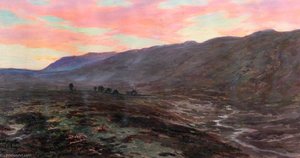
The Llandwrog painting by Frederick William Hayes is a beautiful representation of the Welsh countryside. Created in 1880, this oil on canvas piece measures 23 x 34 cm and is currently displayed at the Bangor University in Bangor, United Kingdom. The painting showcases the artist's skill in capturing the essence of nature, with a focus on the lush greenery and serene atmosphere of the countryside.
The Llandwrog painting by Frederick William Hayes is a stunning piece of art that showcases the beauty of the Welsh countryside. With its well-balanced composition and vibrant colors, it is a must-see for anyone interested in landscape paintings. For more information on the artist and his works, visit the TopImpressionists.com website.
Composition and Style
The composition of the painting is well-balanced, with several trees in the foreground adding depth to the scene. The hillside in the background is dotted with trees, creating a sense of distance and perspective. The use of oil on canvas gives the painting a rich texture and vibrant colors, making it a stunning piece of art. Frederick William Hayes was known for his landscape paintings, and Llandwrog is a prime example of his skill in this genre.Other Works by Frederick William Hayes
Some of the other notable works by Frederick William Hayes include A Wrecked Boat II, A Waterfall, and Twilight, Criccieth. These paintings can be found on the TopImpressionists.com website, which offers handmade oil painting reproductions of famous artworks. For more information on the artist and his works, visit the Frederick William Hayes page on TopImpressionists.com.- Llandwrog is a beautiful representation of the Welsh countryside
- The painting is created using oil on canvas, giving it a rich texture and vibrant colors
- Frederick William Hayes was known for his landscape paintings, and Llandwrog is a prime example of his skill in this genre
The Llandwrog painting by Frederick William Hayes is a stunning piece of art that showcases the beauty of the Welsh countryside. With its well-balanced composition and vibrant colors, it is a must-see for anyone interested in landscape paintings. For more information on the artist and his works, visit the TopImpressionists.com website.
Questions & Answers
What color leads the composition of "Llandwrog" by Frederick William Hayes?
putty (#e4d1cc) is the leading color of "Llandwrog" by Frederick William Hayes.
What subjects appear in "Llandwrog" by Frederick William Hayes?
The themes present in "Llandwrog" by Frederick William Hayes include welsh countryside, landscape painting, rural scenery”, “green hills”, “nature scene”, “oil painting”, “1880s art”. Together they summarize the artwork's subject matter.
What is the emotional tone of "Llandwrog" by Frederick William Hayes?
"Llandwrog" by Frederick William Hayes conveys a tranquil emotional tone.


Artist Biography
Frederick William Hayes: A Welsh Visionary of the Victorian Era
Frederick William Hayes, a name perhaps less familiar than some of his contemporaries, nevertheless holds a significant place in 19th-century British art. Born in Freshfield, Merseyside, in 1848, into a family rooted in industry – his father a tar distiller – Hayes’ artistic journey began not with formal training but through observation and a deep connection to the rugged beauty of North Wales. His early life, marked by a move to Knaresborough House near Leeds, provided him with an initial exposure to landscape painting, laying the groundwork for his distinctive style. However, it was his relocation to London in 1870, as a pupil of the esteemed Henry Dawson, that truly shaped his artistic trajectory. Dawson’s influence proved transformative. Hayes wasn't simply copying; he embraced a technique championed by his mentor – a method of “thin oil colour,” meticulously layered and blended to capture the ephemeral qualities of light and atmosphere. This approach, combined with Dawson’s emphasis on direct observation, instilled in Hayes a profound respect for nature and a commitment to rendering its complexities with remarkable accuracy. His early works, such as "Sunset on the Formby Sand-hills" (1872) and “Her Last Berth” (1885), already showcased this burgeoning talent, hinting at the evocative landscapes that would define his career. These paintings weren’t merely depictions of scenery; they were imbued with a sense of mood and atmosphere, reflecting the changing light and weather conditions with subtle yet powerful effect. Hayes' artistic focus quickly gravitated towards North Wales, particularly the dramatic coastline around Anglesey and the serene beauty of Llyn Du. This region became his lifelong muse, providing an endless source of inspiration for over three thousand paintings – a testament to his dedication and deep appreciation for its unique character. His subjects weren’t grand vistas or heroic scenes; instead, he meticulously captured the intimate details of the landscape: the jagged rocks of Ynys Llanddwyn rising from the sea, the misty glades teeming with wildlife, the reflections shimmering on the water's surface. He eschewed figures altogether, believing that the landscape itself spoke volumes, allowing viewers to project their own emotions and experiences onto the scene. This deliberate choice contributed significantly to the paintings’ timeless quality, ensuring they remain relevant across generations. Beyond his technical skill, Hayes was also a writer and playwright, exploring utopian themes in works like “The Great Revolution of 1905,” reflecting the social and political currents of late Victorian England. This literary endeavor demonstrates a broader intellectual curiosity that informed his artistic practice, suggesting an engagement with ideas about society, progress, and the relationship between humanity and nature. His later years were marked by a shift towards illustration, producing thousands of images for publications, further solidifying his reputation as a versatile artist. Hayes’ legacy is one of quiet brilliance. While he never achieved widespread fame during his lifetime, his paintings are now recognized for their exquisite detail, atmospheric depth, and profound connection to the Welsh landscape. His work resides in prominent collections, including those of the British Museum and Bangor University, ensuring that his vision continues to inspire and captivate viewers today. His dedication to capturing the essence of North Wales—its rugged beauty, its ever-changing light, and its timeless spirit—solidifies Frederick William Hayes as a significant, if often overlooked, figure in Victorian landscape art.Hayes’ Artistic Techniques & Influences
Hayes' distinctive style wasn’t born in isolation; it was shaped by a confluence of influences and a deliberate cultivation of specific techniques. His early training under Henry Dawson proved crucial, instilling in him the principles of direct observation and the use of “thin oil colour.” This method, as described by Dawson’s son, involved meticulously layering translucent glazes to build up depth and luminosity, mimicking the effects of atmospheric perspective. He was particularly adept at capturing the subtle shifts in light and shadow, creating a sense of immediacy and realism that set his work apart. Furthermore, Hayes drew inspiration from the Hudson River School painters of America – artists who championed the beauty of nature and employed similar techniques of layering and glazing to achieve luminous effects. However, unlike the grand landscapes favored by the Hudson River School, Hayes focused on the smaller-scale, more intimate scenes of North Wales. He also absorbed elements of Pre-Raphaelite painting, particularly in his attention to detail and his interest in capturing fleeting moments of beauty. Crucially, Hayes’ artistic development was deeply intertwined with his personal experiences. His upbringing in Merseyside exposed him to the industrial landscape, while his move to London provided access to a wider range of artistic influences. Yet, it was his return to North Wales that truly ignited his passion and shaped his unique vision. He spent countless hours exploring the coastline, sketching in the fields, and immersing himself in the rhythms of nature – experiences that informed every brushstroke.Major Works & Notable Achievements
Throughout his prolific career, Frederick William Hayes produced an astonishing number of paintings—over three thousand—each a testament to his dedication and skill. Several works stand out as particularly significant examples of his artistic achievement: “Llyn Du” (1877), a breathtaking depiction of the lake’s moody waters and surrounding mountains; "Coming to the Spring" (1886), capturing the delicate beauty of a Welsh spring meadow; and “Under the Cliffs” (1889), showcasing his mastery of light and shadow. Beyond individual paintings, Hayes' contribution to the art world extended to the establishment of the Liverpool Watercolour Society in 1872, fostering a community of artists and promoting the development of watercolour painting in the region. His work was regularly exhibited at the Royal Academy of Arts between 1872 and 1891, gaining him recognition within the established art world. Furthermore, Hayes’ illustrations for numerous publications—including books on Welsh history and folklore—demonstrated his versatility as an artist and his ability to capture the essence of a subject through visual imagery. His legacy is not solely defined by his paintings; it encompasses his role as a community leader, a prolific illustrator, and a writer exploring utopian ideals.Hayes’ Historical Context & Lasting Significance
Frederick William Hayes' artistic career unfolded during a period of significant social and cultural change in Britain—the late Victorian era. The rise of industrialization, the growth of cities, and the increasing awareness of environmental issues were all shaping the nation’s identity and influencing artistic expression. Hayes’ focus on the natural world can be seen as a reaction against the rapid pace of modernization and a celebration of the enduring beauty of the countryside. His work also reflects the broader intellectual currents of the time—the rise of utopianism, the interest in social reform, and the growing emphasis on individual experience. Hayes' exploration of utopian themes in his novel “The Great Revolution of 1905” demonstrates an engagement with these ideas, suggesting that his artistic practice was informed by a wider range of concerns. Today, Frederick William Hayes is recognized as a significant figure in Victorian landscape art—an artist who captured the beauty and spirit of North Wales with remarkable skill and sensitivity. His paintings continue to resonate with viewers today, offering a glimpse into a bygone era and reminding us of the enduring power of nature. His dedication to capturing the essence of his beloved Welsh landscapes ensures that his vision will endure for generations to come.
Frederick William Hayes
1848 - 1918
Quick Facts
- Full Name: Frederick William Hayes
- Nationality: English
- Date Of Birth: 1848
- Date Of Death: 1918
- Place Of Birth: Freshfield, Merseyside
- Notable Artworks:
- Llanddwyn III
- Sunset on Formby Sands
- Artistic Movement Or Style: Victorian Landscape Art
- Artists Who Influenced This Artist: ['Henry Dawson']
- Artists Or Movements Influenced By This Artist: ['Hudson River School']
Related Articles

The Magic of Tonalism: Capturing Mood, Mist, and Atmospheric Emotion in Landscape Art
Discover the ethereal beauty of Tonalism. Explore how master artists use mist, soft light, and muted palettes to capture profound emotion and atmospheric mood in landscape painting. A deep dive into this quiet, introspective art movement for true connoisseurs.
Explore artworks organized by themes, styles, and characteristics.