Atelier — Complimentary worldwide shipping — Delivery 2–6 weeks
Painting from Photo Wishlist Cart
PreviewPreview AR previewAR preview Buy Hand Made Painting Buy Hand Made PaintingBuy Image Buy Image SendSend
DetailsDetails Add to favorites Add to favorites DownloadDownload SimilarsSimilars X-RayX-Ray DiaporamaDiaporama

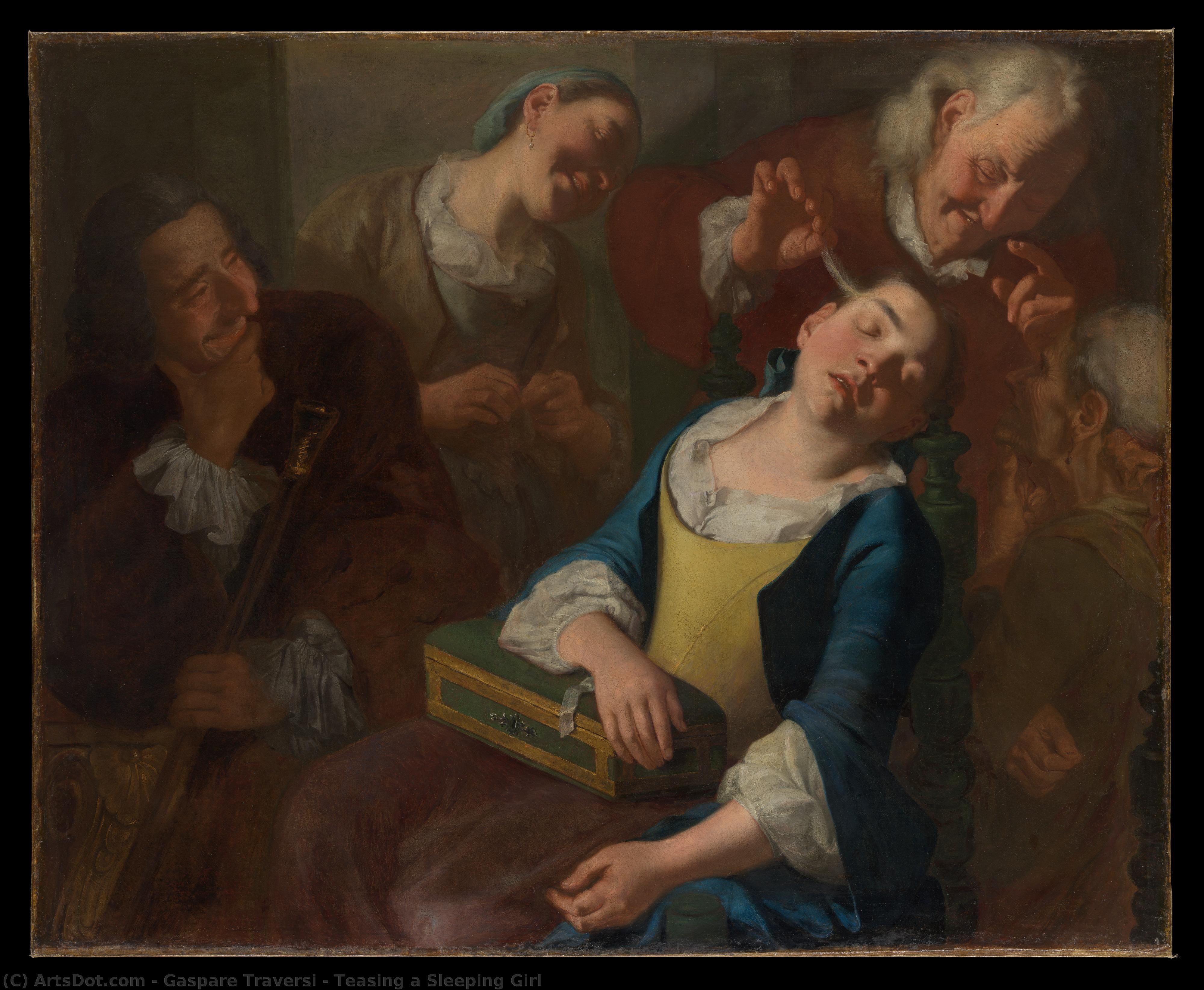
Untitled (D2X8MC)

Gaspare Traversi's 'The Concert' captures a lively scene of aristocratic society, blending humor and psychological insight. Inspired by Caravaggio and Ribera, it portrays a woman pianist observing men engaged in conversation, reflecting the artist's commitment to naturalism and social commentary.

Gaspare Traversi (1722-1770) was an Italian Rococo painter known for satirical genre scenes & vivid religious works in a Caravaggist style. Often compared to Hogarth, his paintings offer lively social commentary and dramatic realism.

Giclée / Art Print

Museum-quality giclée or canvas print with fast production and flexible finish options. (Buy Hand Made Painting Buy Hand Made PaintingBuy Image Buy Image)

P118B $10
P118H $10
P118W $10
P438Z $10
P508JH $12
P508YH $12
P805H $10
P805Z $10
P919BZ $10
P919G $10
P919XJ $10
P959ZH $10
P968JZ $12
W106C $8
W218G $10
W218JH $8
W218Y $10
W307PJ $10
W316G $10
W316PJ $8
W316Y $10
W398PJ $8
W4111J $10
W500HY $15
W500JH $15
W692G $12
W849H $8
W940BG $15
W953PJ $8

Standard
custom
CM
INCH

Pick from our preset sizes that match the artwork's original proportions.

width
height

You may enter your own dimensions to fit a specific frame or space. If your selected size does not match the original image's proportions, we will either crop the artwork or extend the image with a mirrored or solid-fill edge. A digital mockup will be sent for your approval before production begins.
Please note that the on-screen preview does not reflect the actual cropping or extension. Only the mockup will accurately show the final composition.
While custom sizes are available, we recommend selecting a dimension from the predefined list to preserve the original proportions.

Worldwide Delivery () in 2 weeks instead of standard 4/5 weeks. (14 August)

why_choose_icon
Free Worldwide Express Shipping
why_choose_icon
High-Quality Linen Canvas
why_choose_icon
Full Shipping Insurance
why_choose_icon
Customs Tax Refund Guarantee
why_choose_icon
True Color Matching Guarantee
why_choose_icon
60-Day Return Policy (Defects Only)
why_choose_icon
100% Money-Back Guarantee
why_choose_icon
Bulk Discount Offer

Total Price

$ 70

reproduction

Untitled (D2X8MC)

Giclée / Art Print

Reproduction Size

-

Total Price

$ 70

Quick Facts

  • Dimensions: 87 x 108 cm
  • Medium: Oil On Canvas
  • Artistic style: Genre painting
  • Influences: Francesco Solimena
  • Subject or theme: Portrait of a Woman
  • Artist: Gaspare Traversi
  • Movement: Rococo

Collectible Description

Gaspare Traversi: A Venetian Baroque Painter's Dramatic Vision

Gaspare Traversi (1722-1770) stands as a singular figure in the vibrant artistic landscape of Naples during the Rococo era, yet his stylistic affinities extend far beyond the confines of Campania. Born to Genoese merchant parents in Naples, he embarked on an artistic journey marked by meticulous training under Francesco Solimena—a pivotal encounter that cemented his allegiance to Caravaggist principles—and fostered collaborations with fellow Solimena pupils like Giuseppe Bonito and Francesco de Mura. Active primarily between 1732 and 1769, Traversi’s oeuvre transcends regional boundaries, encompassing commissions in Parma and establishing him as a contemporary of luminaries such as Giovanni Lorenzo Berti. His work embodies the spirit of Naples' artistic flourishing—a blend of Venetian grandeur and Neapolitan dynamism—reflecting the tastes of aristocratic patrons eager for dramatic narratives and masterful execution.

Early Training & Solimena Influence: The Seeds of Caravaggism

Traversi’s formative years were spent honing his craft under Francesco Solimena, arguably Naples’ most celebrated Baroque painter. This mentorship instilled within him the dramatic intensity characteristic of Caravaggio—a stylistic impulse that would permeate his entire artistic output. Solimena's influence is palpable in Traversi’s meticulous attention to detail and his masterful use of chiaroscuro, creating a theatrical effect reminiscent of Caravaggio’s groundbreaking compositions. The artist absorbed Solimena’s techniques for portraying human emotion with unflinching realism, prioritizing psychological depth over mere surface appearance—a cornerstone of Baroque aesthetics.

The Concert: Genre Painting as Social Commentary

“The Concert,” completed around 1760, exemplifies Traversi's distinctive genre style and his profound engagement with contemporary social realities. This captivating scene depicts a crowded room hosting a musical performance, populated by figures representing various strata of Neapolitan society. The central figure—a young woman playing the piano—gazes directly at the viewer, establishing an intimate connection between artist and audience. Surrounding her are elegantly dressed men engaged in conversation and flirtation, subtly satirizing the aspirations of the burgeoning bourgeois class. Traversi’s masterful use of light and shadow amplifies the drama of the scene, conveying a palpable tension and hinting at unspoken desires—a hallmark of his artistic vision. The inclusion of a cat adds an element of enigmatic symbolism, perhaps representing cunning or vigilance amidst the social complexities portrayed.

Symbolism & Emotional Impact: Caravaggio's Legacy Revisited

Traversi’s stylistic choices resonate deeply with the principles championed by Michelangelo Merisi da Caravaggio—the artist who revolutionized Baroque painting through his uncompromising realism and dramatic use of chiaroscuro. Like Caravaggio, Traversi sought to evoke visceral emotion in his viewers, prioritizing psychological truthfulness over idealized beauty. His paintings are imbued with a palpable sense of urgency and pathos, capturing fleeting moments of human experience with remarkable sensitivity. The artist’s ability to convey profound emotional depth—fear, passion, contemplation—solidifies his place as one of the most influential painters of his time, ensuring that “The Concert,” and indeed Traversi's entire oeuvre, continues to inspire admiration for its artistic merit and intellectual engagement.

A Rediscovery of Naples: Artistic Innovation Amidst Tradition

Gaspare Traversi’s contribution to Naples’ artistic heritage extends beyond stylistic imitation; he represents a crucial link between Venetian Baroque grandeur and the burgeoning Neapolitan Rococo style. His collaborations with fellow Solimena pupils—Giuseppe Bonito, Francesco de Mura—fueled an artistic dialogue that propelled Naples to the forefront of European art. Traversi's work stands as testament to the enduring power of tradition combined with individual creativity—a legacy that continues to captivate audiences and scholars alike.

Artist Biography

Gaspare Traversi: A Venetian Baroque Painter's Dramatic Vision

Gaspare Traversi (1722-1770) stands as a singular figure in the vibrant artistic landscape of Naples during the Rococo era, yet his stylistic affinities extend far beyond the confines of Campania. Born to Genoese merchant parents in Naples, he embarked on an artistic journey marked by meticulous training under Francesco Solimena—a pivotal encounter that cemented his allegiance to Caravaggist principles—and fostered collaborations with fellow Solimena pupils like Giuseppe Bonito and Francesco de Mura. Active primarily between 1732 and 1769, Traversi’s oeuvre transcends regional boundaries, encompassing commissions in Parma and establishing him as a contemporary of luminaries such as Giovanni Lorenzo Berti.
  • Early Training & Solimena Influence: Traversi's formative years were spent honing his craft under Francesco Solimena, arguably Naples’ most celebrated Baroque painter. This mentorship instilled within him the dramatic chiaroscuro technique characteristic of Caravaggio—a stylistic cornerstone that would permeate his subsequent works.
  • Genre Painting & Venetian Style: Traversi distinguished himself as a genre painter, capturing scenes of everyday life with remarkable psychological depth and theatrical flair. His canvases frequently depict animated bourgeois gatherings, imbued with an unsettling sense of claustrophobia and punctuated by expressive facial expressions—a stylistic hallmark reminiscent of Hogarth’s satirical portraits.
  • Religious Iconography & Caravaggist Drama: Despite his adherence to Venetian Baroque influences, Traversi's religious paintings retain a visceral immediacy akin to Caravaggio’s masterpieces. He skillfully employs tenebrism—the dramatic interplay of light and shadow—to heighten emotional impact and convey profound spiritual contemplation.
  • Notable Commissions & Collaborations: Traversi secured prestigious commissions throughout Italy, notably in Parma where he collaborated with Giovanni Lorenzo Berti on a monumental portrait depicting Saint Margaret of Cortona. This collaborative effort exemplifies Traversi’s commitment to exploring complex narratives and conveying moral lessons through visual storytelling.

A Venetian Baroque Painter's Dramatic Vision

Traversi’s artistic sensibility aligns closely with the Venetian Baroque tradition, particularly evident in his meticulous attention to detail and his masterful manipulation of light and shadow—techniques perfected by artists like Pietro Pellegrino Paladino and Giovanni Battista Tiepolo. His canvases pulsate with dynamism, mirroring the theatrical grandeur favored by Venetian painters during their golden age. The influence of Caravaggio is undeniable, manifesting itself in Traversi’s penchant for dramatic compositions and his unflinching portrayal of human emotion.
  • Caravaggist Technique: Traversi's use of tenebrism—the stark contrast between light and dark—is a deliberate homage to Caravaggio’s revolutionary approach to painting, prioritizing emotional intensity over idealized beauty.
  • Psychological Depth & Dramatic Composition: Like Caravaggio, Traversi delves into the psychological complexities of his subjects, capturing fleeting expressions of emotion with uncanny accuracy. His canvases are characterized by dynamic compositions that propel the narrative forward and engage the viewer’s gaze.

Satirical Observations & Moralistic Tales

Traversi's genre paintings transcend mere depiction; they serve as astute social commentaries, exposing the follies and pretensions of the aristocratic elite with biting wit and unflinching honesty. His canvases frequently portray animated groups of bourgeois protagonists crammed into confined spaces—a stylistic device that underscores the psychological pressures inherent in societal hierarchies. Traversi’s works resonate with moralistic tales—much like Caravaggio's “The Fortune Teller”—offering viewers a glimpse into the anxieties and contradictions of his time.
  • Social Critique: Traversi’s satirical portraits expose hypocrisy and vanity within the upper echelons of society, reflecting the broader intellectual currents of the Enlightenment.
  • Moralistic Narrative: His canvases convey moral lessons through dramatic narratives—a stylistic characteristic shared with Caravaggio—challenging viewers to confront uncomfortable truths about human behavior.

Legacy & Influence

Despite lacking pupils, Gaspare Traversi exerted a considerable influence on subsequent generations of Neapolitan artists, notably Lorenzo de Caro and Giuseppe Bonito. His distinctive style—characterized by dramatic chiaroscuro, psychological depth, and moralistic narratives—continues to inspire admiration and scholarly debate. Robert Longhi’s monograph solidified Traversi's reputation as a pivotal figure in Venetian Baroque art, ensuring his enduring legacy within the annals of Italian painting history.

Gaspare Traversi

Gaspare Traversi

1722 - 1770 , Italy

Quick Facts

  • Artistic Movement Or Style: Rococo
  • Artists Or Movements Influenced By This Artist:
    • Hogarth
    • Longhi
  • Artists Who Influenced This Artist: ['Francesco Solimena']
  • Date Of Birth: Naples, Italy (1722)
  • Date Of Death: 1770
  • Full Name: Gaspare Traversi
  • Nationality: Italian
  • Notable Artworks:
    • Saint Margaret of Cortona
    • Job mocked by his wife.
    • Reading a Letter
  • Place Of Birth: Naples
Explore artworks organized by themes, styles, and characteristics.
© TopImpressionists.com — All Rights Reserved  ·  100% Hand-Painted · Satisfaction Guaranteed · Free Worldwide Shipping
VISA MASTERCARD