


 Preview
 Send
Send Share
Share
 Details
 Guide
Guide

 Download
 Similars
 X-Ray
X-Ray Diaporama
 Stats
StatsEvening Landscape


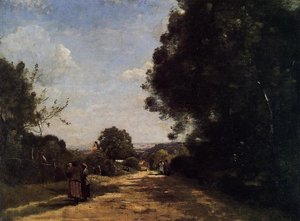
Experience the serene beauty of George Inness's 'Evening Landscape.' This 1863 oil painting captures a tranquil rural scene, showcasing masterful use of light and atmosphere.
 Read More
Discover George Innes’ evocative American Impressionist landscapes & portraits. Explore his serene scenes of nature & rural life, capturing tranquility through masterful brushwork.
Hand Made Oil Reproduction
Hand-painted oil on canvas in your size and frame, made to order by our artists. ( Switch to Print Switch to Digital Image)




































Standard
custom
CM
INCH
Pick from our preset sizes that match the artwork's original proportions.
Loading sizes...

width
height
Type the width and the height you need, to fit your frame or your wall. This is hand-painted, so for a size with a different shape the artist can paint a bit more around the picture, or cut a bit — you choose. We send you a digital mockup to approve before the painting starts. The picture shown on this page does not show the real result — only the mockup does.
Examples of what can be changed: Replace face with customer photo; Add pet (e.g., replace cat with dog); Include hidden message in background; Change background landscape or elements.
After order, TopImpressionists.com team will email client for instructions and provide a mockup preview
After order, TopImpressionists.com team will email client for instructions and provide a mockup preview
Worldwide Delivery () in 3/4 weeks instead of standard 5 weeks. (21 October). No compromise on quality.

Free Worldwide Express Shipping

High-Quality Linen Canvas

Full Shipping Insurance

Customs Tax Refund Guarantee

True Color Matching Guarantee

100-Day Return Policy (Defects Only)

100% Money-Back Guarantee

Bulk Discount Offer
 Glass option is only available in size under 110 CM

Evening Landscape
Reproduction Medium
Reproduction Size
-


Total Price
$ 269
Overview of "Evening Landscape"
The painting "Evening Landscape" is a captivating landscape scene depicting a man walking his dog in the foreground, bathed in the warm glow of a setting sun. Created by the esteemed American landscape painter George Inness in 1863, this oil on canvas masterpiece currently resides at the Washington State University Museum of Art in the United States. The artwork exemplifies a serene atmosphere and showcases Inness's mastery of light and color to evoke a sense of tranquility and connection with nature.Artistic Style and Influences
George Inness was renowned for his ability to capture the essence of nature and portray the effects of light upon it—a quality strikingly evident in "Evening Landscape." His artistic style was significantly influenced by the French Barbizon school, a movement known for its emphasis on naturalism and capturing atmospheric effects. This influence is shared with other prominent artists such as Edward Mitchell Bannister, a key figure in the American Barbizon school. You can learn more about Edward Mitchell Bannister on Wikipedia.Symbolism and Emotional Impact
"Evening Landscape" is rich in symbolism. The setting sun represents the end of a day, symbolizing transition, reflection, and peace. The solitary figure walking with his dog suggests companionship, contemplation, and a connection to the natural world. The warm color palette—dominated by oranges, reds, and browns—evokes feelings of warmth, comfort, and nostalgia. The painting's overall effect is one of profound serenity and invites viewers to pause and appreciate the beauty of the moment. It speaks to the timeless appeal of rural landscapes and the restorative power of nature.Similar Works and Artistic Connections
If you admire the style and atmosphere of "Evening Landscape," consider exploring other works by George Inness, such as "Hastings (also known as Evening Landscape)" available on TopImpressionists.com. For those interested in similar artistic approaches, the work of Wilhelm Riedel, particularly his oil on canvas painting "Evening landscape with a hunter," offers a comparable aesthetic and emotional resonance. You can find more information about Wilhelm Riedel on TopImpressionists.com.Reproductions and Availability
Handmade oil paintings reproductions of "Evening Landscape" are available on TopImpressionists.com, offering an opportunity to own a piece of art history and bring the beauty of this iconic landscape into your home or collection.Questions & Answers
What style does "Evening Landscape" belong to?
"Evening Landscape" is a work of Tonalism. The movement indicates the artistic tradition the work is part of.
Toward which tone does "Evening Landscape" lean?
"Evening Landscape" leans toward a golden yellow range tone.
What does "Evening Landscape" share with the rest of George Innes's output?
"Evening Landscape" shares with George Innes's other works its Tonalism style and the recorded themes: artistic influences, influenced by french barbizon school painters., themes, evokes tranquility, nature's beauty, serenity., artwork corpus context, represents a key work in his tonalist style..
Related Artworks



Artist Biography
The Quiet Observer of Nature’s Soul
George Inness stands as a pivotal figure in American Impressionism, a movement that sought to capture fleeting moments of beauty and emotion through luminous color palettes and loose brushstrokes. Born in Newburgh, New York, Inness developed an artistic vision that prioritized introspection and spiritual contemplation, reflecting a profound engagement with philosophical ideas. Unlike the grand narratives championed by the Hudson River School, his landscapes were imbued with a palpable serenity, portraying rural scenes and animal life with a remarkable sensitivity to light and atmosphere. His dedication to capturing the essence of the natural world resulted in works that transcend mere representation, offering instead a window into a more meditative reality.
His formative years were deeply marked by exposure to Transcendentalist thinkers such as Ralph Waldo Emerson and Henry David Thoreau. Their emphasis on intuition and the spiritual connection with the natural world profoundly shaped his artistic sensibilities. While he pursued formal training at Yale University, much of his true education was self-directed. During the mid-1850s, a crucial period for absorbing Impressionistic techniques, Inness traveled to Paris. There, he immersed himself in the burgeoning movements of the era, studying under masters like Gustave Courbet and Jean-François Millet. These encounters solidified his commitment to capturing immediate visual sensations rather than meticulously recreating reality.
Evolution of Style and Technique
In Paris, Inness began to experiment with plein air painting, working outdoors directly from nature to develop a distinctive style characterized by subtle gradations of color and textured brushwork. This period was essential in his transition toward a more atmospheric approach to landscape. He moved away from the rigid details of his early influences, seeking instead to capture the "power of motive" and a sense of grandeur that avoided being belittled by trifling detail. His later works became increasingly influenced by the theology of Emanuel Swedenborg, which introduced a deeper layer of spiritualism into his mature compositions.
The breadth of his artistic development can be seen through several key elements of his technique:
- Atmospheric Mastery: A profound ability to depict conditions such as mist and light to create depth and mood.
- Color Palette: The use of luminous, subtle color gradations to evoke emotion and tranquility.
- Brushwork: A move toward looser, more expressive strokes that prioritize the feeling of a scene over precise anatomical or botanical accuracy.
- Philosophical Depth: The integration of spiritual and transcendentalist ideas into the very fabric of his landscapes.
Legacy and Lasting Significance
Throughout a prolific career spanning more than forty years and encompassing over 1,000 paintings, Inness’s oeuvre remains a cornerstone of American art history. His ability to blend the influences of the Barbizon school with an uniquely American sensibility allowed him to become a leading artist-philosopher of his generation. Iconic works such as The Dark Side of Twilight and Winter Landscape continue to be celebrated for their masterful depiction of the ephemeral qualities of nature. By focusing on the internal, spiritual response to the landscape, George Inness left an enduring legacy that continues to inspire artists who strive for expressive depth and emotional resonance in their work.

George Innes
1825 - 1894 , United States of America
Quick Facts
- Artistic Movement Or Style: American Impressionism
- Artists Who Influenced This Artist:
- Gustave Courbet
- Jean-François Millet
- Claude Lorrain
- Salvator Rosa
- Thomas Cole
- Asher B. Durand
- Full Name: George Inness
- Nationality: American
- Notable Artworks:
- The Dark Side of Twilight
- Winter Landscape
- A Bit of Roman Aqueduct
- Castel Gandolfo
- Place Of Birth: Newburgh, New York, United States of America
- Date Of Birth: 1825
- Date Of Death: 1894
Related Articles

The Magic of Tonalism: Capturing Mood, Mist, and Atmospheric Emotion in Landscape Art
Discover the ethereal beauty of Tonalism. Explore how master artists use mist, soft light, and muted palettes to capture profound emotion and atmospheric mood in landscape painting. A deep dive into this quiet, introspective art movement for true connoisseurs.

Capturing the Soul of Nature: A Journey Through the Sublime Majesty of American Romanticism
Explore the breathtaking beauty of American Romanticism. Discover how Hudson River School masters captured the sublime spirit of the wilderness through luminous oil landscapes and emotional depth. A journey into the soul of nature for the true art enthusiast.
Explore artworks organized by themes, styles, and characteristics.


