


 Preview
 Send
Send Share
Share
 Details
 Guide
Guide

 Download
 Similars
 X-Ray
X-Ray Diaporama
 Stats
Statsuntitled (2008)


Discover Georges Seurat’s "untitled (2008)", an Impressionistic masterpiece of tranquility & color. Explore Pointillism, serene figures, and a timeless summer scene.
 Read More
Discover Georges Seurat (1859-1891), the pioneer of Pointillism & Neo-Impressionism! Explore 'A Sunday on La Grande Jatte' and his revolutionary color theory capturing modern life. Shop hand-painted reproductions!
Hand Made Oil Reproduction
Hand-painted oil on canvas in your size and frame, made to order by our artists. ( Switch to Print Switch to Digital Image)




P118B $10

P118H $10

P118W $10

P438Z $10

P508JH $12

P508YH $12

P805H $10

P805Z $10

P919BZ $10

P919G $10

P919XJ $10

P959ZH $10

P968JZ $12

W106C $8

W218G $10

W218JH $8

W218Y $10

W307PJ $10

W316G $10

W316PJ $8

W316Y $10

W398PJ $8

W4111J $10

W500HY $15

W500JH $15

W692G $12

W849H $8

W940BG $15

W953PJ $8




Standard
custom
CM
INCH
Pick from our preset sizes that match the artwork's original proportions.
Loading sizes...

width
height
Type the width and the height you need, to fit your frame or your wall. This is hand-painted, so for a size with a different shape the artist can paint a bit more around the picture, or cut a bit — you choose. We send you a digital mockup to approve before the painting starts. The picture shown on this page does not show the real result — only the mockup does.
Examples of what can be changed: Replace face with customer photo; Add pet (e.g., replace cat with dog); Include hidden message in background; Change background landscape or elements.
After order, TopImpressionists.com team will email client for instructions and provide a mockup preview
After order, TopImpressionists.com team will email client for instructions and provide a mockup preview
Worldwide Delivery () in 3/4 weeks instead of standard 5 weeks. (21 October). No compromise on quality.

Free Worldwide Express Shipping

High-Quality Linen Canvas

Full Shipping Insurance

Customs Tax Refund Guarantee

True Color Matching Guarantee

100-Day Return Policy (Defects Only)

100% Money-Back Guarantee

Bulk Discount Offer
 Glass option is only available in size under 110 CM

untitled (2008)
Reproduction Medium
Reproduction Size
-


Total Price
$ 294
A Symphony of Light and Stillness
In the quiet corners of art history, few names resonate with as much scientific precision and poetic grace as Georges Seurat. His work, particularly the evocative “Untitled (2008),” serves as a breathtaking window into a world where time seems to suspend itself. At first glance, the viewer is greeted by a scene of profound serenity: two figures, a man and a woman, nestled by the water’s edge amidst a lush, verdant landscape. There is an immediate sense of tranquility that washes over the observer, a feeling of capturing a fleeting summer afternoon that has been preserved forever in a mosaic of light. This piece does not merely represent a moment of leisure; it invites us to inhabit it, offering a sanctuary of calm for the modern soul.
The emotional resonance of this work lies in its ability to balance the heavy weight of scientific theory with the lightness of a summer breeze. As one gazes upon the figures, there is a palpable connection to the natural world—a sense of escape from the frantic pace of contemporary life into a realm of soft, diffused light and organic harmony. For the collector or interior designer, this painting offers more than just aesthetic beauty; it provides an atmospheric anchor, a piece that breathes life and a sense of historical depth into any curated space.
The Revolutionary Pulse of Pointillism
To understand the brilliance of this work, one must look beyond the surface and into the meticulous technique that defines Seurat’s legacy. Moving away from the spontaneous, often hurried brushstrokes of his Impressionist contemporaries, Seurat pioneered Pointillism, a method rooted in the optical science of his era. Rather than blending pigments on a palette, he applied tiny, distinct dots of pure color directly onto the canvas. This technique, also known as Divisionism, relies on the viewer's eye to perform the final act of creation—blending the blues, greens, and soft earth tones through optical mixing.
This rhythmic application of paint creates a shimmering, vibrating effect, as if the very air in the painting is alive with luminosity. The texture is not smooth but layered and tactile, providing a sense of materiality that catches the light differently depending on the room's illumination. By prioritizing chromoluminarism—the science of color and light—Seurat achieved a structural permanence that traditional Impressionism often lacked. In this piece, the soft edges and organic shapes of the trees and water are held together by a rigorous, almost mathematical precision, making the scene feel both dreamlike and incredibly solid.
A Legacy of Timeless Elegance
Historically, Seurat’s emergence marked a pivotal transition in the art world, bridging the gap between the fleeting impressions of Monet and the structured modernism of the 20th century. “Untitled (2008)” embodies this historical tension perfectly; it captures the ephemeral beauty of a moment while grounding it in an enduring, structural form. The symbolism within the work—the quiet companionship of the figures and their immersion in the landscape—speaks to universal themes of memory, peace, and our fundamental connection to nature.
For those seeking to adorn a home or gallery with a high-quality reproduction, this artwork stands as a testament to intellectual rigor and aesthetic splendor. It is a piece that rewards long periods of contemplation, revealing new nuances of color and shadow with every glance. Whether placed in a sunlit study or a sophisticated living area, Seurat’s mastery of light ensures that the painting remains a luminous centerpiece, an eternal summer captured in a dance of infinite dots.
Questions & Answers
Does "untitled (2008)" have an augmented reality preview?
The AR Preview page of "untitled (2008)" by Georges Seurat uses augmented reality to show the artwork in your own space, on a compatible device.
What space matches the colors of "untitled (2008)" by Georges Seurat?
The neutrals colors of "untitled (2008)" by Georges Seurat match its recommended space: a living room.
What use and space are recommended for "untitled (2008)" by Georges Seurat?
"untitled (2008)" by Georges Seurat is recommended for accent, ideally in a living room. Use and space together guide where a reproduction fits.
Related Artworks


Artist Biography
A Pioneer of Luminous Precision: The Life and Art of Georges Seurat
Georges Pierre Seurat, born in Paris on December 2, 1859, emerged as a pivotal figure in the transition from Impressionism to modern art. His brief but intensely focused career revolutionized painting through the development of Pointillism, a technique predicated on scientific principles and an unwavering pursuit of optical truth. Seurat’s story is one of meticulous observation, intellectual rigor, and a profound sensitivity to the nuances of light and color—qualities that set him apart from his contemporaries and continue to captivate audiences today. His early life, though seemingly conventional, laid the groundwork for his future artistic explorations. The family moved to Boulevard de Magenta shortly after his birth, and his father, Antoine Chrysostome Seurat, a former legal official turned property speculator, provided a comfortable upbringing that allowed young Georges access to art education. He began formal training at the École Municipale de Sculpture et Dessin under sculptor Justin Lequien, followed by enrollment at the prestigious École des Beaux-Arts in 1878, studying under Henri Lehmann. These formative years instilled in him a solid foundation in traditional techniques, yet even then, a unique artistic personality was beginning to take shape—a blend of delicate sensibility and an emerging fascination with systematic analysis.
From Academic Roots to Chromoluminarism
Seurat’s artistic development wasn't a sudden leap into innovation but rather a gradual evolution fueled by intellectual curiosity and rigorous experimentation. Initially, his work reflected the academic standards of the time, demonstrating proficiency in drawing and a respect for established compositional principles. However, he soon began to question these conventions, seeking a more scientific approach to painting. He immersed himself in the burgeoning field of color theory, studying the writings of scientists like Michel Eugène Chevreul and Ogden Rood, who explored the optical effects of juxtaposed colors. This research became the cornerstone of his revolutionary technique, chromoluminarism—the science of color—and its practical application, Pointillism. The core idea was deceptively simple: applying small, distinct dots of pure color to a canvas, relying on the viewer’s eye to optically blend them and create a vibrant, luminous effect. This wasn't merely about achieving brighter colors; it was about understanding how the human visual system perceived light and color, and harnessing that knowledge to create a more dynamic and engaging painting experience. He meticulously prepared for his large-scale compositions with Conté crayon drawings on rough paper, carefully mapping out the placement of each dot, demonstrating an almost mathematical precision in his artistic process.
Landmarks of Innovation: Major Works and Artistic Vision
The culmination of Seurat’s research and experimentation is perhaps best exemplified in A Sunday Afternoon on the Island of La Grande Jatte (1884-1886), a monumental work that marked the beginning of Neo-Impressionism. This iconic painting, depicting Parisians enjoying a leisurely afternoon by the Seine, showcases his pointillist technique to its fullest extent. The figures, rendered as carefully placed dots of color, seem to shimmer and vibrate with light, creating an atmosphere of serene stillness. Alfalfa, Saint-Denis (1886-1887), demonstrates his application of color theory to a rural landscape, while earlier works like Landscape at Saint-Ouen (1882-1883) reveal his evolving style and growing interest in capturing the effects of light and atmosphere. Even depictions of modern Parisian life, such as The Eiffel Tower (1889), were transformed through his unique technique, showcasing a harmonious blend of industrial modernity and artistic innovation. Bathers at Asnières (1884), another significant work, explored themes of leisure and modern life with his distinctive style, foreshadowing the more refined approach seen in *La Grande Jatte*. These paintings weren’t simply representations of scenes; they were carefully constructed visual experiments designed to explore the possibilities of color and perception.
A Lasting Legacy: Influence and Historical Significance
Despite a tragically short life—Seurat died at the age of 31 in 1891—his impact on the art world was profound and far-reaching. His work challenged traditional artistic conventions, paving the way for numerous subsequent movements. The emphasis on subjective expression and exploration of new techniques resonated with artists seeking to break free from academic constraints. Seurat’s influence can be seen in the works of Fauvists, who embraced bold colors and expressive brushwork; Cubists, who deconstructed forms into geometric shapes; and Abstract Expressionists, who prioritized emotional intensity and spontaneous gesture. His scientific approach to painting, while initially controversial, ultimately broadened the definition of artistic possibility. He demonstrated that art could be both intellectually rigorous and emotionally evocative, a synthesis that continues to inspire artists today. Seurat’s legacy extends beyond his technical innovations; he left behind a body of work that captures the essence of modern life with unparalleled precision and beauty, solidifying his place as a true pioneer of modern art. His paintings remain testaments to the power of observation, experimentation, and the enduring human desire to understand the world around us through the lens of artistic expression.

Georges Seurat
1859 - 1891 , France
Quick Facts
- Artistic Movement Or Style:
- Neo-Impressionism
- Pointillism
- Post-Impressionism
- Divisionism
- Artists Or Movements Influenced By This Artist:
- Fauvists
- Cubists
- Abstract Expressionists
- Artists Who Influenced This Artist:
- Michel Eugène Chevreul
- Ogden Rood
- Eugène Delacroix
- Full Name: Georges Pierre Seurat
- Nationality: French
- Notable Artworks:
- A Sunday Afternoon on La Grande Jatte
- Bathers at Asnières
- The Circus
- Young Woman Powdering Herself
- Place Of Birth: Paris, France
- Date Of Birth: 1859
- Date Of Death: 1891
Related Articles

The Symphony of Dots: Unveiling the Luminous Magic and Optical Brilliance of Pointillism
Discover the luminous magic of Pointillism and the scientific brilliance of Georges Seurat. Explore our exquisite, hand-painted oil reproductions, meticulously crafted to bring the timeless elegance and optical beauty of Neo-Impressionism into your home with museum-grade quality.
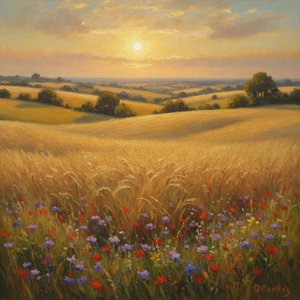
Golden Fields & Sun-Drenched Meadows: Capturing the Soul of Impressionist Landscapes
Immerse yourself in the luminous world of Impressionist landscapes. Discover how masters like Monet and Gauguin captured ephemeral light through plein air painting, and learn to bring the soul of sun-drenched meadows into your home with exquisite, hand-painted oil reproductions.

Liquid Light & Eternal Calm: Exploring the Ethereal Beauty of Water in Impressionist Masterpieces
Immerse yourself in the ethereal beauty of Impressionist waterscapes. Explore the luminous mastery of Monet through our exquisite, hand-painted oil reproductions and bespoke commissions. Discover museum-quality elegance for your sanctuary at TopImpressionists.com.

Capturing the Soul: The Most Emotionally Moving Impressionist and Post-Impressionist Masterpieces
Discover the profound emotional depth of Impressionist and Post-Impressionist masterpieces. Explore how legends like Monet, Van Gogh, and Gauguin captured light and soul through evocative landscapes and vibrant brushwork for a timeless connection to art history.

The Beauty of Impermanence: Capturing Decay through Impressionist Eyes
Explore the profound beauty of impermanence through Impressionist and Post-Impressionist eyes. Discover how masters like Monet and Van Gogh captured fleeting light and the poetic essence of nature's transitions in our deep dive into art history and emotional landscapes.
Explore artworks organized by themes, styles, and characteristics.


