

Shown: · With its frame:
 Preview
 Send
Send Share
Share
 Details
 Guide
Guide

 Download
 Similars
 X-Ray
X-Ray Diaporama
 Q&A
Q&A Stats
StatsSelf-portrait 7


$ 269
Hand Made Oil Reproduction
Hand-painted oil on canvas in your size and frame, made to order by our artists. ( Switch to Print Switch to Digital Image)
This Artwork Is Under Copyright Protection
The artwork displayed on this page is protected by copyright law, which means we cannot legally create or sell an identical reproduction. This protection is enforced under international agreements such as the Berne Convention and by national laws, including those outlined by the U.S. Copyright Law - Title 17.
As a respectful and legal alternative, we offer custom, hand-painted artworks inspired by the original. Our skilled and professional artists carefully study the original's style, mood, and artistic essence to create a new, unique piece that evokes the same feeling - while remaining an original creation in its own right.
This method fully complies with copyright regulations because it does not involve copying or duplicating the protected artwork. Instead, it is a creative reinterpretation - a new painting that is influenced by the original but not identical to it.
 Read more
Size
·Standard
custom
CM
INCH
Pick from our preset sizes that match the artwork's original proportions.
Loading sizes...

width
height
Type the width and the height you need, to fit your frame or your wall. This is hand-painted, so for a size with a different shape the artist can paint a bit more around the picture, or cut a bit — you choose. We send you a digital mockup to approve before the painting starts. The picture shown on this page does not show the real result — only the mockup does.
Finish
·
White $1

Blurside $1

Extended $1

P118B $10

P118H $10

P118W $10

P438Z $10

P508JH $12

P508YH $12

P805H $10

P805Z $10

P919BZ $10

P919G $10

P919XJ $10

P959ZH $10

P968JZ $12

W106C $8

W218G $10

W218JH $8

W218Y $10

W307PJ $10

W316G $10

W316PJ $8

W316Y $10

W398PJ $8

W4111J $10

W500HY $15

W500JH $15

W692G $12

W849H $8

W940BG $15

W953PJ $8

H24-GOLD $30

H24-SILVER $30

H36-GOLD $45

H36-SILVER $45
Shipped in a protective tube, ready for your own framer.
Above 105 cm the frame is shipped as a kit for a professional framer — read the details.
Extras
optionalWhat do the extras include?
Examples of what can be changed: Replace face with customer photo; Add pet (e.g., replace cat with dog); Include hidden message in background; Change background landscape or elements.
After order, TopImpressionists.com team will email client for instructions and provide a mockup preview
After order, TopImpressionists.com team will email client for instructions and provide a mockup preview
Worldwide Delivery () in 3/4 weeks instead of standard 5 weeks. (29 October). No compromise on quality.
Protective Varnish
Nameplate
Engraved Bronze Plaque Details
This elegant plaque features the artist's name and the title of the artwork, finely engraved for a timeless presentation.
It is made from bronze with a refined, elegant finish. The text is precisely laser-engraved for a sharp and permanent result. Measuring 9x2 cm, the plaque is compact yet easy to read. It's built to be durable and scratch-resistant, offering a professional, museum-quality look. Mounting is simple thanks to the included adhesive backing.
Transparent Acrylic Plaque Details
The plaque includes essential engraved details such as the artist's name, the title of the artwork, the date it was created, the type of media used-like oil on canvas or watercolor-a brief description of the piece, and a QR code that links to the complete artwork information.
It is crafted from clear acrylic, offering a sleek, modern appearance. The text is UV-engraved in black to ensure strong visual contrast. With a size of 10x15 cm, it ensures optimal readability. It comes equipped with two metal hooks for secure wall mounting. The plaque is designed to be weather-resistant, making it suitable for various environments, and it includes interactive features that work seamlessly with smartphone scanning.
Black Acrylic Plaque Details
This elegant plaque includes engraved information such as the artist's name, the title of the artwork, the date it was created, the type of media used (like oil on canvas or watercolor), a short description of the artwork, and a QR code for quick access to more information.
The plaque itself is made from refined black acrylic with a premium finish. The text is laser-engraved in white for high contrast and readability. Its size is 10x15 cm, designed to be easy to read. It comes with two metal hooks for professional mounting. The design is sleek and fits any interior style. It is also weather-resistant and durable, with built-in digital integration for mobile compatibility.
Glass option is only available in size under 110 CM
 Glass option is only available in size under 110 CM
- Free Worldwide Express Shipping
- High-Quality Linen Canvas
- Full Shipping Insurance
- Customs Tax Refund Guarantee
- True Color Matching Guarantee
- 100-Day Return Policy (Defects Only)
- 100% Money-Back Guarantee
- Bulk Discount Offer


Collectible Description
A haunting self-portrait by Giorgio de Chirico (1922). Explore the artist's melancholic style, surreal imagery, and philosophical depth in this iconic masterpiece.
Artist Biography
Explore the surreal world of Giorgio de Chirico (1888-1978), founder of Metaphysical art. Discover dreamlike cityscapes, philosophical themes & iconic mannequins. Influential to Surrealism.
About the painting
A Dreamscape in Gray: De Chirico’s “Self-Portrait 7”
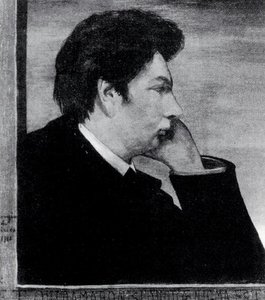
Giorgio de Chirico's "Self-Portrait 7," painted around 1922, isn’t merely a depiction of an artist; it’s a distilled essence of the anxieties and intellectual currents swirling through Europe at the dawn of the 20th century. This haunting monochrome study, housed within the Toledo Museum of Art, invites us into a realm where reality fractures, memory bleeds into dream, and the self becomes both subject and object—a captivating paradox that defines much of de Chirico’s oeuvre. The painting immediately arrests with its stark simplicity: a figure rendered in muted grays, positioned slightly off-center against a subtly receding backdrop, his hand partially obscuring his mouth as if holding back a profound thought or perhaps a secret sorrow.
The work belongs firmly within de Chirico’s “Metaphysical” period, a movement he pioneered alongside his brother, Andrea Savinio. This style rejected the superficiality of contemporary art and sought to capture not just appearances but the underlying anxieties and irrationalities of human experience. Influenced by philosophers like Arthur Schopenhauer and Friedrich Nietzsche, de Chirico aimed to depict a world where logic dissolves, and the familiar becomes unsettlingly strange. The painting’s palette—a carefully orchestrated symphony of grays—is crucial to this effect. It's not simply black and white; it’s a spectrum of tones that evokes both melancholy and a sense of timelessness, mirroring the artist’s own preoccupation with mortality and the passage of time.
Deconstructing Form: Technique and Composition
Technically, “Self-Portrait 7” is characterized by a meticulous layering of oil paint—a technique de Chirico revisited after abandoning his earlier, more vibrant style. He employed subtle gradations of tone to create an illusion of depth and texture, suggesting the rough surface of clothing and the smooth planes of the face. The composition itself is deceptively simple, yet profoundly effective. The figure’s placement off-center creates a dynamic tension, drawing the eye across the canvas and inviting contemplation. Notice how the background recedes sharply, almost dissolving into an indeterminate space—a technique that reinforces the painting's sense of unease and disorientation.
The use of line is equally deliberate. The strong outlines defining the face and body are softened by the surrounding tones, creating a sense of ambiguity. There’s a deliberate lack of detail; de Chirico wasn’t interested in photographic realism but rather in capturing the *feeling* of a scene—the emotional weight of a moment. The inclusion of the bust of Eudipides, subtly referenced in the painting's title and further explored in another work by the artist, adds an additional layer of symbolic complexity, hinting at themes of fate, suffering, and the burden of knowledge.
Symbolism and Emotional Resonance
The obscured mouth is perhaps the most potent symbol within the portrait. It suggests restraint, introspection, or even a suppressed emotion—a refusal to fully articulate the anxieties that plague the artist’s mind. The overall mood is undeniably melancholic, yet there's also an undercurrent of quiet dignity and resilience. De Chirico wasn’t simply depicting sadness; he was exploring the complex relationship between the self and the world, revealing a profound sense of isolation within a rapidly changing society.
The painting’s setting—a vaguely architectural space—further contributes to its unsettling atmosphere. It's reminiscent of Roman arcades, which de Chirico frequently depicted in his work, but here they feel strangely deserted and devoid of life. This reinforces the sense of alienation and loneliness that permeates the portrait. The subtle inclusion of a tangerine adds an unexpected element of warmth and color—a fleeting reminder of beauty amidst the prevailing gloom.
A Legacy of Dreamlike Visions
“Self-Portrait 7” stands as a quintessential example of de Chirico’s unique artistic vision. It's a painting that defies easy interpretation, inviting viewers to engage with its mysteries and grapple with its emotional complexities. It’s not merely a portrait; it’s a window into the artist’s psyche—a glimpse behind the curtain of his creative process. De Chirico’s work continues to resonate today because it taps into universal anxieties about identity, mortality, and the nature of reality. Reproductions of this powerful image offer a chance to bring this dreamlike vision into your own space, prompting reflection and sparking conversation.
Questions & Answers
Which artistic current is "Self-portrait 7" by Giorgio de Chirico part of?
"Self-portrait 7" is a work of Metaphysical Art. The movement indicates the artistic tradition the work is part of.
Is "Self-portrait 7" by Giorgio de Chirico a light or a dark artwork?
The recorded values for "Self-portrait 7" by Giorgio de Chirico are: deep_shadow brightness, soft shadow luminance.
Where is the portrait format of "Self-portrait 7" recommended to be displayed?
The portrait format of "Self-portrait 7" by Giorgio de Chirico is recommended for a living room. Format and space together guide the placement of a reproduction.
Quick facts and art quiz
About Giorgio de Chirico

Giorgio de Chirico
1888 - 1978, Greece
Artist Biography
A Dreamscape of the Mind: The Life and Art of Giorgio de Chirico
Born in 1888 in Volos, Greece, to Italian parents—a Genoese mother and a Sicilian father—Giorgio de Chirico’s artistic journey was one steeped in both classical heritage and a burgeoning sense of modern alienation. His early education at the Athens Polytechnic laid a foundation in traditional techniques, but it was his subsequent studies in Munich that truly ignited his creative spirit. There, amidst the intellectual ferment of pre-war Europe, he encountered the works of Arnold Böcklin and Max Klinger, artists whose symbolic landscapes and haunting imagery would deeply resonate with his own developing aesthetic. Equally influential were the philosophical currents of the time—the writings of Friedrich Nietzsche, Arthur Schopenhauer, and Otto Weininger—which explored themes of existentialism, the irrationality of human desire, and the subjective nature of reality. These ideas would become central to de Chirico’s groundbreaking artistic vision.The Birth of Metaphysical Painting
Around 1909, a unique style began to emerge from de Chirico's explorations—a style that he himself termed “Metaphysical” art. This wasn’t merely a stylistic innovation; it was a profound attempt to capture the hidden realities beneath the surface of everyday life, to reveal the unsettling poetry lurking within familiar spaces. A pivotal moment occurred during a visit to Florence and an experience in Piazza Santa Croce, which sparked his iconic ‘Metaphysical Town Square’ series. These paintings are characterized by their eerie stillness, long dramatic shadows, illogical perspectives, and the presence of classical architecture juxtaposed with unsettling elements like faceless mannequins and looming statues. The effect is deeply disquieting, evoking a sense of nostalgia, isolation, and an almost unbearable longing for something lost or unattainable. De Chirico founded the Scuola Metafisica, profoundly impacting Surrealism, though he would later distance himself from its interpretations of his work. His paintings weren’t intended as illustrations of dreams, but rather as attempts to depict a reality beyond the visible world—a realm where time and space are fluid, and the boundaries between consciousness and unconsciousness blur. Notable works like *The Vexations of the Thinker*, *The Enigma of an Autumn Afternoon*, and *The Song of Love* exemplify this haunting aesthetic, inviting viewers to contemplate the mysteries of existence and the fragility of human perception.A Shift in Style and a Lasting Legacy
Following World War I, around 1919, de Chirico’s artistic path took an unexpected turn. He rejected his earlier metaphysical approach, embracing instead a more traditional neoclassical or neo-baroque style. This shift was met with considerable controversy; many critics lamented the perceived decline in quality and accused him of abandoning the innovative spirit that had defined his early work. However, de Chirico remained steadfast in his artistic choices, revisiting themes from his past but rendering them with a different aesthetic sensibility. He continued to paint and exhibit prolifically throughout his life, exploring various styles and subjects while maintaining a consistent commitment to craftsmanship and technical skill. Despite the criticism, his influence on subsequent generations of artists cannot be overstated. His innovative use of space, perspective, and symbolism challenged conventional artistic norms and paved the way for new forms of expression.Influences and Enduring Impact
De Chirico’s work stands as a crucial bridge between the late 19th-century Symbolist movement and the rise of Surrealism in the early 20th century. He was directly influenced by artists like Arnold Böcklin and Max Klinger, whose evocative imagery resonated with his own fascination with mythology and the subconscious mind. Philosophers such as Nietzsche and Schopenhauer provided him with a framework for exploring themes of existential angst, alienation, and the search for meaning in a seemingly meaningless world. However, de Chirico’s influence extended far beyond Surrealism. Artists like René Magritte and Salvador Dalí were deeply inspired by his metaphysical paintings, adopting his techniques of juxtaposition, illogical perspective, and symbolic imagery to create their own dreamlike worlds. His work also impacted later movements such as Magic Realism, which sought to depict everyday reality with a heightened sense of mystery and psychological depth. Today, de Chirico’s paintings are exhibited in major museums worldwide, including the Museum dedicated to his work near the Spanish Steps in Rome, ensuring that his legacy as one of the most important figures in 20th-century art remains secure. He left behind not just a body of artwork but a new way of seeing—a way of perceiving the world as a place of hidden meanings, unsettling beauty, and enduring mystery.Key Influences & Artistic Lineage
- Influenced By: Arnold Böcklin, Max Klinger, Friedrich Nietzsche, Arthur Schopenhauer.
- Influenced: Surrealism, particularly artists like René Magritte and Salvador Dalí. His work also impacted later movements such as Magic Realism.
Quick Facts
- Full Name: Giorgio de Chirico
- Nationality: Italian
- Date Of Birth: 1888
- Date Of Death: 1978
- Place Of Birth: Volos, Greece
- Notable Artworks:
- The Vexations of the Thinker
- The Enigma of an Autumn Afternoon
- The Song of Love
- Artistic Movement Or Style: Metaphysical art
- Artists Who Influenced This Artist:
- Arnold Böcklin
- Max Klinger
- Friedrich Nietzsche
- Artists Or Movements Influenced By This Artist:
- Surrealism
- René Magritte
- Salvador Dalí
Explore artworks organized by themes, styles, and characteristics.





Self-portrait 7
·