

Shown: · With its frame:
 Preview
 Send
Send Share
Share
 Details
 Guide
Guide

 Download
 Similars
 X-Ray
X-Ray Diaporama
 Q&A
Q&A Stats
Stats
- 91.0 x 340.0 cm


$ 269
Hand Made Oil Reproduction
Hand-painted oil on canvas in your size and frame, made to order by our artists. ( Switch to Print Switch to Digital Image)
Size
·Standard
custom
CM
INCH
Pick from our preset sizes that match the artwork's original proportions.
Loading sizes...

width
height
Type the width and the height you need, to fit your frame or your wall. This is hand-painted, so for a size with a different shape the artist can paint a bit more around the picture, or cut a bit — you choose. We send you a digital mockup to approve before the painting starts. The picture shown on this page does not show the real result — only the mockup does.
 Read more
Finish
·
White $1

Blurside $1

Extended $1

P118B $10

P118H $10

P118W $10

P438Z $10

P508JH $12

P508YH $12

P805H $10

P805Z $10

P919BZ $10

P919G $10

P919XJ $10

P959ZH $10

P968JZ $12

W106C $8

W218G $10

W218JH $8

W218Y $10

W307PJ $10

W316G $10

W316PJ $8

W316Y $10

W398PJ $8

W4111J $10

W500HY $15

W500JH $15

W692G $12

W849H $8

W940BG $15

W953PJ $8

H24-GOLD $30

H24-SILVER $30

H36-GOLD $45

H36-SILVER $45
Shipped in a protective tube, ready for your own framer.
Above 105 cm the frame is shipped as a kit for a professional framer — read the details.
Extras
optionalWhat do the extras include?
Examples of what can be changed: Replace face with customer photo; Add pet (e.g., replace cat with dog); Include hidden message in background; Change background landscape or elements.
After order, TopImpressionists.com team will email client for instructions and provide a mockup preview
After order, TopImpressionists.com team will email client for instructions and provide a mockup preview
Worldwide Delivery () in 3/4 weeks instead of standard 5 weeks. (2 November). No compromise on quality.
Protective Varnish
Nameplate
Engraved Bronze Plaque Details
This elegant plaque features the artist's name and the title of the artwork, finely engraved for a timeless presentation.
It is made from bronze with a refined, elegant finish. The text is precisely laser-engraved for a sharp and permanent result. Measuring 9x2 cm, the plaque is compact yet easy to read. It's built to be durable and scratch-resistant, offering a professional, museum-quality look. Mounting is simple thanks to the included adhesive backing.
Transparent Acrylic Plaque Details
The plaque includes essential engraved details such as the artist's name, the title of the artwork, the date it was created, the type of media used-like oil on canvas or watercolor-a brief description of the piece, and a QR code that links to the complete artwork information.
It is crafted from clear acrylic, offering a sleek, modern appearance. The text is UV-engraved in black to ensure strong visual contrast. With a size of 10x15 cm, it ensures optimal readability. It comes equipped with two metal hooks for secure wall mounting. The plaque is designed to be weather-resistant, making it suitable for various environments, and it includes interactive features that work seamlessly with smartphone scanning.
Black Acrylic Plaque Details
This elegant plaque includes engraved information such as the artist's name, the title of the artwork, the date it was created, the type of media used (like oil on canvas or watercolor), a short description of the artwork, and a QR code for quick access to more information.
The plaque itself is made from refined black acrylic with a premium finish. The text is laser-engraved in white for high contrast and readability. Its size is 10x15 cm, designed to be easy to read. It comes with two metal hooks for professional mounting. The design is sleek and fits any interior style. It is also weather-resistant and durable, with built-in digital integration for mobile compatibility.
Glass option is only available in size under 110 CM
 Glass option is only available in size under 110 CM
- Free Worldwide Express Shipping
- High-Quality Linen Canvas
- Full Shipping Insurance
- Customs Tax Refund Guarantee
- True Color Matching Guarantee
- 100-Day Return Policy (Defects Only)
- 100% Money-Back Guarantee
- Bulk Discount Offer


Collectible Description
Artist Biography
Giotto pioneered naturalism with the Scrovegni Chapel frescoes. Discover the father of Renaissance art today.
About the painting
The Polyptych by Giotto Di Bondone: A Revolutionary Step Towards Renaissance Art
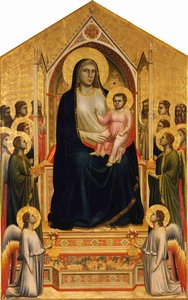
Giotto di Bondone’s Polyptych stands as an unparalleled achievement of early Fourteenth-century art, a monumental testament to his visionary approach and the burgeoning spirit of innovation that would soon define the Renaissance. Housed within the Pinacoteca Nazionale di Bologna—a treasure trove for Emilia Romagna’s artistic heritage—this masterpiece continues to captivate audiences with its masterful composition, intricate detail, and profound emotional resonance.
- Composition & Details: The Polyptych comprises five panels crafted from tempera on dark backgrounds, meticulously divided into distinct sections. Each panel portrays religious figures – primarily Mary, Jesus Christ, St Peter, and angels – arranged in dynamic poses that defy the static conventions of Byzantine art. Careful observation reveals a remarkable level of realism achieved through Giotto’s groundbreaking use of perspective and anatomical accuracy.
- Panel Descriptions: The first panel depicts two men engaged in conversation, one holding a book symbolizing knowledge and the other a staff representing authority. The second portrays St Peter kneeling before Christ, emphasizing humility and devotion. The third showcases Mary cradling Jesus, embodying maternal tenderness and divine grace. Subsequent panels depict angelic figures guarding the holy family, furthering the narrative’s spiritual depth.
- Artistic Significance: Giotto’s departure from Byzantine stylistic norms represents a pivotal moment in art history. His bold experimentation with tempera on dark backgrounds challenged established traditions, prioritizing emotional expression over stylized representation. The Polyptych's influence extended far beyond Bologna, inspiring artists across Italy and shaping the aesthetic sensibilities of the era.
- Historical Context & Preservation: Created around 1330, the Polyptych reflects the religious fervor of its time—a period marked by fervent piety and a renewed interest in classical ideals. Today, it resides within the Pinacoteca Nazionale di Bologna’s esteemed collection, ensuring its preservation for future generations of art enthusiasts. Its meticulous craftsmanship and evocative imagery continue to inspire admiration.
A Pioneer's Technique: Tempera on Dark Background
Giotto’s innovative technique—tempera paint applied to a dark substrate—was revolutionary for its time. Unlike the lavish gold backgrounds favored by Byzantine artists, Giotto opted for a darker palette that heightened the luminosity of the figures and created an atmosphere of solemn contemplation. This deliberate choice underscored his commitment to portraying human emotion with unprecedented sensitivity.
Symbolism & Emotional Impact
The Polyptych’s symbolism speaks volumes about medieval Christian beliefs. Each panel conveys a narrative message—the Virgin Mary's Coronation, St Peter's humility, the divine protection of Jesus—designed to uplift the viewer spiritually. Giotto skillfully captured human emotions – piety, compassion, awe – transforming static images into powerful expressions of faith.
Visiting the Pinacoteca Nazionale di Bologna
For those wishing to experience the Polyptych firsthand, a pilgrimage to the Pinacoteca Nazionale di Bologna is essential. Located in the heart of Emilia Romagna, this museum offers unparalleled access to Emilian art from the thirteenth to eighteenth centuries—a journey back in time to witness the genesis of Renaissance artistic brilliance.
Questions & Answers
How much light do the colors of "Polyptych" appear to reflect?
The colors of "Polyptych" show a soft shadow luminance.
What is "Polyptych" about?
The themes present in "Polyptych" by Giotto di Bondone include religious art, byzantine influence, tempera painting, gothic style, renaissance proto, panel polyptych, bolognese painting. Together they summarize the artwork's subject matter.
What is the emotional tone of "Polyptych" by Giotto di Bondone?
The emotional tone recorded for "Polyptych" by Giotto di Bondone is spiritual. It summarizes the feeling the work expresses.
Quick facts and art quiz
About Giotto di Bondone

Giotto di Bondone
1267 - 1337, Italy
Artist Biography
The Shepherd Boy of Florence: Giotto’s Revolutionary Vision
Born around 1267 in the rolling hills near Florence, Italy, Giotto di Bondone emerged from humble beginnings to become arguably the most pivotal figure in the transition from medieval artistic conventions toward the Renaissance. His early life is steeped in legend – a shepherd boy discovered sketching remarkably lifelike sheep on rocks, catching the discerning eye of the Florentine master Cimabue. Whether fact or folklore, this tale encapsulates the essence of Giotto’s genius: an innate ability to capture the natural world with unprecedented realism and emotional depth. Taken as an apprentice by Cimabue, Giotto quickly surpassed his teacher, absorbing technical skills but forging a path distinctly his own. The Byzantine style, dominant at the time, favored stylized figures, flattened perspectives, and lavish gold backgrounds – symbols of spiritual transcendence rather than earthly representation. Giotto, however, yearned to depict humanity not as ethereal icons, but as individuals imbued with feeling, existing within tangible space.
Breaking from Byzantium: A New Naturalism
Giotto’s artistic revolution wasn't a sudden upheaval, but a gradual evolution. His early works already hinted at the shift to come, demonstrating a growing emphasis on volume, weight, and believable anatomy. He began to observe light and shadow not merely as decorative elements, but as tools to sculpt form and create depth. This nascent naturalism is evident in his contributions to the frescoes in the Upper Basilica of Saint Francis of Assisi – though authorship remains debated, many scholars recognize Giotto’s hand in scenes that display a marked departure from prevailing Byzantine aesthetics. He wasn't simply rejecting tradition; he was building upon it, infusing established forms with a newfound sense of humanity and emotional resonance. He understood the power of narrative, crafting compositions that told stories not through rigid symbolism, but through expressive gestures, believable interactions, and carefully constructed settings.
The Scrovegni Chapel: A Masterpiece of Storytelling
Giotto’s masterpiece, and arguably one of the most important works in Western art history, is the fresco cycle adorning the Scrovegni Chapel (also known as the Arena Chapel) in Padua. Completed around 1305, this breathtaking series depicts the life of Christ and the Virgin Mary with a revolutionary level of realism and emotional intensity. Each scene unfolds like a carefully staged drama, populated by figures who are not merely representations of religious archetypes, but fully realized human beings experiencing joy, sorrow, fear, and hope. The *Last Judgment*, dominating one entire wall, is a powerful testament to Giotto’s skill in conveying both divine majesty and the raw vulnerability of humanity facing its ultimate reckoning. The use of perspective, though not mathematically precise by later Renaissance standards, creates a convincing illusion of depth, drawing the viewer into the narrative. The figures are grounded, their bodies possessing weight and volume, and their expressions convey a range of emotions that were previously unseen in religious art.
Beyond Frescoes: Architecture and Lasting Legacy
Giotto’s talents extended beyond painting; he was also a respected architect. In 1334, he was commissioned to design the Campanile – the bell tower – of Florence Cathedral, a project that showcased his innovative approach to architectural form. Though he died before its completion, his designs laid the foundation for this iconic Florentine landmark. His influence on subsequent generations of artists is immeasurable. He bridged the gap between the medieval and Renaissance worlds, paving the way for masters like Masaccio, Leonardo da Vinci, and Michelangelo. Vasari, in his seminal *Lives of the Artists*, credited Giotto with “giving to painting the great art of doing things from life,” a testament to his profound impact on the course of Western art. Giotto didn’t merely depict the world; he sought to understand it, to capture its essence, and to convey that understanding through the power of visual storytelling. His legacy continues to inspire awe and admiration centuries after his death, solidifying his place as one of history's greatest artistic innovators.
Key Achievements & Lasting Influence
- Revolutionized Painting: Moved away from Byzantine stylization towards naturalism and emotional realism.
- Pioneered Perspective: Introduced techniques to create depth and spatial awareness in paintings.
- Masterful Storytelling: Created compelling narratives through fresco cycles, like the Scrovegni Chapel.
- Architectural Contributions: Designed the Campanile of Florence Cathedral, demonstrating architectural skill.
- Foundation for Renaissance Art: His work laid the groundwork for the artistic achievements of the Renaissance period.
Explore artworks organized by themes, styles, and characteristics.




![Scrovegni - [05] - Joachim's Dream](/media/artworks/images-thumb/8f/67/8f67bb5da87296bd452b3f0b237b528d.jpg)


Giotto di Bondone
Polyptych
() ·
With its frame: · Hand-painted in oil on linen
Total