Preview
 Send
Send Share
Share
 Details
 Guide
Guide

 Download
 Similars
 X-Ray
X-Ray Diaporama
 Stats
StatsThe Artist
 German Romanticism
 1866
1866- 19th Century
 5.0 x 85.0 cm
 Staatliche Kunsthalle Karlsruhe
 Read More
Hand Made Oil Reproduction
Hand-painted oil on canvas in your size and frame, made to order by our artists. ( Switch to Print Switch to Digital Image)




P118B $10

P118H $10

P118W $10

P438Z $10

P508JH $12

P508YH $12

P805H $10

P805Z $10

P919BZ $10

P919G $10

P919XJ $10

P959ZH $10

P968JZ $12

W106C $8

W218G $10

W218JH $8

W218Y $10

W307PJ $10

W316G $10

W316PJ $8

W316Y $10

W398PJ $8

W4111J $10

W500HY $15

W500JH $15

W692G $12

W849H $8

W940BG $15

W953PJ $8




Standard
custom
CM
INCH
Pick from our preset sizes that match the artwork's original proportions.
Loading sizes...

width
height
Type the width and the height you need, to fit your frame or your wall. This is hand-painted, so for a size with a different shape the artist can paint a bit more around the picture, or cut a bit — you choose. We send you a digital mockup to approve before the painting starts. The picture shown on this page does not show the real result — only the mockup does.
Examples of what can be changed: Replace face with customer photo; Add pet (e.g., replace cat with dog); Include hidden message in background; Change background landscape or elements.
After order, TopImpressionists.com team will email client for instructions and provide a mockup preview
After order, TopImpressionists.com team will email client for instructions and provide a mockup preview
Worldwide Delivery () in 3/4 weeks instead of standard 5 weeks. (24 October). No compromise on quality.

Free Worldwide Express Shipping

High-Quality Linen Canvas

Full Shipping Insurance

Customs Tax Refund Guarantee

True Color Matching Guarantee

100-Day Return Policy (Defects Only)

100% Money-Back Guarantee

Bulk Discount Offer
 Glass option is only available in size under 110 CM

The Artist
Reproduction Medium
Reproduction Size
-


Total Price
$ 269
A Quiet Intimacy Captured in Paint
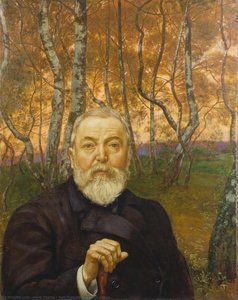
In the tender embrace of The Artist, Hans Thoma invites us into a private, domestic moment that feels both timeless and deeply personal. The painting presents a poignant portrait of two women—one older, one younger—caught in a shared instance of quiet contemplation. The elder woman, her features softened by wisdom and framed by spectacles, holds an open book, her focus anchored to the written word. Beside her, the younger woman gazes upon her with an expression that dances between curiosity and a gentle, protective concern. They are dressed in traditional peasant clothing, with long skirts and apriment details that ground the scene in a sense of rustic authenticity. This is not merely a study of faces, but a study of connection, where the simple act of reading becomes a bridge between generations.
The setting, though understated, contributes significantly to the painting's soulful atmosphere. A dining table rests in the background, its presence suggesting the rhythms of daily life and the steady pulse of a household. The composition is masterfully balanced, allowing the viewer to feel like an unobtrusive observer of a sacred, everyday ritual. There is a profound stillness here, a pause in the movement of time that encourages the soul to linger.
Technique and the Spirit of the Black Forest
Thoma’s technical execution in this work reflects his extraordinary ability to blend meticulous observation with a romantic, almost mystical vision. His brushwork possesses a precision likely inherited from his father’s clockmaking lineage, yet it is never cold or clinical. Instead, every stroke serves to enhance the tactile reality of the scene—the texture of the heavy fabrics, the weight of the book, and the soft light that illuminates the subjects' faces. There is a subtle tonal variation at play, where light and shadow dance across the figures to create a sense of three-dimensional depth and emotional warmth.
The style of The Artist carries echoes of the Pre-Raphaelite movement, particularly in its dedication to capturing atmospheric conditions and deep, emotive truth. Thoma avoids the harshness of pure realism, opting instead for a luminous quality that elevates the humble subject matter into something poetic. For the collector or interior designer, this piece offers a sophisticated way to introduce historical depth and a sense of serene nostalgia into a curated space. It is a work that does not demand attention through grandiosity, but rather earns it through its quiet, enduring beauty—a window into a world where humanity and tradition exist in perfect, harmonious grace.
Questions & Answers
How does "The Artist" by Hans Thoma connect German Romanticism to the artist's home country?
"The Artist" connects the German Romanticism movement with Germany through its creator's birthplace.
What mood and emotion does "The Artist" by Hans Thoma express?
"The Artist" by Hans Thoma conveys a reflective feeling within an overall nostalgic mood.
Is "The Artist" by Hans Thoma a bright or a dark artwork?
The perceived brightness of "The Artist" by Hans Thoma is deep_shadow. It can be matched to the light of the intended space.
Related Artworks




Artist Biography
The Soul of the Black Forest: The Life and Vision of Hans Thoma
Hans Thoma stands as a singular figure in German art history, renowned for his evocative landscapes and portraits that capture the spirit of the Black Forest region—a place deeply ingrained within his artistic vision. Born in Bernau bei Berlin in 1839, he embarked on an artistic journey marked by unwavering devotion to his homeland’s traditions and folklore. His life was a delicate balance between meticulous observation and a profound sense of Romantic idealism, creating a body of work that feels both grounded in the earth and elevated by a dreamlike quality.
Thoma's formative years were shaped by the simple rhythms of rural life; his father’s trade as a clockmaker instilled in him a precision and an extraordinary attention to detail that would later permeate every brushstroke. In 1859, he enrolled at the Karlsruhe Academy, where he was mentored by masters such as Johann Wilhelm Schirmer and Ludwig Des Coulbres. This period established his foundational mastery of landscape painting techniques. While his subsequent travels through Düsseldorf, Paris, Italy, Munich, and Frankfurt exposed him to a whirlwind of diverse artistic currents, these international encounters only served to solidify his commitment to capturing the essence of German rural life and the timeless beauty of nature.
A Tapestry of Influence and Technique
Thoma’s distinctive style defies easy categorization, yet it possesses unmistakable affinities with the Pre-Raphaelite movement. Much like the works of Dante Gabriel Rossetti or John Everett Millais, Thoma prioritized capturing atmospheric conditions and conveying deep emotion through subtle tonal variations and luminous color palettes. His fascination with the minute details of the natural world—the texture of a leaf, the light filtering through a canopy, or the quiet presence of grazing cows—reflects a dedication to realism that is frequently tempered by an imaginative, almost mystical vision.
The lineage of German masters also played a pivotal role in shaping his aesthetic. The works of Albrecht Dürer and Lucas Cranach the Elder served as profound influences, informing his compositional choices and his ability to render precise outlines and careful shading. This blend of classical precision and Romantic sentiment allowed him to create scenes that felt both historically rooted and emotionally immediate. Whether through a black and white drawing like his Youthful Self Portrait or a vibrant, color-drenched landscape such as Autumn Tree in front of Wiesental, Thoma’s technical prowess remained centered on the pursuit of truth within nature.
Legacy and Artistic Significance
Throughout his career, Thoma achieved a level of recognition that placed him at the heart of the German art scene. His ability to evoke serenity through lush greenery and fluffy skies—as seen in works like Landscape With Cloud—demonstrates an almost Impressionistic sensitivity to light and air. He did not merely paint scenery; he painted the atmosphere of a culture and a landscape, turning the Black Forest into a symbol of enduring peace and pastoral beauty.
The historical significance of Hans Thoma lies in his ability to bridge the gap between the rigorous academic traditions of the 19th century and the burgeoning emotionality of modern art. His achievements include:
- Mastery of Landscape: Creating a definitive visual language for the German countryside that blended realism with Romanticism.
- Technical Versatility: Moving seamlessly between precise, detailed drawings and atmospheric, painterly landscapes.
- Cultural Preservation: Documenting the folklore, traditions, and natural splendor of the Black Forest region during a period of rapid industrial change.
Today, Thoma’s work continues to resonate with viewers who seek solace in the idyllic and the eternal. His paintings remain windows into a world where nature and humanity exist in a harmonious, beautifully detailed dance.

Hans Thoma
1839 - 1924 , Germany
Quick Facts
- Full Name: Hans Thoma
- Nationality: German
- Date Of Birth: 1839
- Date Of Death: 1924
- Place Of Birth: Bernau bei Berlin, Germany
- Notable Artworks:
- Youthful Self Portrait
- Wondrous Birds
- The Oed, Holzhausenpark In Frankfurt
- Artistic Movement Or Style: Pre-Raphaelite Style
- Artists Who Influenced This Artist:
- Albrecht Dürer
- Lucas Cranach the Elder
- Artists Or Movements Influenced By This Artist: ['Walter Conz']
Related Articles

Mastering Realism: The Top 25 Masterpieces by Hans Holbein the Younger
Journey through the Northern Renaissance with our curated guide to the top 25 Hans Holbein the Younger masterpieces. Explore breathtaking realism, Tudor history, and museum-quality art reproductions for elegant decor. Discover all masterpieces on TopImpressionists.com.

The Drama of Crimson: Capturing the Soul of Red Curtains and Drapery in Impressionist Art
Explore the emotive power of crimson in Impressionist art. From Renoir's vibrant robes to the dramatic textures of red drapery, discover how master painters captured light and soul through scarlet hues. Expert insights for the true art lover.

Empowered & Evocative: 10 Iconic Artworks That Redefine Womanhood
Journey through history with 10 iconic artworks celebrating womanhood. From Renaissance portraits to modern masterpieces, explore the stories behind these timeless pieces. Find museum-quality art reproductions and curated decor inspiration. Discover all masterpieces on TopImpressionists.com.
Explore artworks organized by themes, styles, and characteristics.