


 Preview
 Send
Send Share
Share
 Details
 Guide
Guide

 Download
 Similars
 X-Ray
X-Ray Diaporama
 Stats
StatsThe Goldfish
 Oil On Canvas
- WallArt
- Fauvism
 Modern
 146.0 x 97.0 cm
 Pushkin State Museum
Discover Henri Matisse’s ‘The Goldfish’! A vibrant 1912 Fauvist masterpiece showcasing bold colors, tranquil scenes & the artist's unique vision. Explore this iconic painting now!
 Read More
Fauvism master Henri Matisse revolutionized art with vibrant colors like The Dance. Discover his iconic paintings and cut-paper collages now.
Giclée / Art Print
Museum-quality giclée or canvas print with fast production and flexible finish options. ( Buy Hand Made Painting Switch to Digital Image)




P118B $10

P118H $10

P118W $10

P438Z $10

P508JH $12

P508YH $12

P805H $10

P805Z $10

P919BZ $10

P919G $10

P919XJ $10

P959ZH $10

P968JZ $12

W106C $8

W218G $10

W218JH $8

W218Y $10

W307PJ $10

W316G $10

W316PJ $8

W316Y $10

W398PJ $8

W4111J $10

W500HY $15

W500JH $15

W692G $12

W849H $8

W940BG $15

W953PJ $8




Standard
custom
CM
INCH
Pick from our preset sizes that match the artwork's original proportions.
Loading sizes...

width
height
Type the width and the height you need, to fit your frame or your wall. A print can only be cut, never made bigger than the picture, so a size with a different shape loses a part of the image. We send you a digital mockup to approve before we print anything. The picture shown on this page does not show the real cut — only the mockup does.
Worldwide Delivery () in 2 weeks instead of standard 4/5 weeks. (22 October)

Free Worldwide Express Shipping

High-Quality Linen Canvas

Full Shipping Insurance

Customs Tax Refund Guarantee

True Color Matching Guarantee

100-Day Return Policy (Defects Only)

100% Money-Back Guarantee

Bulk Discount Offer
 Glass option is only available in size under 110 CM

The Goldfish
Giclée / Art Print
Reproduction Size
-


Total Price
$ 70
A Symphony in Color: Henri Matisse’s “The Goldfish”
Henri Matisse's "The Goldfish," painted in 1912 during his pivotal period as a Fauvist, is more than just a still life; it’s an immersion into a world of vibrant color and tranquil contemplation. Housed within the Pushkin State Museum in Moscow, this deceptively simple canvas pulsates with energy, inviting viewers to lose themselves in its luminous hues and carefully orchestrated composition. It represents a crucial moment in Matisse's artistic evolution – a deliberate shift away from the rigid academic traditions he initially studied towards an expressive language rooted in pure color and form. The painting’s power lies not just in its visual beauty but also in its exploration of themes like harmony, balance, and the very nature of pictorial space.
Matisse's decision to focus on goldfish was deeply personal and reflective of his experiences during a transformative period in his life. Following a visit to Tangier, Morocco, he became captivated by the way locals would spend hours gazing into aquariums filled with these shimmering creatures. He saw in them a symbol of a relaxed, contemplative state – an escape from the pressures of Parisian society. This observation directly informed his artistic choices, leading him to create a series of paintings featuring goldfish as their central motif. The fish themselves aren’t depicted realistically; instead, they are rendered as bursts of color and simplified shapes, embodying Matisse's core Fauvist principles.
The painting’s composition is remarkably balanced despite its seemingly chaotic use of color. A vase filled with water serves as the focal point, housing two goldfish positioned strategically within – one closer to the foreground, creating a sense of depth, and another slightly further back, adding visual interest. Surrounding the vase are carefully placed plants: a vibrant green sprig on the top left corner, a darker foliage element on the right side, and a smaller plant at the bottom left. These elements aren’t merely decorative; they contribute to the overall sense of harmony and balance within the scene. A chair is subtly included in the background, anchoring the composition and providing a grounding element amidst the vibrant colors.
The Language of Fauvism
“The Goldfish” stands as a quintessential example of Fauvist art. Matisse’s bold use of color – intense oranges, pinks, greens, and blues – is deliberately divorced from any attempt at naturalistic representation. He employed these colors not to mimic reality but to express pure emotion and sensation. This approach was revolutionary for its time, challenging the established conventions of Impressionism and paving the way for future developments in modern art. The flat planes of color, devoid of shading or detail, create a sense of immediacy and vibrancy, drawing the viewer directly into the painting’s world.
Matisse's technique is characterized by loose, expressive brushstrokes – a hallmark of Fauvism. These strokes are applied with confidence and spontaneity, contributing to the painting’s dynamic energy. The lack of precise lines or meticulous detail further emphasizes the importance of color and form. The goldfish themselves are rendered with simplified shapes, almost like abstract forms, reinforcing the painting's focus on pure visual experience rather than realistic depiction.
Symbolism and Contemplation
Beyond its purely aesthetic qualities, “The Goldfish” is rich in symbolic meaning. The aquarium itself can be interpreted as a metaphor for Matisse’s studio – a carefully constructed space where he arranged objects to achieve a sense of harmony and balance. The goldfish, with their serene movements within the water, evoke feelings of tranquility, contemplation, and escape. They represent a momentary respite from the complexities of life, mirroring Matisse's own desire for a more peaceful existence.
Furthermore, the painting’s vibrant colors can be seen as representing joy and vitality – qualities that were central to Matisse’s artistic philosophy. He believed that art should be capable of uplifting the human spirit, and “The Goldfish” embodies this belief through its sheer exuberance and optimism. The juxtaposition of bright colors against a relatively simple background creates a captivating visual tension, drawing the viewer's eye and stimulating their imagination.
A Legacy of Color
“The Goldfish” remains one of Henri Matisse’s most beloved works, celebrated for its innovative use of color, dynamic composition, and profound symbolic meaning. It exemplifies his mastery of Fauvist principles and his ability to transform everyday objects into powerful expressions of emotion and experience. Reproductions of this iconic painting offer a unique opportunity to bring the vibrant energy of Matisse's studio into your home or office, serving as a constant reminder of the transformative power of color and the beauty of simple contemplation.
For further exploration of Henri Matisse’s life and work, we invite you to visit Henri Matisse: The Goldfish at TopImpressionists. You may also find valuable insights into the Fauvist movement by consulting Fauvism on Wikipedia.
Questions & Answers
Are the colors of "The Goldfish" by Henri Matisse saturated or muted?
The palette of "The Goldfish" is balanced soft in saturation.
Where can I find a guide to "The Goldfish"?
The Guide page of "The Goldfish" by Henri Matisse offers a printable two-sheet factsheet: the artwork with its identity table, a decade band placing it in the artist's lifetime, other works by the artist, the measured color palette, and ready-to-copy citations in four styles.
Is "The Goldfish" available as a fine art print?
To get a print of "The Goldfish" by Henri Matisse, simply order it on its Fine Art Print page: a fine art print on cotton canvas or archival canvas paper.
Related Artworks


Artist Biography
A Life Immersed in Color: The World of Henri Matisse
Henri Émile Benoît Matisse, born December 31, 1869, in the small northern French town of Le Cateau-Cambrésis, wasn’t destined for a life steeped in pigment and form. Initially pursuing law in Paris after secondary school, his path dramatically altered following an attack of appendicitis in 1889. Confined to recovery, he discovered a latent passion ignited by the simple act of painting with a set of art supplies gifted by his mother. This wasn’t merely a diversion; it was a revelation—a turning point that steered him away from legal briefs and towards a world where color would become his language and canvas his domain. Growing up in Bohain-en-Vermandois, the son of grain merchants, Matisse initially seemed unlikely to embrace the bohemian life of an artist, yet the seed had been sown, nurtured by convalescence and blossoming into a lifelong dedication. He enrolled at the Académie Julian, then later at the École Nationale des Beaux-Arts, studying under William-Adolphe Bouguereau and Gustave Moreau respectively, absorbing classical techniques that would serve as a foundation for his future innovations. Early works reflected this academic training, demonstrating proficiency but lacking the distinctive voice that would soon define him.The Dawn of Fauvism and Bold Experimentation
A pivotal moment arrived in 1896 during a visit to Belle Île with Australian painter John Russell. This encounter proved transformative. Russell introduced Matisse to the vibrant world of Impressionism, and more importantly, to the emotionally charged canvases of Vincent van Gogh. The impact was profound. Van Gogh’s expressive use of color shattered Matisse's previously restrained palette, urging him towards a bolder, more subjective approach. He began to move away from earth tones, embracing hues that resonated with feeling rather than strict representation. This exploration culminated in the emergence of Fauvism around 1905—a movement where Matisse became a leading figure. The name itself, meaning “wild beasts,” was initially derisive, bestowed by a critic upon the group’s shockingly vibrant and non-naturalistic paintings exhibited at the Salon d'Automne. Matisse, alongside artists like André Derain and Maurice de Vlaminck, championed intense color as an independent element of expression, simplifying forms to amplify its impact. Paintings such as The Gourds (1905) exemplify this style—a riot of reds, greens, and yellows applied with a freedom that disregarded traditional perspective and mimetic accuracy. Key characteristics included intensely saturated palettes, simplified shapes, expressive brushstrokes, and a deliberate rejection of conventional representation in favor of emotional resonance.Refinement and Decorative Harmony
Following the initial fervor of Fauvism, Matisse’s style underwent a subtle yet significant evolution. While he never abandoned his love for color, his work became more refined, leaning towards a decorative aesthetic that emphasized flattened forms and intricate patterns. He explored themes of leisure, domesticity, and the human figure within tranquil settings, creating compositions that felt both harmonious and emotionally resonant. A move to Nice on the French Riviera in 1917 further influenced this shift, imbuing his work with a sense of serenity and classical balance. He began to focus on creating environments—paintings, sculptures, and decorative objects—that enveloped the viewer in an atmosphere of beauty and calm. This period saw him experimenting with different media, including ceramics and textiles, extending his artistic vision beyond the traditional canvas. He wasn’t merely depicting scenes; he was constructing worlds designed to evoke a specific emotional response.Late Years: Innovation Through Limitation
As declining health limited Matisse's ability to paint in his conventional manner, he embarked on an extraordinary new chapter in his artistic journey—the creation of cut-paper collages, or *découpages*. Beginning around 1947, these works were born out of necessity. Confined to a wheelchair, he couldn’t physically stand and paint, but he could still manipulate paper with scissors. What began as a practical solution evolved into a groundbreaking artistic technique. He would paint large sheets of paper in vibrant colors, then cut them into shapes—organic forms, leaves, figures—and arrange them on canvas, creating compositions that were both dynamic and deceptively simple. These *découpages* weren’t merely substitutes for painting; they represented a new way of thinking about color, form, and composition. They continued his lifelong exploration of these elements, showcasing an enduring artistic vision even in the face of physical limitations.- The cut-paper technique allowed him to achieve a purity of form and color that was difficult to attain with paint.
- These works often referenced earlier themes and motifs from his paintings, but presented them in a fresh and innovative way.
- They demonstrated his ability to adapt and evolve as an artist throughout his entire career.
A Lasting Legacy: Matisse’s Impact on Modern Art
Henri Matisse died in Nice in 1954, leaving behind a body of work that continues to inspire and captivate audiences worldwide. His impact on the art world is undeniable; he challenged conventional notions of representation, championed the expressive power of color, and paved the way for future generations of artists. Often considered alongside Pablo Picasso as one of the most influential figures in 20th-century art, Matisse fundamentally shaped modernism. His legacy extends beyond his artworks themselves—it encompasses a philosophy celebrating joy, beauty, and the transformative potential of color. He wasn’t simply painting what he saw; he was creating an emotional experience for the viewer, inviting them to share in his vision of a world bathed in light and vibrant hues. Matisse's influence can be seen in countless works by artists across various disciplines, solidifying his place as a true master of modern art—a painter who dared to see the world not as it is, but as it could be, filled with color, harmony, and boundless possibility.
Henri Matisse
1869 - 1954 , France
Quick Facts
- Artistic Movement Or Style:
- Fauvism
- Post-impressionism
- Cubism
- Artists Or Movements Influenced By This Artist: ['Abstract expressionism']
- Artists Who Influenced This Artist:
- Vincent van Gogh
- Gustave Moreau
- William-Adolphe Bouguereau
- John Russell
- Full Name: Henri Émile Benoît Matisse
- Nationality: French
- Notable Artworks:
- The Gourds
- La Danse
- Jazz
- Goldfish
- Place Of Birth: Le Cateau-Cambrésis, France
- Date Of Birth: 1869
- Date Of Death: 1954
Related Articles

Henri Matisse's Masterpieces: Explore 25 Iconic Paintings & Art Decor Ideas
Journey through Henri Matisse's 25 most iconic paintings! Explore Fauvism, vibrant colors & the stories behind masterpieces like 'The Dance'. Find museum-quality art reproductions and curated decor ideas to elevate your space. Discover all masterpieces on TopImpressionists.com.

Fauvism's Boldest Visions: 10 Masterpieces That Revolutionized Modern Art | TopImpressionists
Explore 10 Fauvist masterpieces by Matisse, Derain & Vlaminck that ignited Modern Art! Discover bold colors, expressionist landscapes & the history of this revolutionary movement. Find museum-quality prints at TopImpressionists.com.

The Wild Beast Within: Exploring Fauvism's Revolutionary Use of Color and Form
Explore the revolutionary Fauvism movement & Henri Matisse's bold use of color! Discover key characteristics, iconic artworks, and its lasting impact on modern art history with TopImpressionists.
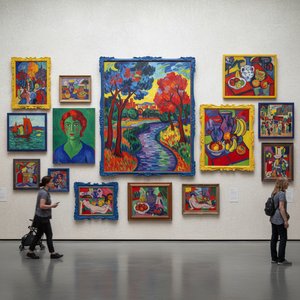
Fauvism's Bold Vision: 10 Masterpieces That Revolutionized Modern Art |
Explore the revolutionary world of Fauvism! Discover 10 masterpieces by Matisse, Derain & Vlaminck that defined this bold art movement. Find museum-quality reproductions and vibrant canvas prints to elevate your home decor at .

Silent Narratives: Exploring the Enduring Appeal of Still Life Painting Across Centuries
Explore the rich history of still life painting with TopImpressionists. Discover Dutch Masters, decode vanitas symbolism & learn about collecting timeless art. Expert insights and museum-quality reproductions.
Explore artworks organized by themes, styles, and characteristics.


