Preview
 Send
Send Share
Share
 Details
 Guide
Guide

 Download
 Similars
 X-Ray
X-Ray Diaporama
 Stats
StatsJust Moved


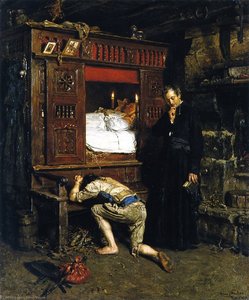
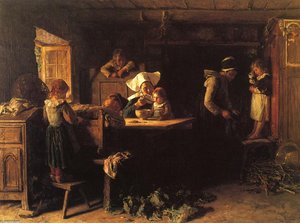
Admire Henry Mosler’s ‘Just Moved,’ a poignant depiction of family life captured in warm hues and masterful chiaroscuro. Explore this exquisite 1870 oil on canvas reproduction at TopImpressionists.
 Read More
Henry Mosler (1841-1920): German-born American artist celebrated for detailed genre paintings, Civil War illustrations & portraits. Known for 'Le Retour' and his European Salon success.
Giclée / Art Print
Museum-quality giclée or canvas print with fast production and flexible finish options. ( Buy Hand Made Painting Switch to Digital Image)




P118B $10

P118H $10

P118W $10

P438Z $10

P508JH $12

P508YH $12

P805H $10

P805Z $10

P919BZ $10

P919G $10

P919XJ $10

P959ZH $10

P968JZ $12

W106C $8

W218G $10

W218JH $8

W218Y $10

W307PJ $10

W316G $10

W316PJ $8

W316Y $10

W398PJ $8

W4111J $10

W500HY $15

W500JH $15

W692G $12

W849H $8

W940BG $15

W953PJ $8




Standard
custom
CM
INCH
Pick from our preset sizes that match the artwork's original proportions.
Loading sizes...

width
height
You may enter your own dimensions to fit a specific frame or space. If your selected size does not match the original image's proportions, we will either crop the artwork or extend the image with a mirrored or solid-fill edge. A digital mockup will be sent for your approval before production begins.
Please note that the on-screen preview does not reflect the actual cropping or extension. Only the mockup will accurately show the final composition.
While custom sizes are available, we recommend selecting a dimension from the predefined list to preserve the original proportions.
Worldwide Delivery () in 2 weeks instead of standard 4/5 weeks. (26 September)

Free Worldwide Express Shipping

High-Quality Linen Canvas

Full Shipping Insurance

Customs Tax Refund Guarantee

True Color Matching Guarantee

100-Day Return Policy (Defects Only)

100% Money-Back Guarantee

Bulk Discount Offer
 Glass option is only available in size under 110 CM

Just Moved
Giclée / Art Print
Reproduction Size
-


Total Price
$ 70
Just Moved: A Snapshot of Domestic Tranquility in Late 19th Century America
Henry Mosler’s “Just Moved” transcends mere depiction; it's a carefully crafted tableau that encapsulates the essence of American domestic life during the Victorian era. Executed in 1870, this oil on canvas resides within the Metropolitan Museum of Art’s collection—a testament to its enduring artistic merit and historical significance. Mosler’s oeuvre is characterized by his meticulous attention to detail and his ability to portray ordinary subjects with remarkable sensitivity, capturing not just appearances but also the subtle nuances of human interaction.The Artist's Vision: Warm Light and Impressionistic Technique
Mosler employs a masterful blend of impressionistic technique and chiaroscuro—the dramatic interplay of light and dark—to establish an atmosphere of comforting intimacy. The artist’s palette leans heavily into warm browns and tans, complemented by muted blues and grays that subtly delineate the room's contours. This deliberate color choice contributes to the painting’s overall feeling of warmth and domestic serenity, inviting viewers into a scene brimming with quiet contemplation. Light streams softly from an unseen window, illuminating the faces of the family members and casting delicate shadows across the tabletop—a technique that elevates the artwork beyond simple representation.A Domestic Scene Illuminated: Composition and Symbolism
The composition itself is thoughtfully arranged to convey a sense of familial connection. A man sits at the table, engaged in an activity – perhaps sketching or reviewing documents – while his wife gazes upon him with affectionate concern. Two children occupy chairs flanking the table, their postures suggesting innocence and youthful curiosity. Scattered around the surface are familiar objects: cups brimming with tea, bowls holding fruit, bottles of wine, books open on the table’s edge, and a knife resting prominently before the man. These items aren't merely props; they symbolize the everyday rituals and comforts of family life—a poignant reminder of simpler times. The inclusion of two cats adds to the scene’s charm, embodying domestic tranquility and companionship.Exploring Light and Shadow: Mosler’s Mastery of Chiaroscuro
Mosler’s skillful use of chiaroscuro is particularly noteworthy. He expertly manipulates light and shadow to sculpt the figures and surfaces within the painting, creating a palpable sense of depth and volume. This technique draws inspiration from Renaissance masters like Leonardo da Vinci, demonstrating Mosler's profound understanding of artistic principles. The dramatic contrast between illuminated areas and darkened recesses enhances the emotional impact of the artwork, guiding the viewer’s gaze and fostering contemplation about the depicted moment.A Legacy Enduring: Similar Artwork Inspiration
For those seeking inspiration or considering a high-quality reproduction, explore similar works by David Vinckboons ("Forest Landscape with Two of Christ's Miracles (detail)") on TopImpressionists.com – a celebration of artistic heritage and timeless beauty. And to delve deeper into Henry Mosler’s artistic journey, visit TopImpressionists.com for comprehensive biographical information and insights into his oeuvre.Artist Biography
Early Life and Artistic Foundations
Henry Mosler, born in Tropplowitz, Silesia (present-day Poland) in 1841, embarked on a journey that would establish him as a significant figure in American art. His family’s emigration to the United States in 1849, settling first in New York and then Cincinnati, Ohio, proved pivotal. This move placed young Henry within a thriving German-Jewish community known for its commitment to education and cultural pursuits—a nurturing environment that undoubtedly fostered his early artistic inclinations. While his father pursued work as a cigar maker and tobacconist, Henry received an apprenticeship with a wood engraver, Horace C. Grosvenor, simultaneously learning the fundamentals of painting from an amateur landscape artist named George Kerr. These formative experiences laid the groundwork for a career deeply rooted in observation, technical skill, and a burgeoning passion for visual storytelling. Even as a young man, Mosler demonstrated a natural talent, sketching portraits of family members and local scenes that hinted at the detailed realism he would later become renowned for.From Civil War Correspondent to European Refinement
The outbreak of the American Civil War dramatically altered the course of Mosler’s artistic development. Serving as an art correspondent for Harper's Weekly from 1862 to 1863, he documented the conflict with a keen eye and unwavering commitment to visual accuracy. This experience wasn’t merely reportage; it was an immersive education in human drama, suffering, and resilience—themes that would subtly permeate his later work. He served as an aide-de-camp with the Army of the Ohio, creating 34 drawings for Harper's Weekly, including depictions of key campaigns in Kentucky and Ohio, alongside portraits of Union generals. Following the war, Mosler sought formal training abroad, a common pursuit for ambitious American artists of the time. He studied in Düsseldorf under Heinrich Mücke and Albert Kindler, then spent six months with Ernest Hébert in Paris. This European sojourn was transformative, exposing him to classical techniques and the prevailing artistic currents of the day. It instilled within him a dedication to craftsmanship and a refined aesthetic sensibility that would define his mature style.A Transatlantic Career and the Pursuit of Realism
Mosler’s career unfolded across continents, reflecting a deliberate pursuit of artistic excellence. He returned to Cincinnati in 1866, establishing himself as a sought-after portraitist, but the allure of Europe proved irresistible. In 1874, he relocated his family to France, initially studying with Carl Theodor von Piloty in Munich before settling into an extended period in Brittany. It was here that Mosler truly found his voice. He became captivated by the lives of Breton peasants, depicting their daily routines and quiet dignity with remarkable sensitivity and detail. His paintings from this period—such as The Quadroon Girl and Early Cares—gained recognition at the Paris Salon, a prestigious platform for showcasing artistic talent. A pivotal moment arrived in 1879 with Le Retour, which was not only accepted by the Salon but also acquired by the Luxembourg Palace – an unprecedented honor for an American artist. This success solidified Mosler’s international reputation and underscored his mastery of realism, a movement that emphasized accurate representation and emotional depth.Legacy and Lasting Influence
In 1894, Henry Mosler returned to the United States, establishing a studio in Carnegie Hall, New York City. He continued to paint prolifically, shifting his focus towards historical genre scenes while maintaining his signature attention to detail and psychological insight. His work resonated with an American audience eager for narratives that celebrated both national heritage and universal human experiences. Beyond his individual achievements, Mosler’s influence extended through his family; his son, Gustave Henry Mosler, also pursued a career in painting, and another son, Arthur Rembrandt Mosler, became an engineer who married the renowned vocal coach Estelle Liebling. His artistic contributions are preserved in major museum collections worldwide—the Smithsonian American Art Museum, the Cincinnati Art Museum, the Huntington Library, and many others—ensuring that his legacy endures for generations to come. He provided valuable visual documentation of both a tumultuous period in American history – the Civil War – and the everyday lives of people across cultures. Henry Mosler stands as a testament to the power of dedication, observation, and artistic skill, leaving an indelible mark on the landscape of 19th-century art.
Henry Mosler
1841 - 1920 , Poland
Quick Facts
- Artistic Movement Or Style: Realism
- Artists Or Movements Influenced By This Artist: ['Subsequent Artists']
- Artists Who Influenced This Artist: ['European Masters']
- Date Of Birth: June 6, 1841
- Date Of Death: April 21, 1920
- Full Name: Henry Mosler
- Nationality: American
- Notable Artworks:
- Le Retour
- Later Afternoon
- Just Moved
- Place Of Birth: Tropszyno, Poland
Related Articles

Capturing the Light: A Journey Through the Soul of American Impressionism and the Hudson River School
Explore the luminous beauty of American Impressionism and the Hudson River School. Discover a curated journey through light, landscape, and history, celebrating the enduring legacy of masters through exquisite, hand-painted oil reproductions for the discerning art lover.
Explore artworks organized by themes, styles, and characteristics.