Preview
 Send
Send Share
Share
 Details
 Guide
Guide

 Download
 Similars
 X-Ray
X-Ray Diaporama
 Q&A
Q&A Stats
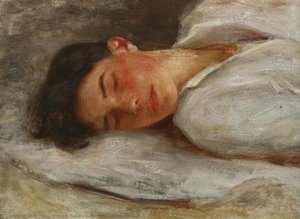
Statsthe watcher
An Impressionist master known for his nude studies of young men. Discover the evocative maritime works of Henry Scott Tuke today.
 Read More
Giclée / Art Print
Museum-quality giclée or canvas print with fast production and flexible finish options. ( Buy Hand Made Painting Switch to Digital Image)




































Standard
custom
CM
INCH
Pick from our preset sizes that match the artwork's original proportions.
Loading sizes...

width
height
Type the width and the height you need, to fit your frame or your wall. A print can only be cut, never made bigger than the picture, so a size with a different shape loses a part of the image. We send you a digital mockup to approve before we print anything. The picture shown on this page does not show the real cut — only the mockup does.
Worldwide Delivery () in 2 weeks instead of standard 4/5 weeks. (9 November)

Free Worldwide Express Shipping

High-Quality Linen Canvas

Full Shipping Insurance

Customs Tax Refund Guarantee

True Color Matching Guarantee

100-Day Return Policy (Defects Only)

100% Money-Back Guarantee

Bulk Discount Offer
 Glass option is only available in size under 110 CM

the watcher
Giclée / Art Print
Reproduction Size
-


Total Price
$ 70
Artist Biography
Early Life, Family and Training
Henry Scott Tuke was born on June 12, 1858, in Lawrence Street, York. He grew up within a prominent Quaker family. His father, Daniel Hack Tuke, worked as a medical doctor with a specialty in psychiatry. From a young age, Henry Scott Tuke was encouraged to pick up a brush and explore drawing and painting. These early inclinations shaped his path long before he reached formal training.
In 1874, the move to London brought him to the Slade School of Art. He studied there under the guidance of Alphonse Legros and Sir Edward Poynter. His time at the Slade was marked by a steady development of his technical skills. By 1877, he had won a scholarship. This achievement allowed him to continue his training at the Slade and eventually travel to Italy in 1880.
Artistic Development in Paris and Italy
After his initial training in London, Tuke moved toward the continent, traveling to Italy between 1880 and 1881. This period of study provided a foundation before he arrived in Paris in 1881. He remained in the French capital until 1883, a time when the atmosphere of the city began to shape his approach to light and outdoor painting. During these years, he studied under the French history painter Jean-Paul Laurens.
While living in Paris, Tuke encountered Jules Bastien-Lepage. It was this meeting that encouraged him to take his easel outside and practice en plein air. This shift toward painting directly from nature changed how he observed the world. He also crossed paths with the American painter John Singer Sargent during his time in the city. These encounters and the lessons learned in the studios of Paris helped refine his technique and his understanding of how light interacts with its subject.
Life and Work in Newlyn and Falmouth
After his time in France, Tuke moved toward the Cornish coast to join the Newlyn School. This group of artists preferred the directness of plein air painting, seeking to capture the atmosphere of the coast as it happened. By 1885, he had settled in the fishing port of Falmouth. The light and the local customs of the village became the backdrop for his daily life. He even purchased a fishing boat and converted it into a studio, a space where he could work away from the traditional constraints of a land-based room.
The sea was a constant presence in his life. In Falmouth, he was introduced to the habit of nude sea bathing, a practice he maintained well into his old age. This connection to the water and the physical reality of the coast shaped his surroundings. He lived among the fishermen and the salt air, finding a sense of place in the rugged landscape of Cornwall.
Technique and Artistic Style
Tuke’s hand moved with a specific kind of dual purpose. He blended the loose, light-seeking brushwork of Impressionism with the disciplined, structured foundations of academic technique. This approach allowed him to capture the way sunlight hits skin or water without losing the solid form of his subjects. He was a figurative painter who understood the weight of the human body, yet he often sought to dissolve that weight into the atmosphere of the outdoors. His time in Paris taught him the value of painting en plein air, a habit that defined his later years in Cornwall.
His eye was not limited to the canvas. As a photographer, he possessed a keen understanding of light and composition that informed his paintings. This technical precision extended to his maritime work. He was an established maritime artist, capable of rendering the specific textures of sailing ships and the movement of the sea. Whether he was focusing on the anatomy of a young man or the rigging of a vessel, his work remained grounded in a direct observation of the physical world.
The way he handled color often mirrored the shifting conditions of the coast. He looked for the truth in natural light, often working in the open air to catch the specific clarity of a summer afternoon. This focus on light and the human form became his primary way of seeing.
Key Works and Subject Matter
Tuke’s gaze often settled on the human form in its most natural state. He spent much of his time painting nude boys and young men, frequently placing them within the rugged, unhurried landscapes of the coast. These figures are rarely posed for a formal portrait; instead, they are seen swimming or fishing, sometimes alone and sometimes in small groups. Many of these subjects appear on boats or along the shoreline, their skin catching the light of the open air.
His work often captures a sense of quiet activity. You might find a young man mid-swim or a group of sailors resting near the water. The focus remains on the interaction between the body and the elements—the salt, the sun, and the sea. One of his most recognized paintings, August Blue (about 1893–94), shows this preoccupation with light and the youthful form in a way that defined much of his output.
- August Blue (about 1893–94)
- The midday rest sailors yarning
- Nude Boy on Rocks
- Return from fishing
Where to See the Works Today
To find his paintings, one often looks to the major institutions in London. The Tate Gallery holds several of his pieces, while the National Portrait Gallery contains his portraits. These collections offer a way to see how he captured the light on skin and the movement of the sea through his specific lens.
In Cornwall, his presence is felt through local collections that reflect his connection to the coast. Penlee House in Penzance holds works that speak to his time in the region. You can also find his art within the Royal Cornwall Polytechnic Society in Falmouth. These locations keep his studies of the human form and maritime life close to the environments that inspired them.
- The Good Samaritan, 1879
- Nude Italian Boy, 1881
- The midday rest sailors yarning, 1906
- July sun, 1913
- Green and Gold, 1920

Henry Scott Tuke
1858 - 1929 , United Kingdom
Quick Facts
- Artistic Movement Or Style: Impressionism
- Artists Or Movements Influenced By This Artist: ['Newlyn School']
- Artists Who Influenced This Artist:
- Alphonse Legros
- Sir Edward Poynter
- Jules Bastien-Lepage
- Full Name: Henry Scott Tuke
- Nationality: English
- Notable Artworks:
- The Boy's Dream
- August, Blue
- Sailing Ships at Newlyn
- Place Of Birth: York, United Kingdom
- Date Of Birth: 1858
- Date Of Death: 1929
Explore artworks organized by themes, styles, and characteristics.