Atelier — Complimentary worldwide shipping — Delivery 2–6 weeks
Sell Your Art Wishlist Cart
PreviewPreview Buy print Buy printBuy Painting Buy Painting SendSend
DetailsDetails Add to favorites Add to favorites DownloadDownload SimilarsSimilars X-RayX-Ray DiaporamaDiaporama

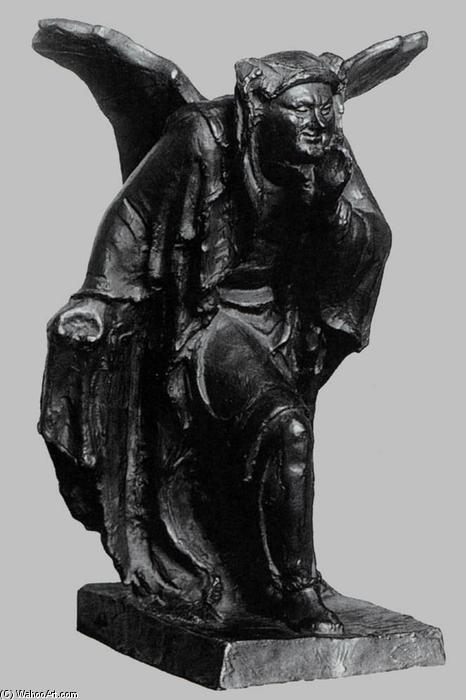
Loki

Witness the cunning and captivating Loki! Hermann Ernst Freund's bronze sculpture embodies Norse mythology’s trickster god with dynamic pose & intricate detail, a Romantic masterpiece.

Hermann Ernst Freund (1786-1840): Danish sculptor famed for Nordic mythology & the Ragnarok Frieze. A key figure in Romantic Nationalism & Neoclassicism.

Purchase a high-resolution, enhanced digital image, far superior to the online preview.

Each file is meticulously prepared by our in-house specialists using advanced tools and expert manual retouching. We ensure every image has exceptional clarity, precise color accuracy, and fine detail.

The final file is delivered via email within 72 hours, optimized for immediate use in professional, editorial, and print environments. This is the same quality trusted by top-tier design studios, publishers, and galleries.

Digital Image

Download a high-resolution file for personal display, printing, and creative projects.

Total Price

$9.99

Included in Every Digital Image Order

Expert Digital Delivery, Guaranteed

When you choose TopImpressionists.com, you're not just getting an image - you're receiving a professionally enhanced digital artwork, crafted with precision and backed by a satisfaction guarantee. Here's everything that comes with your order, automatically:

shipping_icon
Fast Email Delivery

Your high-resolution digital image file will be emailed to you within 72 hours of ordering - ready for immediate use.

canvas_icon
AI-Enhanced Digital File

Your artwork is professionally optimized using advanced AI tools and manual editing, ensuring maximum detail, clarity, and color accuracy.

insurance_icon
Free Lifetime Re-Delivery

Accidentally deleted or lost your file? No worries - we'll resend it to you anytime, free of charge.

tax_icon
No Import Fees - Ever

Enjoy your artwork instantly with zero customs, duties, or delivery fees - digital downloads are always tax-free.

color_icon
Color Accuracy Guarantee

We ensure your digital image reflects the original colors as closely as possible using professional tools and color management.

return_icon
60-Day Satisfaction Guarantee

If you're not satisfied with your digital image, we'll revise it or refund 100% within 60 days - no questions asked.

guarantee_icon
100% Money-Back Guarantee

Not satisfied? Get a full refund within 60 days of receiving your digital file - no questions asked.

discount_icon
Bulk Order Discounts

Buy 3 images, save 10% - Buy 5, save 15% - Buy 10+, save 20%. Great for creative projects, galleries, and agencies.

Quick Facts

  • Artist: Hermann Ernst Freund
  • Subject or theme: Norse mythology
  • Artistic style: Realistic, Romantic
  • Location: Statens Museum for Kunst
  • Year: 1822
  • Movement: Romanticism
  • Medium: Bronze casting

Art Quiz

There is only one correct answer for each question.

Question 1:
What is the primary subject depicted in Hermann Ernst Freund’s sculpture, ‘Loki’?
Question 2:
The sculpture ‘Loki’ is primarily crafted from which material?
Question 3:
In what century was Hermann Ernst Freund's sculpture ‘Loki’ created?
Question 4:
What artistic movement is most evident in the style of Hermann Ernst Freund’s ‘Loki’?
Question 5:
The lighting in the image of ‘Loki’ emphasizes which aspect of the sculpture?

Collectible Description

The Sculptor's Vision: Hermann Ernst Freund and the Enigmatic Loki

Hermann Ernst Freund’s “Loki” stands as a compelling testament to the burgeoning Romantic movement’s fascination with ancient mythology, specifically the complex and often contradictory narratives of Norse lore. Crafted in Rome during a pivotal decade of his artistic development – 1818-1820 – this bronze sculpture transcends mere representation; it embodies a potent distillation of Loki's character: cunning trickster, shapeshifter, and harbinger of chaos, yet simultaneously imbued with an unsettling intelligence and a hint of tragic vulnerability. Freund’s decision to focus on this notoriously ambiguous figure speaks volumes about the era’s shifting artistic sensibilities – a move away from the rigid formality of Neoclassicism towards a more emotionally charged exploration of folklore and the darker aspects of human nature.

  • Historical Context: The early 19th century witnessed a fervent revival of interest in Germanic mythology, fueled by nationalist sentiment and a desire to forge unique cultural identities. Figures like Adam Oehlenschläger championed Norse themes, inspiring artists and writers alike.
  • Thorvaldsen’s Influence: Freund's time as assistant to the renowned Bertel Thorvaldsen profoundly shaped his artistic approach, instilling in him a mastery of classical form and technique while simultaneously encouraging him to experiment with subject matter beyond traditional Greek and Roman themes.

Form and Texture: A Study in Bronze

The sculpture’s power lies not only in its subject but also in Freund's masterful manipulation of bronze – a medium he expertly wielded throughout his career. The figure is rendered with remarkable anatomical detail, capturing the muscularity and coiled energy of Loki mid-pose. Note the deliberate roughness of the surface, achieved through careful polishing and patination; this textural contrast emphasizes the figure’s physicality while simultaneously hinting at an underlying sense of unease. The drapery, flowing and dynamic, is sculpted with a remarkable degree of realism, suggesting both movement and a subtle suggestion of concealment – mirroring Loki's ability to blend seamlessly into various roles.

Technique: The bronze casting process itself contributes significantly to the sculpture’s impact. The inherent qualities of the metal—its weight, its capacity for detail, and its potential for surface treatment—are fully exploited by Freund, creating a work that is both imposing and intimate.

Symbolism and Narrative

Loki's pose – seated, one leg extended, head turned in a gesture of deliberate observation – immediately conveys his characteristic cunning. The subtle suggestion of a smirk plays upon the viewer’s expectations, inviting speculation about his intentions. The presence of wings, a clear reference to Norse mythology, reinforces his status as a supernatural being, capable of transformation and wielding considerable power. However, it is not merely a depiction of brute force; there's an element of calculated strategy in Loki’s stance, reflecting his role as a master manipulator.

  • The Serpent: The implied presence of the serpent (often interpreted as Jörmungandr, the world serpent) reinforces Loki’s association with chaos and destruction.
  • Shapeshifting: The wings symbolize his ability to assume various forms, highlighting his deceptive nature.

Emotional Resonance and Legacy

“Loki” is more than just a sculpture; it’s an evocation of the complexities inherent in Norse mythology – a world populated by gods and giants, heroes and monsters, where fate is often capricious and morality ambiguous. Freund's work captures this spirit with remarkable sensitivity, inviting viewers to contemplate the nature of trickery, intelligence, and the enduring power of myth. Reproductions of this piece offer a tangible connection to a pivotal moment in Romantic art history, allowing us to experience firsthand the artistic vision of a sculptor who dared to delve into the shadowy depths of Norse legend. It remains a potent symbol of both the allure and the danger inherent in embracing the unknown.


Artist Biography

Hermann Ernst Freund: Life and Legacy

Early Life and Training

Hermann Ernst Freund (1786-1840) was a German-born Danish sculptor who achieved recognition for his pioneering work in Nordic mythology and, most notably, the ambitious *Ragnarok Frieze*. Born near Bremen, Germany, he initially pursued training as a smith before dedicating himself to the world of art. He enrolled at the Art Academy in Copenhagen, where his talent quickly shone through, earning him all four silver and gold medals.

Roman Period and Influences

Following his graduation, Freund embarked on a decade-long sojourn in Rome (1810-1820). This period proved pivotal to his artistic development. He became the closest assistant to the renowned sculptor Bertel Thorvaldsen, gaining invaluable experience and refining his skills. His work during this time, such as the marble bust of Bernhard Severin Ingemann (1820), demonstrates a clear influence of Thorvaldsen’s Neoclassical style.

Embracing Nordic Mythology

Upon returning to Denmark, Freund distinguished himself as an early proponent of Romantic Nationalism. He was the first Danish sculptor to actively engage with themes from Nordic mythology, creating a series of twelve statuettes between 1822 and 1829. These included compelling representations of figures like Loki (1822), Odin (bronze, 1827), and Thor (1829). His approach skillfully blended the grandeur of ancient Greek and Roman mythological traditions with distinctly Norse subject matter.

Major Achievements and Artistic Style

  • Ragnarok Frieze: Freund’s magnum opus, a monumental frieze depicting the apocalyptic events of Ragnarök (the end of the world in Norse mythology). Though completed posthumously by Herman Wilhelm Bissen after his death in 1840, it represented years of dedicated work. Sadly, the original was destroyed in the Christianborg fire of 1884; however, a plaster cast remains at Statens Museum for Kunst.
  • Church of Our Lady Decoration: Freund prepared models for figures intended to adorn the Church of Our Lady in Copenhagen, though the commission ultimately went to Thorvaldsen.
  • Sculptural Style: Freund’s style is characterized by a harmonious blend of Neoclassical precision and Romantic emotionality. His figures possess both anatomical accuracy and a sense of dramatic narrative.

Later Life and Legacy

In 1829, Freund was appointed professor at the Academy, solidifying his position within the Danish art world. Inspired by his travels in Southern Italy, he had his official residence, Materialgaard, decorated in a Pompeiian style. He mentored several young artists including Georg Hilker, Heinrich Eddelien, Constantin Hansen and Christen Købke who assisted with the decoration of Materialgaard based on Freund’s designs.

Historical Significance

Hermann Ernst Freund played a crucial role in shaping Danish sculpture during the Golden Age. His pioneering exploration of Nordic mythology not only revitalized national artistic identity but also established a unique and enduring legacy. The largest collection of his works is housed at the Glyptotek in Copenhagen, ensuring that future generations can appreciate his contributions to art history. He remains an important figure for understanding the intersection of Neoclassicism, Romanticism, and National Identity in 19th-century Danish art.

Hermann Ernst Freund

Hermann Ernst Freund

1786 - 1840 , Germany

Quick Facts

  • Birth Date: 1786
  • Birth Place: Uthlede, Germany
  • Death Date: 1840
  • Influenced By: Bertel Thorvaldsen
  • Movement:
    • Romantic Nationalism
    • Neoclassicism
  • Name: Hermann Ernst Freund
  • Nationality: Danish
  • Notable Works:
    • Ragnarok Frieze
    • Loki (1822)
    • Odin (1827)
    • Thor (1829)
© TopImpressionists.com — All Rights Reserved  ·  100% Hand-Painted · Satisfaction Guaranteed · Free Worldwide Shipping
VISA MASTERCARD

