


 Preview
 Send
Send Share
Share
 Details
 Guide
Guide

 Download
 Similars
 X-Ray
X-Ray Diaporama
 Stats
StatsSpring morning

Experience 'Spring Morning' by Hippolyte Camille Delpy – a serene Barbizon-Impressionist landscape capturing rural beauty. Commission a hand-painted replica today!
French painter Hippolyte Camille Delpy blended Barbizon landscapes with Impressionist color. Known for scenes of rural life & winter, he was a student of Daubigny.
 Read More
Giclée / Art Print
Museum-quality giclée or canvas print with fast production and flexible finish options. ( Buy Hand Made Painting Switch to Digital Image)




P118B $10

P118H $10

P118W $10

P438Z $10

P508JH $12

P508YH $12

P805H $10

P805Z $10

P919BZ $10

P919G $10

P919XJ $10

P959ZH $10

P968JZ $12

W106C $8

W218G $10

W218JH $8

W218Y $10

W307PJ $10

W316G $10

W316PJ $8

W316Y $10

W398PJ $8

W4111J $10

W500HY $15

W500JH $15

W692G $12

W849H $8

W940BG $15

W953PJ $8




Standard
custom
CM
INCH
Pick from our preset sizes that match the artwork's original proportions.
Loading sizes...

width
height
Type the width and the height you need, to fit your frame or your wall. A print can only be cut, never made bigger than the picture, so a size with a different shape loses a part of the image. We send you a digital mockup to approve before we print anything. The picture shown on this page does not show the real cut — only the mockup does.
Worldwide Delivery () in 2 weeks instead of standard 4/5 weeks. (25 October)

Free Worldwide Express Shipping

High-Quality Linen Canvas

Full Shipping Insurance

Customs Tax Refund Guarantee

True Color Matching Guarantee

100-Day Return Policy (Defects Only)

100% Money-Back Guarantee

Bulk Discount Offer
 Glass option is only available in size under 110 CM

Spring morning
Giclée / Art Print
Reproduction Size
-


Total Price
$ 70
Related Artworks


Artist Biography
Hippolyte Camille Delpy: Bridging Barbizon and Impressionism
Born in Joigny, France, in 1842, Hippolyte Camille Delpy’s artistic journey was profoundly shaped by a confluence of influences – the legacy of Charles-François Daubigny, the guidance of Corot, and the burgeoning spirit of the Impressionists. His early life within a moderately wealthy family provided him with opportunities unavailable to many artists of his time, fostering an appreciation for both art and a comfortable existence that allowed him to dedicate himself fully to his craft. Delpy’s story isn't one of radical innovation but rather a careful synthesis – he took the foundational principles of Barbizon landscape painting and infused them with the vibrant color palettes and looser brushwork characteristic of the Impressionist movement, creating a distinctive style uniquely his own.
Delpy’s formative years were inextricably linked to Daubigny. Introduced around 1855, the older artist took on the young Delpy as an informal student, a rare gesture that proved invaluable. The summers were spent aboard Daubigny's famed “Le Botin,” a small boat serving as both studio and residence, drifting along the Seine and exploring the landscapes of France. This intimate apprenticeship provided Delpy with direct observation of Daubigny’s techniques – his meticulous attention to detail, his ability to capture the subtle shifts in light and atmosphere, and his deep connection to the natural world. Corot, a respected figure within the Parisian art scene, further broadened Delpy's artistic horizons, introducing him to a more abstract approach to landscape painting, emphasizing tonal values and capturing the essence of a scene rather than its literal representation.
Early Career and Salon Recognition
Delpy’s formal training began in Paris in 1858, where he sought guidance from Corot. His early artistic development was marked by a diligent study of traditional techniques, absorbing the lessons imparted by his mentors. In 1869, Delpy made his debut at the Salon, submitting “A Luncheon during Lent,” a still life that signaled the beginning of his career as a landscape painter. This initial success paved the way for continued recognition within the established artistic circles of France. The years following were characterized by extensive travel and experimentation, with Delpy dividing his time between Ville-d’Avray, favored by Corot, and Auvers-sur-Oise, Daubigny's home, immersing himself in the landscapes that had shaped his artistic sensibilities.
Delpy’s work during this period demonstrates a remarkable ability to blend the rigorous observation of Barbizon painting with the Impressionist emphasis on capturing fleeting moments of light and color. His paintings of winter scenes – particularly those created during the harsh winters of 1873-74 – stand out as particularly innovative, showcasing his willingness to embrace brighter hues and looser brushwork while retaining a strong connection to the natural world. These works garnered critical acclaim, with Jules-Antoine Castagnary praising Delpy’s “originality” in December 1875.
A Unique Style and Notable Achievements
Delpy's style is often described as a harmonious blend of Barbizon and Impressionist approaches. He retained the meticulous detail and atmospheric perspective characteristic of the Barbizon school, but infused his paintings with the vibrant colors and broken brushstrokes that defined the Impressionists. His subjects frequently centered on rural life – farmers harvesting crops, women washing laundry by the river, and idyllic landscapes bathed in sunlight. In 1876, he took a bold step, organizing his own sale of paintings at the Hôtel Drouot, an unprecedented event for a relatively unknown artist. The success of this sale—all 45 works sold—demonstrated Delpy’s growing reputation and financial stability.
Delpy's commitment to his craft extended beyond the Salon circuit. He actively sought opportunities to exhibit his work in various galleries, including the Galerie Georges Petit, a prestigious venue in Paris. In 1886, he even participated in a panoramic painting project in Washington D.C., showcasing his versatility and willingness to adapt to new artistic challenges. Throughout his career, Delpy received numerous accolades, including a medal at the Salon of 1884 and an honorable mention at the Exposition Universelle of 1889.
Legacy and Lasting Influence
Hippolyte Camille Delpy died in Paris in 1910, leaving behind a significant body of work that continues to be admired for its evocative depictions of rural France. His paintings offer a glimpse into a bygone era, capturing the beauty of the landscape and the rhythms of daily life with remarkable sensitivity and skill. Delpy’s legacy lies not only in his individual artistic achievements but also in his ability to bridge the gap between two distinct artistic movements – Barbizon and Impressionism – creating a unique and enduring style that reflects the spirit of 19th-century France.
His works are now held in numerous public and private collections, including The Walters Art Museum in Baltimore, the Tokyo Fuji Art Museum, and the Musée Carnavalet in Paris, ensuring that his artistic vision continues to be appreciated by generations to come.

Hippolyte Camille Delpy
1842 - 1910 , France
Quick Facts
- Full Name: Hippolyte Camille Delpy
- Nationality: French
- Date Of Birth: 1842
- Date Of Death: 1910
- Place Of Birth: Joigny, France
- Notable Artworks:
- Spring Morning
- Potato Harvesting Scene
- Artistic Movement Or Style: Barbizon-Impressionism
- Artists Who Influenced This Artist:
- Charles-François Daubigny
- Camille Corot
- Artists Or Movements Influenced By This Artist: ['Impressionists']
Related Articles

Whispers of Rural Serenity: A Journey Through the Enchanting Village Landscapes of Impressionism
Immerse yourself in the tranquil beauty of Impressionist village landscapes. Explore our exquisite collection of hand-painted oil reproductions, capturing the light and soul of masters like Monet and Pissarro. Bring a piece of art history into your home with TopImpressionists.com.

Capturing the Soul: The Most Emotionally Moving Impressionist and Post-Impressionist Masterpieces
Discover the profound emotional depth of Impressionist and Post-Impressionist masterpieces. Explore how legends like Monet, Van Gogh, and Gauguin captured light and soul through evocative landscapes and vibrant brushwork for a timeless connection to art history.
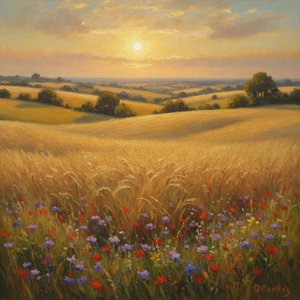
Golden Fields & Sun-Drenched Meadows: Capturing the Soul of Impressionist Landscapes
Immerse yourself in the luminous world of Impressionist landscapes. Discover how masters like Monet and Gauguin captured ephemeral light through plein air painting, and learn to bring the soul of sun-drenched meadows into your home with exquisite, hand-painted oil reproductions.

Beyond the Light: Capturing Raw Emotion and Subjective Vision in Post-Impressionist Landscapes
Explore the profound emotional depth of Post-Impressionist landscapes. Discover how masters like Van Gogh moved beyond light to capture raw human feeling through vibrant color and expressive texture in this expert art history retrospective.

The Beauty of Impermanence: Capturing Decay through Impressionist Eyes
Explore the profound beauty of impermanence through Impressionist and Post-Impressionist eyes. Discover how masters like Monet and Van Gogh captured fleeting light and the poetic essence of nature's transitions in our deep dive into art history and emotional landscapes.
Explore artworks organized by themes, styles, and characteristics.


