Preview
 Send
Send Share
Share
 Details
 Guide
Guide

 Download
 Similars
 X-Ray
X-Ray Diaporama
 Q&A
Q&A Stats
StatsFinette

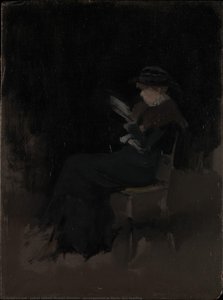
Experience James Abbott Whistler’s ‘Finette,’ a masterpiece of Tonalism. Explore its serene beauty & atmospheric effects. A timeless work by a pivotal American artist.
 Read More
Explore James Abbott McNeill Whistler (1834-1903): American artist of Tonalism & Aestheticism. Discover 'Whistler's Mother,' nocturnes, portraits & his 'art for art's sake' philosophy.
Giclée / Art Print
Museum-quality giclée or canvas print with fast production and flexible finish options. ( Buy Hand Made Painting Switch to Digital Image)




P118B $10

P118H $10

P118W $10

P438Z $10

P508JH $12

P508YH $12

P805H $10

P805Z $10

P919BZ $10

P919G $10

P919XJ $10

P959ZH $10

P968JZ $12

W106C $8

W218G $10

W218JH $8

W218Y $10

W307PJ $10

W316G $10

W316PJ $8

W316Y $10

W398PJ $8

W4111J $10

W500HY $15

W500JH $15

W692G $12

W849H $8

W940BG $15

W953PJ $8




Standard
custom
CM
INCH
Pick from our preset sizes that match the artwork's original proportions.
Loading sizes...

width
height
Type the width and the height you need, to fit your frame or your wall. A print can only be cut, never made bigger than the picture, so a size with a different shape loses a part of the image. We send you a digital mockup to approve before we print anything. The picture shown on this page does not show the real cut — only the mockup does.
Worldwide Delivery () in 2 weeks instead of standard 4/5 weeks. (31 October)

Free Worldwide Express Shipping

High-Quality Linen Canvas

Full Shipping Insurance

Customs Tax Refund Guarantee

True Color Matching Guarantee

100-Day Return Policy (Defects Only)

100% Money-Back Guarantee

Bulk Discount Offer
 Glass option is only available in size under 110 CM

Finette
Giclée / Art Print
Reproduction Size
-


Total Price
$ 70
A Moment Suspended: Unveiling Whistler’s *Finette*
James Abbott McNeill Whistler's Finette (circa 1892-93) is a captivating study in quietude, a prime example of American Tonalism that transcends mere portraiture. It isn’t simply a depiction *of* someone; it’s an evocation of a mood, a feeling – a carefully orchestrated harmony of tones and textures designed to resonate with the viewer on a deeply personal level.
The Enigmatic Subject & Composition
The artwork portrays a young woman, known affectionately as “Finette,” seated near a window, lost in thought. Her face is partially veiled by a delicate fan, lending an air of mystery and inviting speculation about her inner world. Whistler deliberately avoids detailed characterization; Finette isn’t presented as a specific individual to be identified, but rather as a universal representation of feminine grace and contemplative solitude. The inclusion of books subtly suggests intellectual pursuits or artistic sensibility, enriching the narrative without explicitly defining it. Her relaxed yet dignified pose contributes to the overall sense of serene detachment.
Mastering Tonalism: Whistler’s Artistic Approach
Finette embodies the core principles of Tonalism – an artistic movement that prioritized atmospheric effects, muted color palettes, and emotional resonance over precise representation. Whistler achieves this through a masterful command of tonal values, employing a limited range of subtly blended creams, grays, and blacks to create a harmonious, almost monochromatic effect. His delicate brushwork and glazing techniques build up layers of tone, resulting in a soft, diffused light that envelops the figure and creates an ethereal atmosphere. This emphasis on *how* something is painted – rather than *what* is painted – exemplifies Whistler’s “art for art’s sake” philosophy.
Historical Context & Aesthetic Influences
Born in Lowell, Massachusetts, Whistler spent a significant portion of his career in Europe, particularly London. He was profoundly influenced by Japanese art and aesthetics – evident in the composition's asymmetry, simplified forms, and emphasis on negative space. He actively rejected academic traditions, championing a purely aesthetic approach to painting that challenged conventional notions of art’s purpose. Whistler believed art should be appreciated for its beauty alone, free from moral or narrative obligations. This stance positioned him as a key figure within the broader Aesthetic Movement.
Symbolism & Emotional Impact
While seemingly simple, Finette is rich in subtle symbolism. The window acts as a threshold between interior and exterior worlds, suggesting introspection and a connection to something beyond the immediate surroundings. The fan, a traditional symbol of femininity and allure, adds an element of grace and sophistication. However, it also serves to partially obscure Finette’s face, reinforcing her enigmatic quality. Ultimately, the painting evokes feelings of quietude, melancholy, and peaceful contemplation – inviting viewers to project their own emotions onto the scene.
Display & Interior Design Considerations
- Lighting: Soft, diffused lighting is essential. Avoid direct sunlight, which can diminish the delicate tonal variations.
- Wall Color: A neutral palette – warm grays, off-whites, or muted beiges – will complement the painting’s subtle hues without overpowering it.
- Framing: A simple, elegant frame in a muted tone (silver, gold leaf, or dark wood) will enhance the artwork's sophistication. Avoid overly ornate frames that distract from the composition.
- Setting: Finette would be particularly well-suited to spaces designed for relaxation and contemplation – libraries, studies, bedrooms, or intimate living areas.
Owning a reproduction of Whistler’s Finette is an invitation to embrace timeless elegance and artistic refinement. It's a piece that rewards quiet observation and offers a constant source of peaceful inspiration—a subtle yet powerful addition to any discerning collection or interior space.
Questions & Answers
What is the format of "Finette"?
"Finette" by James Abbott McNeill Whistler is a portrait composition. The proportions are worth checking before choosing a print size.
What subjects appear in "Finette" by James Abbott McNeill Whistler?
The themes present in "Finette" by James Abbott McNeill Whistler include tonalist painting, woman in white, atmospheric mood, quiet reflection, vintage art style, whistler’s legacy, elegant portraiture. Together they summarize the artwork's subject matter.
Can I see "Finette" by James Abbott McNeill Whistler on my own wall before buying?
The AR Preview page of "Finette" by James Abbott McNeill Whistler uses augmented reality to show the artwork in your own space, on a compatible device.
Related Artworks




Artist Biography
A Life Shaped by Aestheticism: The World of James Abbott McNeill Whistler
James Abbott McNeill Whistler, born in Lowell, Massachusetts in 1834, was a figure perpetually at odds with convention—a painter who championed “art for art’s sake” during an era obsessed with moralizing narratives. His early life, marked by frequent relocations due to his father's railroad engineering career, instilled within him a sense of adaptability and exposure to diverse environments. A brief, unhappy stint at West Point proved ill-suited to his artistic temperament, followed by work with the U.S. Coast and Geodetic Survey that, while delaying, did not extinguish his burgeoning passion for art. These formative years were characterized by an innate talent for drawing and a resolute desire to forge a path as a professional artist, a pursuit that would ultimately lead him across the Atlantic and into the heart of the European avant-garde. The seeds of Whistler’s artistic rebellion were sown early, nurtured by a spirit that resisted conformity and embraced aesthetic exploration above all else.Parisian Beginnings and the Cultivation of Style
The pivotal moment in Whistler's artistic journey arrived with his move to Paris in 1855. Here, under the tutelage of Sébastien Bouré, he honed his skills in oil painting, watercolor, and printmaking, absorbing the influences of French Realism and the Barbizon School painters. However, Whistler quickly transcended mere imitation, developing a distinctive style characterized by tonal harmonies and atmospheric effects. He wasn’t interested in replicating reality; rather, he sought to capture its *essence*, its fleeting moods and subtle nuances. This period marked a crucial shift from representational accuracy towards an exploration of pure aesthetic form. His early works already hinted at the delicate balance between observation and abstraction that would define his mature style. It was in Paris that Whistler began to articulate his belief that art should be judged solely on its aesthetic qualities, free from didactic or moralizing constraints—a philosophy that would become the cornerstone of his artistic practice and a defining characteristic of the Aesthetic movement.Nocturnes, Portraits, and the Pursuit of Harmony
Whistler’s artistic vision crystallized in several key themes and stylistic choices. He championed the concept of “art for art’s sake,” rejecting narratives laden with moral or social commentary. His work became an exercise in capturing subtle nuances of light, color, and atmosphere—a pursuit that led to his iconic *Nocturnes*. These atmospheric paintings of twilight scenes, often depicting the Thames River at night, were not intended as literal depictions but rather as evocative impressions, studies in tonal harmony and mood. He frequently employed limited palettes and delicate brushwork, creating a sense of ethereal beauty and quiet contemplation. Portraits also occupied a central place in his practice, though he approached them with a unique sensibility. Whistler wasn’t concerned with capturing perfect likenesses; instead, he focused on formal arrangements and tonal relationships, treating his sitters as compositional elements within a carefully constructed aesthetic framework. Works like *Arrangement in Grey and Black No. 1*—better known as *Whistler's Mother*—demonstrate this approach perfectly, transforming a familial portrait into an iconic image of Victorian motherhood through its masterful use of form and tone.Controversy, Influence, and Lasting Legacy
Whistler’s career was not without controversy. The infamous libel suit brought against him by the critic John Ruskin in 1878, sparked by *Nocturne in Black and Gold – The Falling Rocket*, became a landmark moment in art history. Whistler successfully defended his artistic autonomy, arguing that his paintings were not intended to be realistic representations but rather aesthetic arrangements of color and form. This case elevated his profile and ignited important debates about the nature of art criticism and artistic freedom. Beyond this legal battle, Whistler’s influence extended far and wide. He was deeply inspired by Japanese prints (ukiyo-e), which informed his compositional principles and emphasis on decorative patterns, as well as the tonal mastery of Spanish painters like Velázquez. His advocacy for “art for art’s sake” profoundly impacted the Aesthetic movement in England and America, paving the way for modernism and challenging conventional notions about artistic purpose. He left an indelible mark on American art, inspiring generations of artists to embrace formalist approaches and explore the expressive potential of color and composition.- Notable Works: *The Forge* (1861), *Portrait of Charles Lang Freer* (1873), *Brown and Gold: The Gold Girl—Connie Gilchrist* (1876-77), *Arrangement in Grey and Black No. 1 (Whistler’s Mother)* (1871), *Nocturne in Black and Gold – The Falling Rocket* (1875).
- Influences: Japanese prints, Velázquez.

James Abbott McNeill Whistler
1834 - 1903 , United States of America
Quick Facts
- Artistic Movement Or Style: Tonalism & Aestheticism
- Artists Or Movements Influenced By This Artist:
- Modernism
- Tonalism
- Artists Who Influenced This Artist: ['Velázquez']
- Full Name: James Abbott McNeill Whistler
- Nationality: American
- Notable Artworks:
- Whistler's Mother
- Nocturne in Black and Gold
- The Forge
- Wapping
- Place Of Birth: Lowell, United States of America
- Date Of Birth: 1834
- Date Of Death: 1903
Related Articles

The Soul of Impressionism: Why Oil on Canvas Captures Eternal Light and Timeless Emotion
Discover the enchanting alchemy of Impressionism. Explore how the mastery of oil on canvas, through glazing and impasto, captures eternal light and emotion. Perfect for lovers of Monet and Van Gogh seeking the profound depth of hand-painted fine art.

The Magic of Tonalism: Capturing Mood, Mist, and Atmospheric Emotion in Landscape Art
Discover the ethereal beauty of Tonalism. Explore how master artists use mist, soft light, and muted palettes to capture profound emotion and atmospheric mood in landscape painting. A deep dive into this quiet, introspective art movement for true connoisseurs.

The Timeless Charm of Oil on Board: Reimagining Texture and Light through the Impressionist Lens
Discover the profound intimacy of oil on panel. Explore how Impressionist masters used rigid supports to capture light, texture, and impasto depth through exquisite, handmade oil reproductions for discerning collectors.
Explore artworks organized by themes, styles, and characteristics.