


 Preview
 Send
Send Share
Share
 Details
 Guide
Guide

 Download
 Similars
 X-Ray
X-Ray Diaporama
 Stats
StatsHenry Lee


A commanding portrait of Henry Lee captures the essence of American leadership through James Vernon Herring's masterful neoclassical style, inviting you to explore this profound piece of historical artistry.
 Read More
Explore the art of James Vernon Herring (1887-1969), a pivotal American artist & educator influenced by Impressionism. He championed African American artists and founded Howard University's Art Dept. Discover his portraits & legacy at TopImpressionists.
Giclée / Art Print
Museum-quality giclée or canvas print with fast production and flexible finish options. ( Buy Hand Made Painting Switch to Digital Image)




P118B $10

P118H $10

P118W $10

P438Z $10

P508JH $12

P508YH $12

P805H $10

P805Z $10

P919BZ $10

P919G $10

P919XJ $10

P959ZH $10

P968JZ $12

W106C $8

W218G $10

W218JH $8

W218Y $10

W307PJ $10

W316G $10

W316PJ $8

W316Y $10

W398PJ $8

W4111J $10

W500HY $15

W500JH $15

W692G $12

W849H $8

W940BG $15

W953PJ $8




Standard
custom
CM
INCH
Pick from our preset sizes that match the artwork's original proportions.
Loading sizes...

width
height
You may enter your own dimensions to fit a specific frame or space. If your selected size does not match the original image's proportions, we will either crop the artwork or extend the image with a mirrored or solid-fill edge. A digital mockup will be sent for your approval before production begins.
Please note that the on-screen preview does not reflect the actual cropping or extension. Only the mockup will accurately show the final composition.
While custom sizes are available, we recommend selecting a dimension from the predefined list to preserve the original proportions.
Worldwide Delivery () in 2 weeks instead of standard 4/5 weeks. (7 October)

Free Worldwide Express Shipping

High-Quality Linen Canvas

Full Shipping Insurance

Customs Tax Refund Guarantee

True Color Matching Guarantee

100-Day Return Policy (Defects Only)

100% Money-Back Guarantee

Bulk Discount Offer
 Glass option is only available in size under 110 CM

Henry Lee
Giclée / Art Print
Reproduction Size
-


Total Price
$ 70
A Portrait of Leadership: James Vernon Herring’s Reverent Echo of Gilbert Stuart
James Vernon Herring's depiction of Henry Lee stands as a remarkable testament to both artistic skill and historical significance. Executed around 1834, this painting isn’t merely a likeness; it’s an attempt to capture the essence of a man who embodied Virginia’s spirit during a turbulent era – namely, Henry “Light-Horse Harry” Lee.
- Subject Matter: The portrait portrays Lee in meticulous detail, dressed in a formal military uniform adorned with epaulettes. This attire speaks volumes about his position as a cavalry officer and statesman, reflecting the importance of military prowess and political influence during the War of 1812.
- Artist’s Influence: Herring skillfully adapted Gilbert Stuart's iconic portrait style—a hallmark of American neoclassical art—demonstrating an understanding of artistic conventions that prioritized dignity and grandeur. Stuart himself was celebrated for capturing psychological depth within his subjects, a technique Herring admirably emulated.
- Technique: Employing oil paint on canvas, Herring utilized layering and blending techniques to achieve remarkable tonal gradations and textural nuances. The artist’s meticulous attention to detail ensures that every crease in Lee's uniform and every strand of hair is rendered with precision, conveying a palpable sense of realism.
Historical Context: Virginia Under Siege
The painting emerged during a period marked by considerable political unrest. The War of 1812 pitted the United States against Great Britain, triggering anxieties about national security and bolstering calls for unity. Lee’s role as a congressman and governor underscored the importance of leadership in navigating these challenges—a theme subtly conveyed through his commanding posture.
- Symbolism: The military uniform itself symbolizes honor, duty, and service to one's country. Furthermore, Lee’s gaze directs towards the viewer, inviting contemplation on themes of resilience and perseverance – qualities that resonated deeply with audiences of the time.
- Legacy: Herring’s work contributes to a broader understanding of American artistic traditions during the early 19th century. It serves as an invaluable record of Lee's life and accomplishments, offering insights into Virginia society and its aspirations for greatness.
Emotional Resonance: Dignity Amidst Adversity
Despite Lee’s personal struggles—including financial difficulties and a devastating injury sustained during the War of 1812—Herring's portrayal exudes an aura of composure and dignity. The artist skillfully captures Lee’s inner strength, conveying a profound respect for his character and highlighting the enduring power of portraiture to communicate emotion.
- Decorative Potential: This artwork would lend itself beautifully to interior design schemes emphasizing classic elegance and patriotic sentiment. Its muted palette—primarily browns and creams—harmonizes seamlessly with traditional furnishings, creating a sophisticated aesthetic.
- Reproductions: TopImpressionists offers high-quality reproductions of Herring’s masterpiece, allowing art enthusiasts worldwide to experience the beauty and nuance of this seminal work of American art.
Questions & Answers
Who sells hand-painted copies of "Henry Lee" by James Vernon Herring?
"Henry Lee" is available as a hand-painted oil reproduction on linen canvas. The order can be placed on this page, with a choice of sizes.
What palette and what feeling does "Henry Lee" combine?
"Henry Lee" by James Vernon Herring combines an earthy palette with a reflective tone.
What explains the copyright situation of "Henry Lee" by James Vernon Herring?
"Henry Lee" by James Vernon Herring is still protected by copyright. Copyright duration runs from the artist's death, which occurred in 1969.
What does "Henry Lee" by James Vernon Herring bring to an interior?
"Henry Lee" by James Vernon Herring has an elegant atmosphere and is recommended for a living room. The mood is what the work brings to the space around it.
Which artist is "Henry Lee" attributed to?
"Henry Lee" is attributed to James Vernon Herring.
What type of artwork is "Henry Lee" by James Vernon Herring?
In the catalog, "Henry Lee" by James Vernon Herring is filed as wall art. The category helps find similar works.
In what year was "Henry Lee" by James Vernon Herring created?
"Henry Lee" by James Vernon Herring was created in 1834.
Related Artworks


Artist Biography
A Legacy of Vision and Resilience
James Vernon Herring (1887-1969) stands as a pivotal figure in the landscape of American art, particularly for his crucial role in championing African American artists during a period marked by systemic exclusion. Born in Clio, South Carolina, to a Black mother and a white Jewish father—a unique familial arrangement that shaped his perspective—Herring’s journey from a small rural town to prominence within Washington D.C.’s art world is a testament to resilience, vision, and an unwavering commitment to artistic representation. His life was inextricably linked with Howard University, where he not only taught but fundamentally reshaped the institution's artistic identity, leaving behind a legacy that continues to inspire generations of artists and scholars.
Herring’s early education unfolded in the segregated South, an environment that simultaneously fostered his creativity and instilled within him a deep awareness of racial injustice. Recognizing the limitations imposed by societal barriers, his family relocated him to Washington D.C., affording him access to educational opportunities unavailable in his hometown. He began his formal artistic training at Syracuse University, followed by studies at Columbia and Harvard, where he honed his technical skills and developed an appreciation for a diverse range of artistic styles. Crucially, Herring’s exposure to the French Impressionist movement profoundly influenced his approach to capturing light, color, and fleeting moments in nature—a technique that would become a hallmark of his work.
The Intersection of Technique and Identity
While his technical foundation was rooted in the luminous traditions of Impressionism, Herring’s true passion lay in the reclamation of the Black narrative through portraiture and historical representation. He recognized the inherent beauty and cultural richness within African American art—often marginalized and overlooked during this era—viewing it as essential to a complete understanding of the American experience. His work often sought to bridge the gap between classical European techniques and the profound, often untold, stories of his people.
In his masterful portraits, such as his evocative depiction of Noah Webster, Herring demonstrates an ability to place historical figures within scholarly and dignified settings. This specific piece captures the American lexicographer amidst a scholarly atmosphere, showcasing a pivotal moment in language and education. Through such works, Herring did more than just paint faces; he painted dignity, intellect, and the enduring spirit of Black excellence. His brushwork, characterized by an ability to manipulate light and shadow, allowed him to breathe life into his subjects, making them feel both timeless and immediate.
A Pillar of Artistic Education
Beyond his individual contributions to the canvas, Herring’s most enduring impact may be found in his role as an educator and institution builder. His commitment to fostering talent led to his instrumental role in founding the Art Department at Howard University. Through this platform, he created a sanctuary for Black artists to develop their voices without the stifling constraints of racial prejudice that dominated much of the contemporary art world. He did not merely teach technique; he cultivated an environment where identity and artistry could coexist and flourish.
His influence extended into the broader community through his engagement with galleries and movements that sought to elevate Black art, including connections to the Barnett-Aden Gallery era. The significance of his life's work can be summarized by several key pillars:
- Educational Foundation: His rigorous training at Syracuse, Columbia, and Harvard provided a technical mastery that blended Impressionist light with classical structure.
- Cultural Advocacy: He acted as a bridge between the marginalized Black art movement and the established American art canon.
- Institutional Legacy: His leadership at Howard University established a permanent home for African American artistic excellence.
- Historical Documentation: Through his portraits, he provided a visual record of intellectual and cultural importance, reclaiming history through the medium of oil and pigment.
James Vernon Herring remains a beacon of what is possible when technical brilliance meets social purpose. His life was a continuous dialogue between the beauty of the natural world and the necessity of social truth, ensuring that the light he captured on canvas would illuminate the path for all who followed.

James Vernon Herring
1887 - 1969 , United States of America
Quick Facts
- Full Name: James Vernon Herring
- Nationality: American
- Date Of Birth: 1887
- Date Of Death: 1969
- Place Of Birth: Clio, United States of America
- Notable Artworks: ['Portrait of a Lady']
- Artistic Movement Or Style: Impressionism, African American art
- Artists Who Influenced This Artist:
- French Impressionists
- African American artists
- Artists Or Movements Influenced By This Artist:
- James A. Porter
- David C. Driskell
Related Articles

10 Iconic Masterpieces to Elevate Your Coworking Space Design
Transform your workspace with timeless elegance. Explore 10 iconic masterpieces, from Impressionist classics to modern abstracts, curated to inspire productivity. Find museum-quality art reproductions for your coworking space. Discover all masterpieces on TopImpressionists.com.

25 Iconic Masterpieces by Henri de Toulouse-Lautrec: The Spirit of Montmartre
Step into the vibrant nightlife of Montmartre with our curated guide to the top 25 Henri de Toulouse-Lautrec masterpieces. Explore Post-Impressionist legends and find museum-quality art reproductions for your decor. Discover all masterpieces on TopImpressionists.com.

Color Unleashed: The Top 25 Masterpieces by Henri Matisse
Immerse yourself in the vibrant world of Henri Matisse. Explore 25 iconic Fauvist masterpieces, from bold color experiments to timeless cutouts. Find inspiration for your collection with museum-quality art reproductions and curated decor ideas. Discover all masterpieces on TopImpressionists.com.

Elevate Your Workspace: 10 Iconic Masterpieces for a Professional Office
Transform your workspace with timeless elegance. Explore 10 iconic masterpieces, from Impressionist classics to modern abstracts, curated for professional interiors. Find museum-quality art reproductions and expert decor inspiration. Discover all masterpieces on TopImpressionists.com.
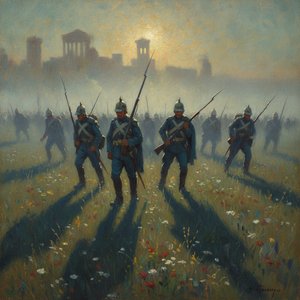
Shadows of Valor: The Ethereal Art of Capturing Military Figures through Impressionist Light
Step into a world where valor meets light. Explore our exquisite collection of Impressionist military paintings and bespoke oil reproductions, masterfully hand-painted to capture the ephemeral beauty of history. Discover museum-quality artistry for your private collection at TopImpressionists.com.
Explore artworks organized by themes, styles, and characteristics.

