Preview
 Send
Send Share
Share
 Details
 Guide
Guide

 Download
 Similars
 X-Ray
X-Ray Diaporama
 Stats
Stats(Landscape)
 1930
1930 21.0 x 30.0 cm
 Read More
The artwork displayed on this page is protected by copyright law, which means we cannot legally create or sell an identical reproduction. This protection is enforced under international agreements such as the Berne Convention and by national laws, including those outlined by the U.S. Copyright Law - Title 17.
This method fully complies with copyright regulations because it does not involve copying or duplicating the protected artwork. Instead, it is a creative reinterpretation - a new painting that is influenced by the original but not identical to it.
Giclée / Art Print
Museum-quality giclée or canvas print with fast production and flexible finish options. ( Buy Hand Made Painting Switch to Digital Image)




































Standard
custom
CM
INCH
Pick from our preset sizes that match the artwork's original proportions.
Loading sizes...

width
height
Type the width and the height you need, to fit your frame or your wall. A print can only be cut, never made bigger than the picture, so a size with a different shape loses a part of the image. We send you a digital mockup to approve before we print anything. The picture shown on this page does not show the real cut — only the mockup does.
Worldwide Delivery () in 2 weeks instead of standard 4/5 weeks. (22 October)

Free Worldwide Express Shipping

High-Quality Linen Canvas

Full Shipping Insurance

Customs Tax Refund Guarantee

True Color Matching Guarantee

100-Day Return Policy (Defects Only)

100% Money-Back Guarantee

Bulk Discount Offer
 Glass option is only available in size under 110 CM

(Landscape)
Giclée / Art Print
Reproduction Size
-


Total Price
$ 70
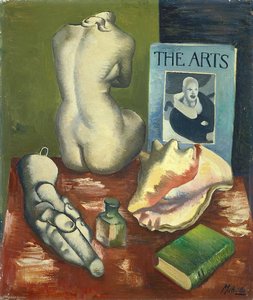
The Landscape painting by Jan Matulka is a remarkable example of modern art, showcasing the artist's unique style and technique. Created in 1930, this painting is a testament to Matulka's ability to capture the essence of the natural world.
The Landscape painting by Jan Matulka is a must-see for anyone interested in modern art and its history. Its unique style and technique make it a standout piece in the world of art.
The Artist's Background
Jan Matulka was a Czech-American modern artist, born on November 7, 1890, in Vlachovo Březí, Bohemia. He studied at the National Academy of Design in New York City and later became one of the first recipients of the Joseph Pulitzer National Traveling Scholarship. This scholarship allowed him to travel extensively throughout the United States and the Caribbean, inspiring many of his works.The Painting
The Landscape painting is a beautiful representation of Matulka's style, which ranged from abstract expressionism to landscapes. The painting features a serene town with mountains in the background, created using crayon on paperboard. The use of bold lines and vibrant colors gives the painting a sense of energy and movement.Importance of the Painting
The Landscape painting is not only a beautiful work of art but also an important part of American modernism. It showcases Matulka's unique style, which was influenced by his travels and experiences. The painting is now part of the collection at the Smithsonian American Art Museum, where it continues to inspire and educate visitors.- The painting is a great example of modern art and its ability to capture the essence of the natural world.
- The use of crayon on paperboard gives the painting a unique texture and feel.
- The Smithsonian American Art Museum is home to many other notable works by Jan Matulka, including Landscape.
The Landscape painting by Jan Matulka is a must-see for anyone interested in modern art and its history. Its unique style and technique make it a standout piece in the world of art.
Questions & Answers
Can I use augmented reality to see "(Landscape)" by Jan Matulka in my room?
"(Landscape)" has an augmented reality preview: the artwork's AR Preview page shows it in your own space on a compatible device.
What size is "(Landscape)" by Jan Matulka in real life?
The recorded dimensions of "(Landscape)" by Jan Matulka are 21 x 30 cm. Reproductions can be ordered in other sizes while keeping the same proportions.
What color intensity does "(Landscape)" by Jan Matulka have?
"(Landscape)" by Jan Matulka shows a balanced color intensity.
Artist Biography
The Alchemist of Color: The Life and Legacy of Jan Matulka
Jan Matulka stands as a luminous bridge between the deep-rooted traditions of European Bohemia and the experimental frontiers of American Modernism. Born in 1890 in Vlachovo Březí, within the then-Austro-Hungarian territory of Bohemia, his early life was defined by a profound sense of cultural heritage that would later infuse his canvases with a unique, symbolic depth. His journey to the United States in 1907 brought him to the Bronx, where he faced the challenges of a young immigrant but found within the bustling energy of New York a new canvas for his burgeoning talent. This duality—the nostalgic echoes of his Czech roots and the rhythmic pulse of American urbanity—became the heartbeat of his artistic evolution.
Matulka’s formal training was a rigorous pursuit of excellence, beginning at the National Academy of Design in New York between 1911 and 1916. This classical foundation provided him with the technical mastery required to later deconstruct form and color. However, it was his exposure to the avant-garde movements of Europe that truly ignited his creative spirit. During his time in Paris, he moved within circles of profound intellectual influence, becoming acquainted with luminaries such as Gertrude Stein and André Lhote. These encounters allowed him to absorb the lessons of Cubism and Surrealism, which he would eventually weave into a personal style that refused to be confined by a single movement.
A Tapestry of Styles: From Landscapes to Abstraction
The brilliance of Matulka’s oeuvre lies in its remarkable fluidity; his artistic temperament was such that he could traverse the spectrum from serene landscapes to jarring abstraction, sometimes within the span of a single day. His early works often captured the melancholic beauty of Bohemian vistas and the picturesque charm of Czechoslovakian hill towns, rendered with an impressionistic sensitivity to light and atmosphere. Yet, as the twentieth century progressed, his brushwork grew bolder and more experimental. He began to embrace the geometric complexities of modern life, creating vibrant cityscapes that pulsed with the kinetic energy of a changing world.
As his career matured, Matulka’s work delved into the realms of Surrealism and Abstract Expressionism. His compositions became playgrounds for the subconscious, where symbolic elements—such as shells, nude figures, or botanical forms—interacted with abstract shapes in dreamlike arrangements. This period of his work is characterized by:
- Vibrant Chromaticism: A fearless use of saturated hues that evoke intense emotional responses.
- Dynamic Composition: The use of intersecting lines and fragmented planes to create a sense of movement and depth.
- Symbolic Narrative: The integration of folklore and mythic imagery, reflecting his Bohemian intellectual heritage.
One of his most significant achievements was his ability to translate the industrial and social shifts of America into a visual language that felt both contemporary and timeless. His collaboration with the sculptor David Smith serves as a testament to his role in the broader movement of American modern art, pushing the boundaries of how materials and forms could represent the human experience.
Historical Significance and Enduring Influence
Beyond the physical beauty of his paintings, Jan Matulka’s historical significance lies in his role as a cultural conduit. He did not merely adopt new styles; he synthesized them, creating a unique aesthetic that helped define the American modernist landscape. As an instructor at the Art Students League, he passed this rich, multifaceted tradition down to subsequent generations, influencing notable artists such as Dorothy Dehner, Francis Criss, and Burgoyne Diller.
His legacy is preserved not only in museum collections like the Smithsonian American Art Museum but also in the very fabric of modern art history. Matulka’s ability to maintain a connection to his origins while fearlessly embracing the unknown allowed him to create works that remain as captivating and intellectually stimulating today as they were during his lifetime. He remains a master of the transitional moment, an artist who captured the precise instant when tradition met the future.

Jan Matulka
1890 - 1972
Quick Facts
- Artistic Movement Or Style: Modern Art, Abstract Painting, Surrealism
- Artists Who Influenced This Artist: ['David Smith']
- Date Of Birth: 1890
- Date Of Death: 1972
- Full Name: Jan Matulka
- Nationality: Czech
- Notable Artworks:
- Landscape
- Untitled (Spanish Woman Playing Guitar)
- Untitled (View of Hill Town in Czechoslovakia)
- Place Of Birth: Czech Republic
Explore artworks organized by themes, styles, and characteristics.