


 Preview
 Send
Send Share
Share
 Details
 Guide
Guide

 Download
 Similars
 X-Ray
X-Ray Diaporama
 Stats
StatsUntitled
 Painting
- Contemporary Art
 2007
2007- Contemporary
 25.0 x 20.0 cm
 Contemporary Art Platform
An anthropomorphic keyhole face emerges from a vibrant yellow square with a bold red border in this creative 2007 painting by Jean-Marc Nahas, inviting you to explore the whimsical depth of his unique contemporary style.
 Read More
Explore the powerful abstract & surrealist paintings of Jean-Marc Nahas, a Lebanese artist born in 1963. His work reflects themes of war, displacement, and resilience, exhibited globally including at the British Museum.
The artwork displayed on this page is protected by copyright law, which means we cannot legally create or sell an identical reproduction. This protection is enforced under international agreements such as the Berne Convention and by national laws, including those outlined by the U.S. Copyright Law - Title 17.
This method fully complies with copyright regulations because it does not involve copying or duplicating the protected artwork. Instead, it is a creative reinterpretation - a new painting that is influenced by the original but not identical to it.
Giclée / Art Print
Museum-quality giclée or canvas print with fast production and flexible finish options. ( Buy Hand Made Painting Switch to Digital Image)




P118B $10

P118H $10

P118W $10

P438Z $10

P508JH $12

P508YH $12

P805H $10

P805Z $10

P919BZ $10

P919G $10

P919XJ $10

P959ZH $10

P968JZ $12

W106C $8

W218G $10

W218JH $8

W218Y $10

W307PJ $10

W316G $10

W316PJ $8

W316Y $10

W398PJ $8

W4111J $10

W500HY $15

W500JH $15

W692G $12

W849H $8

W940BG $15

W953PJ $8




Standard
custom
CM
INCH
Pick from our preset sizes that match the artwork's original proportions.
Loading sizes...

width
height
Type the width and the height you need, to fit your frame or your wall. A print can only be cut, never made bigger than the picture, so a size with a different shape loses a part of the image. We send you a digital mockup to approve before we print anything. The picture shown on this page does not show the real cut — only the mockup does.
Worldwide Delivery () in 2 weeks instead of standard 4/5 weeks. (23 October)

Free Worldwide Express Shipping

High-Quality Linen Canvas

Full Shipping Insurance

Customs Tax Refund Guarantee

True Color Matching Guarantee

100-Day Return Policy (Defects Only)

100% Money-Back Guarantee

Bulk Discount Offer
 Glass option is only available in size under 110 CM

Untitled
Giclée / Art Print
Reproduction Size
-


Total Price
$ 70
A Portal of Whimsy: The Playful Geometry of Jean-Marc Nahas
In the vast landscape of contemporary abstraction, few works manage to capture the viewer's attention with such immediate, childlike charm as this 2007 untitled masterpiece by Jean-Marc Nahas. At first glance, the eye is drawn to a striking composition of primary colors: a vibrant, sun-drenched yellow square framed by a bold, assertive red border. This stark, geometric foundation provides a stage for something far more intimate and unexpected. Nestrated within this bright field is a meticulously rendered keyhole, which Nahas has imbued with a startlingly human quality. By adding a delicate, hand-drawn face to the aperture of the keyhole, the artist transforms a cold, mechanical object into an anthropomorphic character, inviting us into a world where inanimate objects possess their own secret, watching consciousness.
The technique employed here speaks to Nahas’s ability to blend rigorous formal structure with spontaneous, expressive line work. The painting functions as a dialogue between the heavy, saturated presence of the color fields and the light, almost whimsical sketchiness of the central figure. This contrast creates a captivating tension; while the red and yellow borders suggest a sense of containment and stability, the expressive face within the keyhole suggests a breaking of boundaries—a peek into a hidden dimension of emotion. For the collector or interior designer, this piece offers a unique versatility, acting as a concentrated burst of energy that can serve as a focal point in a minimalist setting or add a layer of surrealist intrigue to a more eclectic gallery wall.
To understand the emotional resonance of this work, one must consider the broader context of Nahas’s artistic journey. Born amidst the turbulence of the Lebanese Civil War, his later works often navigate the delicate balance between chaos and order, memory and presence. In this specific piece, we see a masterful simplification of form that echoes his training at the prestigious École Nationale Supérieure des Beaux-Arts, yet it is infused with a profound sense of resilience and joy. The keyhole becomes a powerful symbol of curiosity and the human desire to look beyond the surface, to find life and personality even in the most enclosed spaces. It is an invitation to remain curious, to find the "face" in the unknown, and to celebrate the vibrant, colorful mysteries that lie just behind the threshold of our perception.
Questions & Answers
How do I discover artworks close to "Untitled" by Jean-Marc Nahas?
Artworks similar to "Untitled" by Jean-Marc Nahas are gathered on the artwork's Similars page.
How can I get a digital file of "Untitled" by Jean-Marc Nahas?
A digital image of "Untitled" by Jean-Marc Nahas can be purchased on its Digital Image page: a high-resolution digital image download.
Are the colors of "Untitled" by Jean-Marc Nahas vivid or muted?
"Untitled" by Jean-Marc Nahas is recorded with a vivid color saturation and a vivid intensity.
Artist Biography
Jean-Marc Nahas: A Voice Carved from Conflict and Memory
Born in the tumultuous heart of Beirut, Lebanon, in 1963, Jean-Marc Nahas’s artistic journey is inextricably linked to the nation's long history of strife. Growing up amidst the Lebanese Civil War profoundly shaped his perspective, imbuing his work with a raw emotional intensity and a deep engagement with themes of war, displacement, and ultimately, resilience. This formative experience isn’t merely reflected in his subject matter; it’s woven into the very fabric of his artistic language – a deliberate simplification of form coupled with explosive bursts of color and dynamic movement.
Nahas's early life was marked by instability and displacement, experiences that propelled him to Paris at the age of seventeen. Seeking refuge and artistic training, he enrolled in the École Nationale Supérieure des Beaux-Arts (ENSBA) and Penninghen, institutions renowned for their rigorous curriculum and emphasis on traditional techniques. However, Nahas’s approach quickly transcended mere adherence to established methods. He sought mentorship from influential figures like Pierre Alechinsky, Vladimir Veličković, Ferit Iscan, and Albert Zavaro – artists who encouraged him to explore his own unique voice within the broader context of European modernism.
The Language of Emotion: Style and Technique
Nahas’s artistic style is immediately recognizable for its potent blend of abstraction and expressionism. His paintings are rarely representational in a literal sense; instead, they function as visual narratives—intimate portraits of the human condition rendered through simplified forms and intensely colored brushstrokes. He frequently employs a technique he describes as “writing,” likening his process to composing poetry or crafting a personal letter. This approach is evident in works like "Untitled" (2005), where bold lines, vibrant hues, and gestural textures coalesce to evoke a sense of urgency and emotional depth.
A key element of Nahas’s style lies in his deliberate simplification of form. He eschews elaborate detail, opting instead for a streamlined aesthetic that allows the raw emotion of the subject matter to take center stage. This reductionist approach is balanced by an energetic application of paint – rapid, rhythmic brushstrokes that convey movement and dynamism. Animal motifs frequently appear within his compositions, often depicted in moments of intense action or vulnerability, adding layers of symbolic meaning.
Themes of War and Displacement
The specter of war looms large throughout Nahas’s oeuvre, a direct consequence of his upbringing in Lebanon. However, his work transcends mere documentation of conflict; it delves into the psychological impact of violence on individuals and communities. He doesn't shy away from depicting the scars of trauma—the faces etched with sorrow, the bodies contorted by pain—but he also seeks to capture moments of hope and resilience. As he himself stated, “Unlike some of his fellow artists for whom the drawn-out conflict appears to have had little tangible impact on their artistic expression, for Jean-Marc, the scars of war run deep within his psyche, healed only by the cathartic practice of drawing.”
Furthermore, Nahas’s work frequently explores themes of displacement and exile. His move to Paris marked a significant shift in his life, yet the memories of Beirut—its beauty, its chaos, its enduring spirit—continue to resonate within his art. This duality – the tension between past and present, homeland and exile – is a recurring motif in his paintings.
Recognition and Legacy
Nahas’s work has garnered international recognition, with exhibitions held at prestigious galleries and museums around the world, including the Contemporary Art Platform in Kuwait City, the British Museum, and Bank Audi Foundation. His pieces are also part of private collections, solidifying his place as a significant contemporary artist. His retrospective exhibition at the Beirut Exhibition Center in 2013 served as a powerful testament to his artistic evolution and enduring impact.
Beyond individual achievements, Nahas’s work contributes to a broader dialogue about the role of art in confronting difficult historical realities. His willingness to engage with themes of war and displacement—with honesty and vulnerability—makes him a compelling voice within the contemporary art world. He continues to live and work in Beirut, drawing inspiration from his homeland while simultaneously navigating the complexities of a globalized artistic landscape.

Jean-Marc Nahas
1958 - , Lebanon
Quick Facts
- Full Name: Jean-Marc Nahas
- Nationality: Lebanese-Canadian
- Date Of Birth: 1958
- Place Of Birth: Beirut, Lebanon
- Notable Artworks:
- Untitled (2005)
- Untitled (2005)
- Untitled (2005)
- Artistic Movement Or Style: Abstract & Surrealism
- Artists Who Influenced This Artist:
- Pierre Alechinsky
- Vladimir Veličković
- Ferit Iscan
- Albert Zavaro
- Artists Or Movements Influenced By This Artist:
- Expressionism
- Symbolism
Related Articles

Mark Rothko's Masterpieces: 25 Paintings That Define Abstract Expressionism | TopImpressionists
Explore 25 iconic Mark Rothko paintings that define Abstract Expressionism. Discover the stories, colors & emotions behind these masterpieces. Find museum-quality art reproductions and curated decor ideas at TopImpressionists.com.
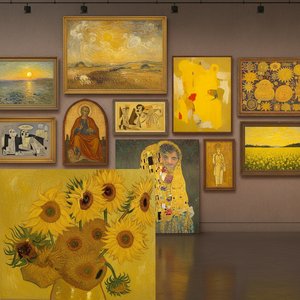
Golden Hues: 10 Masterpieces Dominated by Chrome Yellow | TopImpressionists
Immerse yourself in golden light! Explore 10 famous paintings dominated by 'Chrome Yellow', from Van Gogh’s Sunflowers to Monet's Haystacks. Discover the stories behind these iconic Impressionist & Post-Impressionist masterpieces and find museum-quality art reproductions at TopImpressionists.com.
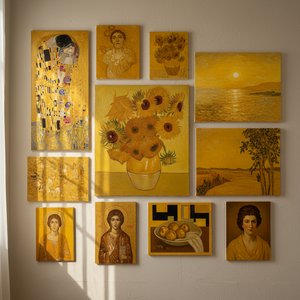
Golden Hues: Top 10 Paintings Dominated by Yellow Ochre |
Explore 10 iconic paintings bathed in golden yellow ochre! From Van Gogh's sunflowers to Monet’s haystacks, discover the stories behind these masterpieces. Find museum-quality art reproductions & elevate your home decor on .

The Golden Hue: Exploring Symbolism & Emotion in Yellow Art
Explore the rich symbolism & emotional power of yellow in art history! From Van Gogh to Kandinsky, discover how artists used this vibrant hue. Expert analysis & high-quality reproductions at TopImpressionists.

Crimson Threads of Narrative: Exploring Symbolism & Representation in Artworks Featuring the Red Dress
Explore the rich symbolism of the red dress in art history! From ancient power displays to iconic portraits like Cézanne’s 'Madame Cezanne', discover the cultural and artistic significance behind this captivating color. Expert analysis & insights.
Explore artworks organized by themes, styles, and characteristics.

