Preview
 Send
Send Share
Share
 Details
 Guide
Guide

 Download
 Similars
 X-Ray
X-Ray Diaporama
 Q&A
Q&A Stats
StatsDavid Garrick
 Oil On Canvas
- WallArt
- Baroque Rococo Fusion
 1763
1763- Early Modern
 75.0 x 63.0 cm
 The Ashmolean Museum of Art And Archaeology
Admire Johann Zoffany's iconic portrait of David Garrick alongside Eva Maria Veigel, capturing the theatrical spirit of Georgian England at The Ashmolean Museum.
 Read More
Discover Johann Zoffany's 18th-century masterpieces! Renowned for 'conversation pieces,' blending German precision & Italian flair. Explore portraits, history paintings & more – available at TopImpressionists.
Giclée / Art Print
Museum-quality giclée or canvas print with fast production and flexible finish options. ( Buy Hand Made Painting Switch to Digital Image)




P118B $10

P118H $10

P118W $10

P438Z $10

P508JH $12

P508YH $12

P805H $10

P805Z $10

P919BZ $10

P919G $10

P919XJ $10

P959ZH $10

P968JZ $12

W106C $8

W218G $10

W218JH $8

W218Y $10

W307PJ $10

W316G $10

W316PJ $8

W316Y $10

W398PJ $8

W4111J $10

W500HY $15

W500JH $15

W692G $12

W849H $8

W940BG $15

W953PJ $8




Standard
custom
CM
INCH
Pick from our preset sizes that match the artwork's original proportions.
Loading sizes...

width
height
Type the width and the height you need, to fit your frame or your wall. A print can only be cut, never made bigger than the picture, so a size with a different shape loses a part of the image. We send you a digital mockup to approve before we print anything. The picture shown on this page does not show the real cut — only the mockup does.
Worldwide Delivery () in 2 weeks instead of standard 4/5 weeks. (31 October)

Free Worldwide Express Shipping

High-Quality Linen Canvas

Full Shipping Insurance

Customs Tax Refund Guarantee

True Color Matching Guarantee

100-Day Return Policy (Defects Only)

100% Money-Back Guarantee

Bulk Discount Offer
 Glass option is only available in size under 110 CM

David Garrick
Giclée / Art Print
Reproduction Size
-


Total Price
$ 70
A Theatrical Soul Captured in Oil
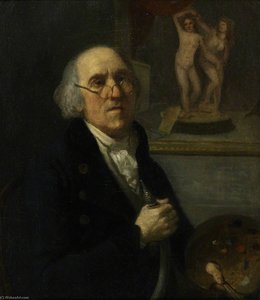
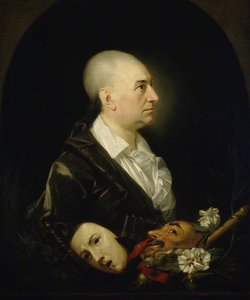
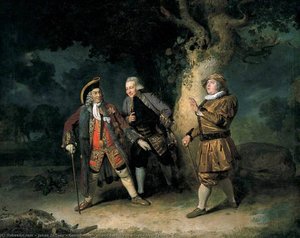
In the quiet halls of The Ashmolean Museum of Art and Archaeology, there exists a portrait that does more than merely record a likeness; it breathes with the very essence of the eighteenth-century stage. Johann Zoffany’s 1763 masterpiece, David Garrick, is an evocative window into the heart of Enlightenment England. At first glance, we encounter the commanding presence of Garrick, the most celebrated actor of his era, rendered with a profound sense of dignity and intellectual depth. Zoffny does not present us with a mere performer in costume, but with a man whose very existence was intertwined with the dramatic arts. The composition is intimate yet grand, focusing on Garrick from the chest up against a somber, dark background that pushes his luminous features toward the viewer, demanding an immediate and visceral connection.
The technique employed by Zoffany is nothing short of masterful, showcasing the meticulous precision characteristic of the finest oil-on-canvas works of the period. Through subtle tonal gradations and a sophisticated command of light, the artist breathes life into the textures of the subject's attire—the crisp white collar contrasting sharply against the deep black of his formal coat. This interplay of light and shadow, or chiaroscuro, serves to sculpt Garrick’s face, highlighting a contemplative gaze that seems to look beyond the frame, perhaps lost in thought regarding a recent performance or a future script. For the discerning collector or interior designer, this painting offers a profound sense of classical elegance, making it an ideal centerpiece for spaces that value historical gravity and sophisticated drama.
The Dual Faces of Drama
Beyond the physical representation of a legendary actor, Zoffany weaves a complex tapestry of symbolism into the very fabric of the portrait. Floating near Garrick’s face are two iconic theatrical masks: the smiling visage of Comedy and the furrowed, mournful brow of Tragedy. These are not mere decorative elements; they are the dual pillars of the human experience that Garrick mastered on stage. The presence of these masks transforms the portrait from a standard biographical study into a profound meditation on the nature of performance and emotion. It suggests that behind the dignified gentleman lies the capacity for both joyous exuberance and profound sorrow, mirroring the duality of the human condition itself.
This symbolic layer adds an intellectual richness that elevates the artwork, making it much more than a decorative piece. It invites the viewer to contemplate the boundaries between reality and artifice, between the man and the persona. For those looking to adorn a home or gallery with a reproduction of this caliber, the painting provides a continuous source of conversation and inspiration. It embodies a period where art, intellect, and social status converged in a beautiful, theatrical display. To possess such a work is to hold a fragment of history—a moment frozen in 1763, where the spirit of the theatre remains eternally vibrant and hauntingly beautiful.
Questions & Answers
Does the copyright of "David Garrick" by Johann Zoffany allow reproductions?
"David Garrick" by Johann Zoffany, held at The Ashmolean Museum of Art And Archaeology, is in the public domain - its copyright has expired. This status determines whether reproductions of the image may be made.
How big is the original "David Garrick"?
The original "David Garrick" by Johann Zoffany measures 75 x 63 cm.
Can I watch "David Garrick" as a full-screen slideshow?
The diaporama of "David Garrick" can be watched on the artwork's Diaporama page.
Artist Biography
Johann Zoffany: Life and Legacy
Early Life and Training
Johann Zoffany, born Johannes Josephus Zaufallij in 1733 in Freiburg, Germany, was a painter who achieved renown primarily in England and Italy. Details of his early childhood remain scarce, but it is known he received artistic training from a young age. He initially apprenticed with a sculptor, possibly Melchior Paulus in Ellwangen, before studying with Martin Speer in Regensburg. This foundational period laid the groundwork for his future career.
Journey to Italy and England
In 1750, Zoffany traveled to Rome, entering the studio of Agostino Masucci where he honed his skills within the Italian artistic tradition. He later moved to England in 1760, initially supporting himself by creating decorative designs for clocks made by Stephen Rimbault. This period marked a turning point as he began to establish connections and gain recognition within London’s art scene.
Royal Patronage and Artistic Development
Zoffany quickly attracted the attention of King George III and Queen Charlotte, becoming a favored portraitist of the royal family. His ability to capture informal moments – such as Queen Charlotte and Her Two Eldest Children (1765) – distinguished him from more formal court painters. He was also popular with Austrian imperial family and created a baron of the Holy Roman Empire in 1776 by Empress Maria Theresa.
The Master of ‘Conversation Pieces’
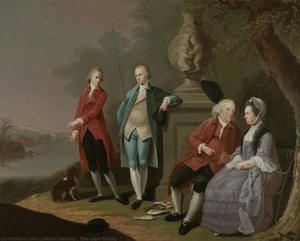
Zoffany became celebrated for his “conversation pieces,” or *conversazione* – informal group portraits depicting social gatherings. He excelled at capturing the personalities and interactions within these scenes, often featuring prominent figures from society, theatre, and literature. His works like The Cope Family (1775) exemplify this style, offering glimpses into the lives of his patrons.
Major Achievements and Notable Works
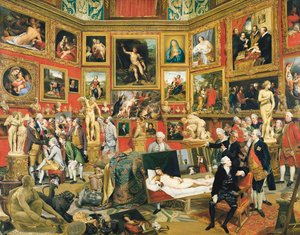
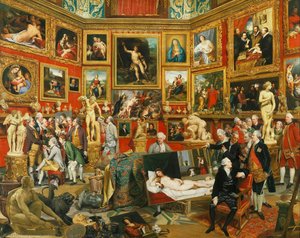
- Tribuna of the Uffizi (1772-1778): Perhaps his most famous work, a meticulously detailed depiction of the Uffizi Gallery in Florence.
- Dr William Hunter Teaching Anatomy at the Royal Academy (1779): A fascinating portrayal of medical education and scientific inquiry.
- George III (1771): A regal portrait showcasing the King’s power and elegance.
- Colonel Mordaunt's Cock Match (1784-1786): A vibrant depiction of colonial life in India, capturing a unique cultural event.
Years in India and Later Life
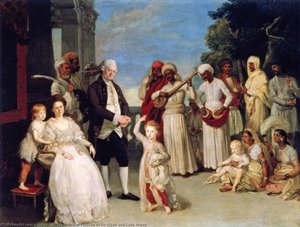
From 1783 to 1789, Zoffany resided in India, where he painted portraits of prominent figures like Warren Hastings and Asaf-ud-Daula. His experiences there influenced his artistic style and subject matter. A remarkable story from this period involves a shipwreck off the Andaman Islands, where survivors resorted to extreme measures for survival.
Influences and Legacy
Zoffany’s work reflects influences from both German precision and Italian artistry. He was influenced by artists like Agostino Masucci and drew inspiration from the Baroque tradition. His style, in turn, influenced contemporaries and later artists interested in portraiture and social commentary. He bridged artistic traditions and left a lasting impact on 18th-century art.
Historical Significance
Johann Zoffany’s paintings provide valuable insights into the social customs, intellectual life, and cultural values of his time. His “conversation pieces” offer intimate portraits of prominent individuals and their world, while his depictions of India contribute to our understanding of colonial history. He remains a significant figure in the history of art, celebrated for his technical skill, insightful observations, and unique artistic vision.

Johann Zoffany
1733 - 1810 , Germany
Quick Facts
- Name: Johann Zoffany
- Movement:
- Neoclassicism
- Realism
- Expressionism
- Birth Date: 1733
- Death Date: 1810
- Birth Place: Frankfurt, Germany
- Nationality: German
- Date Of Birth: 1733
- Date Of Death: 1810
- Notable Works:
- Tribuna of the Uffizi
- Dr William Hunter Teaching Anatomy at the Royal Academy
- George III
- The Flower Girl
- Colonel Mordaunt's Cock Match
- Place Of Birth: Frankfurt, Germany
Related Articles

David Cox the Elder: Landscape, Light & the Romantic Vision of Rural England
Explore the captivating landscapes of David Cox the Elder, a pivotal figure in British Romanticism. Discover his masterful watercolour techniques, enduring legacy & find timeless art for your home at TopImpressionists.

Gerard David: Bridging Late Medieval Tradition with Early Renaissance Humanism
Explore the captivating world of Gerard David, a pivotal figure bridging late medieval artistry with the Early Renaissance. Discover his innovative techniques, religious masterpieces, and enduring legacy – a must-read for discerning art collectors.

Johann Zoffany: Capturing Georgian Society with Brushstrokes of Cosmopolitan Flair
Explore the captivating world of Johann Zoffany, master portraitist of Georgian society. Discover his unique 'conversation pieces,' imperial commissions & lasting legacy. A guide for discerning collectors.

Jacques-Louis David: Neoclassical Ideals & Revolutionary Witness
Explore the life & art of Jacques-Louis David, leading Neoclassical painter of the French Revolution. Discover iconic works like 'The Death of Marat' and his lasting impact on art history. Expert analysis & high-quality reproductions at TopImpressionists.

Thomas Rowlandson: Satire, Society & the Art of Caricature in Georgian England
Explore the witty world of Thomas Rowlandson, master Georgian caricaturist! Discover his satirical prints & insightful social commentary on 18th-century England. Learn about his life, techniques, and enduring influence.
Explore artworks organized by themes, styles, and characteristics.