

Shown: · With its frame:
 Preview

 Send
 Share
 Details
 Fact sheet


 Download
 Similars
 X-Ray
 Diaporama
 Q&A

 Stats
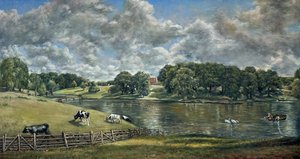
Flatford Mill (John Constable, 1817)

- 50.0 x 60.0 cm (19.7 × 23.6 in)


Canvas and fine art prints from $49 at 28 x 36 cm
Hand-painted oil reproduction from $195
- Free Worldwide Shipping in 3 to 4 Weeks
- Rolled prints delivered in 3 to 4 weeks
- 100-day returns, money back
- Rated 4.9/5 by 241 customers on ArtShopReviews.com
$ 76
Giclée / Art Print
Museum-quality giclée or canvas print with fast production and flexible finish options. ( Impressionist Oil Digital Copy
)
Medium
 Read more
Our budget print: the same image printed on a 260 g/m² polyester canvas instead of cotton, delivered rolled in a tube by regular post in 3 to 4 weeks. Rolled only (no stretcher, no frame) and no urgent production, for sizes with at least one side of 80 cm (31.5 in) or less. About 30% cheaper than the cotton canvas print.
Not available for this size: at least one side must be 80 cm (31.5 in) or less.
Rolled only: choose the canvas rolled in a tube to select this print.
Available for sizes with both sides of 110 cm (43.3 in) or less. For larger sizes the print is made on matt cotton canvas.
Matt archival canvas is not available for this size: both sides must be 110 cm (43.3 in) or less. Your print is made on matt cotton canvas instead.
Glass option is only available in size under 110 CM
Size
·Pick from our preset sizes that match the artwork's original proportions.
Loading sizes...

width
height
Type the width and the height you need, to fit your frame or your wall. A print can only be cut, never made bigger than the picture, so a size with a different shape loses a part of the image. We send you a digital mockup to approve before we print anything. The picture shown on this page does not show the real cut — only the mockup does.
Standard
custom
CM
INCH
Finish
·
White $1

Blurside $1

Extended $1

P118B $10

P118H $10

P118W $10

P438Z $10

P508JH $12

P508YH $12

P805H $10

P805Z $10

P919BZ $10

P919G $10

P919XJ $10

P959ZH $10

P968JZ $12

W106C $8

W218G $10

W218JH $8

W218Y $10

W307PJ $10

W316G $10

W316PJ $8

W316Y $10

W398PJ $8

W4111J $10

W500HY $15

W500JH $15

W692G $12

W849H $8

W940BG $15

W953PJ $8
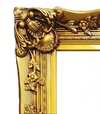
H24-GOLD $30
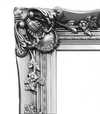
H24-SILVER $30
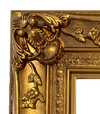
H36-GOLD $70
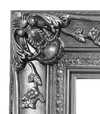
H36-SILVER $70
Shipped in a protective tube, ready for your own framer.
Above 105 cm the frame is shipped as a kit for a professional framer — read the details.
Extras
optionalWhat do the extras include?
Worldwide Delivery () in 2 weeks instead of standard 4/5 weeks. (27 December)
Urgent production and express courier are not available with the Economy poly-canvas print, which travels by regular post.
Protective Varnish
Nameplate
Engraved Bronze Plaque Details
This elegant plaque features the artist's name and the title of the artwork, finely engraved for a timeless presentation.
It is made from bronze with a refined, elegant finish. The text is precisely laser-engraved for a sharp and permanent result. Measuring 9x2 cm, the plaque is compact yet easy to read. It's built to be durable and scratch-resistant, offering a professional, museum-quality look. Mounting is simple thanks to the included adhesive backing.
Transparent Acrylic Plaque Details
The plaque includes essential engraved details such as the artist's name, the title of the artwork, the date it was created, the type of media used-like oil on canvas or watercolor-a brief description of the piece, and a QR code that links to the complete artwork information.
It is crafted from clear acrylic, offering a sleek, modern appearance. The text is UV-engraved in black to ensure strong visual contrast. With a size of 10x15 cm, it ensures optimal readability. It comes equipped with two metal hooks for secure wall mounting. The plaque is designed to be weather-resistant, making it suitable for various environments, and it includes interactive features that work seamlessly with smartphone scanning.
Black Acrylic Plaque Details
This elegant plaque includes engraved information such as the artist's name, the title of the artwork, the date it was created, the type of media used (like oil on canvas or watercolor), a short description of the artwork, and a QR code for quick access to more information.
The plaque itself is made from refined black acrylic with a premium finish. The text is laser-engraved in white for high contrast and readability. Its size is 10x15 cm, designed to be easy to read. It comes with two metal hooks for professional mounting. The design is sleek and fits any interior style. It is also weather-resistant and durable, with built-in digital integration for mobile compatibility.
Glass option is only available in size under 110 CM
 Glass option is only available in size under 110 CM
- Free Worldwide Shipping in 3 to 4 Weeks
- High-Quality Linen Canvas
- Full Shipping Insurance
- Customs Tax Refund Guarantee
- True Color Matching Guarantee
- 100-day returns, money back
- 100% Money-Back Guarantee
- Bulk Discount Offer


Flatford Mill: John Constable and the Romanticism moment
A tranquil river scene with boats and a horse by the water's edge, rendered with thick impasto to capture the shifting light of the Stour Valley.
John Constable: biography
Maria's death from tuberculosis led him to dress in black and paint the expressive landscapes of his later years.
About the artwork
Identification of Flatford Mill by John Constable
Flatford Mill is an 1817 landscape painting by the British artist John Constable. This work offers a view of the mill located in East Bergholt on the River Stour. It is also known by the subtitle Scene on a Navigable River. The scene captures a specific moment in the rural landscape of the Stour Valley, focusing on the quiet activity surrounding the water's edge.
The painting was first presented to the public when it was displayed at the Royal Academy's Summer Exhibition at Somerset House in 1817. At that time, it established the artist's interest in the specific topography of his home region. The composition centers on the mill and the river, providing a detailed look at the relationship between the water and the surrounding land.
The Composition and Visual Elements
The composition pulls you into a world of lush greens and reflective waters. At the heart of the scene, the calm, reflective waters of the river act as a mirror to the lush, verdant banks. This interplay of light and liquid creates a sense of depth that draws the eye toward the center of the work. A moored boat and distant figures provide a gentle human connection to the vastness of the Suffolk countryside, grounding the landscape in a quiet, lived-in reality.
Several individuals stand near the water's edge, their presence adding a subtle layer of activity to the peaceful scene. On the left side of the image, a horse is positioned near the bank, its form integrated into the pastoral setting. Two boats are visible in the water; one is situated towards the center, while another rests slightly to the right. These elements, combined with the rhythmic presence of the river, establish a sense of harmony within the rural environment.
Technique and Artistic Materials
In this oil on canvas, one can sense the methodical preparation that preceded the final application of paint. Before committing to the large-scale composition, the artist relied on a foundation of oil sketches, graphite drawings, and watercolour studies. This disciplined approach allowed for a careful arrangement of the landscape's complexities. The resulting work possesses a physical weight, achieved through the use of thick impasto to build up texture across the surface. This tactile quality gives the river and the earth a sense of movement and life.
There is a particular luminosity in the way the light interacts with the water and the sky. This effect is achieved through the painstaking layering of thin glazes of paint. Such a technique allows light to penetrate the surface, creating an illusion of shimmering luminescence that mimics the shifting atmosphere of the Stour Valley. It is a quiet, deliberate mastery of light and shadow.
Historical Ownership and Collections
The provenance of this work is deeply connected to the artist's own legacy. It was eventually included as part of the Constable Bequest in 1888, ensuring its place within the public consciousness. This transition from private hands to a permanent collection secured its survival for future generations to study.
Today, the painting is held within the collection of Tate Britain. It is also part of the holdings at the Tate Gallery in London. These institutions maintain the work as a significant part of their English landscape holdings. Additionally, the National Trust holds a connection to the work through its stewardship of the surrounding landscapes and properties.
Related Works by John Constable
To understand the evolution of this artist, one might look toward his earlier explorations of the Stour Valley. In 1815, he produced Boat-building near Flatford Mill, a work that captures the rhythmic sounds of craftsmanship against a quiet river setting. This piece reflects his deep connection to the local landscape and the dignity of rural labor. It is a quiet study of the textures found in the Suffolk countryside.
His later compositions often expanded in scale and ambition. He moved toward larger canvases, such as The Hay Wain from 1821, which remains one of his most recognized depictions of the river. Other significant works include The Cornfield (1826) and The Lock (1824), both of which continue his investigation into the interplay of light and water. He also turned his attention to more architectural subjects, such as Salisbury Cathedral from the Meadows in 1831.
- Boat-building near Flatford Mill (1815)
- The Hay Wain (1821)
- The Lock (1824)
- The Cornfield (1826)
- Salisbury Cathedral from the Meadows (1831)
Where to See This Masterpiece Today
If you wish to experience the subtle shifts of light and the texture of the River Stour in person, you will find this work held within the collections of the Tate Gallery in London. It is part of the permanent collection at Tate Britain, where the painting is kept for public viewing. The work remains a significant part of the Tate Britain collection, allowing visitors to observe the specific impasto and the atmospheric perspective that Constable achieved in 1817.
The painting is situated in London, United Kingdom. It is housed within the Tate Gallery, London, providing a quiet space to study the relationship between the water and the sky. Being part of the Tate Britain collection, it is accessible to those who appreciate the nuances of the Romantic tradition in a museum setting.
Questions & Answers
Is this reproduction of Flatford Mill painted by hand or printed?
Printed: Flatford Mill is reproduced as a giclée print on cotton canvas or on Epson archival canvas paper.
What size should I choose for Flatford Mill?
The original measures 50 x 60 cm. Sizes run from 28.2 x 35.5 cm ($49) to 192.6 x 242.9 cm ($444); the table on this page lists the main steps and their prices.
How long does delivery take?
A print rolled in a tube travels free by regular post and arrives in 3 to 4 weeks; a stretched or framed print takes 4 to 5 weeks. Express courier delivery exists only with the paid Express Delivery option offered on this page. You can return it within 100 days for a full refund, with no condition.
What medium did John Constable use for Flatford Mill?
Oil On Canvas.
Quick facts and art quiz
About John Constable

John Constable
1776 - 1837, United Kingdom
About John Constable: life, works and biography
Quick facts about John Constable
- Artistic Movement Or Style: Romanticism
- Artists Or Movements Influenced By This Artist: ['Barbizon School']
- Artists Who Influenced This Artist: ['Claude Lorrain']
- Full Name: John Constable
- Nationality: British
- Notable Artworks:
- The Hay Wain
- Hadleigh Castle
- Salisbury Cathedral from the Meadows
- Netley Abbey
- Place Of Birth: East Bergholt, United Kingdom
- Date Of Birth: 1776
- Date Of Death: 1837
Related Artworks
Kindred canvases that echo this painting's light, palette and mood.


Explore artworks organized by themes, styles, and characteristics.




John Constable
Flatford Mill
() ·
With its frame: ·
Total